Don't miss a timely, critical conversation on how the public, community leaders, elected officials, and others can create #SafeAndJust communities.
🗓️ April 14
📍 @NatUrbanLeague’s new headquarters in Harlem
🔗https://t.co/IeglRgPlJD
Curious about what it takes to create safe and thriving communities? Join us on April 14 at the Safe & Just Communities Summit, hosted by @NatUrbanLeague at their new #Harlem headquarters: https://t.co/IeglRgPlJD
#SafeAndJust
What does a truly safe community look like? And how do we create it? Join us at the Safe & Just Communities Summit on April 14th, hosted by @NatUrbanLeague https://t.co/IeglRgPlJD #SafeAndJust
Join our partner @NatUrbanLeague The Safe & Just Communities Summit on April 14 in Harlem! This convening will bring advocates, policy makers, and civic leaders committed to building communities that are safer. Register here:
https://t.co/IeglRgPlJD
Kentucky is training people in prison with real job skills…but if outdated records for non-violent offenders block employment opportunities, that training goes to waste.
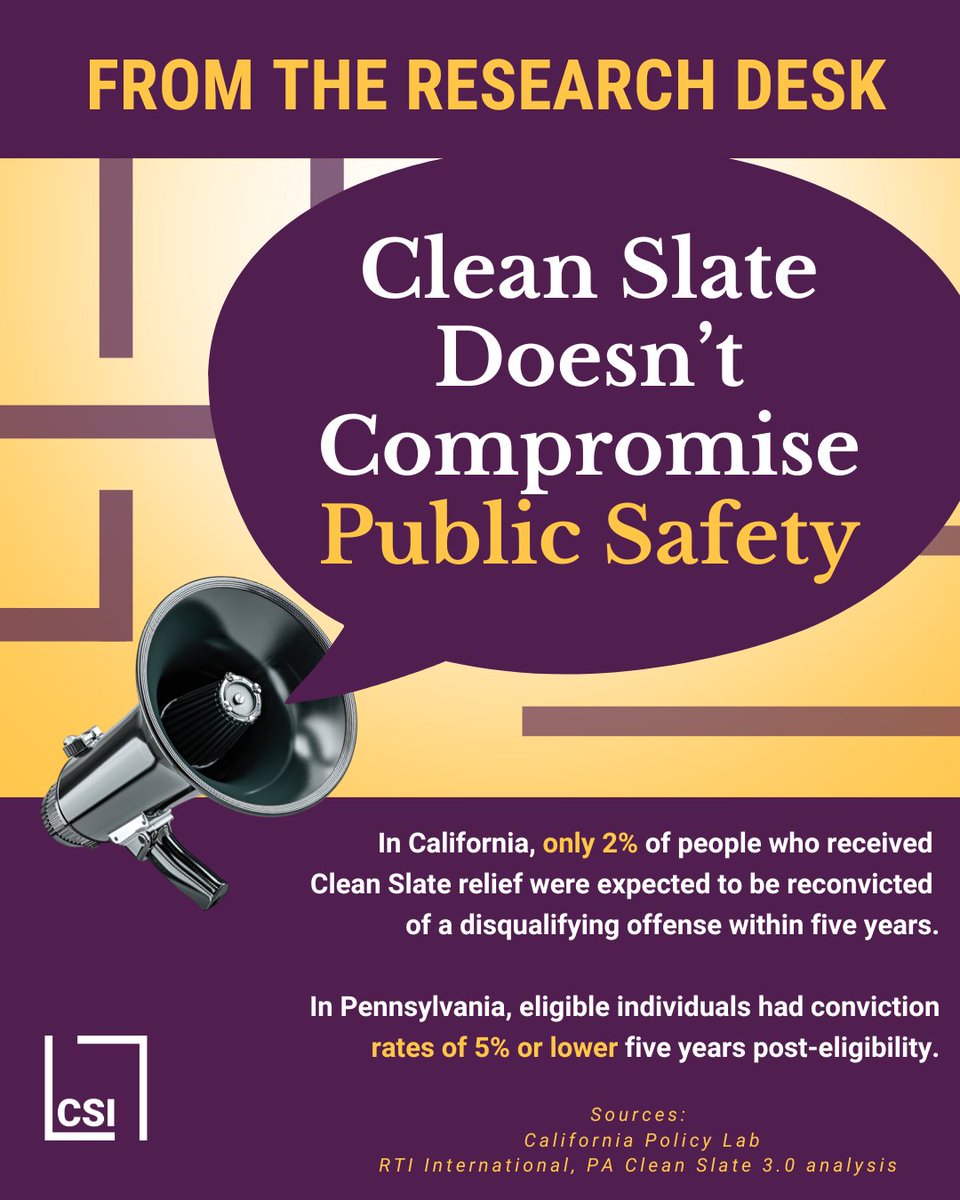
Clean Slate legislation makes second chances work—for people and for public safety 👏
Join us on Zoom tomorrow (3/11) at 2pm EST for a talk about AI + Incarceration. This webinar will explain how AI is being deployed within correctional and reentry systems, implications for incarcerated individuals, and people being detained.
RVSP: https://t.co/Ge0qp3XkOc
Michigan exonerees are working to close the reentry gap for people released after wrongful convictions.
The Organization of Exonerees, led by Ken Nixon, has launched a new mobile app designed to help exonerees navigate life after prison.
https://t.co/zW6VX4BFH1
Recent LAC testimony before @NYCCouncil’s Committee on Criminal Justice highlighted the public health crisis at Rikers & called for sustained funding of reentry programs to connect reentering NYers to vital health care, housing & supportive services. READ: https://t.co/WQxdWUBDXu
Public safety isn’t just about punishment — it’s about prevention.
Communities are safer when people have jobs, stable families, and a real chance to rebuild after a past mistake and the data proves it.
A new report from @SentencingProj details how prior convictions can add years, even decades, to prison sentences without evidence of improved public safety. These enhancements fuel excessive punishment & racial disparities.
Learn more:
https://t.co/6iBcQUSKBr
AI isn’t science fiction anymore, it now has a place in our criminal justice system.
New technology can help solve crimes and protect communities. But without transparency, oversight, and human judgment, innovation risks undermining trust ⤵️
🚨NEW: As food insecurity runs rampant in the U.S., hunger is being used as punishment.
New data reveal that most U.S. states have restrictions on SNAP benefits for people with probation violations — potentially leaving many vulnerable folks behind. 🧵
The U.S. locks too many people behind bars for too long, despite evidence that harsh sentencing doesn't make us safer.
Second look laws offer an opportunity to revisit long prison sentences that no longer serve public safety and give people a fair chance: https://t.co/8yc6CTom96
We are not being paranoid.
The rapid rise of AI image generators is not harmless experimentation. The misuse of these tools is already causing real harm in Black communities, from digitally manipulated arrest photos to fabricated protest images and synthetic political propaganda.
And this is no longer limited to anonymous individuals online.
AI-generated content is increasingly being used in political messaging, campaign communication, and public discourse at the highest levels of influence. When manipulated images circulate without transparency, they distort truth, fuel misinformation, and reinforce harmful stereotypes.
Not only that, but the use of AI-generated images is growing more sophisticated.
It is becoming harder to tell what is real and what is manufactured.
And when truth becomes blurred, marginalized communities are often the first to feel the consequences.
This is a digital safety issue, and we need to talk about it.
Join us this Wednesday for our Black Tech Town Hall as we examine:
• The risks of AI-generated imagery
• How synthetic media disproportionately harms Black communities
• What safeguards and policy solutions are being proposed
• How you can protect yourself and advocate for accountability
The conversation is urgent. Education is necessary. The action must be collective.
RSVP to be in the room. Then, visit our website to view and download our Tech One pagers, so you can have a resource on how to understand the differences between a real image and one created by AI. #UntilJusticeIsReal
https://t.co/m0j9ymY4jx
Image Credit: BET, BBC, Afropunk, & Black Enterprise
A recent report from the Deportation Data Project revealed that ICE quadrupled during the first nine months of Trump’s second term. Additionally:
➡️ Deportations and street arrests surged
➡️ Arrests of people with no criminal record rose 600 percent
https://t.co/C0EiHnWvGy
The human toll is staggering: people taken from job sites and schools, entire communities destabilized, asylum seekers pressured to give up, and detention centers expanding despite safety concerns. Immigrant communities deserve safety and fairness, not cruelty and fear.
From advocacy to reentry, our blog highlights the issues people in prison face and what support can look like.
Read the blog:
https://t.co/KfwgQiS21K
#Michigan#HumanityForPrisoners
📢NEW REPORT: 5 years in, New York’s bail reforms have reduced bail-setting & pretrial detention. Our latest study also finds rising bail amounts, declining affordability, and persistent racial disparities (in violent felony cases). 🔗https://t.co/KnklysTfIF
🔈UPDATE: People detained at Rikers while awaiting transfer to state prison have dropped from 885 in July (due to a February state corrections officer strike) to 189 in December -- returning to its historical share of <5% of the total.
🔗 Read the update:
https://t.co/w4FYTrS5wo
🗓️WEBINAR: Rikers Island & Mental Health: Data, Lived Experience, and Community-Based Alternatives.
Join us on Jan 15 @ 1pm for a conversation with DCJ + @katalcenter on the latest data, human impact, and pathways to community-based diversion.
🔗Register: https://t.co/RvULYma9nq