Nice of James to highlight this.
Solar panel waste could be as much as:
1 / 100th of packaging waste
1 / 500th of the amount of coal ash
1 / 500th the amount of construction waste
1 / 1000th the amount of municipal waste
1 / 10,000th of CO2 waste emitted by fossil fuels
(all pretty rough figures but you get the idea... It's almost like some people just don't like clean energy and want to find any objection, however spurious. Do they comb these reports just looking for excuses?)
You don't need to read editorialised accounts of what happened to Henry Nowak, at the hands of his killer, his killers cooperative family, and the police.
The sentencing remarks are the closest thing to ground truth, and are not long. Read them.
https://t.co/prGbn7pAsl
This couple have been caught on camera fly-tipping near Nuneaton. The evidence will be passed to the Leader of Warks County Council @_GeorgeFinch who, we have full confidence, will ensure these people are prosecuted. @bbcmtd
This @Tesla Model 3 plunged 300 feet off a Malibu cliff this weekend and the two passengers survived with only moderate injuries.
Tesla makes the safest vehicles.
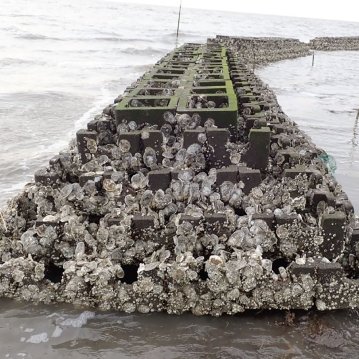
Coastal cities are replacing concrete seawalls with oyster reefs. The oysters are better at the job.
Seawalls start degrading the day they're installed. Waves chew them up, storms crack them, and the repairs never stop.
An oyster reef, on the other hand, doesn't break down. It actually grows. The oysters stack, reproduce, and fuse into living rock that gets stronger every year. A mature reef can cut incoming wave height by up to 83%, trap sediment, rebuild the shoreline behind it, and shelter fish, crabs, and shrimp while it does the work.
A hectare of reef provides up to $85,000 a year in shoreline protection. Concrete costs over a million dollars a hectare to build and only weakens.
Once again, working with nature instead of against it is the answer.
3 minutes into this Uber and the driver is already drifting lanes while fiddling with his phone.
We've departed our lane more in the last 1km than I did during my entire cross-country drive using Tesla FSD Supervised.
Let that sink in.
Good news 💚
Highland councillors have agreed to declare an area of shoreline on the Inner Moray Firth as a local nature reserve (LNR).
The almost 47 acres (19ha) at Ardersier Common provides habitat for birds such as tern, curlew and goldfinch and it is also home to rare species of flowers and butterflies.
An LNR is a protected area of land designated by a local authority because of its special natural interest or educational value.
The designation means Highland Council can begin developing a management plan for the area to facilitate improvements and support nature recovery.
Ardersier and Petty Community Council approached Highland Council last year about securing LNR status.
The area of grassland, scrub and woodland is owned by five different landowners, including Highland Council, Scottish Water and the Ministry of Defence.
In a report to councillors, Highland Council officials said the common was an "important rest area" for migratory birds and insects....
https://t.co/0grOMcOFwv
@20splentyforus Better to keep humans and vehicles apart, not sharing the same spaces.
Cars are a great invention, one of the greatest, getting people quickly from A to B. Let’s not go back to Horse speed.
Running a gas leaf blower for one hour pollutes as much as driving a car 1,100 miles.
That figure is from the California Air Resources Board, comparing one hour of a commercial gas leaf blower to driving a 2017 Toyota Camry from Los Angeles to Denver.
The reason is the two-stroke engine: it burns oil and fuel together and has no real emissions controls, so it throws out enormous amounts of smog-forming hydrocarbons and ultrafine particulates, the kind that lodge deep in human lungs. A 2011 Edmunds test found a two-stroke blower emitted nearly 300 times the hydrocarbons of a Ford F-150 pickup.
And that's just the air pollution aspect of it. The blower also strips the yard of everything a healthy ecosystem needs: it blasts away the leaf litter where moths, fireflies, and native bees overwinter, scatters the topsoil, and kills or displaces the insects living in it.
A rake does the same job with zero emissions, zero noise pollution, and none of the collateral damage. Or you leave the leaves where they fall, which is better for your local ecosystem anyway.
Since privatisation, water companies sold off 25 reservoirs without building a single major one.
Now they want bill payers to fund a few new projects. Too little, too late.
Privatised greed is putting us at risk during a climate emergency. To build resilience, we need public ownership.
Tesla self driving is the best product of any kind I’ve ever had the privilege of experiencing in my entire life by far. V14 is magic. Can’t believe it’s gonna keep getting better.
I don’t even care anymore dude.
It’s so safe that I don’t even care what it’s doing. Stopped for too long and pissed someone off? Took a dumb route? I barely care anymore dude. I’m not involved. It’s so consistently safe that I just don’t really care anymore. I know it’s gonna do better than me with safety and I’m gonna show up wherever I’m going without doing anything.
Ok, I’m calling it. Oil seed rape is an invasive species & we need some government action & planning to stop it taking over our natural spaces. On the River Roding in London seed has probably come along the river from Essex and established a self sustaining monoculture along an entire bank, stretching as far as the eye can see & outcompeting all native species.
If a group of rowdy teenagers had destroyed an area of precious native ecosystem this big by trampling on it or leaving litter, people on Twitter would be calling for arrests. But because it’s been destroyed by seed from environmentally damaging farming, no one seems to care.
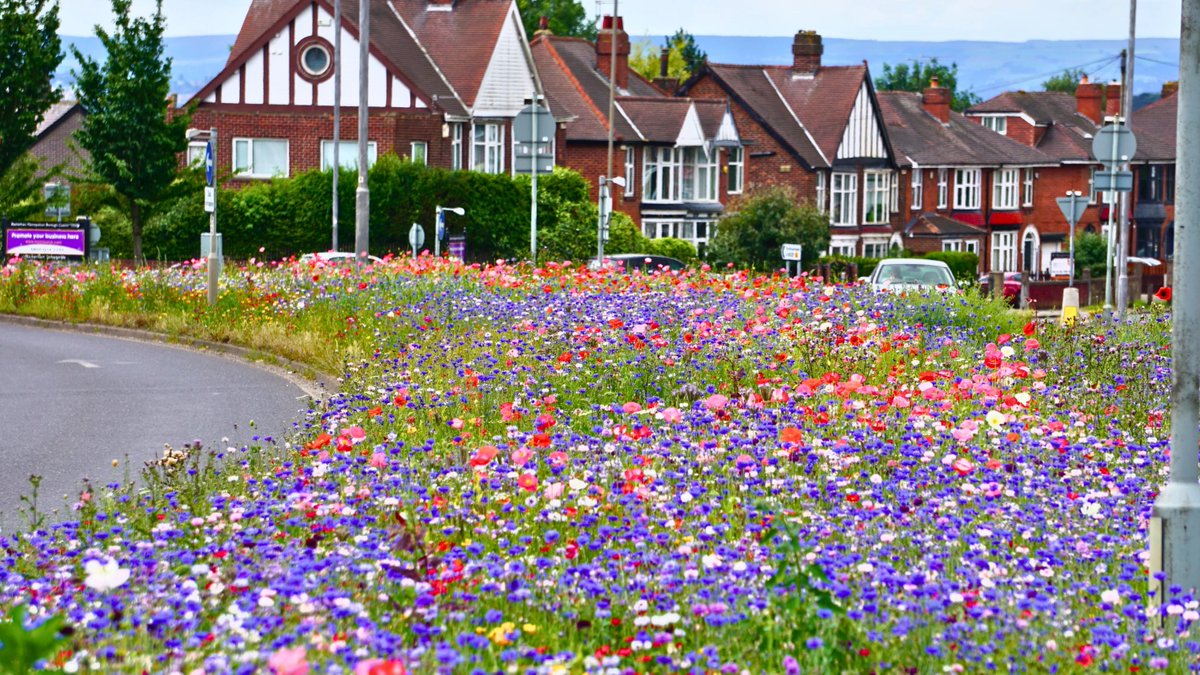
13 years ago, Rotherham, England turned 8 miles of mowed roadside grass into a "river of flowers." In 2021, they added even more miles.
The original scheme was commissioned by Rotherham Council in 2013, designed by Professor Nigel Dunnett at the University of Sheffield, and seeded with a 180-species wildflower mix along the central reservations of the town's main ring road. It replaced mowing that had been costing the council around £80,000 a year.
Since then: the wildflower verges have saved roughly £23,000 to £25,000 per two-year mowing cycle, increased pollinator abundance, and inspired similar programs in Nottinghamshire, Derbyshire, Birmingham, Newcastle, and Sheffield.
In 2021, Rotherham added 3.5 more miles across 12 new sites including Herringthorpe, Swinton, Harthill, and Maltby. They just keep expanding it.
The UK has lost 97% of its wildflower meadows in the last 100 years. Most of what was lost was paved, plowed, or mowed. The verges nobody was using anyway turned out to be one of the largest untapped habitats in the country.
An ecologist says it will take decades for a Herefordshire river to recover from damage by a local farmer.
John Price was jailed for illegally removing tonnes of gravel from the riverbed to build a road and horse yard at his home and tearing out 71 trees.
https://t.co/m1piOkW9V0