Unusual corpus callosum
"To be, to feel, to think, to imagine, to know." (The human circuit)
Bylines @techreview @reactionlife @jewishchron @thetimes &c.
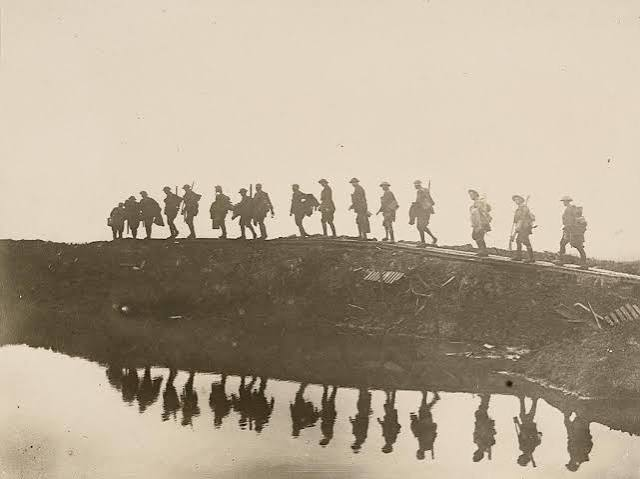
They shall grow not old, as we that are left grow old:
Age shall not weary them, nor the years condemn.
At the going down of the sun and in the morning
We will remember them.
#RemembranceSunday
(Photos: Frank Hurley)
“Winston had disliked her from the very first moment of seeing her. He knew the reason. It was because of the atmosphere of hockey−fields and cold baths and community hikes and general clean−mindedness which she managed to carry about with her. He disliked nearly all women, and especially the young and pretty ones. It was always the women, and above all the young ones, who were the most bigoted adherents of the Party, the swallowers of slogans, the amateur spies and nosers−out of unorthodoxy.”
George Orwell, Nineteen Eighty-Four (1949)
https://t.co/jnl0wUEPaX
@photonstorm@nederev I got to Multiball! I don't even play games but this one reminded me of talking to a guy who repaired them (the original one) in an old blacksmith's as a side gig er... half a century ago. Fun. Thanks!
Nayib Bukele: “There is no State that cannot defeat criminals. If a State does not defeat criminality, it is because the State is complicit.” @nayibbukele
Or they could ask @BjornLomborg to do it, but this time more honestly & less matronisingly:
[Google AI]
"When the Copenhagen Consensus questions and materials are given to children and young people to assess, the results show that their priority rankings are remarkably similar to those of expert Nobel laureate economists.
Björn Lomborg's Copenhagen Consensus Center frequently runs a Youth Forum in parallel with its official expert deliberations. While the expert panels rely strictly on rigorous economic cost-benefit analyses, the youth participants are allowed to look beyond pure economics to incorporate broader social values.
The comparative results reveal key takeaways about how children and youth prioritize global solutions:
Validation of Expert Priorities: Despite not being bound by strict economic math, the youth forums consistently validate the expert economists' findings by producing highly aligned rankings. Both groups routinely place high-leverage, low-cost interventions at the top.
High Agreement on Early Childhood Interventions: Both the youth and the experts heavily prioritize investments targeting young children and pregnant mothers—such as micronutrient supplements, basic health services, and early education. Both cohorts recognize that improving the lives of children yields a lifetime of compounded benefits.
Differing Approaches, Same Conclusions: While the experts focus heavily on quantifiable Benefit-Cost Ratios (BCRs) and annual discount rates, the youth reach similar conclusions by balancing rational arguments with an intuitive understanding of what will do the most long-term good for global prosperity.
Ultimately, Lomborg highlights these youth results to demonstrate that when young people are presented with hard facts and trade-offs rather than "feel-good" development rhetoric, they naturally gravitate toward highly rational, smart, and cost-effective solutions.
https://t.co/38PdygfCXF
I think the question is extremely interesting; I'm somewhat less convinced your answer goes far enough, as it's likely to be a very complex one, layered in many ways and directions. I can hear where @ec2man is coming from, too - particularly performative politicians, particularly yesterday. But there are still generations now and still to come of those for whom showing a connection to the military service of their forebears is of great worth and value in lots of ways (the funds raised and shabbily inadequate military funding for veterans and families including war widows notwithstanding).
Like the flags, these distinctive unifying symbols are below the salt for today's progressives - but Orwell had their number in that smoky and foggy and fusty world, still hanging in there in Larkin's time. I get hit by the strange facts that land or settle periodically, lying just beyond my historical reach. Realising every single old person when I was a child had gone through The Great War. Endured a world in which every family in England & Wales, on average, lost a man. Unimaginable the moment you start thinking of your own family, those you know. That the pebbledash I so loathed for so long was sold, door to door, as 'insulating' and 'strengthening' - by wounded veterans. It doesn't make it beautiful but it makes it moving and something one must accept more gracefully, I think.
I don't think we can just start again - tempting though it is. We've gone from arguments about white 'peace' poppies in my youth, which had least had a case when you look at the bravery of so many medical orderlies who were 'conchies' (like Sir Stanley Spencer), to the revolting Pallywoodistic provocation of that one this year to, as you note, Ben, an eerily growing absence of a presence that was almost ubiquitous throughout my life. When someone not wearing one on TV accidentally (with buckets of the things off-stage) could and would become a national moment of scandal & apology. Nowadays so many, appearing on TV mass events (e.g. the post Traitors finale show) seem to give much of AF.
So it's going to become a marker. A more elegant kind of keffiyeh for the other side for a couple of weeks perhaps. Grimly fascinating, but depressing, too.
Oy vey.
Image: Stanley Spencer, Resurrection of the Soldiers, Sandham Memorial Chapel, Burghclere.
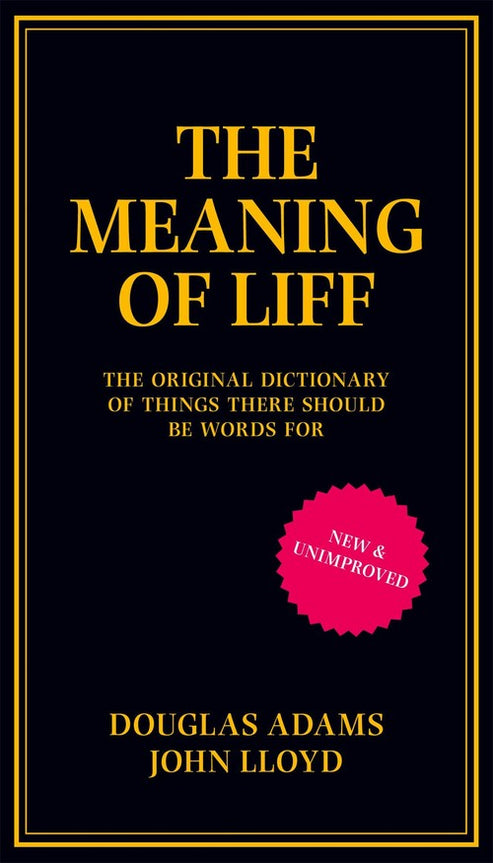
Start with taking a gander at The Meaning of Liff, and then pick your place...!
Examples...
Woking (ptcpl. vb.) – Standing in the kitchen and completely forgetting why you walked in there.
Kettering (n.) – The patterned marks left on your legs or thighs after sitting on a wickerwork chair.
Ockle (n.) – An electrical switch that appears to be off in both positions.
Berriwillock (n.) – An unknown workmate signing your leaving card with a weirdly intimate message.
Dalpibble (n.) – Searching frantically and endlessly for your car keys.
The flowers of Remembrance. Hour after hour an unceasing pilgrimage of bereaved mothers, wives, daughters, and sweethearts lay floral offerings on the Cenotaph. Armistice Day, London, 1920.