I finally got an open model to do structural biology by itself 🔥
GLM-5.2 drives the Mol* viewer, judges its own render through Qwen3-VL, and refines until the drug pops in its pocket. Then I spun it in 3D.
All open, on @huggingface. What should it build next?
Excited to share a bit about what I've been up to the past few months! As a molecular biologist I always struggled to stay in the flow state while designing experiments and analyzing data. Sequence visualization, annotation, wrangling pymol settings, variant mapping, WAY too much tortuous cloning . These are a lot of small pain points that accumulate into friction and context switching. What I wanted was a tool that would serve as a flow state manager. So we built DNAForge, a desktop molecular biology workbench to make the flow state more accessible!🧵
5 steps turn every paper you read into new research ideas, on autopilot.
The key: a system for organising claims, questions, and ideas.
Let's break it down:
🔴 The problem: you highlight a claim in Zotero. It felt important.
Two weeks later, you can't remember why.
🟢 The fix: Stop collecting highlights. Build a network of claims, questions, and ideas that links back to every source.
1. Read the paper. Add it to Zotero first, so annotations and metadata export cleanly to Obsidian.
2. Import into Obsidian (ZotLit plugin or AI). Every note gets a type: Topic, Question, or Idea.
3. For each highlight, write the claim in your own words. Add it to a topic note and deep-link back to the PDF. Over time you stop creating new topics, you already have most of them.
4. A question or idea? Split it into its own note, linked back to the source and topic that sparked it.
5. Keep one "List of open questions" note. Every unanswered question lives there, with its sources (Obsidian Bases can automate this).
Out of ideas? Run an AI search on an open question, or explore an idea note.
After a few months, you'll have 100+ questions and ideas ready to go.
One of the best things you can do with Fable right now:
Build an Obsidian second-brain database that self-evolves over time with loops.
Here's how to set it up in <2 minutes:
Step 1. Download Obsidian
Head to obsidian . MD and download the desktop app.
Create a new Obsidian vault (this is where all notes live locally).
Start dumping everything in here:
- Personal goals
- Meeting notes
- Fitness goals
The more you put in, the better.
Step 2. Connect to Fable
Send this prompt to Claude Code
"I want you to connect to my Obsidian database so I can start sending notes via Claude Code, and so you evolve over time."
Step 3. Set the /loop
Next, set you /loop
Example:
"/loop I want to run a loop every single week where you scan my entire notes database and use it to suggest new workflows I build, analyze patterns I may be missing, and just conduct a deep dive analysis on my life based on my Obsidian secondbrain."
Super simple yet high-ROI way to use Obsidian.
SPLICECRAFT v1.0 IS LIVE!!!!!!!!!!!!
Open your terminal and type in "pipx install splicecraft" if you want to try it out, then spam "splicecraft update" often as I push updates frequently. A labor of love for the community I adore. Enjoy! 💚
🎉🎉🎉 Excited to introduce our recent project FigMirror - a very interesting and useful tool with a simple workflow for making any paper-style figures.
- See a beautiful figure in a paper
- Screenshot it
- Add your own data
- Get a new Matplotlib figure with the same visual style
FigMirror learns the quiet details that make paper figures look polished:
- typography
- spacing
- line weight
- color restraint
- layout rhythm
The key mechanism is Grounded Measurement.
Computer-use AI can point to coordinates inside the reference figure. Code then inspects the pixels, colors, spacing, and layout around those points. This gives the system concrete visual evidence to iterate on.
Our FigMirror draws a candidate figure, compares it with the reference, keeps what works, and improves what still feels off.
Outputs:
- editable Matplotlib code
- camera-ready PDF
It works as both a local Web UI and a Codex / Claude Code skill.
Open source:
https://t.co/zCVM0aAyxp
Try it before your next deadline!
Many experiments in biology happen one protein at a time, which means synthesizing DNA one gene at a time. This is fine for tens of genes. For thousands, the cost is unsustainable.
Introducing uSort-M: a method to isolate and sequence-verify thousands of genes at low cost
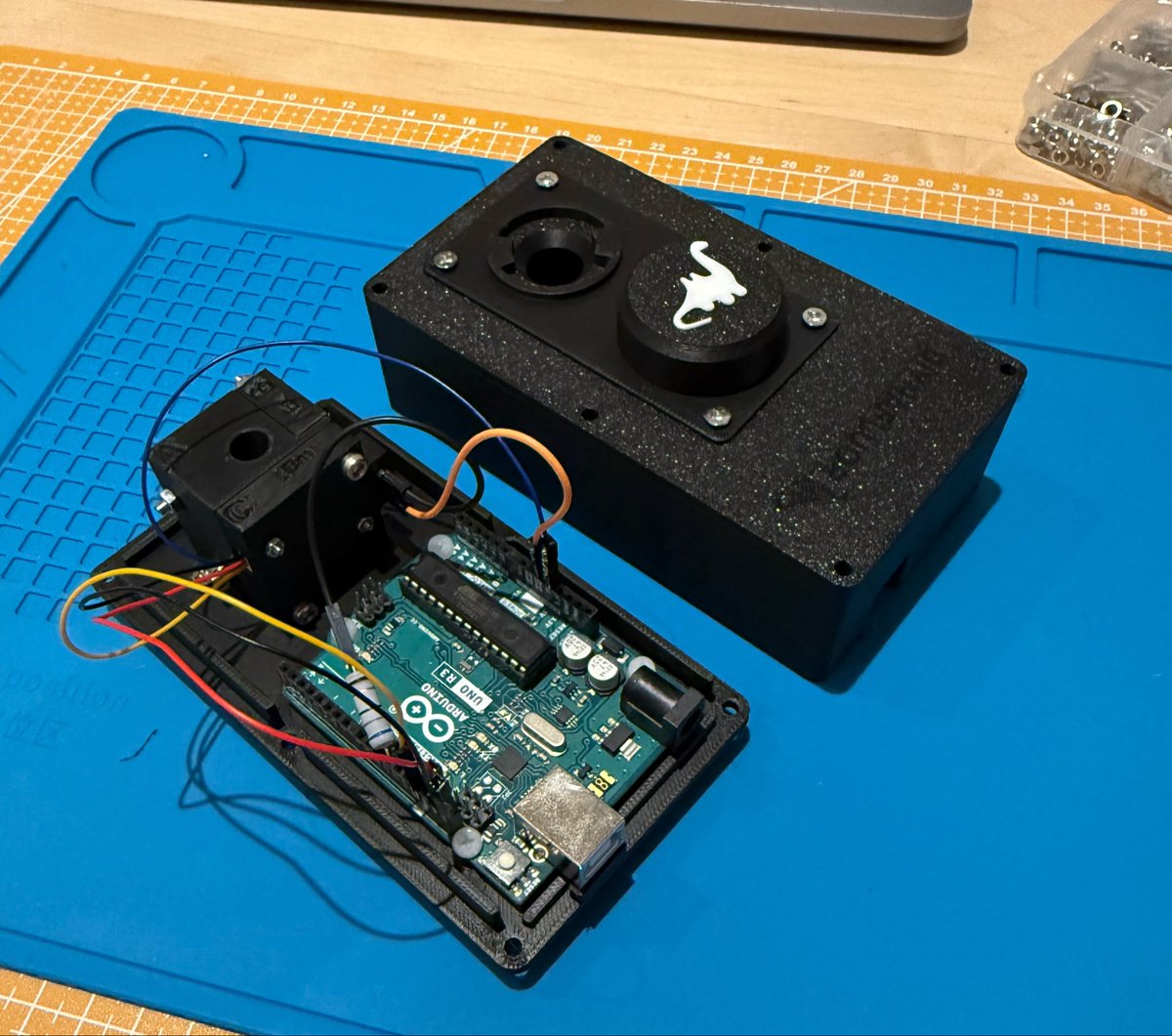
A Qubit costs ~$5,260.
I built one for $39.
Not a toy version. A fully working DNA fluorometer: the device you use to measure how much DNA there is in a sample.
This mattered because my first sequencing run underperformed partly because I didn’t know exactly how much DNA I was loading.
For nanopore sequencing, input DNA quality matters a lot. Too little and the pores are underutilised. Too much and flow cell longevity is compromised.
The underlying device is not complicated.
A DNA fluorometer works by adding a dye that binds to DNA, shining light at the sample, and measuring the fluorescence.
The BOM is basically:
> $23 optics + sensor
> $8 Arduino/electronics
> $6 screws/nuts
> $2 enclosure plastic
Biotech especially is full of equipment with insane idiot indexes. With AI you don't really have an excuse not to 1) work out what that the index for a piece of equipment is and 2) build your own version if it's irrationally high.
THINK BEFORE YOU BUY.
https://t.co/N4e3ZkAy3J
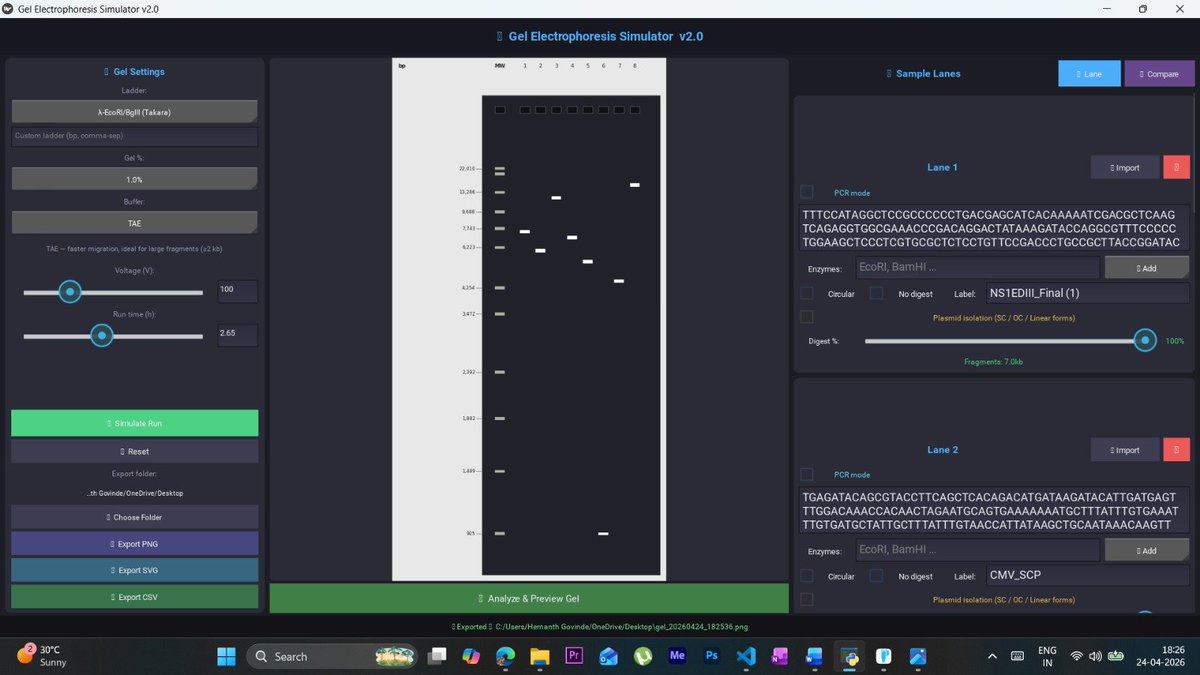
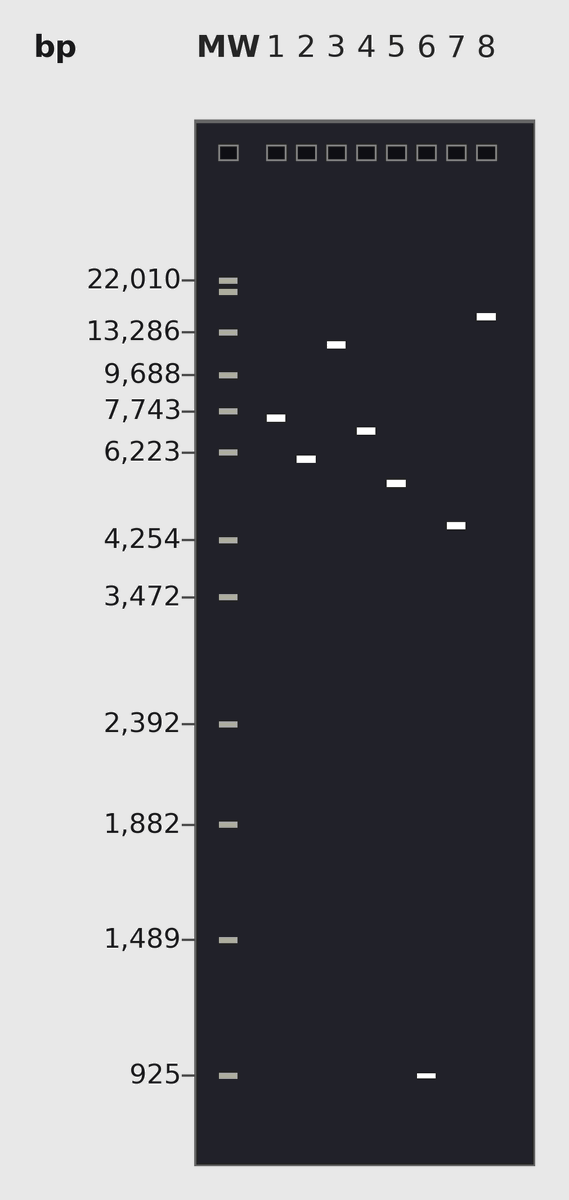
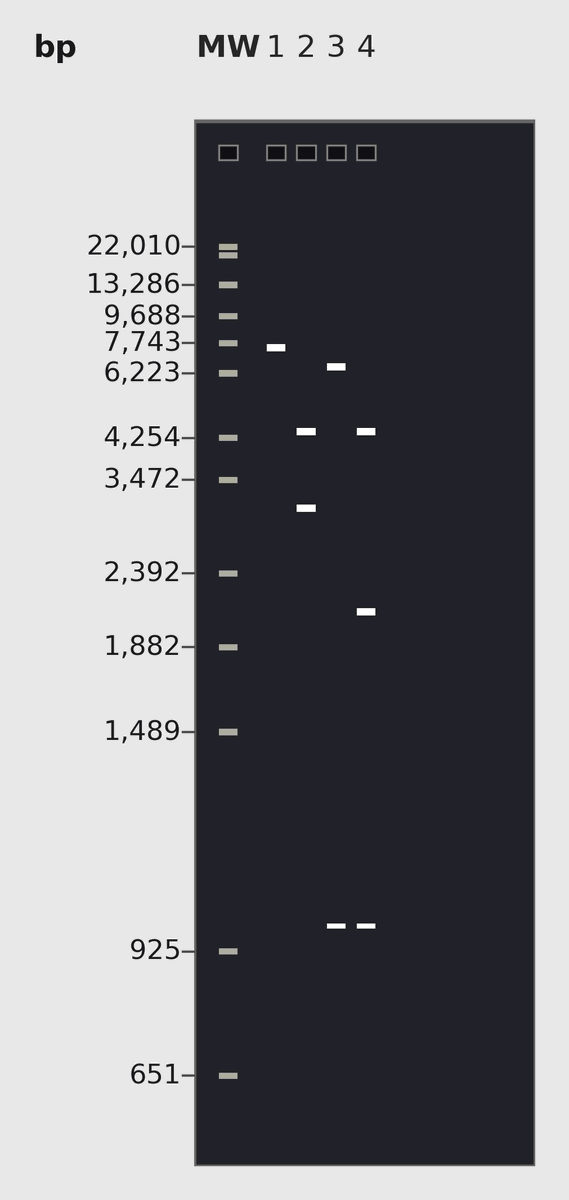
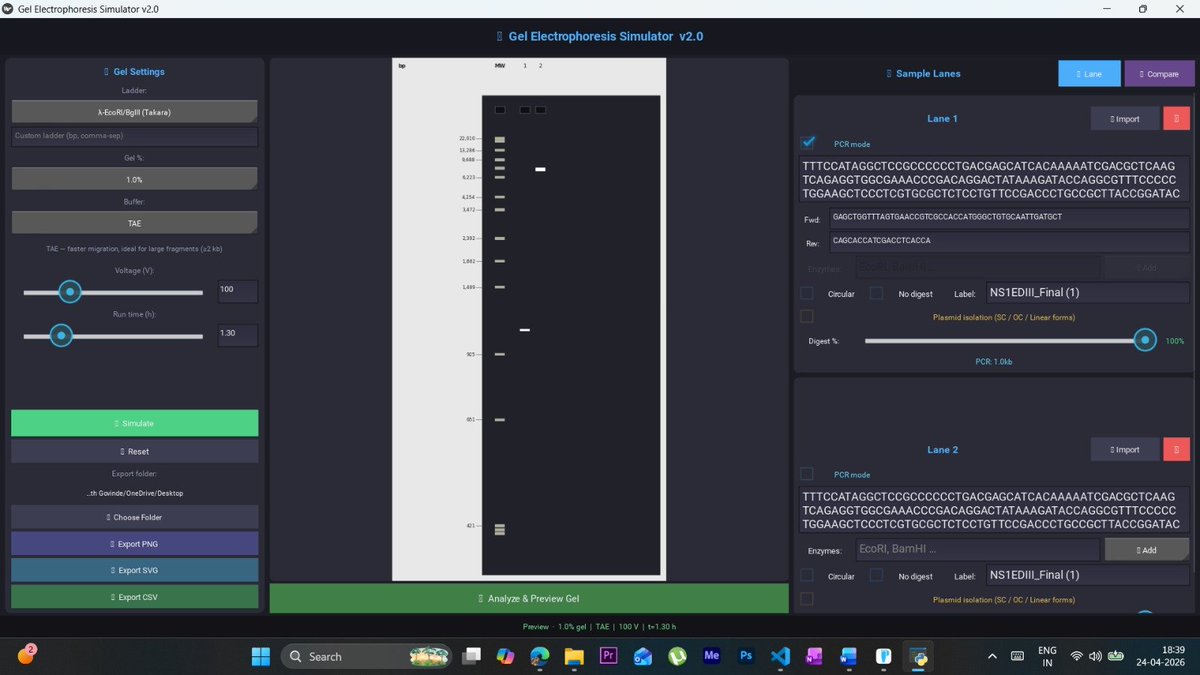
Vibe coded (Claude) an electrophoresis simulator.
Run the code and add more features if possible.
-Export PNG/SVG
-PCR mode - input both primers to simulate amplicon only
-Compare with multiple enzyme cuts (Use compare button) (1/n)
Benchmarking of shotgun sequencing depth reveals the potential and limitations of shallow metagenomics and strain-level analysis | Nature Microbiology https://t.co/yy83nQhT1E
I never expected this protocol to become this viral... I just did some old tricks adaptations. Take a look at the repo, share it, test it, improve it, if you need to. More to come: https://t.co/qlq6oai7bv
Guys look Claude helped me - a random guy in his basement - build a wetlab and do vibe genomics!
I sequenced my whole genome despite zero lab experience, without my DNA leaving home!
I put together my notes and a step by step guide here:
https://t.co/T5x6PKkwjW
It was a lot easier than I was expecting!
Ultimately I hit ~16x coverage and compared my results against my 600k raw 23andme SNPs, and it held up!
I sequenced my genome at home, on my kitchen table.
I wrote up exactly how I did it - the equipment, protocol, theory, and cost:
https://t.co/Nkjqaho2zm
Here is how to run the new Qwen3.6-35B-A3B, bookmark this for later!
> At full context on a 4090 - IQ4_XS gguf with llama cpp
> At full context on a Spark - FP8 with a tweaked vLLM
I'm adding the docker compose of both in the thread below
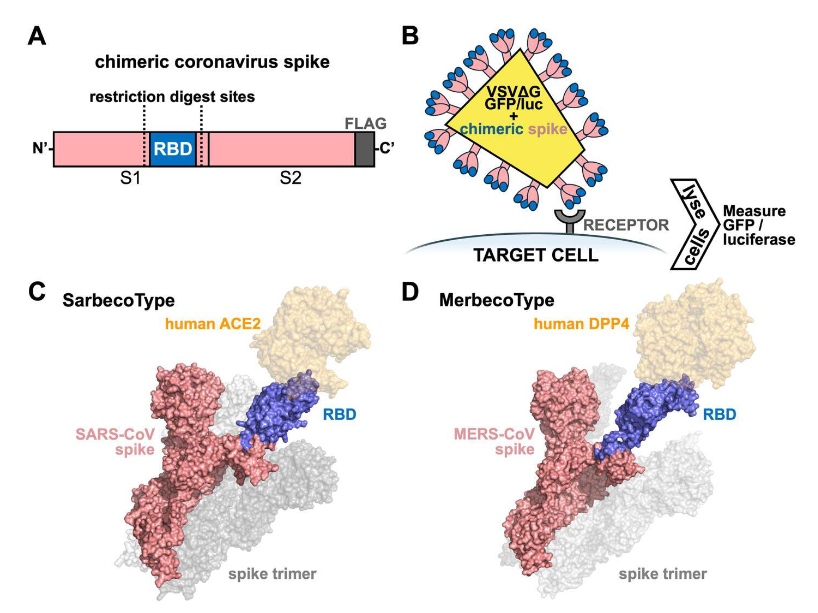
Over the past 2 decades, viral discovery has uncovered thousands of novel coronaviruses in wildlife. However, lab limitations have stymied research on experimentally assessing their zoonotic potential. How can "functional viromics" help? #JVirology: https://t.co/yt2ApQzHcw
Why do cloning tools still suck? This problem seems like a low-hanging fruit for AI to solve.
Today, if a scientist wants to make a new plasmid or DNA sequence, they often go into their freezer, figure out which DNA sequences they have, upload those DNA sequences to Benchling (or another platform), and then must figure out how to "convert" those sequences into what they want. Should I do Golden Gate or Gibson Assembly? What annealing temperature should I use for my primers? And so on.
There are already tools that help with each of these steps, but has anybody "automated" this decision-making? If so, I'm not familiar with them. (A tool called J5 is probably the closest thing, but it won't recommend the optimal method given a scientist's existing sequences and primers.) And if the scientist makes even one error in this multi-step design process — like forgetting about an internal restriction site in a gene — they basically waste an entire week of work.
(You might object to this and say, “But DNA synthesis solves this problem; just synthesize the full plasmid directly!” But people have been saying that for decades at this point, and DNA synthesis costs have not fallen in several years. Cloning DNA remains essential.)
What we need is a fully automated, end-to-end cloning design tool that selects the best method based on a library of existing sequences and primers; a tool that recommends the optimal approach based on cost, speed, and so on. “Design tools” for cloning may not seem like a sexy thing to work on, but whoever solves it will marginally improve the lives of many scientists.
With this in mind, I’ve given $1,500 in microgrants, courtesy of Astera Institute, to two people — Jai Padmakumar and Xavier Bower — who have been thinking about this problem. Bower has already built an open-source prototype, called IceCreamClone. (Visit icecreamclone[dot]xavbio[dot]com to see a demo.)
Here's how a tool like this should work:
First, you specify the plasmid you want to build. Then, you upload your current plasmid library, a collection of DNA sequences already in your inventory, and existing primers. The tool takes these data and outputs multiple cloning protocols based on different metrics, such as lowest cost, fastest speed, or the protocol most likely to be successful. The tool also runs a series of checks on all the sequences to make sure they don’t have internal restriction sites, for example, or weird secondary structures.
It would be particularly cool if scientists using this tool could opt-in to sharing their data. The tool could then prompt them afterwards: How did the cloning go? Can you upload the results? Over time, this feedback data could be used to train predictive models that make cloning far more likely to be successful.
Of course, there are issues with this idea. For one, it requires that people upload their entire catalog of existing sequences + primers, which is quite tedious for some laboratories; especially those with decades of cloning experience. Ideally, these tools would directly integrate with Benchling and Addgene.
Anyway, I continue to think this is a "low-hanging" problem worth working on. Whoever makes an easy-to-use, end-to-end cloning design tool with really good predictive accuracy could presumably make a small business out of it. And, in doing so, you'd make many people happy!










![NikoMcCarty's tweet photo. Why do cloning tools still suck? This problem seems like a low-hanging fruit for AI to solve.
Today, if a scientist wants to make a new plasmid or DNA sequence, they often go into their freezer, figure out which DNA sequences they have, upload those DNA sequences to Benchling (or another platform), and then must figure out how to "convert" those sequences into what they want. Should I do Golden Gate or Gibson Assembly? What annealing temperature should I use for my primers? And so on.
There are already tools that help with each of these steps, but has anybody "automated" this decision-making? If so, I'm not familiar with them. (A tool called J5 is probably the closest thing, but it won't recommend the optimal method given a scientist's existing sequences and primers.) And if the scientist makes even one error in this multi-step design process — like forgetting about an internal restriction site in a gene — they basically waste an entire week of work.
(You might object to this and say, “But DNA synthesis solves this problem; just synthesize the full plasmid directly!” But people have been saying that for decades at this point, and DNA synthesis costs have not fallen in several years. Cloning DNA remains essential.)
What we need is a fully automated, end-to-end cloning design tool that selects the best method based on a library of existing sequences and primers; a tool that recommends the optimal approach based on cost, speed, and so on. “Design tools” for cloning may not seem like a sexy thing to work on, but whoever solves it will marginally improve the lives of many scientists.
With this in mind, I’ve given $1,500 in microgrants, courtesy of Astera Institute, to two people — Jai Padmakumar and Xavier Bower — who have been thinking about this problem. Bower has already built an open-source prototype, called IceCreamClone. (Visit icecreamclone[dot]xavbio[dot]com to see a demo.)
Here's how a tool like this should work:
First, you specify the plasmid you want to build. Then, you upload your current plasmid library, a collection of DNA sequences already in your inventory, and existing primers. The tool takes these data and outputs multiple cloning protocols based on different metrics, such as lowest cost, fastest speed, or the protocol most likely to be successful. The tool also runs a series of checks on all the sequences to make sure they don’t have internal restriction sites, for example, or weird secondary structures.
It would be particularly cool if scientists using this tool could opt-in to sharing their data. The tool could then prompt them afterwards: How did the cloning go? Can you upload the results? Over time, this feedback data could be used to train predictive models that make cloning far more likely to be successful.
Of course, there are issues with this idea. For one, it requires that people upload their entire catalog of existing sequences + primers, which is quite tedious for some laboratories; especially those with decades of cloning experience. Ideally, these tools would directly integrate with Benchling and Addgene.
Anyway, I continue to think this is a "low-hanging" problem worth working on. Whoever makes an easy-to-use, end-to-end cloning design tool with really good predictive accuracy could presumably make a small business out of it. And, in doing so, you'd make many people happy!](https://pbs.twimg.com/media/HF9WynObYAAc376.png)


