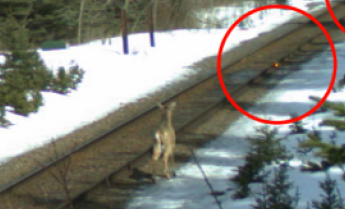
New paper today! The long-awaited test of our warning system. Large animals fled from trains 6.5 s (62%!) earlier when warned than otherwise. This extra time could reduce wildlife deaths from train collisions.
Published open access here: https://t.co/DkpSWmTsFd
**Please share/Apply**
We're hiring a postdoc to work on conservation social science and the ethics of caribou recovery, with partners at @Splatsinfn Cold Lake FN, Cdn Forest Service, UofAb, UofGuelph, and @BiodivPathways.
More funding available - pls ask for details!
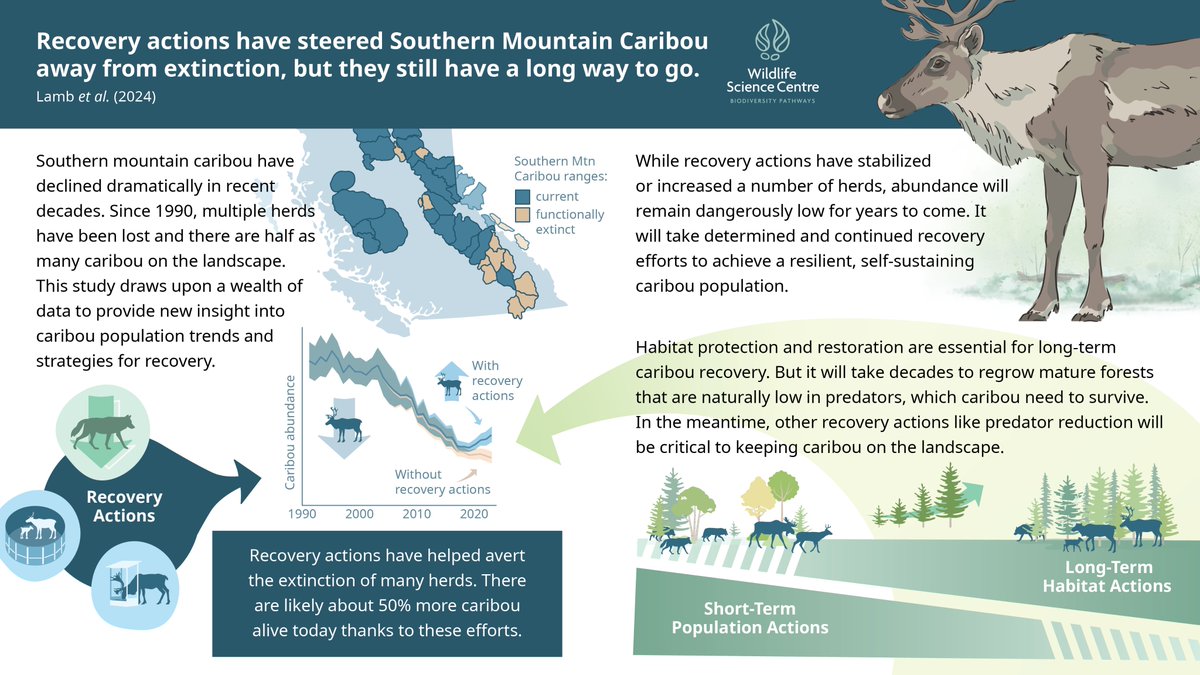
NEW PAPER: We followed the fate of 40 caribou herds —the southern mountain caribou population—to assess their trajectory and response to recovery actions. What we found was surprising and bitter sweet: dramatic declines but recent recovery due to controversial measures. 🧵 (1/n)
@sarameghanbeery Trying to spread word about a stipended summer opportunity for undergrads at the San Diego Zoo Conservation Technology Lab. Just made this account so have little reach. Maybe your followers include folks who’d be interested? And/or you know some ugrads who’d be?
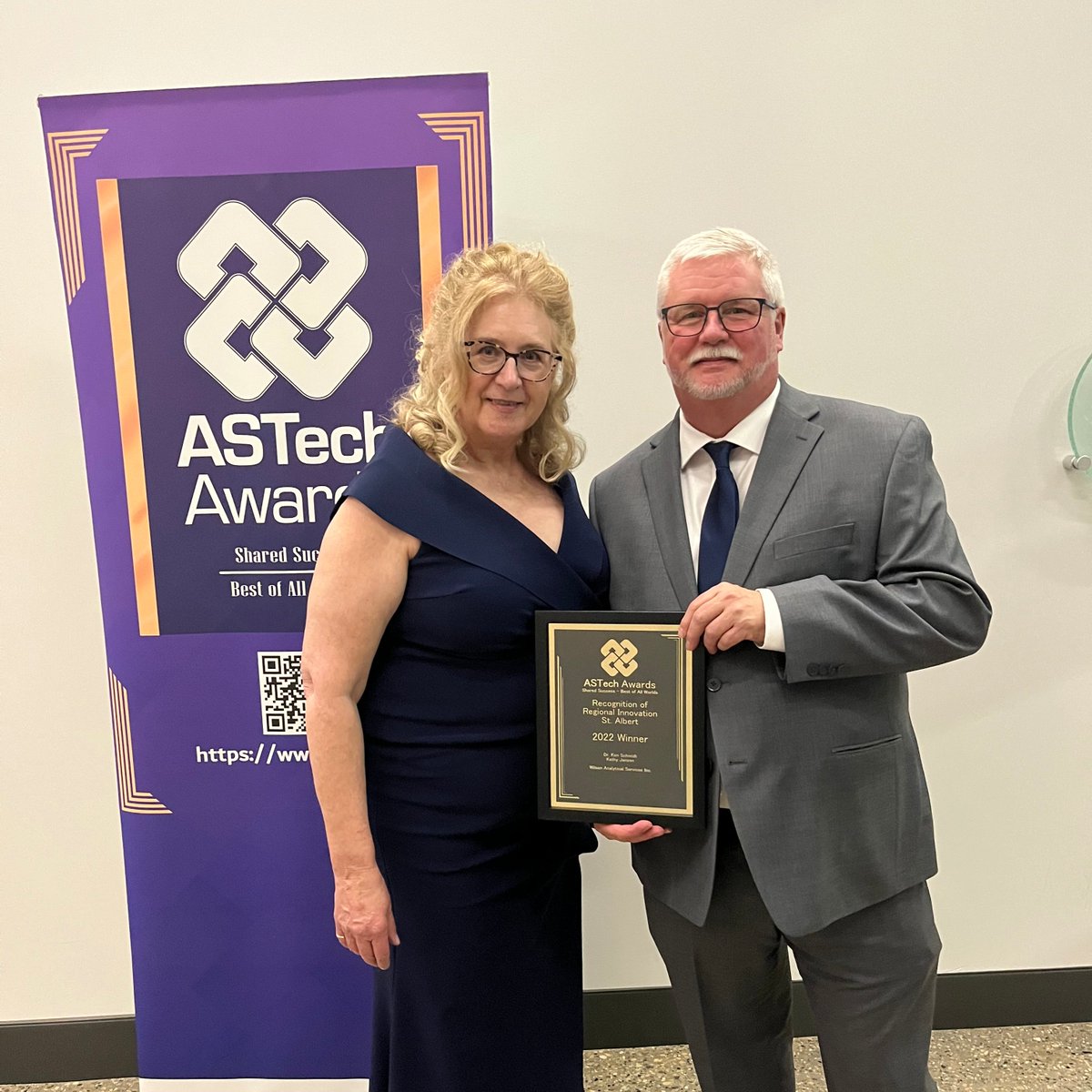
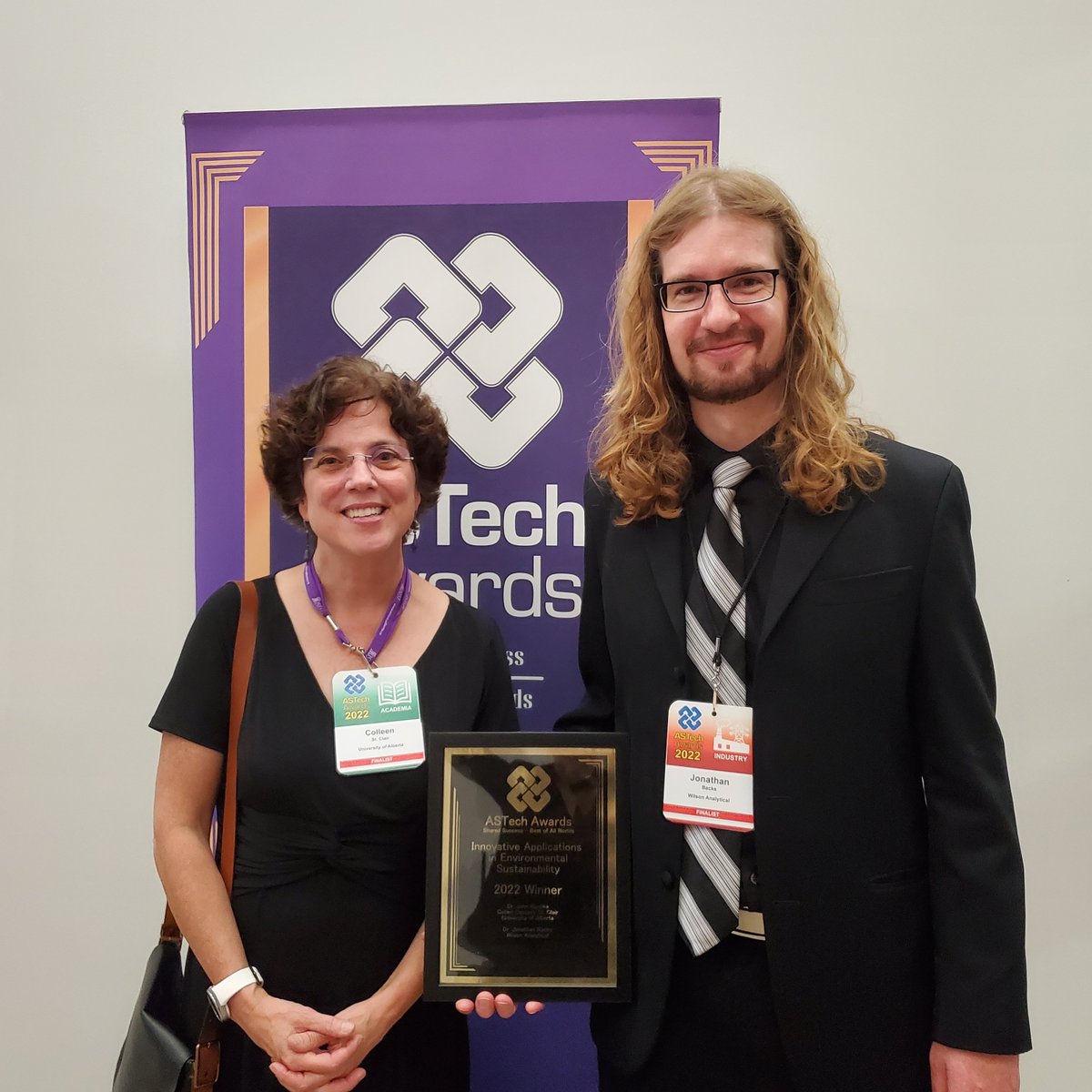
I was honoured this past Friday to receive a 2022 ASTech Award for Outstanding Achievement in Environmental Sustainability with my teammates Dr. John Nychka and Dr. Colleen St. Clair. This was for our work on wildlife and railways. #astech2022
Now it's time to bring in #MachineLearning. Our software engineers @bluevalhalla and Mary Nguyen then begin to work with the data. First, by breaking the vids down to frames and running them through our bear face detector (see Clapham et al. 2020). 7/n https://t.co/b0eDSMJphb
Maybe you’ve wondered what a caribou “maternity pen” is? Well, this is yet another one of my zero narrow, niche expertise. So, let me share it with you! 🧵
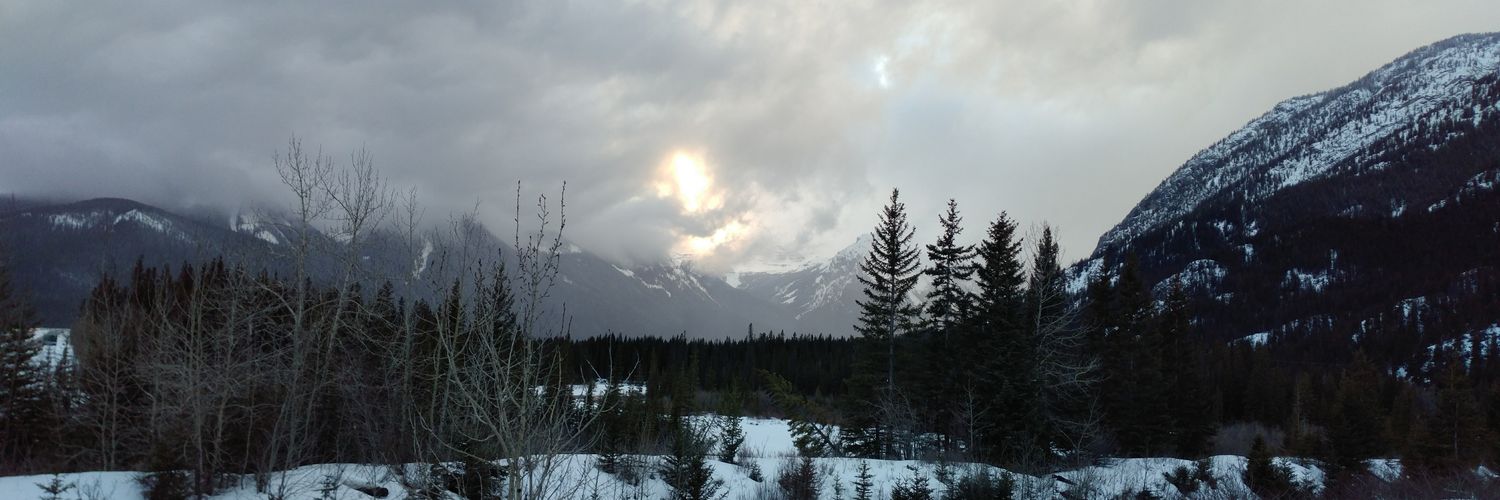
Train collisions with wildlife often happen in areas where animals can't hear the train approach as well. @JonathanBacks helping us understand the mechanisms of road/train kills.
Another awesome piece of #transportationecology from @JonathanBacks. Thanks JB! This is honestly one of the strangest and no one believes me, but trains can truly sneak up on you if the situation is right. It's crazy and has happened to me on multiple occasions at work.
New Paper! Low audibility of trains may contribute to increased collisions with wildlife. Published open-access here: https://t.co/qfMXtJFmwK
This is the third and final paper from my dissertation. At 14k words, 8 figures, and 6 tables, this work is a journey. [cont.]
This paper is the first to quantify a relationship between vehicle audibility and wildlife collisions in a terrestrial transportation system. I hope others will be inspired to study vehicle audibility as a factor in wildlife collisions. [done]










![JonathanBacks's tweet photo. New Paper! Low audibility of trains may contribute to increased collisions with wildlife. Published open-access here: https://t.co/qfMXtJFmwK
This is the third and final paper from my dissertation. At 14k words, 8 figures, and 6 tables, this work is a journey. [cont.] https://t.co/DQoNeMV0Gj](https://pbs.twimg.com/media/FMy2AcTVUAAdWxK.jpg)
![JonathanBacks's tweet photo. This paper is the first to quantify a relationship between vehicle audibility and wildlife collisions in a terrestrial transportation system. I hope others will be inspired to study vehicle audibility as a factor in wildlife collisions. [done] https://t.co/sq3l3fQdb1](https://pbs.twimg.com/media/FMy33NpVcAAlAWW.jpg)


