Just 250 years ago, America didn’t exist. Let that sink in.
Within three generations of people, this country has accomplished the impossible
> first country to send human to the moon
> invented the internet and core infrastructure behind it (ARPANET, TCP/IP)
> invented airplanes
> invented the telephone
> invented electricity distribution
> invented reusable rockets
> invented the polio vaccine and mRNA technology
> invented the GPS
> built the deepest capital markets in history
> won 34% of all nobel prize awards, more than the next two countries combined
> annually spend a third of the world’s entire R&D budget
> led the Genome project that sequenced human DNA
> hold just 4% of the population but contribute 25% to the world’s GDP
> hold the oldest written national constitution that still remains in force
The birth of America was not just a win for Americans. It was a win for the entire world.
God bless America. Greatest country on the planet.
Today in 1863, a 34-year-old college professor from Maine named Joshua Lawrence Chamberlain helps fend off repeated Confederate attacks against the left flank of the Union line at Gettysburg. The fight for Little Round Top will become one of the battle's most celebrated moments.
[Happy Bayonets!!! Day to all who celebrate.]
On this day in 1863, lead elements of the Union and Confederate armies began descending on this little town in Pennsylvania.
Setting conditions for the largest battle ever fought in the western hemisphere.
I never met Gordon Wood, but I have a story about him.
In one of my grad school seminars, we read Wood’s Creation of the American Republic. The sheer erudition and evidentiary depth of the book bowled me over.
Back then, before kids and before life accelerated to warp speed, I used to call my mother every Sunday to catch up. Lots of times, we ended up talking about what I was reading that week in my grad seminars or for leisure. Mom had an omnivorous mind, and she was always looking for something else to read. She was a true intellectual—curious about almost everything, always eager to integrate new arguments or ideas into her existing schemas of how the world worked or to have those schemas challenged and changed.
When we talked that particular Sunday, I think I tried to describe to her part of Wood’s argument about the relationship between the state constitutions during the Articles of Confederation era and the federal Constitution. Maybe I was tired, maybe I didn’t completely understand her questions, but the end result of the conversation was that Mom had questions about Wood’s argument that I didn’t answer satisfactorily. I told her that she should probably just read the book, and we said goodbye.
She did eventually read the book, but the next Sunday, Mom started our conversation by saying, “Well, I had a lovely conversation with Gordon Wood this week.” For a split second, I thought she was joking, but then I remembered who I was dealing with. I started to sweat. “How?” I asked. A whole variety of unlikely scenarios in which the foremost historian of the American Revolution and my mother, who lived in Wichita, Kansas, might have met ran through my mind. “Oh, I just looked up his office phone number on Brown’s website and called, and he picked up!” Mom said. I decided I would have to find another profession.
As it ended up, Gordon Wood spent about an hour on the phone with my mother answering her questions about the Constitution. Ever since, I’ve had a soft spot for the man when I imagine him picking up the phone in Providence and finding Becky Elder from Wichita on the other end of the line. His generosity in that moment spoke very well of him.
Rest in peace, professor.
On the night of June 5, 1944, Eisenhower stood on a tarmac in England and watched 13,000 paratroopers board their planes.
He already knew what Air Marshal Leigh-Mallory had told him in private: up to half of them might not survive the night. 6,500 men. Dead before a single soldier touched the beach. Eisenhower had approved the mission anyway, called the decision "soul-wracking," and said nothing to the men.
Instead he drove out and visited them.
He chatted. Laughed. Asked where they were from. Shook hands. Cracked jokes. Not one of them knew their general had just signed what might be their death warrant.
When the last plane disappeared into the dark sky, his driver Kay Summersby looked over at him.
There were tears running down his face.
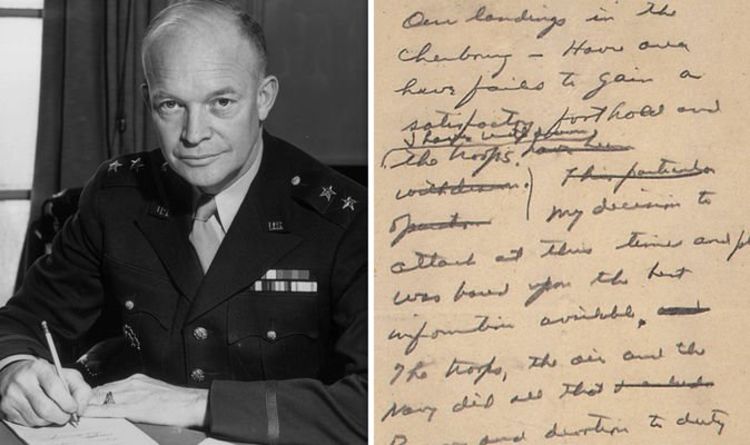
He drove back to Telegraph Cottage in silence. Then he sat down, picked up a pencil, and wrote a note he prayed no one would ever read.
"Our landings in the Cherbourg-Havre area have failed to gain a satisfactory foothold and I have withdrawn the troops. My decision to attack at this time and place was based upon the best information available. The troops, the air and the Navy did all that bravery and devotion to duty could do. If any blame or fault attaches to the attempt it is mine alone."
Look at what he edited.
He had first written "This particular operation." He crossed it out and replaced it with "My decision to attack." Then he pressed the pencil down hard and drew a long, firm line under the words "mine alone."
He misdated it July 5 instead of June 5.
He was so consumed with dread he had forgotten what month it was.
He folded the note and put it in his wallet. He carried it there as 156,000 men stormed the beaches of Normandy. When word came back that the beachhead had held, he took it out, crumpled it, and threw it in the trash.
An aide quietly pulled it out and saved it.
That note is now behind glass at the Eisenhower Presidential Library in Abilene, Kansas. You can still see where the pencil pressed hardest.
Right under the words "mine alone."
82 years ago tonight.
Today, the remains of a fallen U.S. Navy sailor were flown into Little Rock's Clinton National Airport, greeted with a reverent hero's welcome to the state he left more than 80 years ago as a teenager.
Fireman 3rd Class Royle Bradford Luker was just 17 years old when he was killed during the attack on Pearl Harbor on December 7, 1941. He was one of the 106 crewmen on the USS West Virginia who were killed in the attack. For decades, he was listed as killed in action, but his remains were deemed non-recoverable.
Through recent advancements in DNA technology and the work of the Defense POW/MIA Accounting Agency, F3C Luker was identified.
In the years since the "date that will live in infamy," F3C Luker was awarded numerous honors for his valor and sacrifice, including the Purple Heart.
A procession by Arkansas State Police, Little Rock Police Department, and other law enforcement agencies accompanied F3C Luker today on the final leg of his trip from Little Rock to Dardanelle.
Graveside services with full military honors will be held at 2:00 p.m. on Saturday, May 30, 2026, at New Bethel Cemetery near Plainview in Yell County.
His return home is a solemn reminder that America does not forget those who gave their lives in service to our nation.
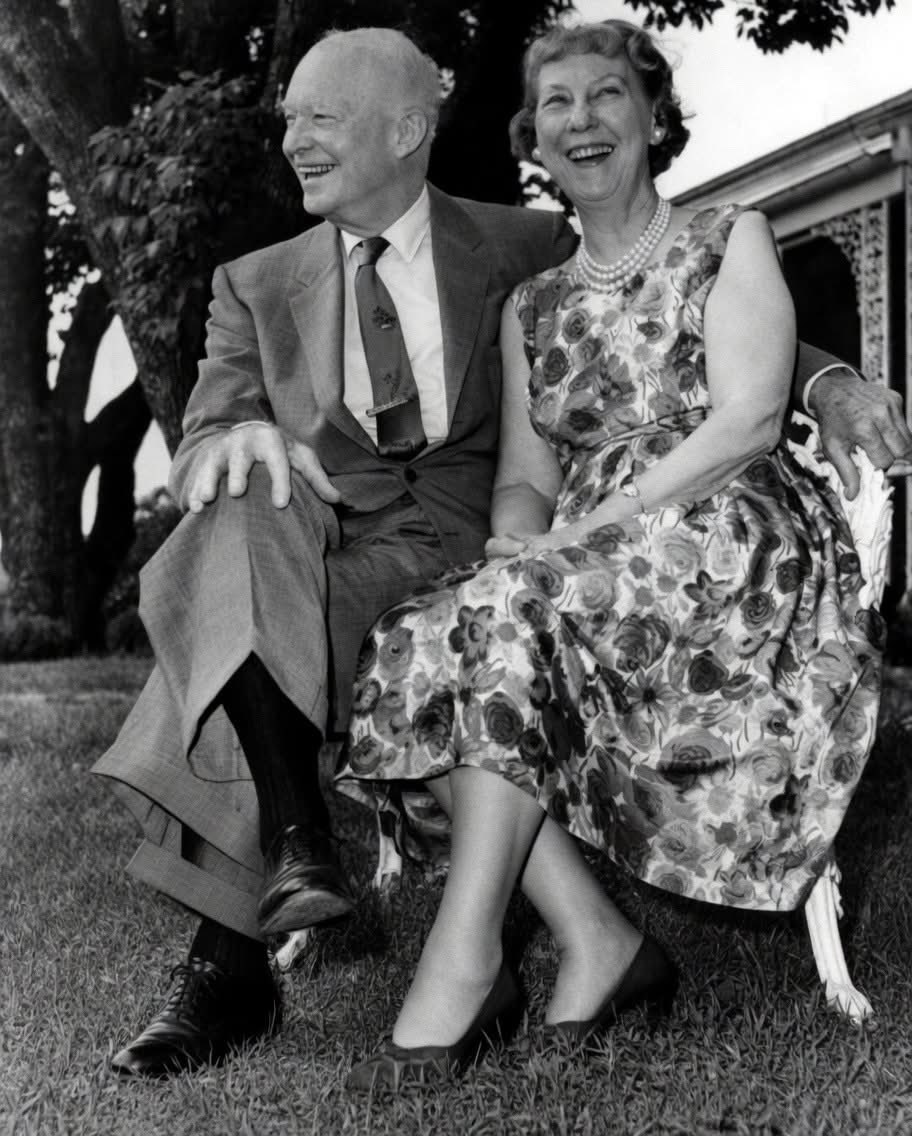
Before marrying Dwight Eisenhower in 1916, Mamie Doud’s wealthy father asked her one question:
“Do you understand what you’re choosing?”
She was 19.
Raised with servants, private schools, and every comfort money could buy.
Dwight was a broke second lieutenant with a tiny army salary and no financial future to promise her.
Her father made the rules clear:
No family money.
No safety net.
No rescue if life became difficult.
Mamie understood perfectly.
And she married him anyway.
Over the next 52 years, they endured constant military moves, years apart during WWII, and the heartbreaking death of their first son.
Mamie unpacked their home at least 27 different times across 33 houses.
She transformed cramped military quarters into places people loved gathering in “Club Eisenhower,” friends called it.
The young lieutenant she chose eventually became Supreme Allied Commander in Europe and later the 34th President of the United States.
But Mamie never cared much about status.
She once said simply:
“Ike was my career.”
That’s what makes their story beautiful.
She didn’t choose comfort.
She chose partnership.
And then spent 52 years choosing it again every single day.
This is Eagles OL Tyler Steen at the Tomb of the Unknown Soldier.
His grandfather, Sgt. Rodney M. Davis, jumped on a grenade in Vietnam to save five fellow Marines.
Davis was awarded the Medal of Honor.
This Memorial Day, his story deserves to be told. 🇺🇸
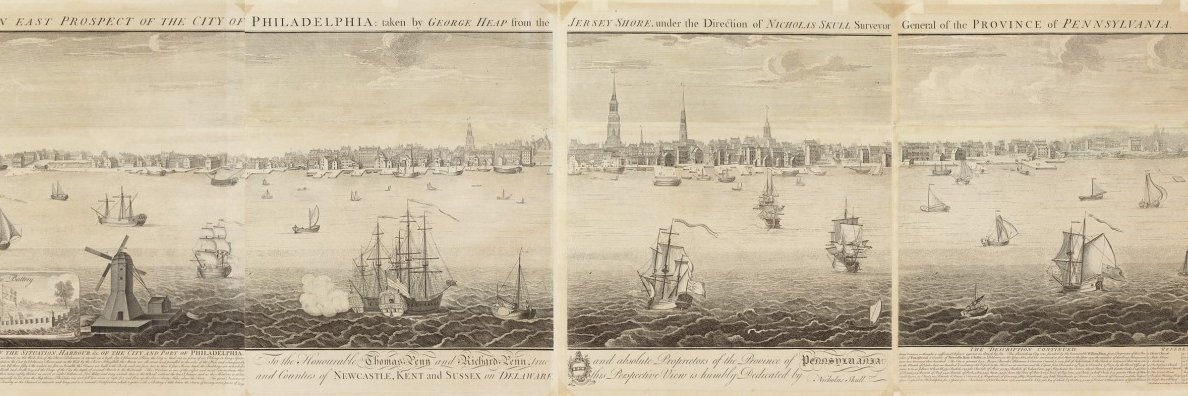
Philadelphia city hall was briefly the tallest building in the world.
It was also the last building to ever hold that title that wasn’t made out of steel.
Skyscrapers are impressive, but sometimes I miss the old ways.
This arrival is unique and more incredible than is reported. Let me explain…
This trip was planned earlier in the month, and I was invited to fly down with @PeteHegseth.
For security reasons, none of us had a clue it was for the arrival of the Ford.
Then POTUS pulled @SecWar onto Air Force One for the trip to China, and all the logistics changed. I no longer had a seat on the SECWAR plane.
I’ve been to a lot of “dog and pony” arrivals over the years, and without fail, some CEO or admiral or ambassador delays the damn thing.
The crew ends up slowing down or doing circles in the ocean to push the arrival back. Sometimes it’s just a few hours so the VIP can get his beauty sleep. Sometimes it’s days.
Often, after all that, the VIP doesn’t even show up. He sends some deputy to make the remarks.
And these delays are always dressed up with lies about mechanical failure or weather.
I was thinking of driving down anyway, and the SECWAR team welcomed it.
Then yesterday morning I drove over a massive nail, blew a tire, and had to cancel.
Immediately @RileyPodleski called and rattled off the reasons I needed to be there, including the 55 babies who would be on the pier waiting to see dad for the first time.
“I can’t get there first thing. Any chance it’s going to be delayed till noon?”
None.
But the crazy thing was the media team hadn’t even talked to Hegseth in days. They were still confident he wouldn’t push the arrival back a single minute.
Air Force One arrived late last night.
I’ve been on trips with Pete Hegseth. He doesn’t lounge. He doesn’t sleep. He works. And President Trump barely sleeps, so I can guarantee Hegseth is beat.
I also don’t know the travel arrangements from Andrews to Norfolk, but those transfers always take longer than expected.
Seems like a minor thing. Seems like something he could have easily pushed back a few hours to catch well-deserved sleep or slip home quickly to spend a few hours with his kids.
He refused.
And then his media team hammered me and other journalists to cover this incredible story.
What makes it even more incredible? Hegseth is Army. Yes, he absolutely knows how powerful homecomings after long deployments are. He knows how painful even an hour delay at a terminal can be.
But he doesn’t know the energy of thousands arriving home at once. Army soldiers get orders, and it can take days to get home, but they move through crowded terminals and airports. They have time to decompress.
Naval arrivals come after weeks of hard underway time in lonely seas. Time made longer and more painful by deferred maintenance and endless cleaning.
Naval arrivals are the most incredible feeling a person can experience.
On both sides. Personally, I’ve only been on the shoreside, when my wife returned from Iraq, but oh what a feeling.
And despite having the best excuse in the world, the most important summit of the year with our greatest adversary, Hegseth refused to rob these sailors of a single second of joy. He didn’t just show up. He arrived with enthusiasm and spirit.
Why?
Because he isn’t lying when he says the job isn’t about him. It’s about our warfighters.
The legacy media has gone out of their way to paint him as selfish and, after a minor fire and the Strait of Hormuz still closed, the carrier sailors as failures.
The truth is polar opposite.
To @PeteHegseth about each and every sailor who just completed the longest carrier deployment since the Vietnam War.
And it’s about forcing the media to report on his and @USNavyCNO words of congratulations for an excellent job.
And it’s about the sons and daughters and wives waiting on that pier.
Congratulations to the Ford Carrier Strike Group.
Bravo Zulu and welcome home sailors.
🇺🇸🇺🇸🇺🇸
There are now 141 stars on the CIA's Memorial Wall. The latest star was unveiled at the annual Agency memorial ceremony at CIA headquarters in Langley, Virginia, yesterday. The identity of the Agency officer it commemorates remains undisclosed. Family members of the fallen officer and hundreds of relatives of others honored on the Wall were in attendance. It was the first new star to be unveiled since the 140th in 2023.
Each star measures 2¼ inches tall by 2¼ inches wide and half an inch deep; all the stars are six inches apart from each other, as are all the rows. The stars are carved Alabama marble, in the entrance hall of CIA headquarters, opposite the statue of William "Wild Bill" Donovan, director of the OSS, forerunner to the CIA. Beneath the stars is the Book of Honor, in which 108 names are inscribed; 33 of the stars officially remain anonymous, though 20 of those have been identified publicly.
The Memorial Wall, created in 1974 with an original 31 stars, is revered within the Agency; officers who are retiring often linger as they pass by it for the final time, touching the stars. Outside the CIA, the Wall has attained iconic status, featured in documentaries, movies, and television series. The Wall has been featured in the movies The Recruit (2003) and 13 Hours (2016), as well as the episode 36—“The Star” of the TV series Homeland (2013).
Johnny Micheal Spann, the CIA's and America's first casualty on the battlefield after 9/11, was commemorated by the 79th star.
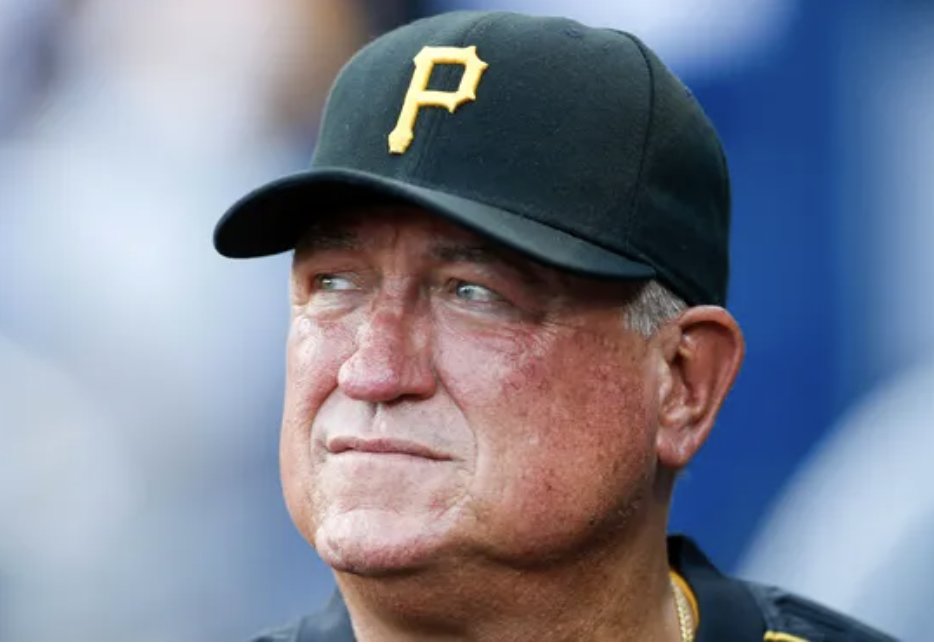
I kept this story in my pocket for a long time....
In Pittsburgh, September 15th is Roberto Clemente Day.
Every year the whole organization fans out across the city. It's like Christmas. Roberto's family is there, Vera and the boys.
My first year as manager was 2011. We celebrated. We shook hands and moved on.
We didn't win.
19 consecutive losing seasons.
2012 rolls around. Same day, same celebration. We had another losing season, our 20th consecutive.
After the ceremony, Roberto Jr. walked over.
"My mom wants to talk to you."
We went into the dugout. Me, Vera, and her three sons.
She spoke in Spanish. I played four years of winter ball so I understood enough. She wasn't angry, but she was passionate. And I kept hearing Roberto's number come up.
Roberto Jr. translated.
"My mother wants you to know that there cannot be a 21st losing season. That was Roberto's number. It would be a disgrace to his legacy."
She was staring right at me.
Before I could even think about what to say, words came out of my mouth:
"I promise you, Vera. That won't happen."
Roberto Jr. looked at me and said, "You made my mom a promise. I hope you can keep it."
I said, "I hope I can keep it too."
I didn't tell my coaches. I didn't tell the players. I told my wife. That was it.
The next year, 2013, we broke the consecutive seasons losing streak. Ended it at 20.
On Roberto Clemente Day that September, Vera came walking across that field.
And I probably got one of the most meaningful hugs I've ever received in my life.
The players did all the heavy lifting. I just got the hug.
Some promises are worth making before you know if you can keep them.
@Pirates
A focus on only work, money and ambition degrades the soul. But we can’t return our souls to ourselves. Only Shabbat can do that, writes @shirajkaplan
https://t.co/rkTUEVCMTP
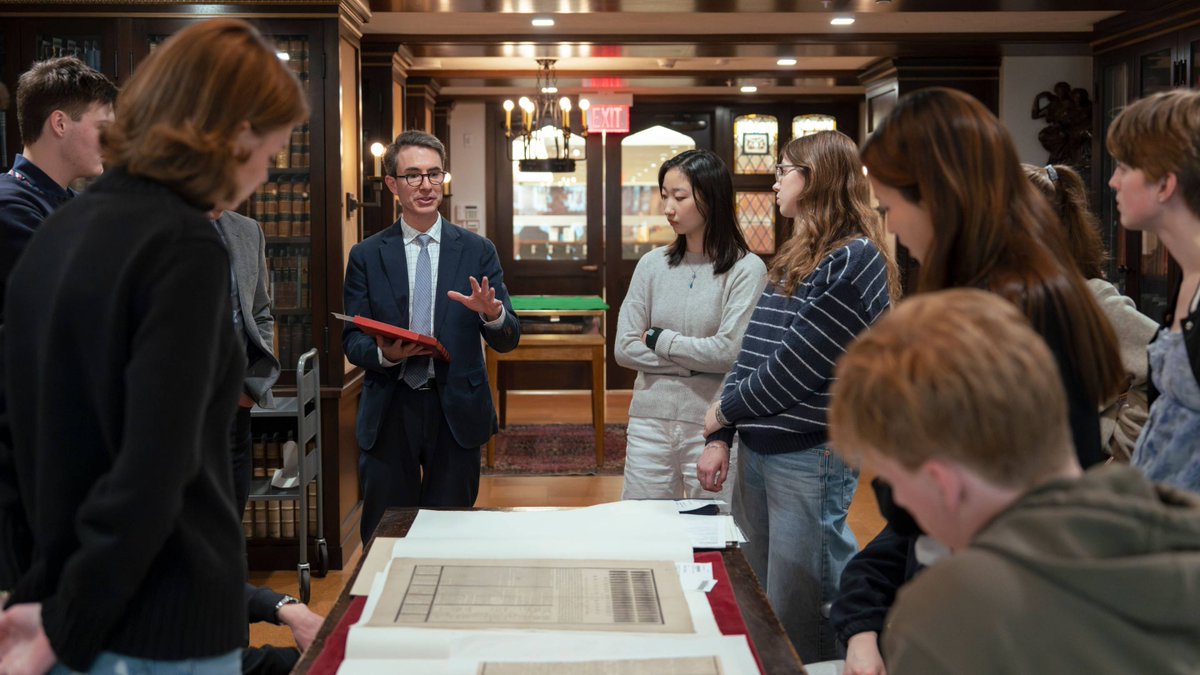
As the country celebrates #America250, a Princeton undergraduate history course has welcomed students into Special Collections at Princeton University Library during the past year for an extraordinary opportunity to study documents from the Revolutionary era and explore Princeton’s role in America’s founding.
“I was holding Thomas Jefferson’s letters, holding George Washington’s letters, every week,” said Princeton senior Luke Johnston, a history major who took the course, “Revolution in the Archives,” last year.
https://t.co/Kx6ZmJSuEu
🚨🇺🇸 Today at Modern Day Marine, Acting Secretary of the Navy Hung Cao spoke about his first love:
“My first love is the Marine Corps:
Because it was the Marine Corps that took me out of Vietnam in 1975. It was the Marine Corps that met me in Guam, and it was the Marine Corps again at Camp Pendleton at the second refugee camp.
In 1979, when the Shah of Iran was overthrown and I was living in West Africa, they brought us into the embassies—and those Marines who stood watch over us that night said, ‘Nothing is going to hurt you tonight—not on my watch.’
So I wanted to be like those Marines. I wanted to be like those heroes when I grew up.”
Sir, I promise you this—today’s Marines will make you fall in love all over again. Oorah.
We are a maritime nation, bordering on both the Atlantic and the Pacific. Our commerce depends on safe and secure sea lanes of communication.
President Trump’s commission to our military is simple: to achieve Peace Through Strength.
The USS Idaho joins the fleet ready to answer the call to action, in any ocean, at any time.
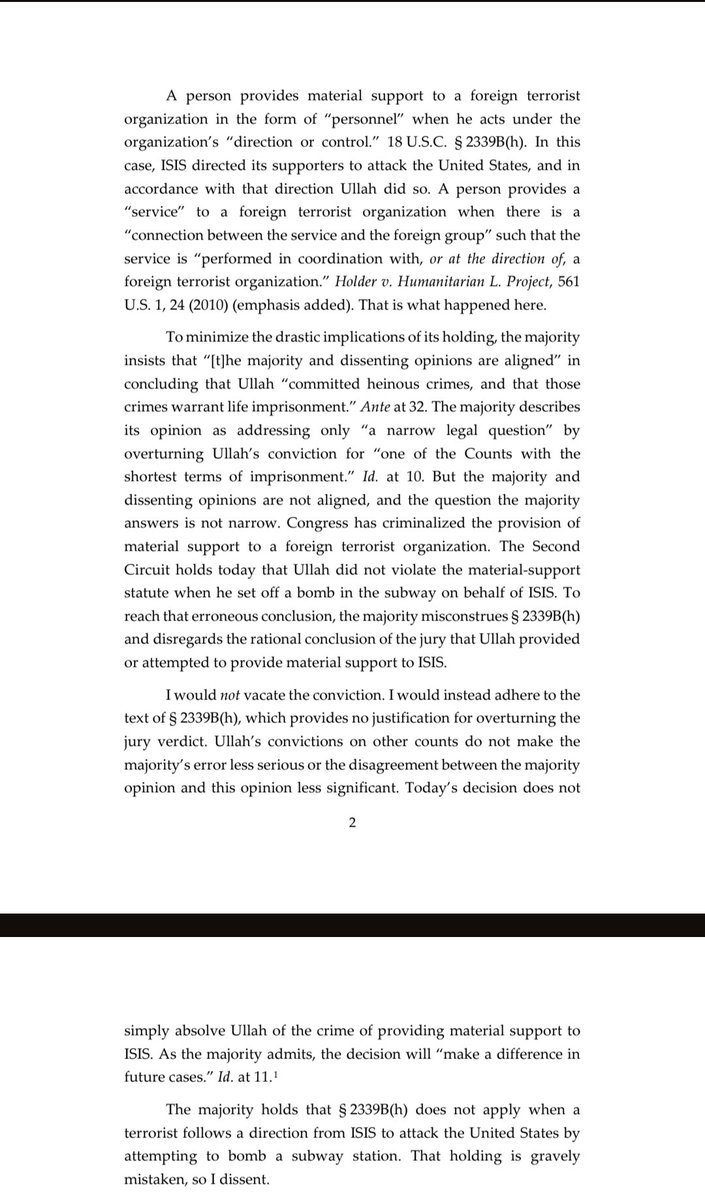
A man set off a pipe bomb in the Times Square subway station "on behalf of the Islamic State." Is that material support for terrorism? Judge Menashi (Trump), dissenting, says yes. Judge Perez (Biden) for the majority says no. Judge Menashi has the far stronger facts and law here.






![MilHistNow's tweet photo. Today in 1863, a 34-year-old college professor from Maine named Joshua Lawrence Chamberlain helps fend off repeated Confederate attacks against the left flank of the Union line at Gettysburg. The fight for Little Round Top will become one of the battle's most celebrated moments.
[Happy Bayonets!!! Day to all who celebrate.]](https://pbs.twimg.com/media/HMJ0ab_WsAAXD6d.jpg)