Glad to see OpenRouter moving to privacy-preserving technologies! Privacy with pure math (like FHE) is the holy grail: you almost wouldn't have to worry about infrastructure security anymore, but its overhead compared to plaintext is still too large for business today.
That makes TEEs the only practical option right now: easiest to set up, with the lowest overhead.
But there's a big misconception about what TEEs actually offer.
By default, they encrypt VM memory, making it very hard for the host operator to inspect the machine and extract data. That helps when you don't trust the underlying provider (i.e. you are worried about AWS or Google looking in your VM). That's not the threat model OpenRouter is interested in here.
The main threat is bugs, misconfigurations, or exposed interfaces in the software itself allowing attackers to extract sensitive data, and a TEE does nothing to prevent that. Once you look past host-level snooping, the only remaining protection a TEE adds is remote attestation: a cryptographic guarantee of which exact software is running inside the machine.
Mentionning things like "encrypted TEE" (memory encryption is already built in) or "E2E encrypted" also oversimplify how TEEs work. Prompts still have to be decrypted inside the enclave to run inference. So, put the same vulnerable software that got hacked into a TEE, and you add zero security against software flaws; you just get a way to prove to users which exact software you're running.
The way to make this actually work is:
- harden and intensively audit the stack (with TLS terminating inside the enclave and attestation verified before routing),
- either open-source it with reproducible builds so anyone can verify the code behind the hash,
- or go the Apple / Google route: rely on trusted auditors and public transparency logs (like Apple's Private Cloud Compute) to vouch that a specific build hash is genuinely secure and privacy-preserving.
Either way, the security and privacy engineering has to be just as solid as if we were simply trusting providers to implement it properly. A TEE doesn't replace that work, it simply gives you verifiability that the audited stack is what's actually running.
So: Use of TEE to enforce ZDR and prove that this policy is respected sounds like a great match, this adds trust. But by no means do TEE add security / privacy by default. The encrypted memory feature is not that important.
Providers’ data-handling claims have mostly relied on self-attestation. This isn't going to be sufficient.
Just as continuous benchmarking and monitoring transformed the quality and reliability of inference both on and out of OpenRouter, we expect technical validation, auditing, and continuous testing to do the same for data policy enforcement.
Encrypted TEE (Trusted Execution Environment) inference will be a great way for providers to accelerate this.
We will keep raising the bar, and providers that want to be on OpenRouter will need to meet it.
6 years ago, the first https://t.co/wteVnmhxtT meetup took place, with Zama CTO and co-founder @Pascal_paillier introducing Fully Homomorphic Encryption to the community.
A lot has changed since. The tech is far faster (about 400,000x since Zama started), more practical, and now powers real applications. The field has grown with it, with more researchers, more builders and a stronger community.
Zama is proud to have been part of the https://t.co/wteVnmhxtT community since the beginning.
Here’s to many more years of research, collaboration, and breakthroughs.
▶️ https://t.co/bGFgHIuOuE
@boardyai not really, they end up with ~1,000$ per bug compromising the whole system. That's well within what a lot of companies are ready to pay to secure their system.
When you see the amount of thinking and effort that OpenAI go through to make this work end to end, with the amounts involved. It's pretty clear that:
- no AI security company has a moat,
- the internal "super intelligence" is not smart enough to do it alone,
- OpenAI still doesn't know how to sell this as a product (but maybe soon?)
AI Bounty Hunter that cost 2k$ per critical/high vuln it finds in your system seems like a good business both ways.
Our security researchers built an autonomous cyber vulnerability discovery, exploitation, and patching pipeline.
In a single run with an upcoming cyber model, it validated and generated patches for 948 local privilege escalation vulnerabilities in the Linux kernel at a total API cost of $1.2 million.
Top model changes based on how much weight each benchmark get.
That's just for #1 model but the whole ranking changes based on these weights.
Find a set of benchmark that really represent what you expect a model to achieve. Or just build one yourself if you can.
I count 654 different companies selling AI for security. This makes sense I guess. AI cyber defense is a #1 priority for lots of companies right now.
But I see no really meaningful benchmark where these companies compete.
With all the CVEs disclosed after model training cutoffs, we should be able to run these tools against the pre-fix commits of open source projects and measure how these systems actually perform.
Then each of these company should have to prove it can beat a raw frontier model + "find vuln" prompt on precision, recall, and cost.
It's a tough problem but having a single source of truth for benchmarks is certainly not good. Having different people, companies, countries publish their own internal benchmarks built over a standardized open source framework would make much more sense.
Then we can have aggregators of benchmarks that rely on whatever they trust. AA is one aggregator. We need a lot more benchmarks, a lot more tied to the real world, to the business, education, health, finance... Let's make it extremely simple to deploy such benchmark with internal data, with public data.
"Low-cost" here can be misunderstood as lower quality. But let’s be clear: DeepSeek V4.1 Flash outperforms Large 4 on almost every benchmark while being 10x cheaper.
We need Europe to be pragmatic. Yes, Europe needs a frontier model, and yes, Large 4 is a great achievement. But no, it is not the model you should pick in 99.9% of use cases.
Open weights are awesome so let's own the alignment on these models and serve the best ones to European companies while we figure out how to build our own.
We’re also now serving two fast, low-cost models:
- DeepSeek V4.1 Flash, in public preview. Great for long-context coding and agentic tasks.
- GLM 5.3 Flash, now generally available. Great for subagents, tool calls and coding tasks.
@theo Deepseek v4.1 flash 1017 -> gpt 6.1 Terra -> GPT-6.1 Sol -> Opus 5.5
Haiku 5.5 has similar capability as DS, Luna 6 has lost the battle for now.
> The bottleneck is iterated contact with reality.
and outside of physics, "reality" is mostly defined by humans.
It is made of ever changing human goals at every scale of society: individuals, companies, cities, governments, the world.
Where a result can be checked in milliseconds like a math proof or a unit test, the AI loop runs a million times before lunch. Where reality is a moving human consensus, we need lived time to figure out what we actually want, and the graders we built for math won't work.
String theory is what happens when an intelligent system is starved of sensory input and starts hallucinating. Intelligence needs grounding.
For this reason, intelligence is practically never the bottleneck to solving impactful problems. The bottleneck is iterated contact with reality.
Haven’t seen this shared much, but Gemini 4 Argon has a remarkably low hallucination rate vs other frontier models.
Roughly:
- 3.5× lower than GPT-6 Astra and 6.1 Sol
- 4× lower than Claude Opus 5.5
- 5× less than Fable
- 6× lower than the older GPT-5.6 Sol
More signals for post training.
Frontier labs are hungry for real life signals now. Building the next gen capability model isn’t enough if they can’t learn what people actually want across the economy.
That human feedback is what keeps us steering the system and that's super important. If AI can optimize whatever objective we give it, we should be extremely careful not to automate away the feedback loop itself. I hope we never reach a world where we press Tab for too long...
Now in beta: composer predictions in Codex for Pro users.
Codex can now suggest your next message based on your conversation and how you talk to it.
One of the most loved new features we've ever tested internally.
They have plenty of time to nail this. Smartphones and their users aren't going anywhere. Apple has a pretty good spot where they can observe others' failures.
+ the risk is huge. People trying out computer use on mac is pretty small compare to actual number of iphone users. That increase a lot chances for an agent to do something pretty bad.
Just relax and build.
https://t.co/dgxmNrAYQ3
Every company building a personal agent is going to lose to Apple and Google. The moat isn't building the personal agent. That, as we have seen with the 100s different harnesses now, is pretty simple to setup. The moat is in getting it into people's hands. And in our hands we have a phone owned by Apple and Google. Even better is that now Siri runs on Gemini so it's pretty clear where this is going.
And the model capability doesn't even matter here. Well, first I think Google can pull this off..., but even if they don't Fable / Astra capability will be a commodity soon.
So, whoever can let the agent act across your apps without asking you to approve every step (safely, securely and in a privacy preserving way) wins, and only the OS owner can do that. OpenAI and Anthropic are stuck connecting from the outside which I do not believe scales well.
Who uses https://t.co/7Rm6soP7GM? That's a genuine question, the elo based ranking is great but, I wonder what kind of user would be willing to compare solutions. That was fine when it was small pieces of code but today it's already hard enough to judge the code of a single model output.
That said, everything about human <-> ai interaction could be a great fit here. UI, learning, decision based report. Current state of ai -> human communication is pretty bad.
Eventually, frontier labs could compete to build better intelligence (even tho there are risks there as well to consider), while countries, cities and institutions license efficient versions to run on infrastructure they own and govern. Labs would earn from models and upgrades; societies would control deployment and capture the productivity gains directly.
But distributing intelligence is only half the challenge. As AI shifts income from labor to capital, we also need mechanisms, citizen dividends, shared ownership, or both that return those gains to people. The goal should be an economy where improving AI improves human living standards, even when it reduces the need for human work.
does it really matter if AI reaches human intelligence? Give it an environment it can interact with and information it can convert into action to repair itself. That's the definition of a living creature. Whether it ressemble in some ways to human along the way doesn't change that. Human has its own intelligence. So does AI.
In order to stay in the loop, arbitrarily large amounts of ai work has to be compressible into exactly the amount of information a human needs at the moment they need it. The way humans communicate through their agents today is NOT sustainable to remain in the loop.
We'll be spending a lot more time trying to understand the outputs of language models. A few thoughts, tips & tricks:
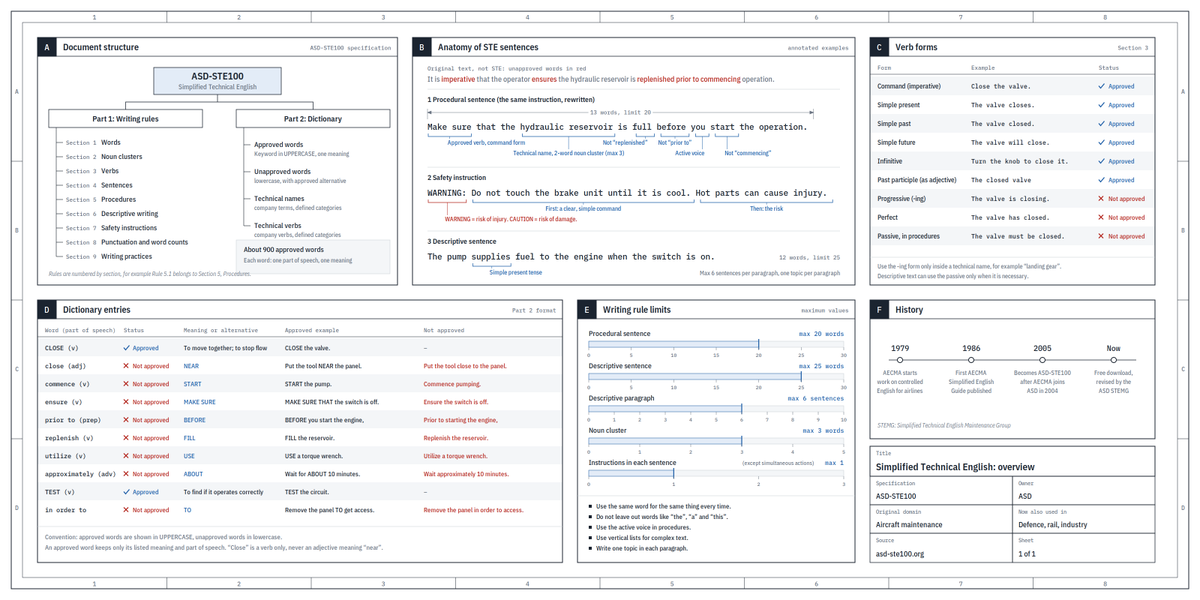
Writing. Something I've had success with: Ask your LLM to explain something in ASD-STE100, it's a controlled language specification originally developed for aerospace maintenance documentation. LLMs well-versed in this language and it comes with heavy constraints on clean writing style that I often find a lot more readable. Sometimes I've tried to soften it a bit e.g. ask for "80% of the way to ASD-STE100" because the spec is quite stringent. But even better:
Diagrams / images. Instead of writing, ask your LLM to create a diagram. These can be a lot easier to process, parse, and understand. But even better:
Web pages. Ask for output "in HTML" to get a beautiful, interactive webpage. LLMs are getting really good at frontend and can create beautiful experiences, animations, etc. But even better:
Explainer videos. The output format I am most bullish on is fully custom / bespoke explainer videos generated on any arbitrary topic. Experiment with things like "Create a 3b1b style video explainer on X. Use my ElevenLabs API key for audio narration". (you'd need an API key for the latter or you can ask your LLM to find you decent free alternatives that use your local compute). This is actually starting to work!
In summary:
- As LLMs get better, they will do more and more of the legwork autonomously, and a lot more of our work will rise up the abstractions into oversight and understanding.
- Luckily, LLMs can help here too because as intelligence and code are increasingly abundant, you can ask for large, custom, discardable software artifacts (e.g. web apps, video explainers) that would have never made sense to create before. Push the boundaries here and you'll be surprised.
AI rents should not stay in the model layer for long but as intelligence gets commoditized, it should basically boil down to energy and compute. I am more worried about states and elites that no longer need their citizens' labor as AI does a huge part of it. Public ownership of the energy and compute layer, plus agents that serve their users instead of whoever runs them is maybe a first step to the answer.