After 7 months on the job market, I am happy to announce:
- I joined @allen_ai
- Professor at @CarnegieMellon from Fall 2025
- New bitsandbytes maintainer @Titus_vK
My main focus will be to strengthen open-source for real-world problems and bring the best AI to laptops 🧵
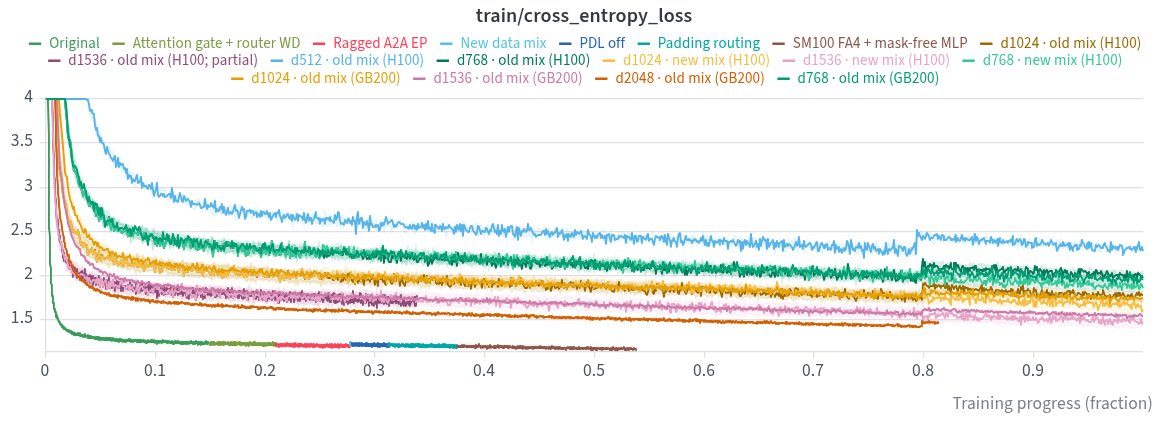
We’re releasing all 57 intermediate checkpoints from Marin “Mochi” 535B-A23B pretraining, including 10 from long-context extension. 18.2T tokens, about 61 TB of weights.
https://t.co/MmfZeQdB1V
Blog: https://t.co/kNCJ6PoNW5
Why was Marin 535B-A23B the size it was? Why 8 of 384 experts? Why GatedNorm, sconv, XSA? Why linear learning rate? All of these factors were driven by tradeoffs between timelines, compute efficiency, MoE router stability, etc. Read about the rationale of each design decision:
It’s done! Marin’s Mochi 535B-A23B finished its main pretraining phase this morning. 18T tokens! Long context this weekend, SFT over the next week or so. Hoping to release checkpoints next week. Some EU paperwork first. https://t.co/VZeGY2yXCl
After our kernel-agent experiments, we had to confront an uncomfortable question: Do we still need DSLs and ML compilers when agents can do it all?
In short: We're still here! 😎
If you're curious why, here's our take:
https://t.co/qcgomLr8sX
We've also rebuilt TIRx from the ground up as a shared DSL and compiler foundation for agentic kernel development.
I've always believed that intelligence should come from simple, general building blocks that learn their own abstractions directly from raw data; in other words, the bitter lesson. I think we're finally seeing a real step towards AI that can learn from all data.
Language modeling on raw bytes is a microcosm of this ideal, and to me it's a central problem in AI: if we can't build LLMs that learn end-to-end from bytes, how will we handle the rest of the world's data that we understand even less?
Last year we introduced hierarchical networks (H-Nets) as a first step. Our new version finds up to 3-5x efficiency gains in controlled scaling law experiments, and at larger scale matches an open-source model trained on 11T tokens with ~10x less data and compute. The posts below walk through what we found and why we think it works.
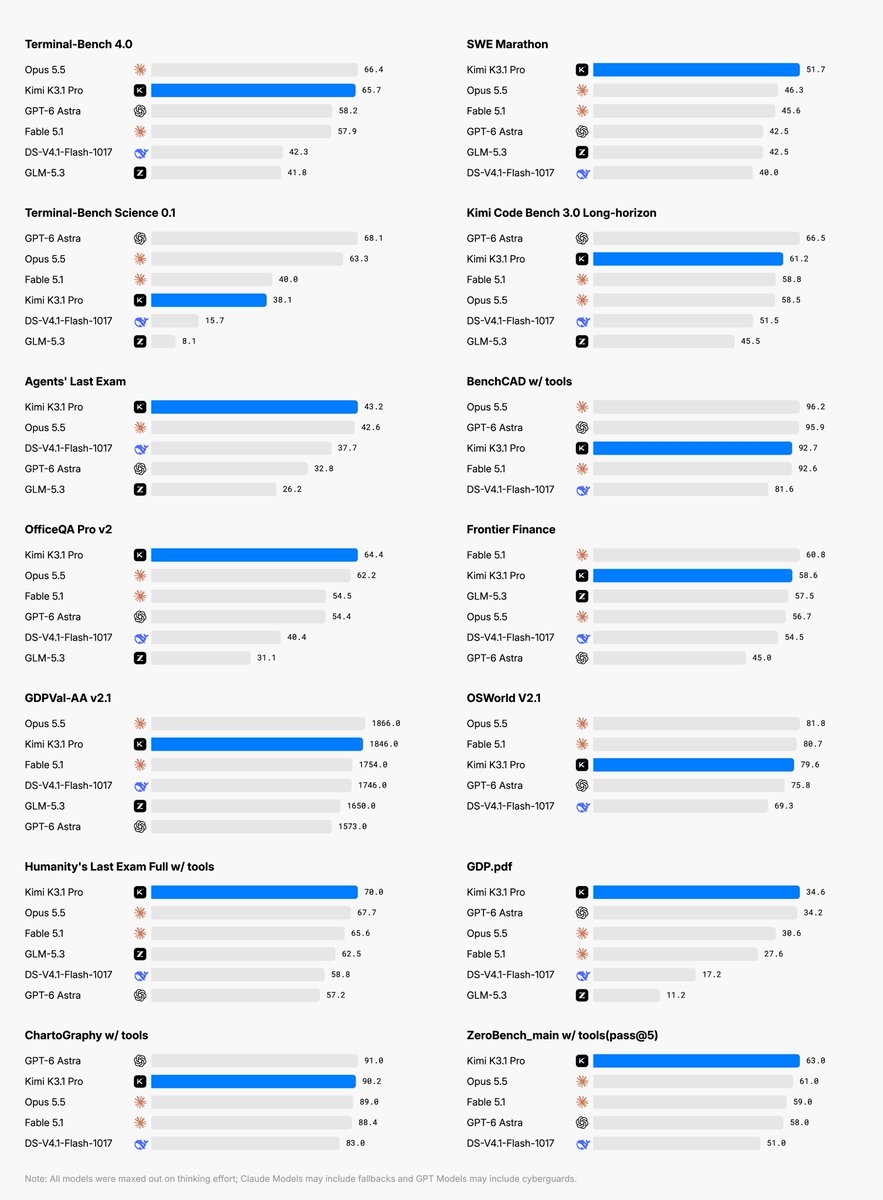
Introducing Kimi K3.1 Pro: our most capable 3T-class open-weight model.
🔹 1M-token context, 2.8T total / 104B active params (MoE), Multimodal.
🔹 Full-project coding: games in Unreal, Unity & Godot.
🔹 Excels at parametric 3D modeling in Blender & CAD.
🔹 More reliable at finance work: Accurate modeling with hallucination down by 65%.
🔹 Matching the strongest proprietary models across coding, agentic and knowledge benchmarks.
Kimi K3.1 Pro and K3.1 Pro Highspeed (2–3× faster) are now live on https://t.co/85jA71X9gw, Kimi Work, Kimi Code, and the Kimi API.
Open weights by Nov 4, 2026.
🔗 API: https://t.co/XCrgjXAqMw
🔗 Tech blog: https://t.co/5iPP0MBej6
Very excited to share that we've been selected to receive NSF funding through the NSF-STRIDE AI Efficiency Challenge!
People are increasingly using LLMs to analyze large datasets, but doing so with current AI models and systems is often extremely expensive, slow, and inefficient. We need better infrastructure to make this kind of analysis practical at scale.
I am hiring PhD students and postdocs to work in this area starting in 2027—prospective PhD students, please apply at the CMU website, and prospective postdocs, please send me an email.
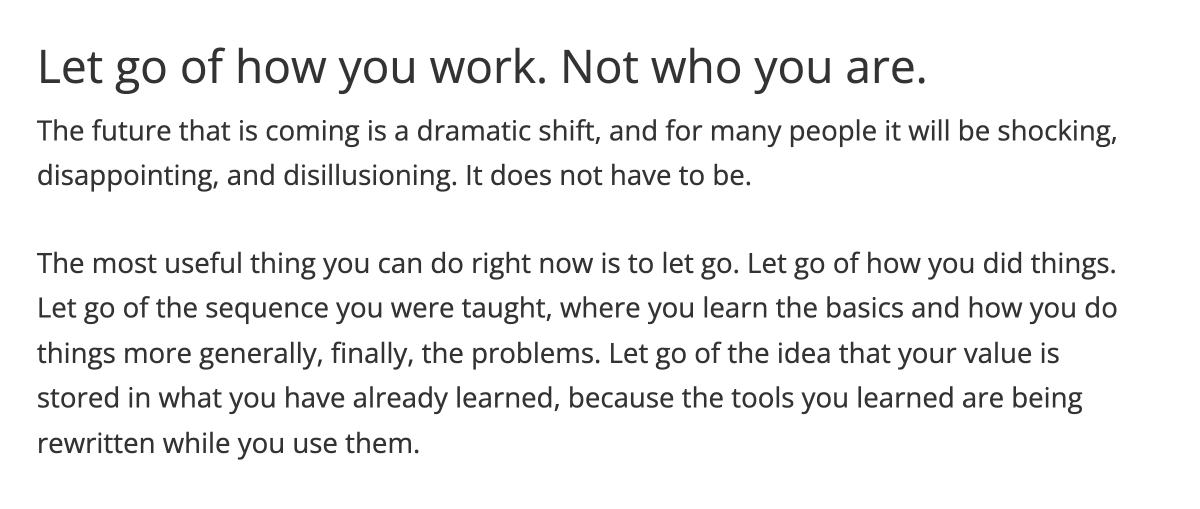
For those who are like me trying not to drawn in this AI perturbance, @Tim_Dettmers shared amazing inspirational grounded in reality notes on how to survive this and thrive next:
https://t.co/3KfAi5sVps
https://t.co/cxu2XyZeI8
Thanks a lot to @jeffra45 for sharing this with me.
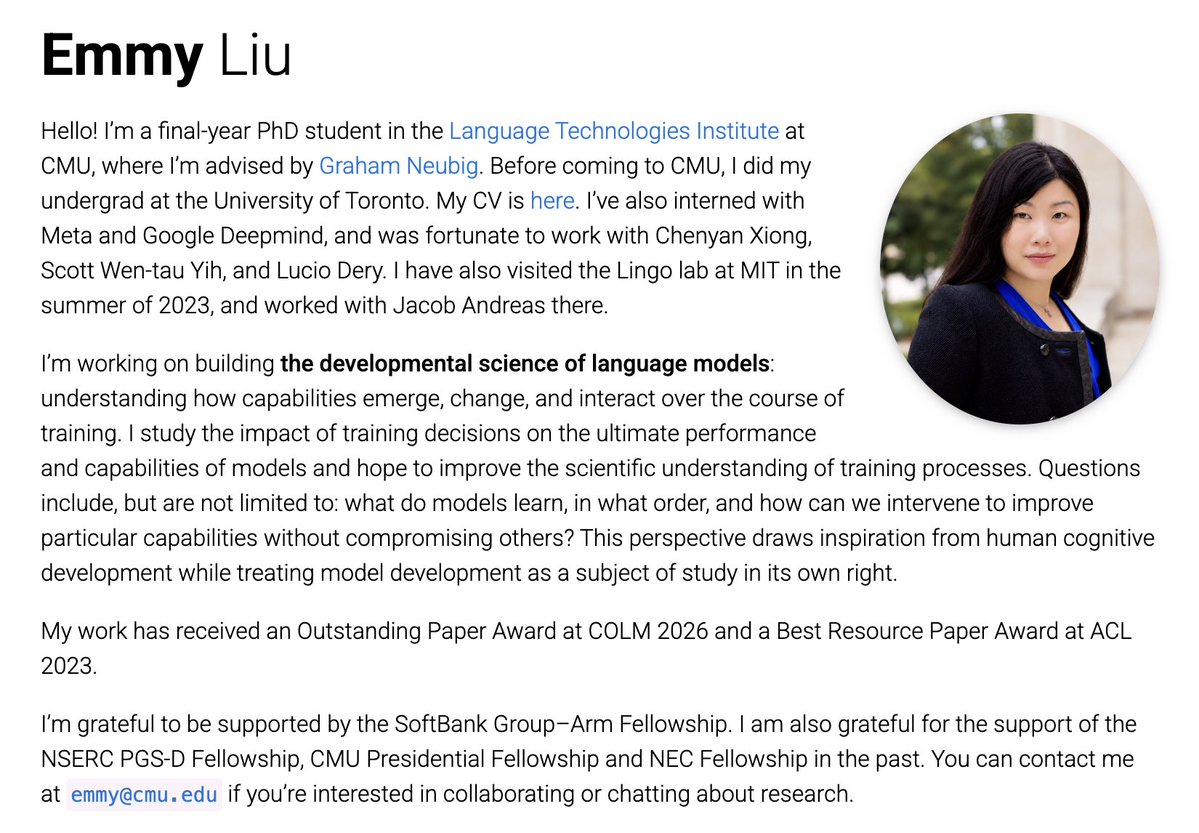
On the job market this year! Open to faculty as well as RS/MTS positions and primarily interested in the science of language models. Please reach out if you are hiring and you think I would be a good fit.
🚀 Introducing DeepInfer, our in-house inference framework, now fully open source!
Powering DeepSeek-V4.1-Flash at scale with high throughput and low latency. We’re sharing our production stack to help the community lower compute costs, reduce energy use, and make AI more affordable.
🔗 https://t.co/JGAik1kgk0
1/4
Today, Dream Labs is coming out of stealth with Dream-1, a robot foundation model that controls bimanual robots it has never seen, on tasks it was never shown, in places it has never been, from $3/hour.
Dream API is live for everyone, today. 🧵
Tons of bangers and useful advice for undergrads and grad students trying to make sense of how to navigate academia and entering industry in the age of agents in @Tim_Dettmers recent blog.
Highly recommend people read it.
https://t.co/3VbFSlxqpF
This is really cool work on our synthetic hospital benchmark. For patient diagnosis, this shows that small models + SFT + the right tools > GPT-6 Luna. Interesting is that the tools help small models, but not big models. So gaps in capability can be replaced by tools
spent a few days trying to train a tiny model to diagnose patients on the Synthetic Hospital environment out of CMU.
RL didn't help much, but some SFT and a simple search tool got qwen3-4b to perform as well as a ~1T param model
this is because the agent is more than just the model.
🧵:
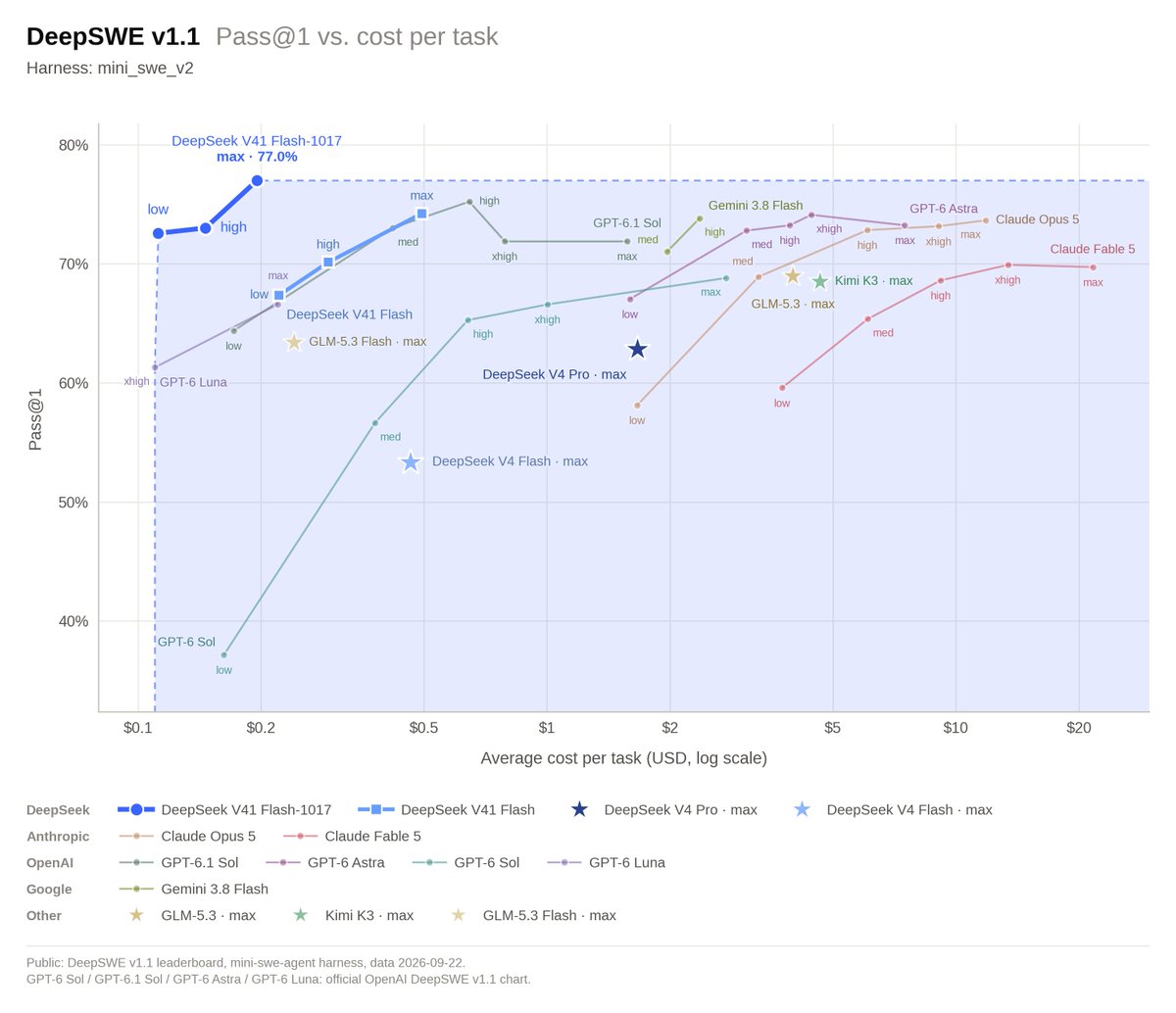
🚀 DeepSeek-V4.1-Flash-1017 is here!
Stronger benchmark performance, faster task completion, and shorter outputs than the previous version—a Pareto improvement in performance and cost. Now live on our website, app, and API.
🛠️ Optimized for @DeepSeekHarness, Tencent CodeBuddy, WorkBuddy, and more. Upgrade to DeepSeek Harness v0.2.1-rc.1 or later for the best experience with the new model.
1/4
Excited to introduce Scout 1.0, the model powering Bits Investigation, Datadog’s AI SRE agent for complex troubleshooting and late-night alerts.
We post-trained GLM-5.3 Flash to match frontier models at much lower cost on our internal AlertEval benchmark. 🧵