“Dr. Ruth Aceng was once a strong advocate for medical interns during her early medical career, particularly between 1993–1994 at St. Mary’s Hospital Lacor, where she and colleagues reportedly protested issues related to intern welfare and food shortages, an episode said to have led to her transfer to Mulago Hospital.”
However, during her role as Minister of Health, she was part of Cabinet decisions that approved the withdrawal of medical interns’ allowances.
People forget their previous struggles so fast.
#PayAllMedicalnterns
My respected Hon @CHRISBARYOMUNS1, I guess it is within your reach to guide both MOE and MOH, and GOU not to gamble with Medical training in Uganda.
Six years for Undergraduate training can't be the answer to the poor quality training outcomes of our doctors, and the huge university output beyond the government's capacity to absorb them into service. It is poor planning and fractured systems.
Let us be honest: the issue is not that medical interns are too many.
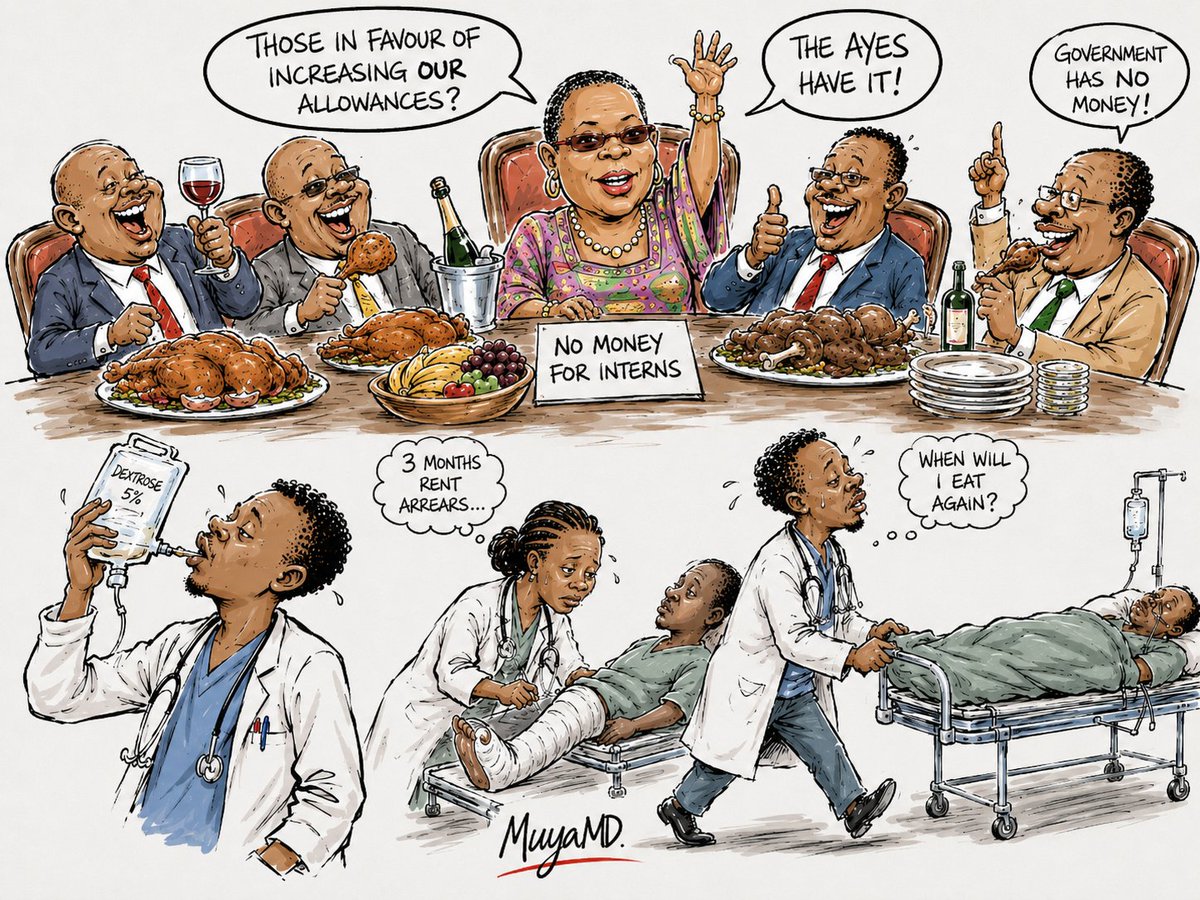
It is not that Uganda has no money.
It is that medical interns are not being treated as a priority.
Consider the choices being made:
• Parliament keeps growing.
Parliament’s budget reportedly doubled to about 𝗦𝗵𝘀 𝟭. 𝟮 𝘁𝗿𝗶𝗹𝗹𝗶𝗼𝗻. The money going to 529 MPs rose from about 𝗦𝗵𝘀 𝟰𝟬𝟬𝗯 in 2020/21 to 𝗦𝗵𝘀 𝟳𝟰𝟰.𝟰𝗯 in 2026/27, an increase of about 𝗦𝗵𝘀 𝟯𝟰𝟰.𝟰𝗯.
What direct return does this give the common Ugandan in a crowded hospital?
• Two offices alone tell the story.
The Speaker and Deputy Speaker offices had about 𝗦𝗵𝘀 𝟳.𝟭𝗯 combined in 2020/21. In 2026/27, they stand at about 𝗦𝗵𝘀 𝟱𝟬.𝟮𝗯 , an increase of about 𝗦𝗵𝘀 𝟰𝟯.𝟭𝗯 for only two offices.
That increase alone can pay 𝟯𝟬𝟬𝟬 interns 𝗦𝗵𝘀 𝟭𝗺 𝗽𝗲𝗿 𝗺𝗼𝗻𝘁𝗵 𝗳𝗼𝗿 𝗮 𝗳𝘂𝗹𝗹 𝘆𝗲𝗮𝗿, with money left.
• Questionable spending continues.
In 2025/26, selected Speaker’s office lines reportedly included 𝗦𝗵𝘀 𝟮.𝟰𝗯 for foreign travel, 𝗦𝗵𝘀 𝟵𝟲𝟲𝗺 for fuel, 𝗦𝗵𝘀 𝟰.𝟴𝗯 for incapacity, death benefits and funeral expenses, and 𝗦𝗵𝘀 𝟱.𝟮𝗯 for donations. Total: about 𝗦𝗵𝘀 𝟭𝟰.𝟮𝗯. What lasting public health return does this produce compared with doctors on wards?
• RDC structures are being funded.
Uganda reportedly has 146 RDCs, 170 Deputy RDCs and 432 Assistant RDCs, total 748 officials. Their proposed salary enhancement requires an extra 𝗦𝗵𝘀 𝟮𝟵.𝟬𝟳𝟵𝗯 every year.
Add the reported 𝗦𝗵𝘀 ���𝟬𝗯 for LC I to LC V political leader facilitation, and that is about 𝗦𝗵𝘀 𝟱𝟵𝗯. In what way does this benefit the common Ugandan?
• Donations are funded.
State House donations reportedly consumed 𝗦𝗵𝘀 𝟳𝟱𝟭𝗯 over seven financial years. In 2023/24 alone, donations were budgeted at 𝗦𝗵𝘀 𝟭𝟴.𝟭𝗯, but actual spending reached 𝗦𝗵𝘀 𝟴𝟬.𝟭𝟴𝗯. If tens and hundreds of billions can be found for donations, how does 𝗦𝗵𝘀 𝟮𝟰𝗯 to 𝗦𝗵𝘀 𝟯𝟲𝗯 for over 2,000 medical interns become impossible?
• Health was not protected with the same urgency.
The Ministry of Health vote fell from about 𝗦𝗵𝘀 𝟭. 𝟲𝟵𝟯 𝘁𝗿𝗶𝗹𝗹𝗶𝗼𝗻 in FY2023/24 to about 𝗦𝗵𝘀 𝟭. 𝟯𝟰𝟰 𝘁𝗿𝗶𝗹𝗹𝗶𝗼𝗻 in FY2024/25, a reduction of about 𝗦𝗵𝘀 𝟯𝟰𝟵𝗯. Even the 2025/26 estimate of 𝗦𝗵𝘀 𝟭.𝟱𝟲𝟰 𝘁𝗿𝗶𝗹𝗹𝗶𝗼𝗻 remains below the 2023/24 level. Yet health is the sector that directly touches mothers in labour, accident victims, children with malaria, emergency patients and families in public hospitals.
Now compare:
• 2,000 interns × Shs1m × 12 months = 𝗦𝗵𝘀 𝟮����𝗯 per year
• 2,500 interns × Shs1m × 12 months = 𝗦𝗵𝘀 𝟯𝟬𝗯 per year
• 3,000 interns × Shs1m × 12 months = 𝗦𝗵𝘀 𝟯𝟲𝗯 per year
Even using the Ministry of Health’s own gross figure of Shs15.6m per intern per year, the reported 2,706 eligible interns would require about Shs42.2b. That is still small compared with what is being found for political comfort and administrative expansion.
That money is not a handout.
✨ It avails doctors on wards.
✨ It keeps emergency units covered.
✨ It supports maternity care.
✨ It fills staffing gaps in regional referrals.
✨ It protects patients.
So let us stop pretending.
This is not a numbers problem.
This is not a money problem.
It is a priority problem.
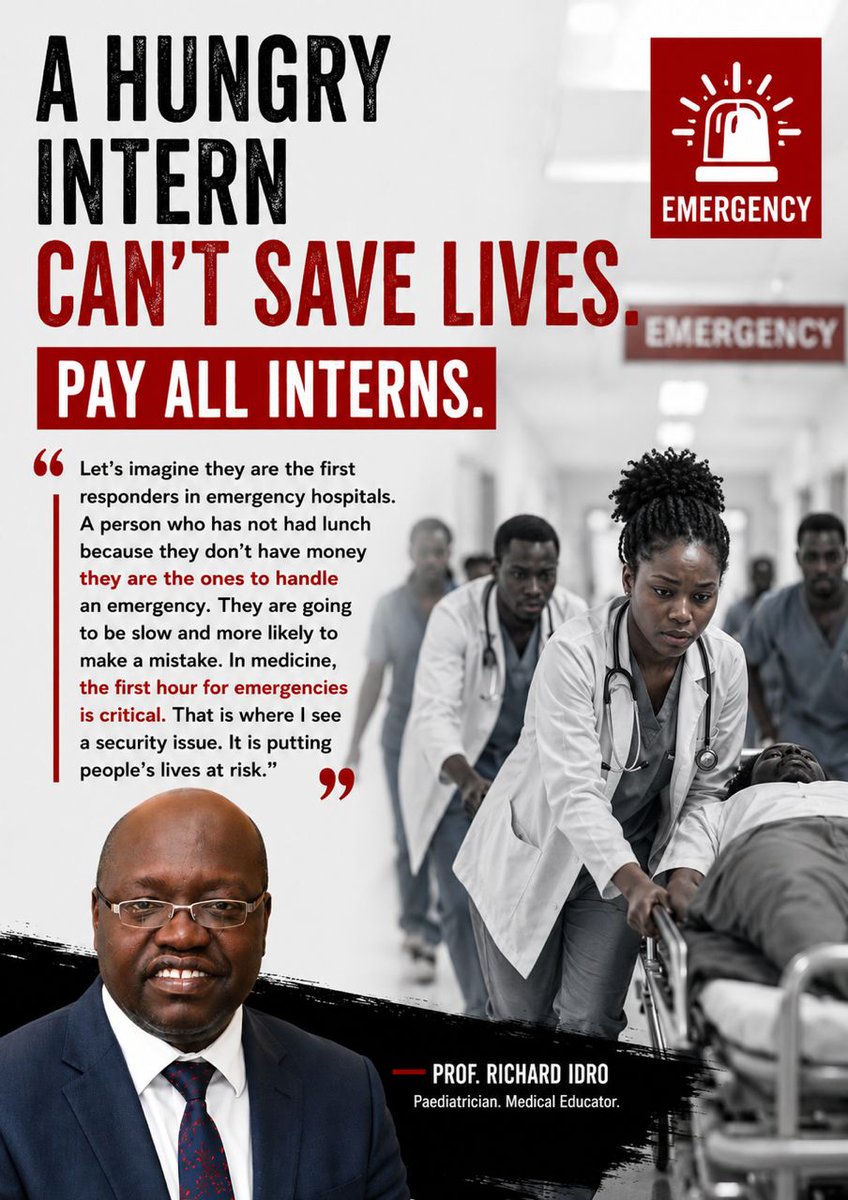
Medical interns are doctors under apprenticeship, not free labour!
#InternsNotSlaves
What exactly makes the Ministry of Health (MOH) believe that only government sponsored medical interns deserve allowances, while self sponsored or privately funded interns doing exactly the same work, under the same conditions and supervisors, in the same hospitals, should receive nothing? 🤦♀️
After carefully reading through the entire Internship Policy framework, the recent circulars (including ADM.010/095/01), the National Education and Training for Health Policy 2025, and related Public Service Standing Orders, one thing is crystal clear 👉 this is a blatant case of unfair discrimination that undermines the principles of equity, natural justice, fair labour practices.
All interns regardless of how their undergraduate education was funded perform the same critical duties. They manage wards, handle emergencies, assist in surgeries, and form the backbone of service delivery in our public hospitals, often contributing up to 60% of the clinical workload. Yet the policy arbitrarily ties eligibility for the monthly allowance which they now call “support” (coz they dont want to commit on anything so they can always make it look like it’s at their mercy) to the sponsorship status during university. Shame 🚮
I urge those few government sponsored interns who might feel “safe” because they are being promised something not to be misled. This fight for better internship policies concerns every single one of us. 📌
The policy is deliberately vague even for those it claims to cover. It refuses to commit to a specific, guaranteed amount, timeline, or protection against future reductions or delays. There is no rock solid assuarance clause ensuring consistency or timely disbursement.
This ambiguity reveals the deeper truth 👉no one is safe. Today’s “privileged” group can easily become tomorrow’s excluded group once budget constraints or new circulars kick in.
We have witnessed government reduce reduced allowances from Shs2.5m to Shs1m, delayed payments repeatedly, and is pushing toward models where interns (reclassified as students) receive little to nothing.
We are not asking for charity. We are demanding recognition for the essential professional work we do during this mandatory year. A fair policy must provide 👇
📌Uniform allowances for all interns performing the same duties
📌Clear, ring-fenced funding with specific amounts
📌Timely deployment and payment
📌Protection against arbitrary exclusion based on sponsorship history
The current approach is not only unjust, it threatens the entire healthcare. This concerns the future of healthcare in Uganda. We must stand united. 📌