One of the most amazing things I’ve ever seen: a standing ovation for the full Daraxonrasib results
I feel inspired and energised, to put it mildly — we have a targeted therapy for pancreatic cancer now, and nothing is undruggable anymore
@IanACoates_ just defended his PhD at @Stanford
Thesis: high-resolution stereolithography for functional negative space.
Translation: designing the void—channels, flow, function—not just the solid.
That’s where the future is.
Congrats, Dr. Coates.
Big moment today!
How many of you have seen the recent reports—nanoparticle mRNA vaccines starting to show real signals in pancreatic cancer?
That’s the moment we’re in.
And today, Amy Latursky successfully defended her PhD at @Stanford right at that frontier.
Her work tackles the next limitation head-on. Today’s systems are powerful—but limited. Amy built a platform that decouples the nanoparticle, the RNA payload, and the targeting strategy—making RNA delivery modular, customizable, and programmable.
Pre-make the scaffold. Load on demand. Target with precision. That’s where this field is going.
Proud of you, Amy (except for how far you sent the champagne cork!). Onward!
It was an honor to speak at the @UCBerkeley 2026 Miller Institute Annual Interdisciplinary Symposium down in Santa Cruz.
I walked through how convergence isn’t a buzzword—it’s the blueprint. From 3D printing to interstitial fluid diagnostics, the real breakthroughs happen when disciplines collide, teams click, and we stay obsessed with turning ideas into things.
Great discussion with a new generation of scholars! https://t.co/pjxGOXQkMY
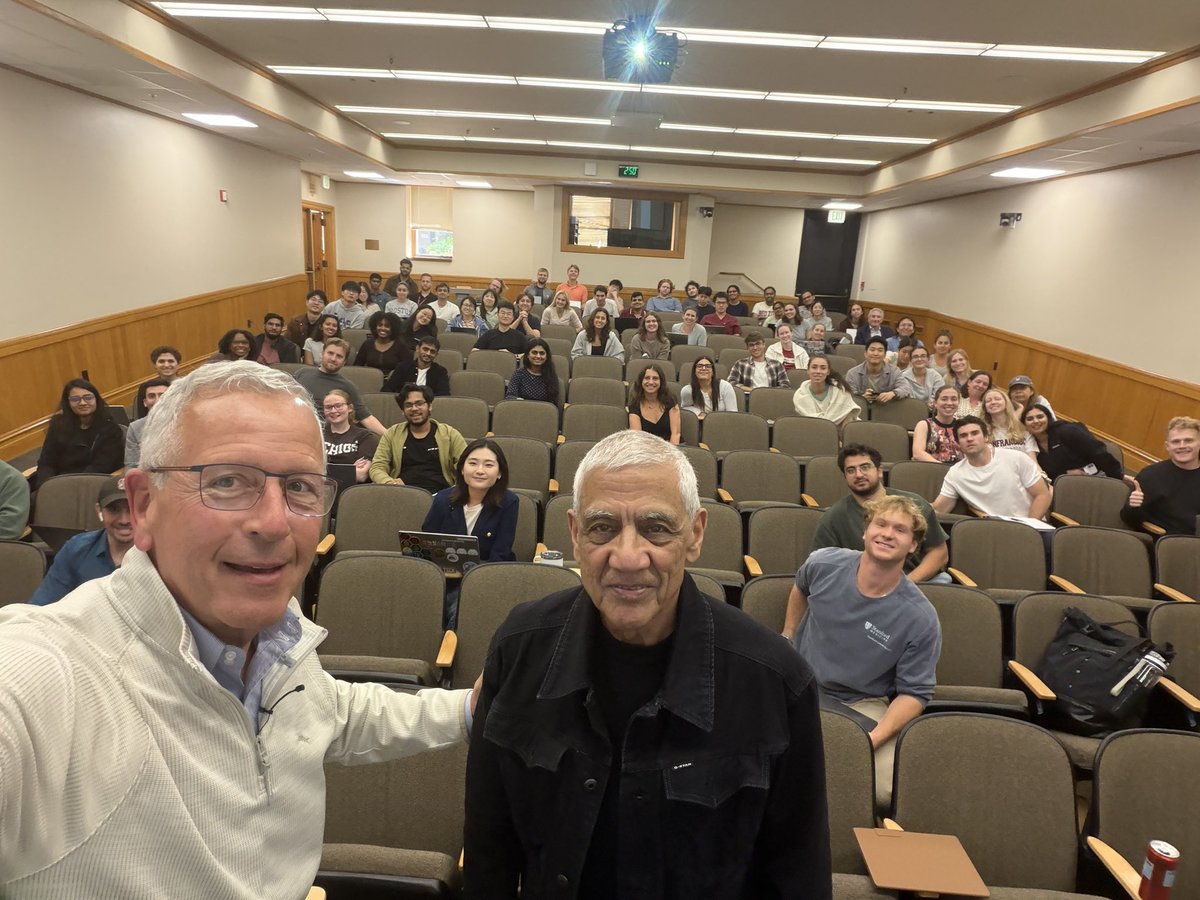
AI isn’t just disrupting jobs—it’s colliding with global population collapse.
In my @Stanford ENG 189/289 class with @vkhosla Vinod Khosla:
→ AI drives a deflationary, abundance economy
→ Demographics create a labor shortage
That’s not a headwind. It’s a tailwind.
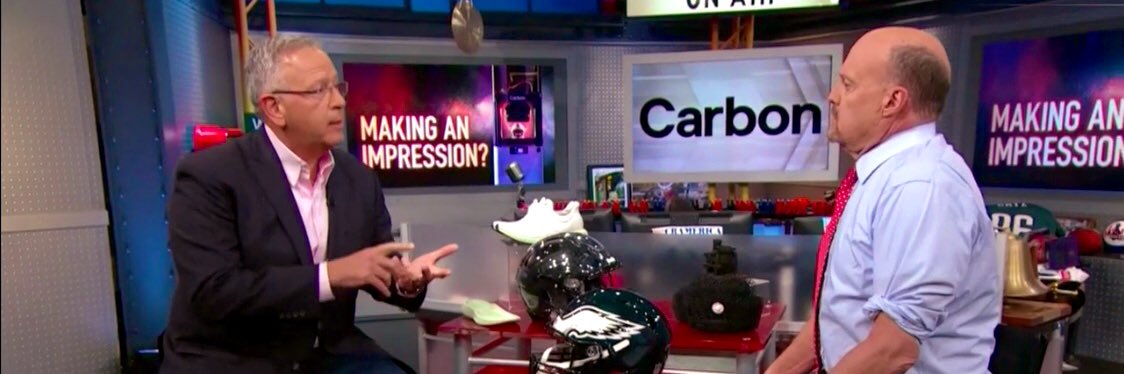
With Josh Green (my consigliere at @Carbon): fundamentals still win—judgment, trust, urgency.
#AI #FutureOfWork
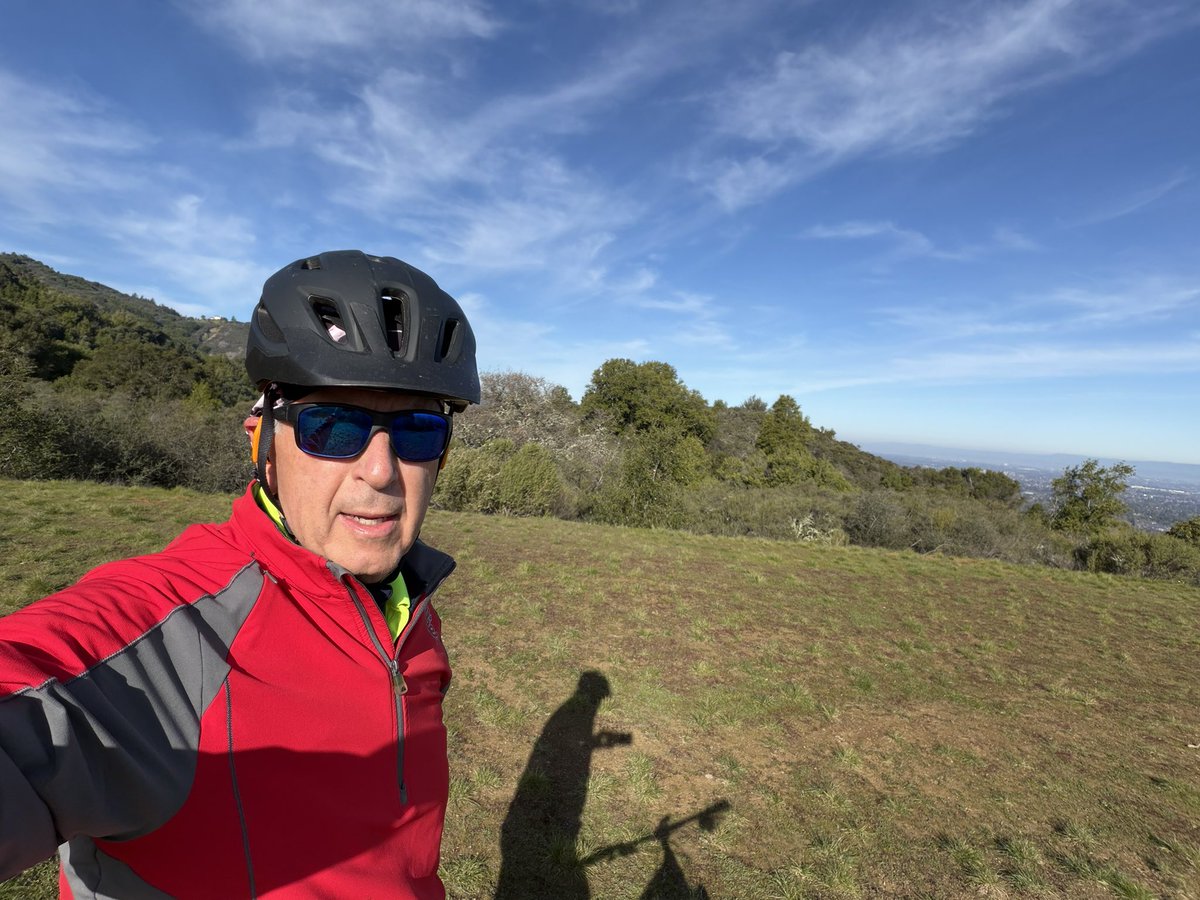
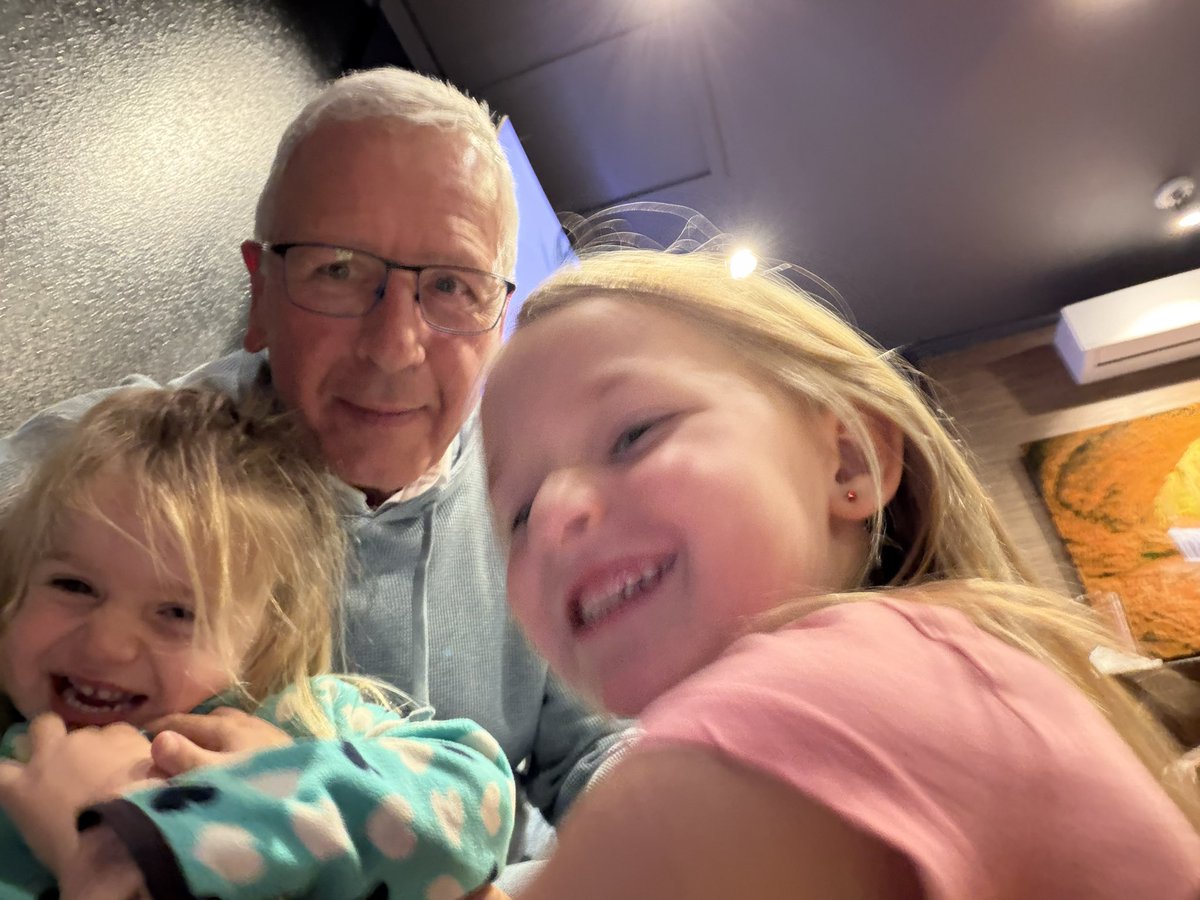
Finally got back on my bike this weekend after a wreck on my bike on January 18 down at Wilder Ranch State Park along the ocean. I experienced a Lisfranc injury during a fairly ungraceful spill which resulted in a tear of a ligament midfoot. Healing as we age slows down!! Really great to have the physicians at @StanfordMed helping me getting “back in the saddle”! Thank you! And, grateful that weekends were made for granddaughters!
This year will be one of the most important years in the history of 3D Printing. Excited to continue to see high volume app after high volume app. Go team @Carbon & go team @adidas!
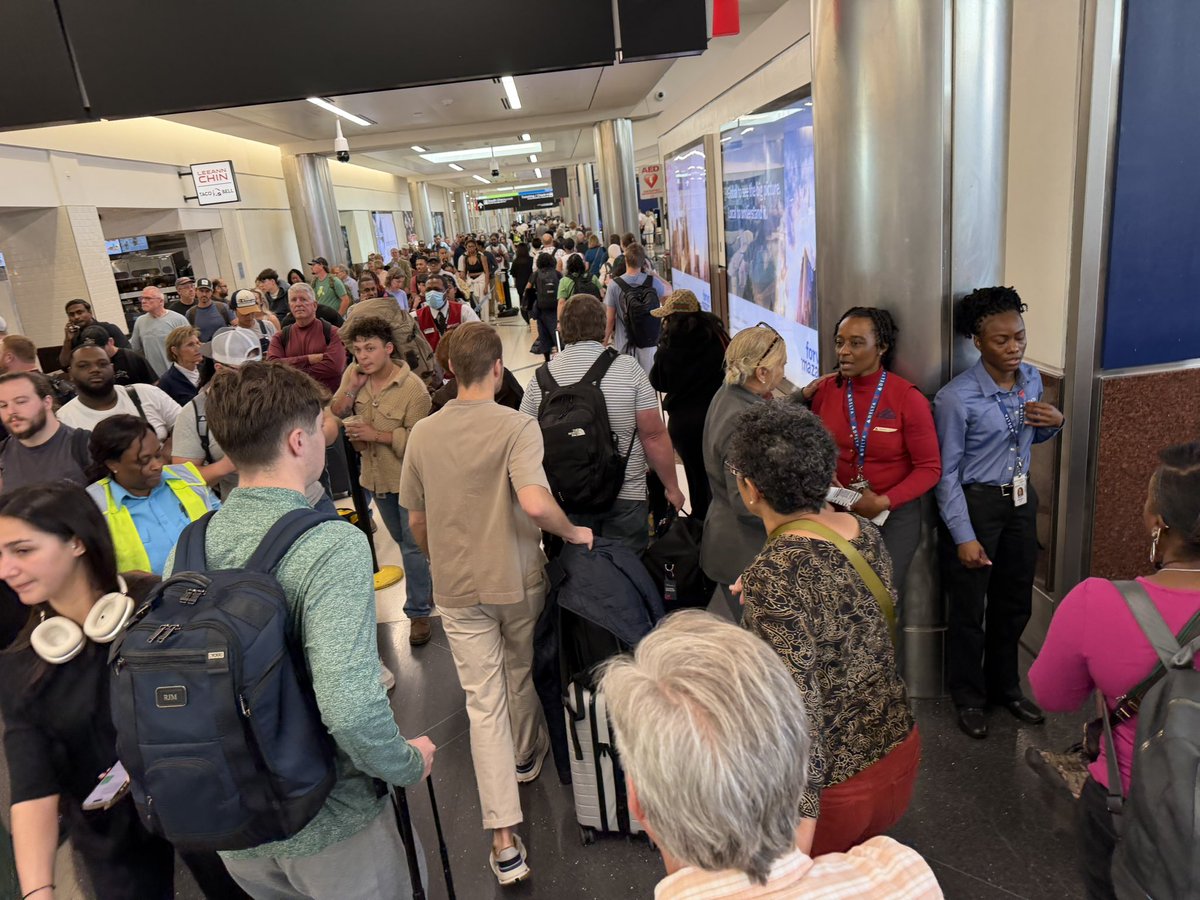
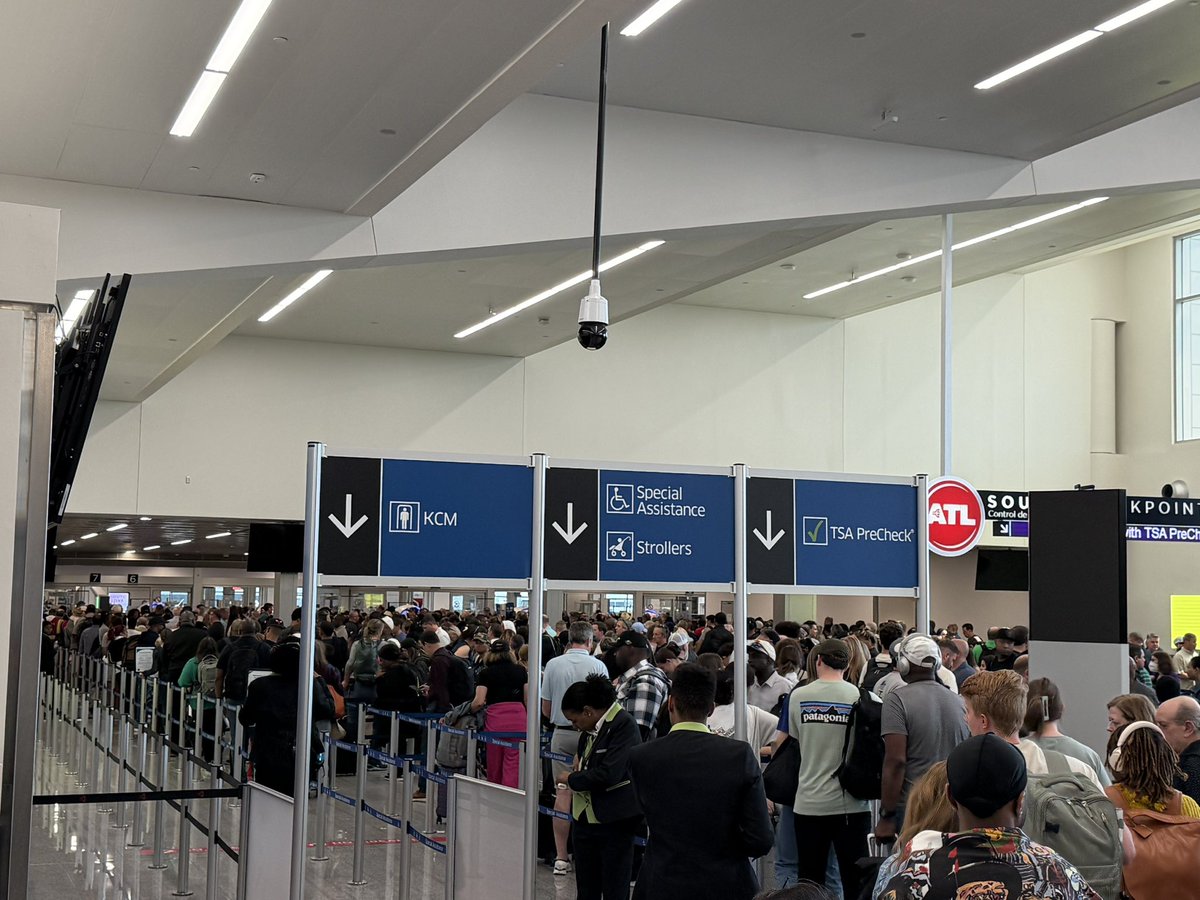
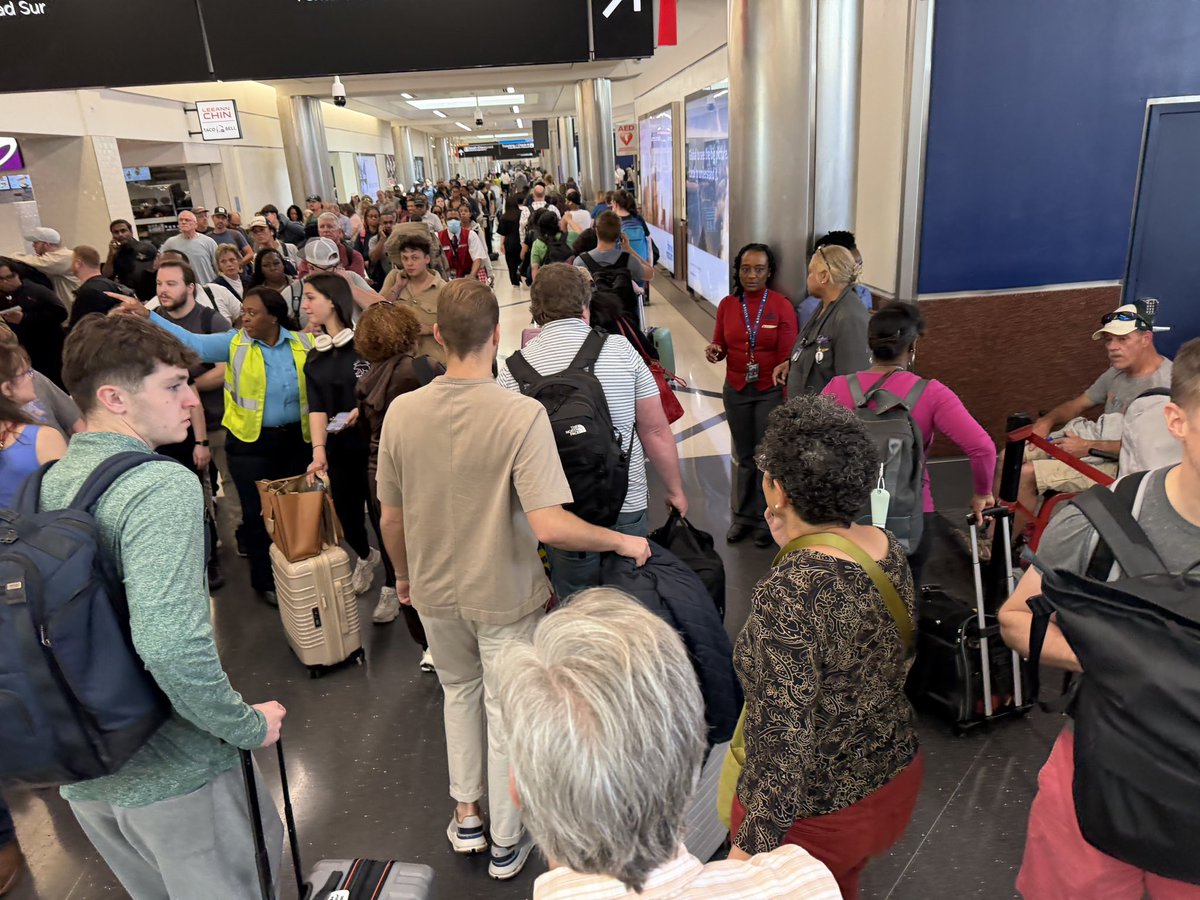
I’m at the @ATLairport and decide to get here 6 hours ahead of my flight. It’s a chaotic disaster! TSA precheck key! No #Clear. No Touchless screening. Feels like Hunger Games! Good luck and stay calm!
Always fun to see our @adidas shoes made by @Carbon technology in the wild! This time the Adidas Climacool which is a specialized design for maximum breathability and moisture management, featuring 360-degree airflow through mesh uppers, ventilated midsoles, and outsoles. And according to the clerk “selling like hotcakes at a good price point of $160”—3D printing has come of age!! In Chicago @Nordstrom on Michigan Ave. Bravo team!
Great visit from @kellehersan to our group at @Stanford—her seminar “What we talk about when we talk about Love [Chemistry]!” was equal parts science and soul.
Grateful too for the gift of 100 Poems—a perfect reminder that chemistry, like poetry, is about connection.
Wore green in her honor ☘️—felt only right to welcome Dublin to Stanford.
Rooting for this outcome, a diametric opposite to Citrini’s piece. Still reading, but enjoying it as a non-Doomer.
“This was the pattern the bears missed. They tracked the dollars leaving software budgets but didn’t follow where those dollars went.”
The math on this project should mass-humble every AI lab on the planet.
1 cubic millimeter. One-millionth of a human brain. Harvard and Google spent 10 years mapping it. The imaging alone took 326 days. They sliced the tissue into 5,000 wafers each 30 nanometers thick, ran them through a $6 million electron microscope, then needed Google’s ML models to stitch the 3D reconstruction because no human team could process the output.
The result: 57,000 cells, 150 million synapses, 230 millimeters of blood vessels, compressed into 1.4 petabytes of raw data. For context, 1.4 petabytes is roughly 1.4 million gigabytes. From a speck smaller than a grain of rice.
Now scale that. The full human brain is one million times larger. Mapping the whole thing at this resolution would produce approximately 1.4 zettabytes of data. That’s roughly equal to all the data generated on Earth in a single year. The storage alone would cost an estimated $50 billion and require a 140-acre data center, which would make it the largest on the planet.
And they found things textbooks don’t contain. One neuron had over 5,000 connection points. Some axons had coiled themselves into tight whorls for completely unknown reasons. Pairs of cell clusters grew in mirror images of each other. Jeff Lichtman, the Harvard lead, said there’s “a chasm between what we already know and what we need to know.”
This is why the next step isn’t a human brain. It’s a mouse hippocampus, 10 cubic millimeters, over the next five years. Because even a mouse brain is 1,000x larger than what they just mapped, and the full mouse connectome is the proof of concept before anyone attempts the human one.
We’re building AI systems that loosely mimic neural networks while still unable to fully read the wiring diagram of a single cubic millimeter of the thing we’re trying to imitate. The original is 1.4 petabytes per millionth of its volume. Every AI model on Earth fits in a fraction of that.
The brain runs on 20 watts and fits in your skull. The data center required to merely describe one-millionth of it would span 140 acres.



![Joseph_DeSimone's tweet photo. Great visit from @kellehersan to our group at @Stanford—her seminar “What we talk about when we talk about Love [Chemistry]!” was equal parts science and soul.
Grateful too for the gift of 100 Poems—a perfect reminder that chemistry, like poetry, is about connection.
Wore green in her honor ☘️—felt only right to welcome Dublin to Stanford.](https://pbs.twimg.com/media/HDt9QeiaoAAY9zO.jpg)
![Joseph_DeSimone's tweet photo. Great visit from @kellehersan to our group at @Stanford—her seminar “What we talk about when we talk about Love [Chemistry]!” was equal parts science and soul.
Grateful too for the gift of 100 Poems—a perfect reminder that chemistry, like poetry, is about connection.
Wore green in her honor ☘️—felt only right to welcome Dublin to Stanford.](https://pbs.twimg.com/media/HDt9QehaYAA9yPL.jpg)










![Joseph_DeSimone's tweet photo. Great visit from @kellehersan to our group at @Stanford—her seminar “What we talk about when we talk about Love [Chemistry]!” was equal parts science and soul.
Grateful too for the gift of 100 Poems—a perfect reminder that chemistry, like poetry, is about connection.
Wore green in her honor ☘️—felt only right to welcome Dublin to Stanford.](https://pbs.twimg.com/media/HDt9Qeja4AAEtQi.jpg)


