The best drawing is the one you detail correctly.
The best engineer is the one who shows up on site.
The best plan is the one that gets built.
What makes these the best isn't the tool or the title, it's the discipline behind them.
Staircases can be elegant and complex. Check out this hand-drawn BBS (Bar Bending Schedule) for a special folded staircase. This design uses a specific shape of horizontal and vertical rings to create the steps themselves, with no traditional waist slab! This is engineering precision at its finest.
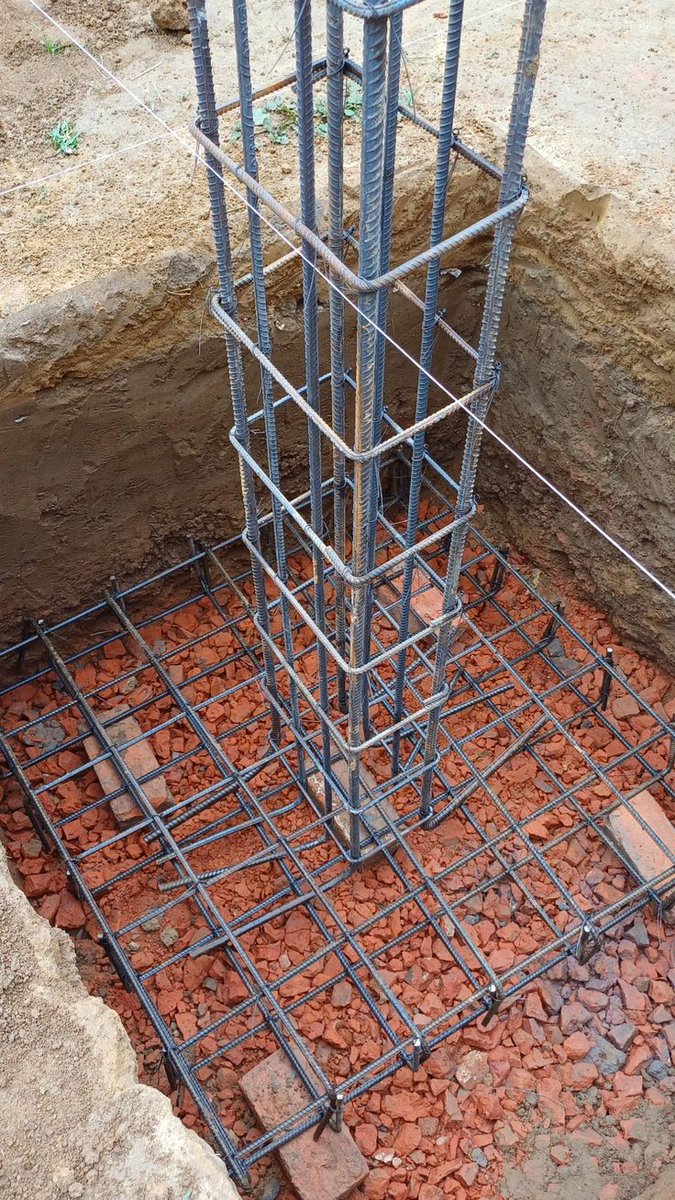
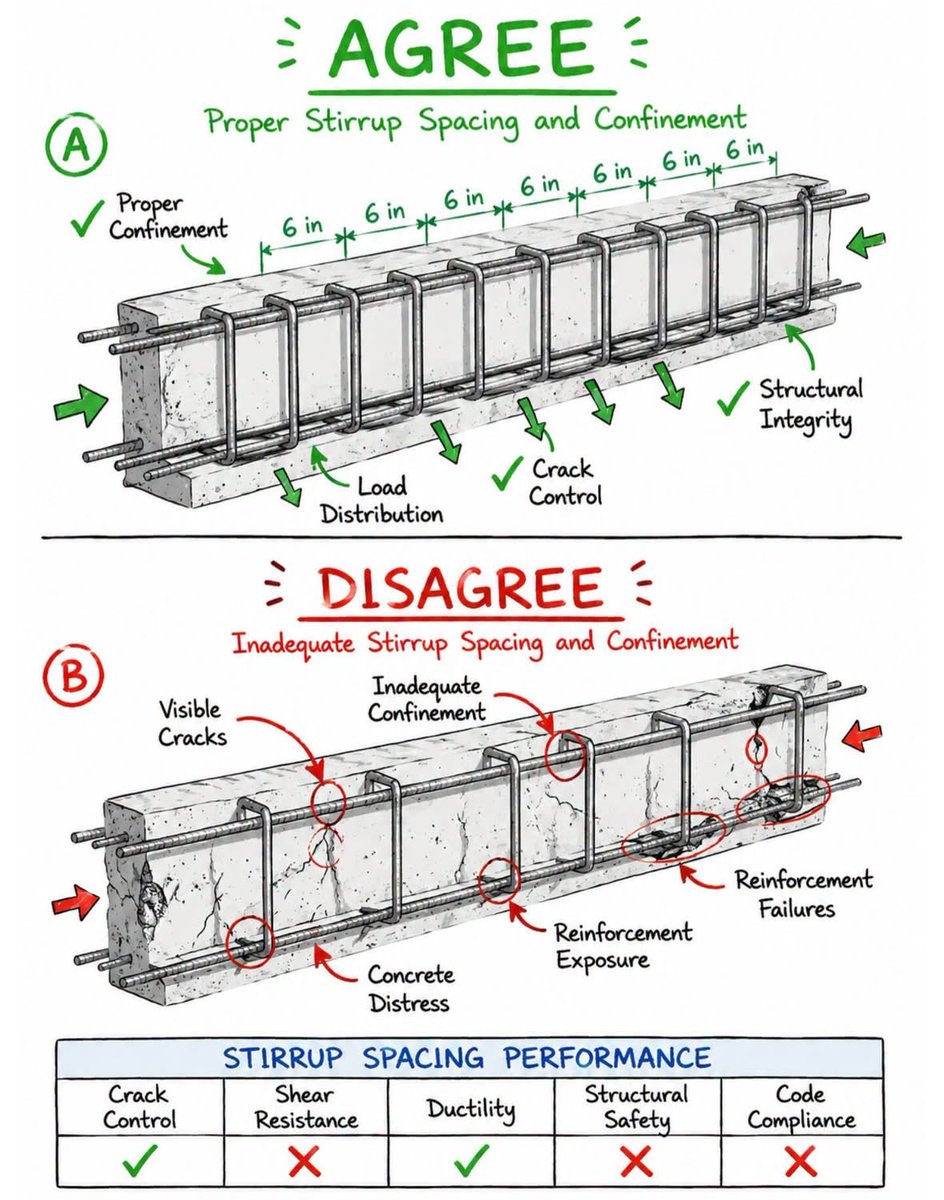
Efficiency is key on any job site. Pre-casting rebar cages for beams and columns saves time and ensures quality. Look at this close-up of a beam's steel skeleton. Notice the stirrups – those steel hoops – they're crucial for resisting shear forces. 🦾 Perfecting this process is a must for any engineering enthusiast.
Ongoing: The Judiciary Council is holding a two-day retreat at Lake Victoria Serena Golf Resort and Spa, Kigo.
The Chairperson of the Judiciary Council and Chief Justice, Justice Dr. Flavian Zeija, welcomed members to the retreat and congratulated Justice Moses Kazibwe Kawumi on his appointment as Deputy Chief Justice, and HW Agnes Alum on her appointment as Chief Registrar.
During the retreat, the Council will consider the draft Magistrates Courts (Transfer and Management of Files) (Practice) Directions, 2026 and the Code of Conduct for the Judiciary Service, 2026.
Presenting the draft Magistrates Courts (Transfer and Management of Files) (Practice) Directions, 2026 are HW John Paul Edoku (Registrar Planning Research and Development) and HW Juliet Komugisa (Assistant Registrar, Family Division).
The Judiciary Council is a statutory body responsible for advising on the administration of the Judiciary and related policy matters. It is chaired by the Chief Justice and comprises 17 members drawn from the Judiciary and other key institutions
The High Court remains the custodian of the rule of law, good governance, and constitutionalism. Today, it has suspended the patently illegal decision of the Cabinet Secretary for Energy and Petroleum to appoint some board members of KETACO outside the prevailing legal framework. The Court has also suspended all Board resolutions made by and in the presence of these individuals.
The Evergreen climbers are perfect for your hedges. Some call them Honey Suckle. Seedlings are readily available. They grow so fast. They don't have thorns. Take a look at this..
🔴🚨BREAKING: CoA says Paying for Land Is Not Enough - Occupation May Matter More Than the Title Deed
Many Kenyans assume that once a land sale agreement collapses, the buyer loses everything and the registered owner automatically keeps the property. The Court of Appeal has now shaken that assumption in Okul v Ondieki [2026]. The dispute revolved around a Nakuru property allegedly sold in 1985. The purchaser paid the agreed consideration, took possession, developed the land, erected rental structures, and remained in occupation for over three decades. Yet the transfer was never completed. Years later, after both the buyer and seller had died, the seller’s family claimed the property as part of the deceased’s estate and argued that no valid transfer had ever occurred.
The Court of Appeal was confronted with a question that keeps many investors, families, and estate administrators awake at night: can a person who never received a title deed still end up owning the land? The answer was a resounding yes. The Court held that where a purchaser enters land pursuant to a sale agreement, openly occupies it, develops it, collects rent, and remains there uninterrupted for the statutory period, that occupation can mature into adverse possession even if the sale transaction itself was never completed. In one of the most consequential statements in the judgment, the Court affirmed that entry into land under an incomplete sale agreement, particularly where the purchaser is not to blame for the failure to complete, can ultimately extinguish the registered owner's rights altogether.
The implication for landowners, investors, succession practitioners, and property developers is profound. A title deed is not always the end of the conversation. If another person occupies your property openly, treats it as their own, develops it, earns income from it, and you fail to assert your rights for years, the law may eventually recognize them rather than you. The decision reinforces a powerful principle in Kenyan property law: ownership is not protected by registration alone; it must also be defended through action. For those dealing with old land transactions, stalled transfers, family estates, or forgotten sale agreements, this judgment is a reminder that time can quietly transfer property just as effectively as a signed transfer form.
Kindly retweet. 🙏












![AssociatesRoba's tweet photo. 🔴🚨BREAKING: CoA says Paying for Land Is Not Enough - Occupation May Matter More Than the Title Deed
Many Kenyans assume that once a land sale agreement collapses, the buyer loses everything and the registered owner automatically keeps the property. The Court of Appeal has now shaken that assumption in Okul v Ondieki [2026]. The dispute revolved around a Nakuru property allegedly sold in 1985. The purchaser paid the agreed consideration, took possession, developed the land, erected rental structures, and remained in occupation for over three decades. Yet the transfer was never completed. Years later, after both the buyer and seller had died, the seller’s family claimed the property as part of the deceased’s estate and argued that no valid transfer had ever occurred.
The Court of Appeal was confronted with a question that keeps many investors, families, and estate administrators awake at night: can a person who never received a title deed still end up owning the land? The answer was a resounding yes. The Court held that where a purchaser enters land pursuant to a sale agreement, openly occupies it, develops it, collects rent, and remains there uninterrupted for the statutory period, that occupation can mature into adverse possession even if the sale transaction itself was never completed. In one of the most consequential statements in the judgment, the Court affirmed that entry into land under an incomplete sale agreement, particularly where the purchaser is not to blame for the failure to complete, can ultimately extinguish the registered owner's rights altogether.
The implication for landowners, investors, succession practitioners, and property developers is profound. A title deed is not always the end of the conversation. If another person occupies your property openly, treats it as their own, develops it, earns income from it, and you fail to assert your rights for years, the law may eventually recognize them rather than you. The decision reinforces a powerful principle in Kenyan property law: ownership is not protected by registration alone; it must also be defended through action. For those dealing with old land transactions, stalled transfers, family estates, or forgotten sale agreements, this judgment is a reminder that time can quietly transfer property just as effectively as a signed transfer form.
Kindly retweet. 🙏](https://pbs.twimg.com/media/HKcLsJjWAAASxAb.png)


