A social impact leader with more than two decades of real-world experience developing strategy, culture, programs, and leaders through an integral framework.
What makes integrative scholarship actually cohere? A story. The evolutionary arc from physics to biology to psychology to culture isn't just a compelling narrative — it's what shows why all the ways of knowing reality belong together. https://t.co/0XQ6pxD6g6
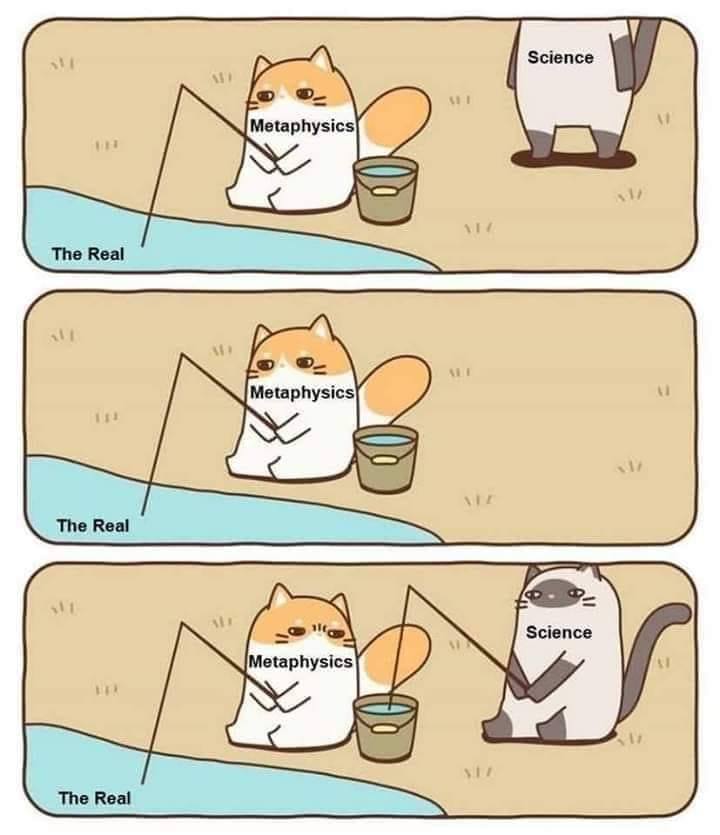
Modernity: reality is given. Postmodernity: reality is constructed. Nick Hedlund's synthesis — both are partly true. Constructions can be more or less in tune with the reality that holds them, and the ones too far out of resonance self-terminate: https://t.co/fJ9qjzhhsb
We are all blessed to walk the same earth as @JamesCarville. Even if your politics are not aligned he is still a gift and a treasure that should be savored while it can.
https://t.co/go10TzP4OV
The eagerness for OpenAI to sign the contract on the very night their rival got fired is likely to be a lot more revealing than the contract terms, which in any event are ambiguous and unlikely to be enforced by a court that gives a lot of deference to the executive.
There’s a serious argument here re: national security and democratic accountability (no surprise there — Palmer's exceedingly sharp and laudably patriotic).
But there’s also a very serious argument about constitutional limits.
The government may regulate. It may contract. It may legislate. What it cannot simply do (even in the name of protecting democracy) is force private actors to operate contrary to their own policies without raising concerns about compelled speech, due process, and other constitutional protections.
They could also build/maintain the tech in-house. Or contract with a better-aligned vendor. And if the State is determined to use Anthropic’s tech, theatrical MIDNIGHT FRIDAY DEADLINES and public intimidation hardly seem like the ideal way to achieve that outcome.
@kofinas@RaoulGMI This misses a lot. All relevance realization—meaning—remains human, AI can’t do it. That holism scales, so AI becomes just next (radically powerful) tool for us to do more meaningful things easier. Value follows meaning, so demand shifts. New equilibrium struck.
@MeghanMcCain I live in Oakland, CA, and I never heard a single one of my Obama loving friends ever call McCain a racist. We admire that clip as much as you do.
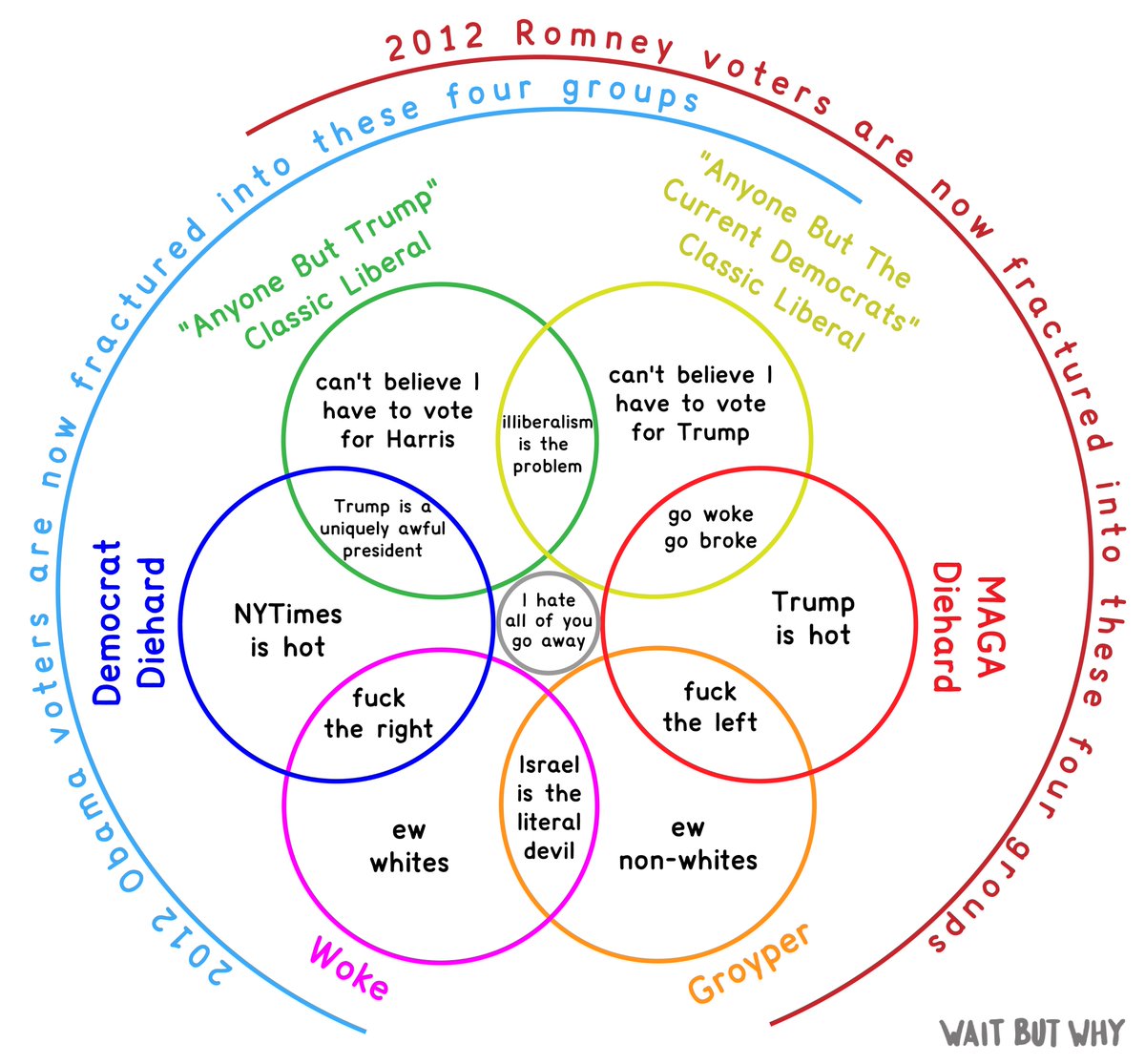
America’s political landscape is more complicated than it used to be. Here’s my attempt to depict what I see as the seven broad camps today. Most people I know fall pretty cleanly into one of these circles (each of which has some common ground with the two adjacent circles).
Some additional points:
- The top two circles (green/yellow) are concerned first and foremost with the rise of illiberalism—disregard for the constitution, cancel culture, mob behavior, political violence. They see liberal vs illiberal as more critical right now than left vs right. In 2020, they agreed that wokeness was bad but today they’re divided on whether Trump or Harris/Biden are the lesser of two evils.
- For the middle two circles (blue/red), left vs right is the main thing. They’re not illiberal themselves but tend to focus on illiberalism from the other side while ignoring or condoning illiberalism from their own team. Both skew older and are the main consumers of traditional media, whether it be cable news or newspapers.
- The two lower circles (pink/orange) share a strong sense of grievance, place utmost importance on identity, tend to view identity groups (race, religion, sex, etc.) as monoliths, and are prone to believing conspiracy theories that fit with their worldview. Both skew younger, with woke skewing feminine and upper class and groyper skewing masculine and lower class. Both use revolutionary rhetoric, seeing the establishment as rotten to the core, and readily employ illiberal tactics under the belief that desperate times call for desperate measures.
Thoughts?