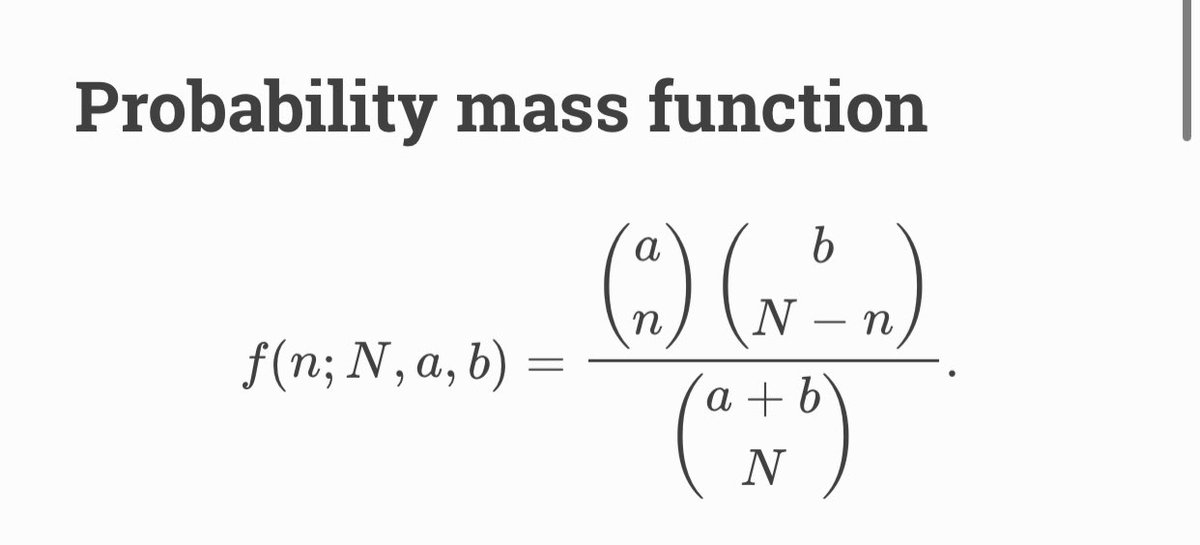
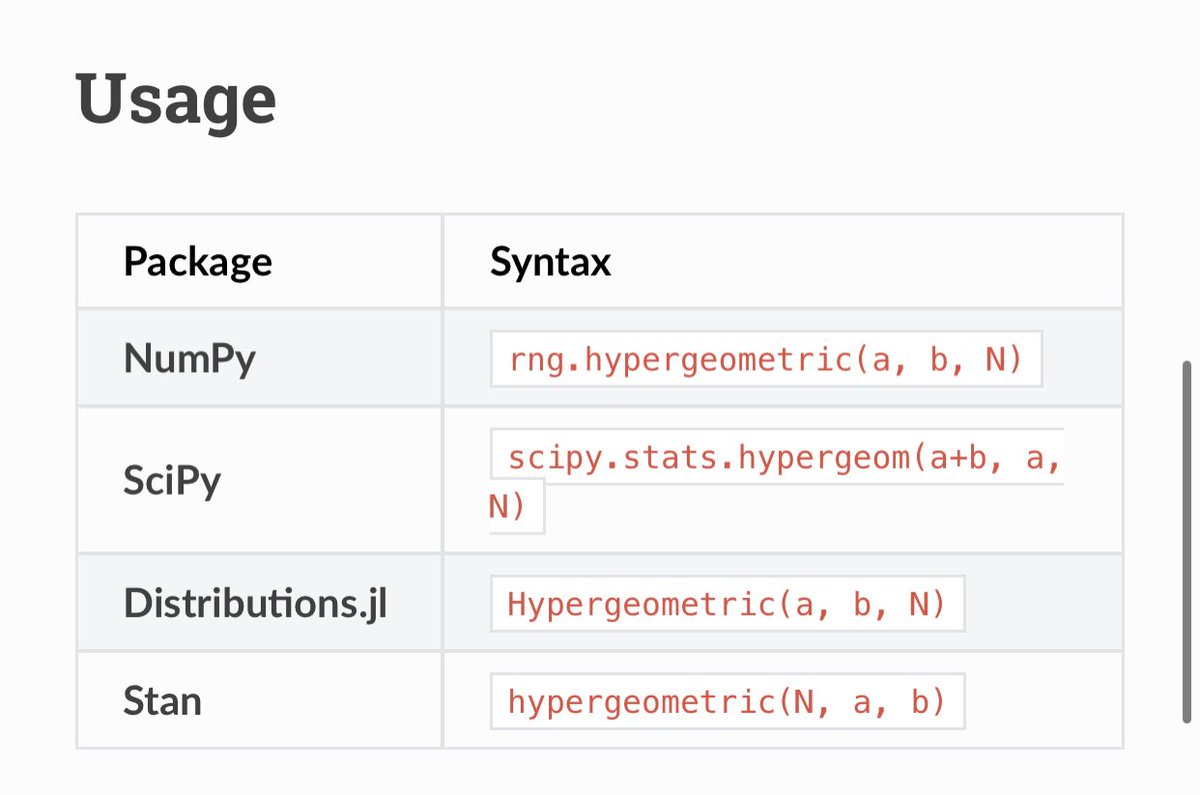
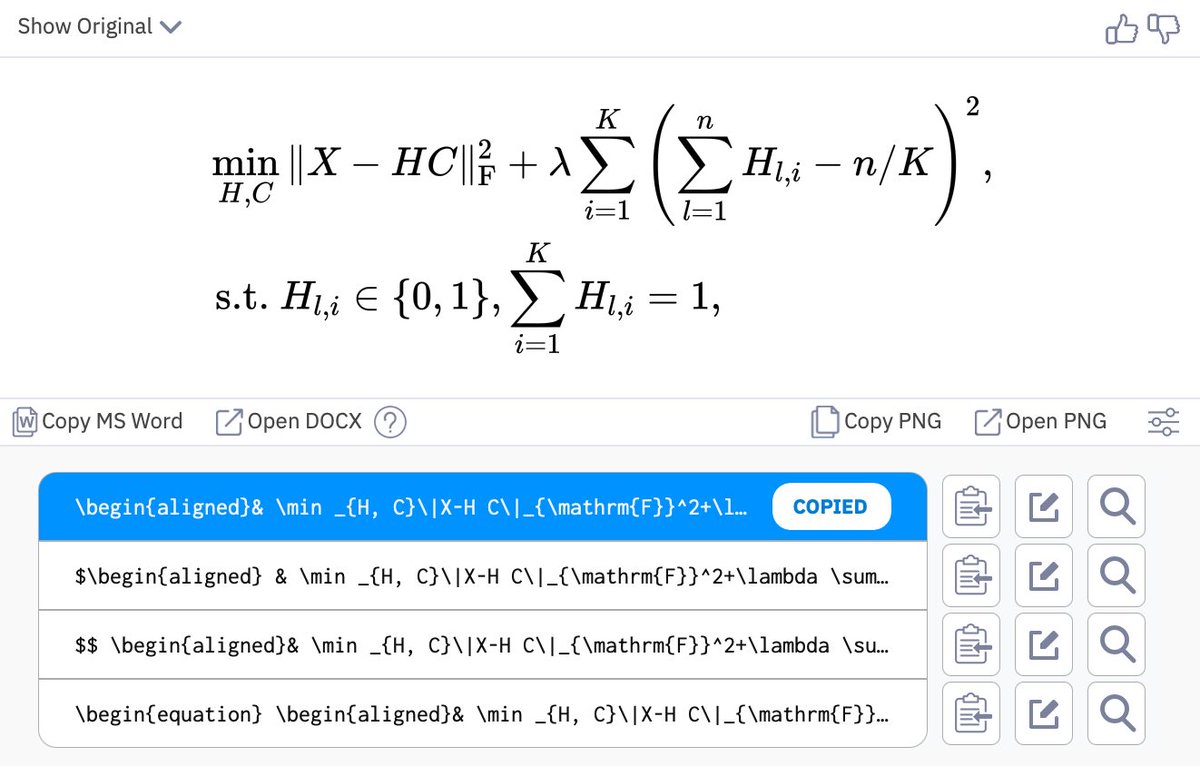
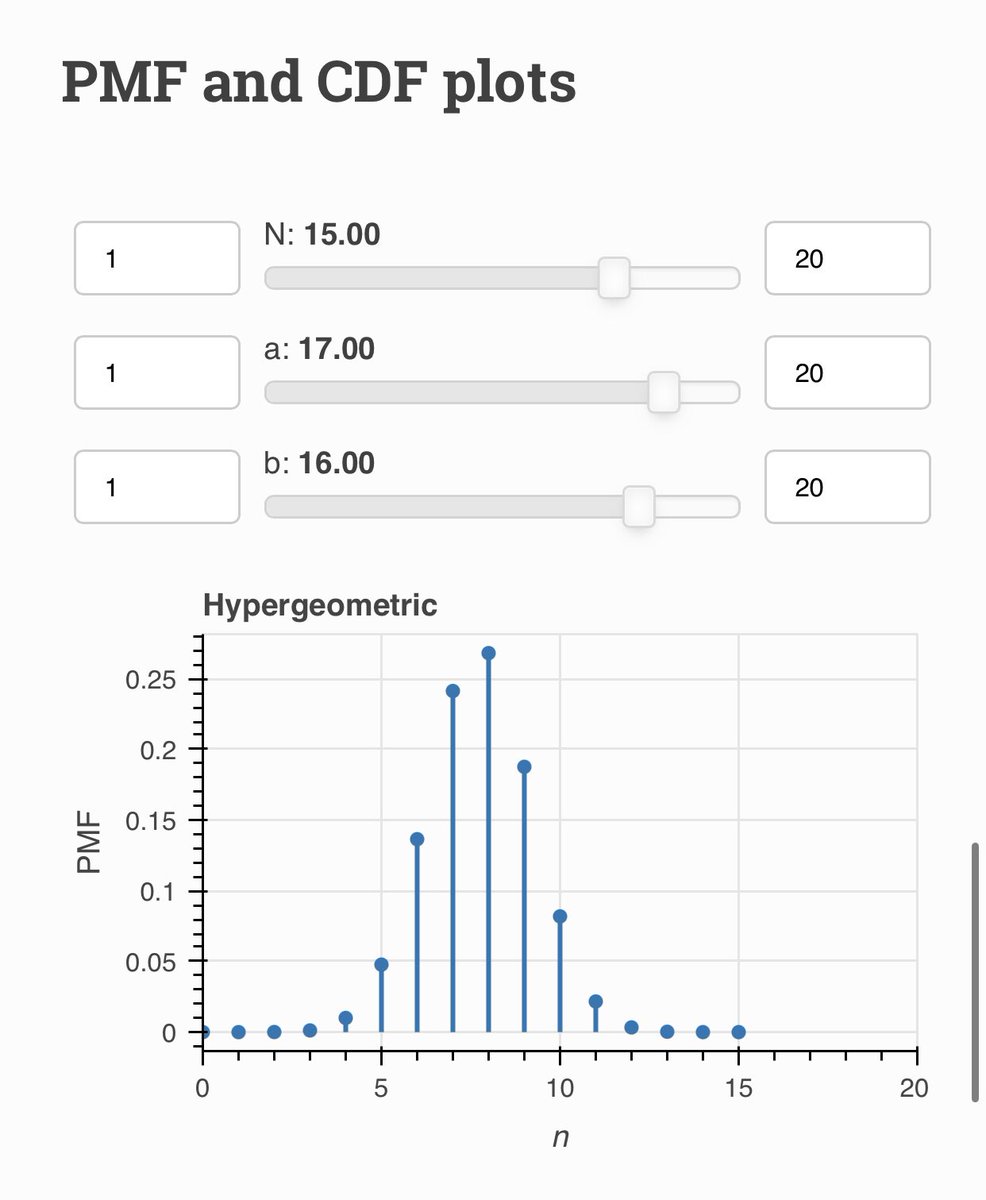
This is one of the more useful resources I have come across recently: Probability Distribution Explorer. It provides descriptions, equations, code, and interactive visualizations for many different distributions. https://t.co/DT7GyosFkK
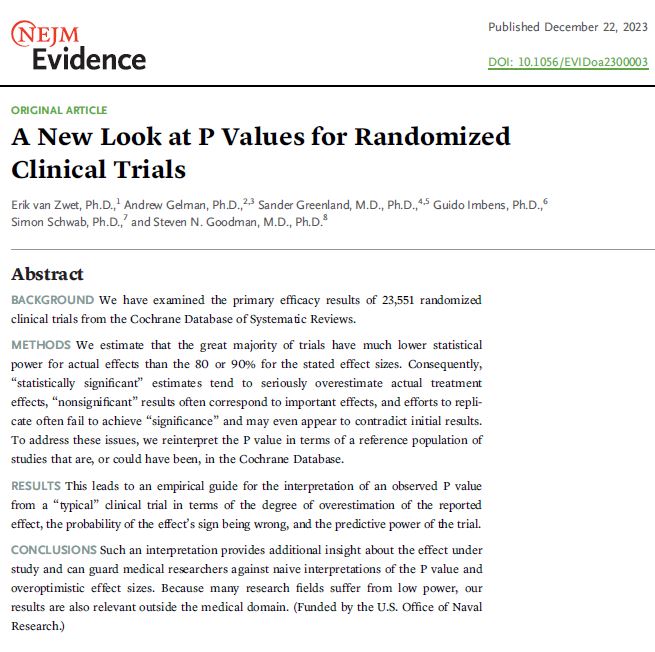
Don't like p-values? We're presenting a completely new interpretation in the context of clinical trials. With Andrew Gelman, Sander Greenland, @guido_imbens Simon Schwab and Steve Goodman. @Lester_Domes@goodmanmetrics@NEJMEvidence
https://t.co/iIu46aY3mZ
Excited to announce a new #rstats package, Trelliscope, for interactive exploration of data frames of visualizations: https://t.co/IhHpM5vssM. This reimagines the older trelliscopejs package. It's ready for public evaluation - give it a try and let me know if you have feedback!
New paper by Cristian Mesquida @JennyMurphy2@JoeWarne1 and me in the Journal of Sport Sciences: “Publication bias, statistical power and reporting practices in the Journal of Sports Sciences: potential barriers to replicability” https://t.co/UgaaymaarK Some results:
Are you an ESM/EMA researcher and do you want a function that can quickly calculate a within-person and between-person Cronbach's alpha?
I just wrote a function in R that does exactly that and you can find it here:
https://t.co/S3pXftcZ9h
We have an awesome list of 18 free #opensource & #rstats workshops by amazing volunteers from the community for #rinpharma this year!🎢🎬
Registration will open on Mon Oct 2! Workshops will run Oct 16-20th, Oct 23rd & Oct 27th.
Please see the sneak peek below of full list!:
👇
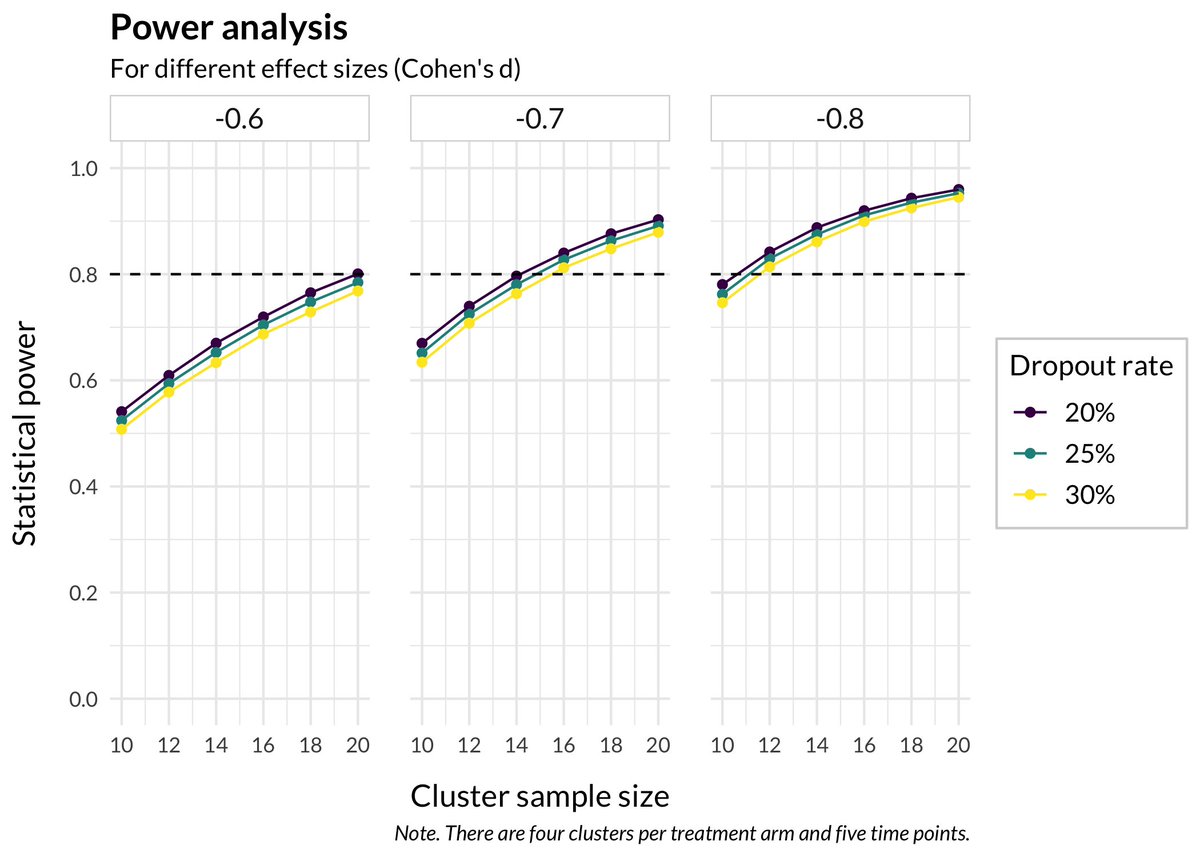
Here is a brief example on how you can do power analysis for a longitudinal multi-level study when you want to vary the input parameters and easily produce visual output of all variations.
#rstats#openscience
https://t.co/T479kvtv1X
280 million people hear voices.
I am one of them.
Voices can be one's worst enemy or best friend, sometimes both at the same time.
I would love voices to become seen as neurodivergence, not eradicating difference but making affirmative room for it.
#WorldHearingVoicesDay
Science is great but academia not so much. Earlier this week I revised my talk "Science as Amateur Software Development". The unprofessional way that academics curate & process data would benefit from professional habits of software engineers and chefs: https://t.co/7e3HTQ6dhY
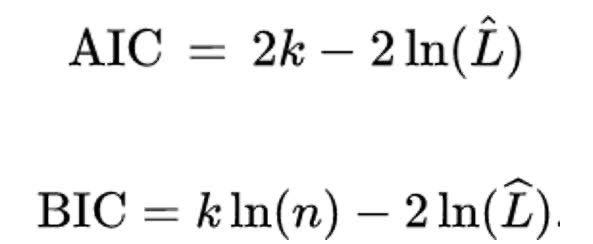
Unpacking Information Criteria - AIC & BIC in Plain English
1/ Intro to Information Criteria 🚀:
Ever built a model and wondered if adding more variables makes it genuinely better? Or just more complex? Enter AIC & BIC - tools to help balance good fit with simplicity!
2/ The Essence of Model Selection 🎯:
Choosing the "best" model isn't just about which fits the data most closely, but which does so with the fewest unnecessary variables. It's a trade-off between fit & simplicity.
3/ AIC: Akaike Information Criterion 🧩:
Proposed by Hirotugu Akaike in the 1970s, AIC evaluates a model's fit and then adds a penalty for each parameter (or variable) used. The idea? To discourage needless complexity.
4/ BIC: Bayesian Information Criterion 🔍:
Introduced by Gideon Schwarz in the 1970s, BIC also balances fit & simplicity. But it's stricter! Its penalty grows more substantially with the addition of parameters, especially as the sample size increases.
5/ AIC vs BIC: The Key Difference ✌️:
Both penalize complexity, but while AIC focuses on predicting future data points, BIC is all about identifying the true model among a set of candidates. In large samples, BIC tends to favor simpler models than AIC.
6/ When to Use Which? 🤷♂️:
If you're keen on predicting new observations, AIC might be your go-to. For more theoretical pursuits, like understanding underlying processes or if you have a large sample, BIC could be preferable.
7/ Both Have Limitations ⚠️:
No criterion is perfect! AIC & BIC can sometimes choose overly complex or too simplistic models. They're guides, not gospel. Always use in conjunction with domain knowledge & other diagnostics.
8/ In Practice: Model Comparisons 🔄:
When comparing multiple models, the one with the LOWEST AIC or BIC is typically considered the best. But remember, small differences (especially in AIC) might not always be meaningful.
9/ Real-World Analogy 🍔:
Imagine you're at a restaurant. AIC is like wanting the best value meal – tasty but not overly pricey. BIC is more discerning, willing to pay more but only for truly standout dishes.
10/ Extensions & Relatives 🌱:
Beyond AIC & BIC, there's a world of other criteria: corrected AIC (AICc), DIC (used in Bayesian contexts), and more. Each has its unique advantages and contexts.
11/ Final Thoughts:
Information criteria like AIC & BIC offer a structured way to think about model selection, nudging us to question not just how well a model fits, but at what cost in terms of complexity.
12/ Engage & Share:
How have you used AIC/BIC in your modeling journeys? Got more insights or questions about them? Let's chat! If this thread helped, do like, share, and comment below! 🌟
#DataScience #Statistics
What a wonderful way to end #RSS2023Conf. A brilliant presentation from Prof Fiona Steele on dyadic data. I would never normally get to see a talk like this and it was fascinating! This is what is brilliant about @RSSAnnualConf
📣We've just launched a new guide for data visualisation
Covering the core principles & elements of #datavis - the structure of charts & tables and how they can be refined to aid readability.
Read it here ⬇️
https://t.co/Nr5dOgUZxC
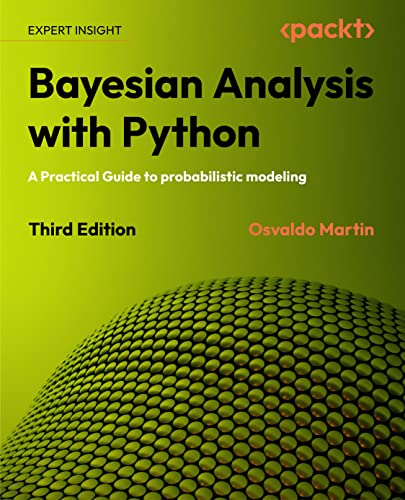
The third edition of Bayesian Analysis with Python will be published in four to six months.
In the meantime, I have updated the code of the first 5 chapters from the second edition https://t.co/OWaQttRgNX.
I wrote a blog post about Bayesian estimation approaches to multi-level regression. It's aimed at newbies to estimation approaches. But it works perfectly for everyone who can't sleep at night.
https://t.co/UtVLNWObdJ
#RStats#brms
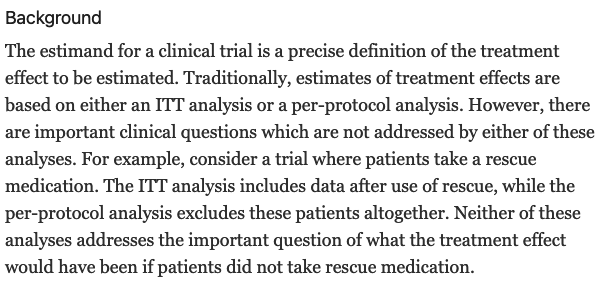
How are we supposed to use data to inform clinical practice? Nice paper pointing out that even randomized experiments require careful thinking about what we want to know. https://t.co/fj58drOqK6
I think too about public policy, where experiments are harder and estimands vaguer.
I often get asked about Bayes factors and confidence intervals as alternative to p-values. I don’t think either of these is any solution at all. https://t.co/VqosMxVAbM
Love the crisis of interpretation these slides have caused. Great example to expose how confusing statistical "adjustment" can be. Adjusting for being tired, people who sleep more hours are no more aware than those who sleep less.