On my way to the office this morning, I passed a group of young people protesting, a Palestinian flag draped over their shoulders.
And I asked myself a question I can't shake: why does this generation always fall into the same trap? No matter the history. No matter the context. Even the ones from wealthy families, who went to the best schools, who were dealt every good card. Always the same trap.
I don't think it's stupidity. I think it's a mechanism. And a mechanism can be taken apart, piece by piece.
A. The observation: everything the state touches becomes unaffordable.
Look at economist Mark Perry's famous chart, the one people call "the chart of the century." It tracks US prices since 2000.
At the top, what explodes: hospital services, college tuition, textbooks, childcare, housing. Increases of +100%, +150%, up to +250%, far above general inflation.
At the bottom, what collapses: TVs, software, phones, toys, clothing. A TV today costs a fraction of what it did in 2000, for an infinitely better product.
Look at what separates the two groups. It isn't technology. It isn't complexity. It's one variable: how much the state is involved.
At the top, sectors that are subsidized, regulated, shielded from competition, where the state funds demand and blocks supply. At the bottom, sectors where companies fight every single morning to serve you better and cheaper.
B. The mechanism: why it's systematic.
When the state subsidizes demand without freeing supply, prices rise. Every time. Guaranteed student loans, and universities raise tuition. Housing aid plus blocked building permits, and rents skyrocket. Administered healthcare, and bureaucracy eats the budget before it ever reaches the patient.
In France it's even more vicious, because the price doesn't disappear: it hides. You never see the hospital bill, you pay it through payroll contributions. You never see the cost of school, you pay it through taxes. Public spending at 57% of GDP, one of the heaviest tax burdens in the world, more than €3.4 trillion in debt. And the result? Overflowing ERs, falling PISA scores, young people who can't afford to live in the city where they work.
The market didn't fail in these sectors. It was never allowed in.
C. Suffering demands a culprit.
A 22-year-old lives all of this in their bones. They can't find a place to live. Their degree either buries them in debt or opens no doors. The future feels blocked. That suffering is real, and I don't deny it for a second.
But human beings can't stand suffering without a culprit. They need a face. A scapegoat.
And this is where everything is decided: who taught them how to read the world?
D. Whoever tells the story picks the villain.
Schools are public. Universities are public. Culture runs on grants. Film goes through funding committees. Public broadcasting shapes the narratives. The people handing down the interpretive framework are, overwhelmingly, paid by the very system that creates the problem.
Do you really think that system is going to name itself as the culprit?
No. It names the capitalist. The boss. The landlord. "The rich." The multinational. The commercial West. Same role, same casting, every time.
E. One lens, a thousand causes.
And this brings me back to that flag. A generation taught to read every situation through a single lens, oppressor on one side, rich, Western, capitalist, oppressed on the other, will apply that lens everywhere. To housing. To climate. To conflicts on the other side of the world. The cause changes, the lens stays. That's why the trap is always the same: it's not the cause that draws them in, it's the way of thinking that was installed in them.
F. The perfect inversion.
Here's the irony. Capitalism is the force that drove down the price of almost everything it touched. The state is the force that blew up the price of almost everything it captured. And young people blame the first for the crimes of the second.
It's like blaming the firefighter for the fire because you saw him at the scene.
G. The ballot box confirms it.
In the US, a few weeks out from the midterms, a large share of urban young voters is getting ready to vote Democrat for more state, more spending, more regulation. New York elected a self-described socialist mayor, carried by young voters, on promises of rent freezes and city-run grocery stores. Rent freezes, the policy that has made housing scarcer everywhere it's been tried. The cure that worsens the disease.
In France, it's the same play in two acts. Part of the youth votes for the radical left, which promises more state. Another part votes for the center, which promises to "manage" the state well, and has dug the debt deeper than ever. Two different ballots, one shared assumption: the problem is the market, the solution is the state.
H. The way out.
These young people aren't stupid. They're right to be angry. They're just aiming at the wrong target.
The day they understand that their rent, their tuition and their hospital are expensive precisely because the state runs them, their anger will change direction. They'll stop protesting against those who create. They'll start protesting against those who capture.
That day, the greatest intellectual scam of our time will be over.
Dear socialist friend,
Nothing is stopping you.
If collective ownership works so much better, you can prove it by next Tuesday. Pool your savings with your comrades. Elect a planning committee. Run a bakery, a farm, a repair shop – shared ownership, equal pay, decisions by vote. All of it is fully legal, today, everywhere in the West. No revolution needed.
And yet.
You want the workers to seize the factories – but you won’t open a food truck with three people from your group chat. You demand collective housing – but you won’t sign a joint lease with people who agree with you about everything.
People have tried voluntary socialism for two hundred years. The communes keep dissolving – the members simply walk out. The only socialist countries that lasted were the ones that locked the borders.
That’s the whole story. Where leaving is allowed, everyone leaves. Socialism only survives where leaving is banned. The people voted – on foot.
Just do it. Or admit that "collective" was always just a word for other people’s property.
In July 1985, over a billion people watched Live Aid.
Months earlier, Michael Jackson and Lionel Richie had written "We Are the World." All of it was a response to a famine in Ethiopia.
Almost nobody remembers who actually caused the famine. 🧵
After more than two years of Milei, the international press still does not understand what is happening in Argentina.
The narrative abroad is "shock therapy, social pain, fragile coalition." That frame misses the actual mechanism. Argentina did not have a budget problem. It had a printing problem. From 2003 to 2023 the central bank financed deficit after deficit until the peso lost 99 percent of its value against the dollar. Annual inflation hit 211 percent in 2023. Half the country was poor. That was the floor.
What changed is not vibes. It is arithmetic. The fiscal deficit was eliminated for the first time in 16 years. Monthly inflation fell from 25 percent to low single digits. The central bank stopped printing to fund the Treasury. Country risk dropped from over 2,500 basis points to a fraction of that. Argentine sovereign debt, which used to trade like a default option, began behaving like normal emerging market paper.
Critics say poverty rose. It did, briefly, because removing price controls and subsidies revealed the real prices of energy, transport and food that the state had been hiding with debt. Once measured honestly, poverty has been falling fast. Real wages are recovering. Mortgages in pesos are reappearing, something that had not been possible in a generation.
This matters beyond Argentina. It is the clearest live experiment in whether a developed-style economy can be rebuilt by pulling the state out of places it never belonged. Spain, Italy and France should be paying attention. A country does not get poor because it lacks resources. It gets poor because its political class learned to live off printing money and calling it social policy.
Argentina spent 80 years proving that. It is now spending two years proving the opposite.
@KenRoth Correction: Economic disaster caused by 65 years of failed socialist policies under the Castro regime, not because of a few months of an oil embargo.
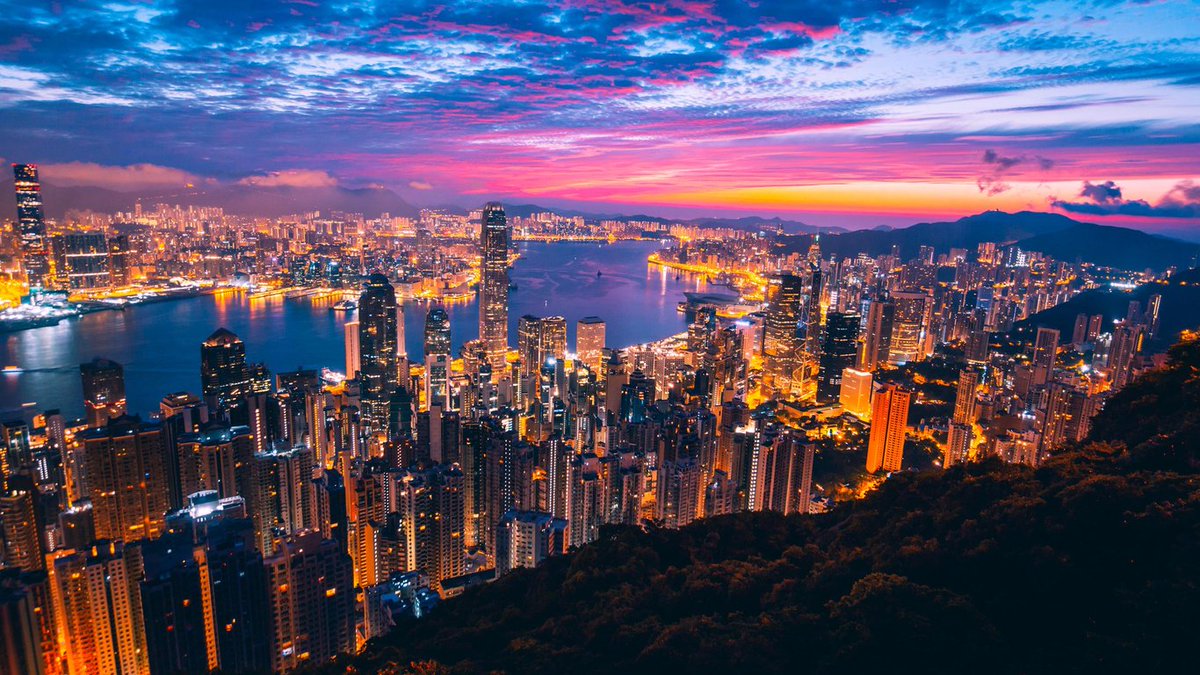
In the aftermath of WW2, Hong Kong was a bombed-out British colony of 600,000 refugees, with no natural resources and a per capita income lower than many African nations. But by the 1980s it had become one of the richest places on earth. The man most responsible was John Cowperthwaite, Financial Secretary from 1961 to 1971.
Cowperthwaite refused to plan the economy. He cut taxes to a flat 15 %, scrapped tariffs and subsidies, rejected industrial policy, and even stopped collecting detailed economic statistics - lest civil servants use the numbers to meddle. “I did very little”, he said. “All I did was to try to prevent some of the things that might have been done.”
Government spending stayed below 15 % of GDP. Markets, not ministers, decided what to produce. The result was explosive growth: poverty collapsed, skyscrapers rose, and Hong Kong’s income overtook Britain’s.
Today, most Western governments still strangle their economies with taxes and regulations, ignoring the lesson Hong Kong proved: the surest path to prosperity is to get out of the way.
Free markets are the best way to create wealth AND reduce poverty ever discovered.
One of the big puzzles of history is how the same lesson has to be learned again and again. Poland, China, India, and now Argentina are the latest experiments.
Argentina with Milei:
- Poverty down: 53% to 28%.
- Inflation down: 200% to 33% (and continuing to fall
- Growth up to: 4.4% last year.
- Govt surplus: first in 123 years.
https://t.co/xwHfaDbTo8
In 2019, MIT professor Patrick Winston gave a legendary 1-hour lecture called “How to Speak.”
It has 18M+ views for a reason.
His frameworks:
• Your ideas are like your children
• The 5-minute rule for job talks
• Why jokes fail at the start
15 lessons on communication:
Milton Friedman 🗣️
“Inflation is just like alcoholism. In both cases when you start drinking or when you start printing too much money, the good effects come first. The bad effects only come later.”
“That’s why in both cases there is a strong temptation to overdo it: to drink too much and to print too much money.”
“When it comes to the cure, it’s the other way around. When you stop drinking or when you stop printing money, the bad effects come first and the good effects only come later.”
“That’s why it’s so hard to persist with the cure.”
Ludwig von Mises warned us decades ago: "The middle classes are the chief victims of inflation." While the wealthy own real assets that rise with monetary expansion and the poor receive government transfers, the middle class gets crushed holding cash savings and fixed incomes. Their purchasing power evaporates as central banks print money to fund government spending.
Look around today and you see exactly what Mises predicted. Anyone who saved in bank accounts earning 0.5% interest while inflation ran at 8% lost massive wealth. Meanwhile, asset owners — those with stocks, real estate — saw their holdings soar. The Fed's money printing didn't create prosperity; it redistributed wealth from savers to debtors and asset holders.
But here's what makes this particularly insidious: politicians sell inflation as helping "working families" while systematically destroying the middle class foundation of society. They promise stimulus and easy money will boost employment, yet ignore how monetary debasement hollows out the very people who built their savings through productive work rather than financial speculation.
Mises understood that sound money isn't just an economic issue — it's a moral one. When you can print money, you don't need to convince people to fund your programs through taxes. You just inflate away their savings instead.
LASIK eye surgery cost $2,200 per eye in 2000. Today it's around $1,000 per eye despite 24 years of inflation. Meanwhile, an MRI that cost $1,200 in 2000 now costs $3,000+. The difference? LASIK operates in a free market with no insurance interference and minimal regulation.
When patients pay directly, providers must compete on price and quality. LASIK clinics advertise prices, offer financing, and constantly improve technology to attract customers. Compare this to hospital procedures where prices are hidden, patients never see bills, and insurance companies negotiate opaque rates that somehow always increase faster than inflation.
Cosmetic surgery follows the same pattern. Breast augmentation, rhinoplasty, and other elective procedures have become more affordable and safer over decades. Surgeons invest in better techniques and equipment because they must satisfy paying customers, not insurance bureaucrats or hospital administrators focused on maximizing reimbursements.
The lesson is clear: remove third-party payment systems and excessive regulation, and you get Austrian economics in action. Prices fall, quality rises, and innovation accelerates. Healthcare costs aren't rising because of aging populations or new technology—they're rising because we've destroyed the price mechanism that makes markets work.
In 1959, Fidel Castro promised to redistribute Cuba's wealth and create equality for all. Within a decade, the island that once exported sugar and cigars to the world couldn't even keep its own lights on. The wealthy fled, but instead of their riches trickling down to the poor, everyone just became equally poor together.
The revolucionarios had calculated that seizing the means of production would mean seizing prosperity itself. What they discovered instead was that prosperity isn't sitting in some vault waiting to be redistributed—it's created daily by millions of voluntary exchanges, investments, and entrepreneurial risks. When you abolish those mechanisms, you don't redistribute wealth; you redistribute poverty.
Today's politicians make the same mathematical error Castro did: they see inequality and assume it represents a fixed pie that just needs better slicing. They never ask why some pies grow while others shrink, or why the countries promising equality most loudly seem to deliver scarcity most efficiently.
The cruel irony is that the only truly "equal" outcome socialism reliably produces is making everyone equally worse off than they started.
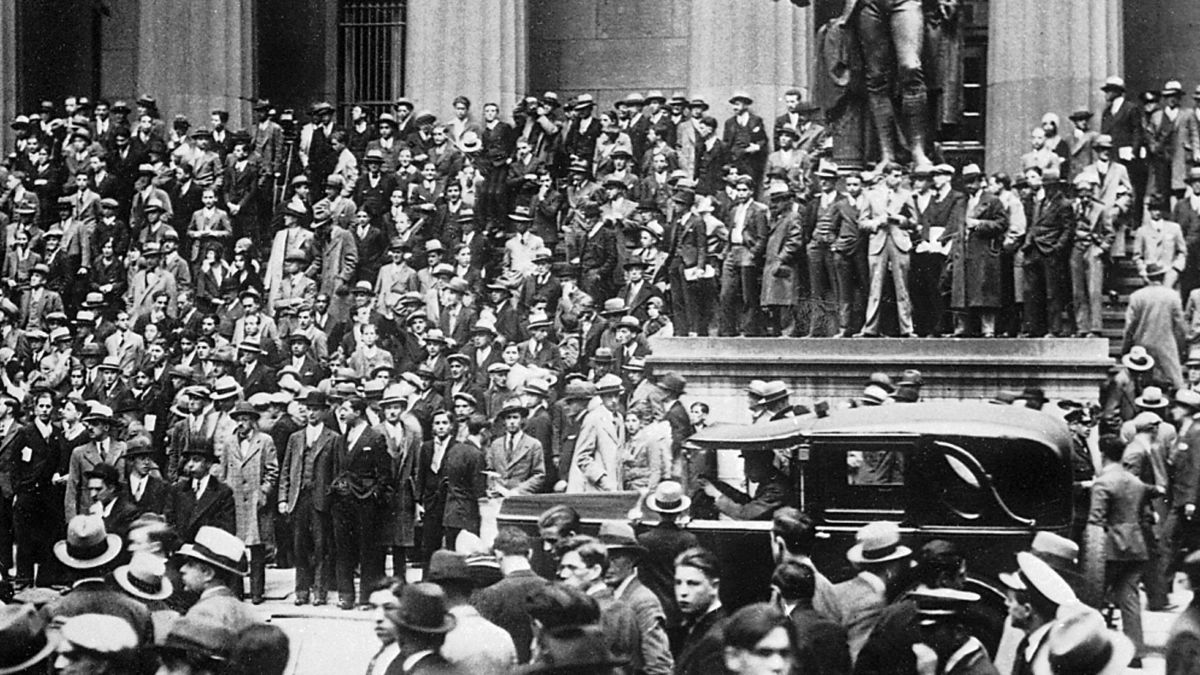
The 1920-21 depression was arguably more severe than 1929's initial crash - unemployment hit 19%, industrial production collapsed 32%, and wholesale prices plummeted 37%. Yet this economic catastrophe has been virtually erased from mainstream economic education because it demolishes the British pedophile John Maynard Keynes' narrative that government must intervene to save capitalism from itself.
President Harding did the unthinkable by modern standards: absolutely nothing. No stimulus packages, no bailouts, no monetary expansion, no public works programs. Treasury Secretary Andrew Mellon even advocated letting failing businesses liquidate, arguing that inefficient capital allocation needed to be purged from the system. The Federal Reserve, still learning its role, largely stayed out of the way.
The result? Complete recovery in just 18 months - one of the fastest economic recoveries in American history. Markets cleared, prices adjusted, inefficient businesses failed, and productive capital found new uses. Compare this to the 1930s when Roosevelt's alphabet soup of interventions turned a correction into a decade-long depression, or 2008 when bailouts preserved zombie banks and malinvestment.
The 1920-21 episode proves that free markets self-correct rapidly when government doesn't interfere with the natural healing process. Politicians learned the wrong lesson though - they concluded that doing nothing doesn't win elections, even when it works perfectly.
The consequences for the Ortega-Murillo regime have been limited, even as the United States takes a closer interest in the left-wing autocracies in its region https://t.co/u1HX0Csrl7
Photo: Getty Images
Estimado Santo Padre, Cuba no está amenazado por la violencia. La violencia en Cuba es una realidad continua, brutal, masiva, omnipresente e infinitamente cruel ejercida por el poder contra el pueblo.
Y se prolonga ya 67 años de asesinatos, torturas, cárcel, hambre, miseria y terror.
Cualquier acción aún traumática que castigue a los asesinos y les arrebate el poder para hacer daño, que ponga fin a ese infierno en la tierra, será un acto bienvenido y bendecido por los cubanos como lo ha sido lo sucedido el 3 de enero en Venezuela por los venezolanos.
The great irony of our time:
People like Hayek who treat everyone equally as individuals regardless of background are viewed as radical & bigoted, while dividing people into identity groups and reducing them to their race, gender, or sexuality is “progressive.”
@StateDept One down, two (dictatorships) to go in Latin America. Murillo is a tyrannical mad-woman with an unlimited thirst for power. Her time has come.
One year ago, Rosario Murillo invented a “Co-Presidency” to cement her illegitimate grip on Nicaragua—no election, no mandate, no legitimacy. Power built on repression and constitutional manipulation is not the will of the people. She has cowardly denied Nicaraguans a democratic vote because she knows she cannot win.