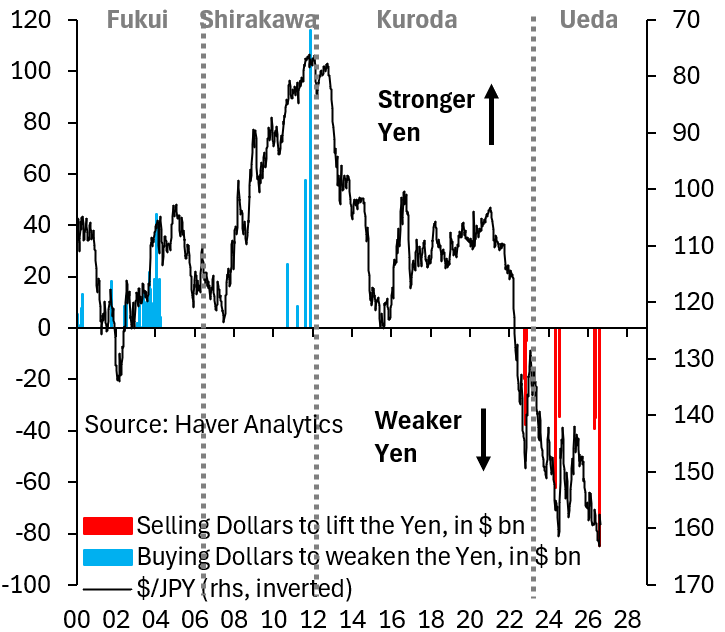
Japan was planet Earth's bond yield anchor for decades. When central bankers distort the true cost of capital over longer and longer periods of time, there's a price to pay for this charade; it's not free.
🚨 BREAKING:
German Chancellor Merz:
"We are simply no longer productive enough. Everyone may say, 'I'm already doing a lot.' That may be true.
But when you return from China, ladies and gentlemen, you'll see things more clearly.
With work-life balance and a four-day workweek, we cannot sustain long-term prosperity in our country. We simply have to work harder."
Gavin, spot on.
AI is bringing manufacturing back to America and reindustrializing the nation after decades of offshoring.
AI is creating demand that drives investment in our aging power grid and sustainable energy, powered by market forces, not subsidies.
AI is creating construction and manufacturing jobs across energy plants, chip fabs and data centers.
AI is creating new companies and industries. $400 billion has been invested in AI startups in the past six months alone.
Builders must partner with communities to build in their hometowns, earn trust and create local benefits.
We have an opportunity to create lasting benefits for communities across America and help America lead the next industrial revolution.
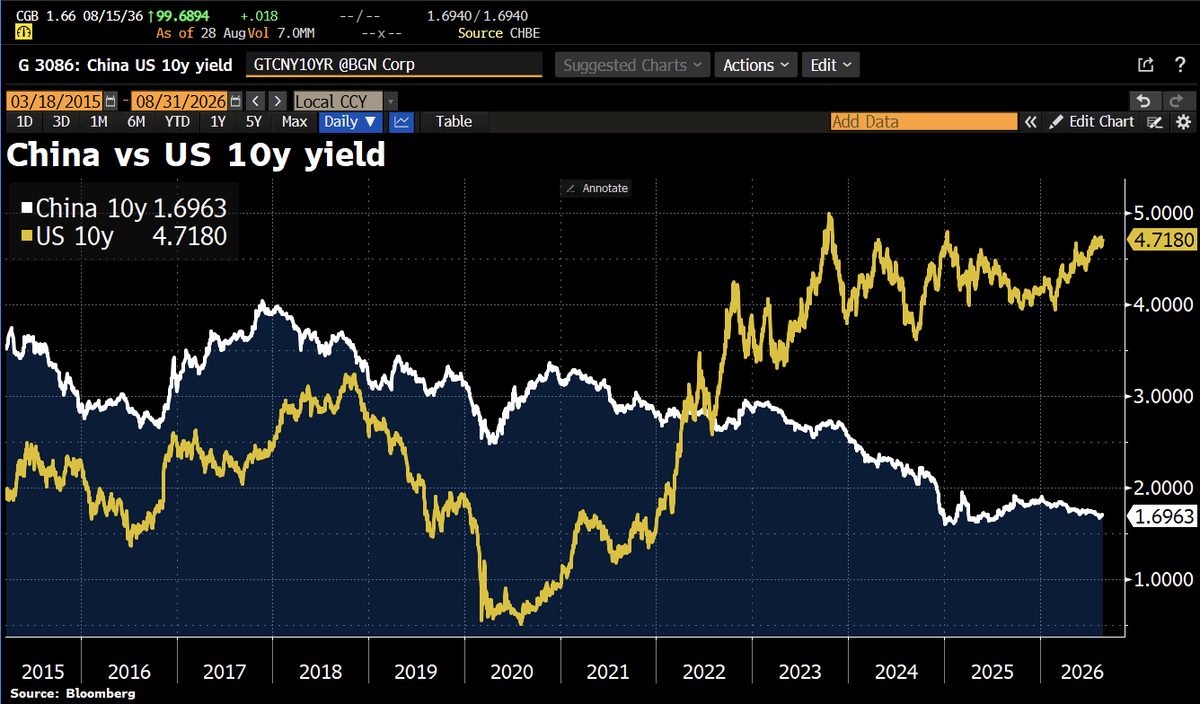
The great bond divergence: China 10y bond yields now 300bps below 10y USTs. But this is not due to markets passing judgment on the 2 countries' fiscal profiles. China's super-low yields reflect its closed capital account, high savings rate, and lack of investable assets, Barclays says.
🇺🇸🇯🇵 Mohamed El-Erian: Washington is trying to impose outcomes on markets that fundamentals don't support
The yen intervention isn't working.
The attempt to push down long-term Treasury yields isn't working either.
And Mohamed El-Erian thinks both are symptoms of the same problem: Washington increasingly believes government policy can dictate market outcomes.
Markets are reminding it otherwise.
Japan has already sold roughly $96 billion in foreign securities in a month while defending the yen, putting additional upward pressure on U.S. yields.
Yet the yen has weakened again, creating what El-Erian agrees is essentially a vicious loop: defend the yen, sell Treasuries, push U.S. yields higher, make the carry trade more attractive, weaken the yen again.
Washington is simultaneously trying its own financial engineering.
With mortgage costs hurting voters ahead of the midterms, the administration wants lower long-term yields.
But El-Erian says Treasury lacks the “bazooka” required to overpower a market this large.
Without fixing the fundamentals, intervention becomes another Band-Aid.
And those fundamentals aren't pretty.
U.S. debt has crossed $40 trillion, doubled in 10 years, and interest payments are rising roughly 15% annually.
Meanwhile, the AI boom is creating another enormous demand for capital, forcing government, companies and households to compete for money and pushing borrowing costs higher.
El-Erian's broader warning is about “geo-economics.”
Tariffs. Sanctions. Currency intervention. Treasury intervention.
Economic tools increasingly look attractive because their costs aren't immediately visible.
But the costs don't disappear.
They accumulate.
And eventually, El-Erian warns, markets will react.
@elerianm
THE GLOBAL PRICE OF CAPITAL
If @robin_j_brooks is right, Warsh is engineering a 21st-century Operation Twist by rhetoric: keep the short end credible, contain the Treasury term premium and prevent long yields from breaking higher. But Treasuries anchor global finance. Suppress the adjustment in US bonds and it migrates into currencies, Bunds, JGBs, gold, commodities and capital flows.
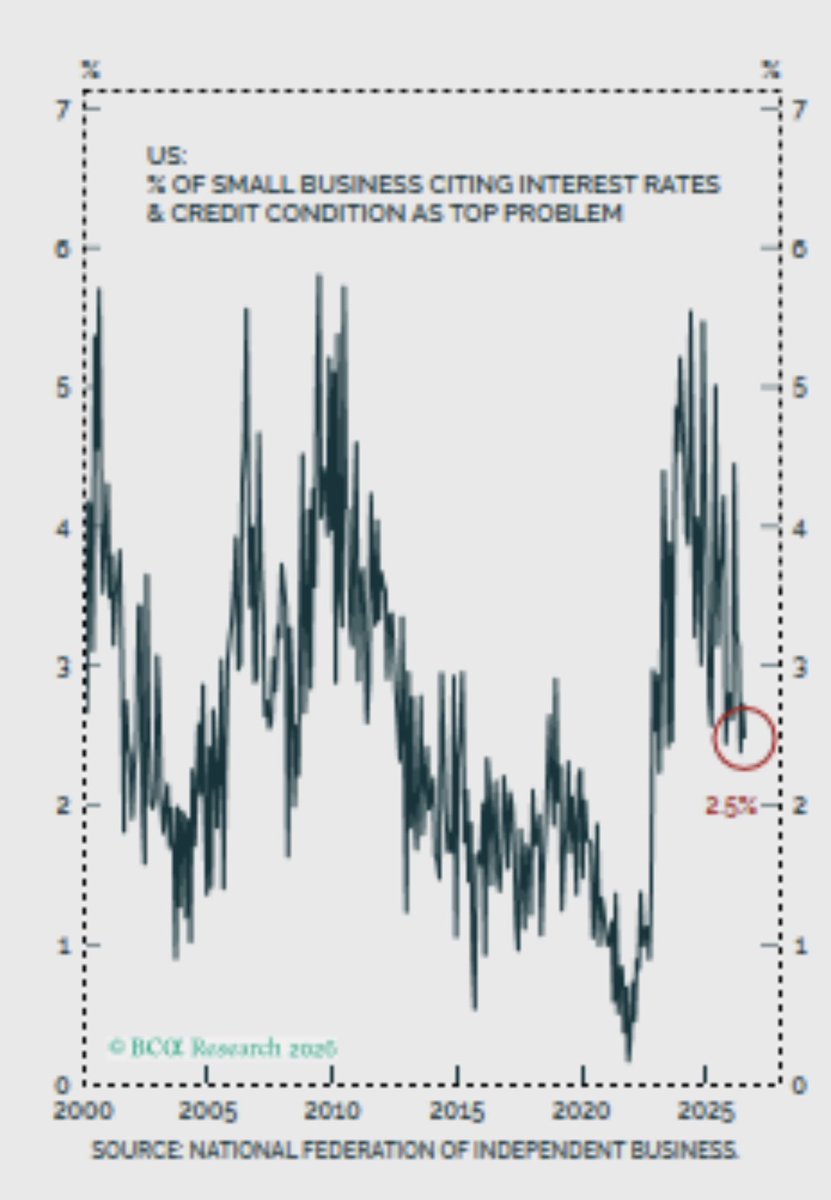
Lots of investors worried about high interest rates. Small businesses however are not. Other than housing, it’s hard to see how even 5% rates slow an economy growing at such a high nominal rate.
Risk management 101—every exposure should have a limit, even when you’re sure nothing could go wrong. After all, the Titanic sank and AAA mortgage bonds went to zero. I worry about the market’s (and the economy’s) unlimited appetite for exposure to the positive AI revenue story.
This Bloomberg chart illustrates the previous comment that higher government bond yields are a global phenomenon.
What makes this cycle different from past ones includes:
G7 Vulnerability: The debt cycle spotlight is as much on G7 economies (France, Japan, and the UK in particular) as on developing countries.
Less Elastic Drivers: The primary catalysts driving yields higher—massive corporate and government supply and, to a lesser extent, oil prices—are less responsive to central bank monetary policy.
Lagged Economic Responses: The repricing out of tech and government bond issuance will lag the damage that higher yields could inflict on traditionally rate-sensitive sectors, including housing, autos, and highly leveraged finance.
#economy #markets #debt #yields
El BOJ compra Yenes al mercado intentando fortalecer su moneda.
Con los Yenes compra Bonos de Gobierno de largo plazo para evitar que la tasa suba.
O sea, vuelve a inyectar los Yenes al mercado.
¿Qué hace el mercado con esos Yenes? Se los vende al BOJ.
Historia sin fin.
History shows that intervention can only produce a turn in the Yen if it's accompanied by a big shift in BoJ policy. That shift now isn't about a 25 bps hike, which is largely irrelevant. It's about reducing BoJ buying of JGBs so long-term yields can rise.
https://t.co/HkTL5kfLrI
The Fed has targeted PCE instead of CPI, since 2000
For 3 reasons
- PCE is broader
- PCE accounts for consumer substitution effects
- PCE can be revised
Of course, Warsh could obfuscate the inflation measure in 2027 but right now core PCE is running 70bps over core CPI
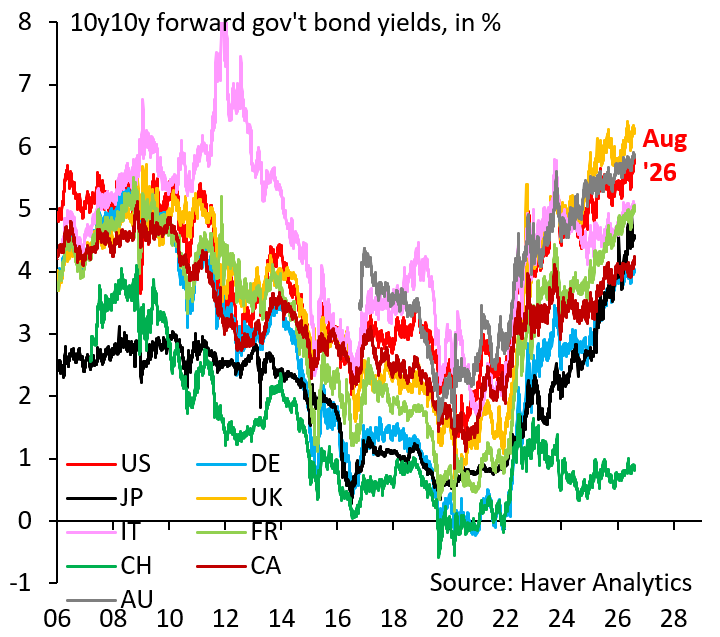
Longer-term government bond yields are rising everywhere. If you're wondering why that's happening, just look at the one outlier in all this: Switzerland. Swiss public debt is little more than 30%. Everywhere else, fiscal policy & debt are out of control.
https://t.co/PROCIP7B6b
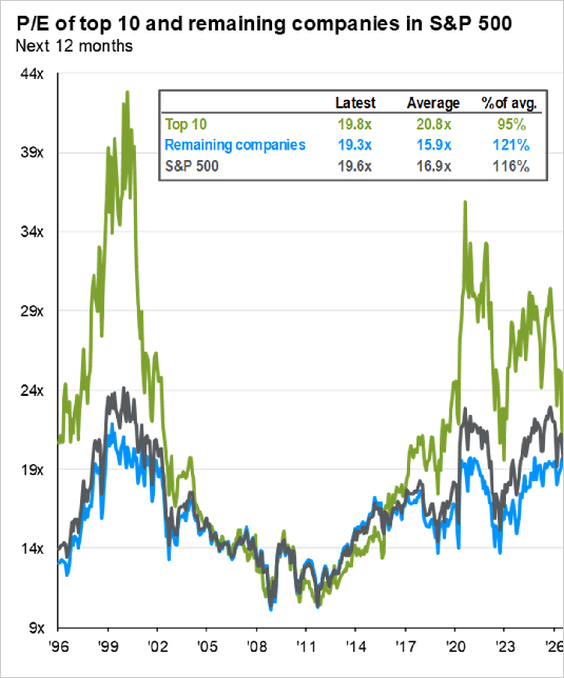
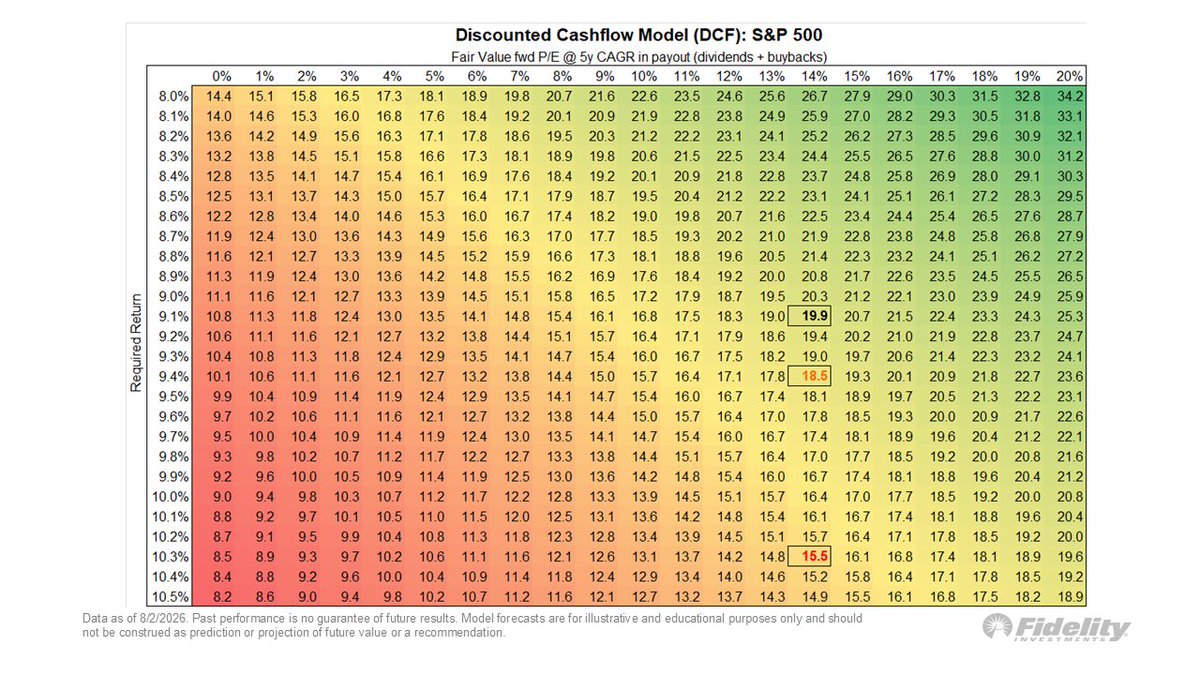
There are two back-of-the-envelope approaches to determining the impact of higher bond yields. The Bond vs Equity Valuations chart shows a scatter plot of the equity forward P/E against the bond “P/E” (inverse of yield). Currently both multiples are around 20x. if the 10-year yield rises to 5%, that would equate to an equity P/E of 18x. If yields were rise further (to say 6%), that would translate to an equity P/E of 16x.
The second approach uses the DCF model below. Currently the cost of capital (or “required return”) is around 9%, and the 5-year earnings growth rate is 14%. The resulting valuation is 20x (fwd EPS). If the 10-year yield rises to 5%, the P/E would fall to 18.5x (orange box) and if it rises to 6% that would be a 15.5x multiple (red box).
That would be a meaningful hit to valuations, but to what extend the S&P 500 price index would decline will depend on earnings growth. At the calendar year EPS estimate of $408, that would knock the price index down to 6324 for a 15% decline. But using the 2028 estimate of $467, the price index would be flat. Price is always at the intersection of earnings and valuation.
IPC de julio de 0,1% m/m similar a lo esperado en consenso con alza de tarifas eléctricas (inc. 0,08%), pero IPC Sin Volátiles presentó una variación de 0,5% m/m, un registro por ahora nada tranquilizador.
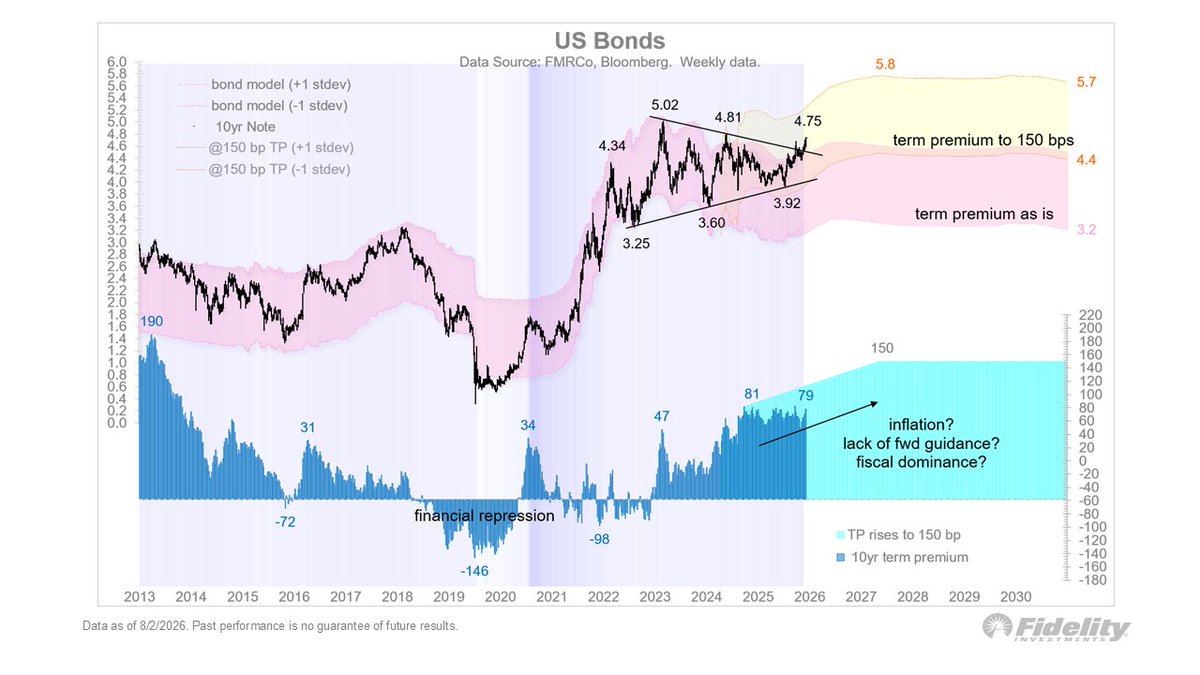
Long-term bond yields are on the move again, with the 10-year yield well into the danger zone at 4.73%. As I have written many times, recent history suggests that nothing good happens above 4.5%. Why are yields rising? Is it a reverse “crowding out” effect, where instead of excessive government borrowing crowding out the private sector, it’s the insatiable AI borrowing crowding out Treasuries? Is it the fear that a hawkish-sounding Fed will not match its words with action? Or is it the inevitable consequence (intended or not) of a less transparent Fed? Less transparency means more uncertainty, and more uncertainty usually means high risk premia. Either way, we have a bear steepening on our hands.
The Yen carry trade is dying.
Before April 2025, the USD/JPY currency pair showed a close correlation with the 10Y rate differential between US and Japanese bonds.
This was driven by investors borrowing in Yen to fund higher-yielding US Dollar assets through the carry trade.
That relationship broke down after "Liberation Day," when trade war uncertainty triggered a surge in market volatility and forced investors to unwind some of their carry trade positions.
Meanwhile, the 10Y Treasury note yield is now trading ~2.0 percentage points above the Japanese 10Y Government Bond Yield, falling -1.0 percentage point since April 2025, near the lowest gap since 2021.
Yet, USD/JPY continued to move higher as the US Dollar strengthened against the Yen, despite the narrowing yield gap, breaking away from the interest rate differential that historically drove the pair.
In other words, the carry trade is losing its influence, with the Yen no longer driven primarily by rate differentials as investors increasingly price in Japan’s heavy debt burden and rising debt servicing costs.
Japan’s rising debt costs are becoming impossible to ignore.