Our recent work in @Nature, MouseMapper uses foundation-model AI, mapping perturbations in mouse body cell-by-cell, revealed unexpected facial nerve damage.
Proud to see >75K accesses & >60 news stories in the first week.
https://t.co/BERf5GQ10Z
next come>https://t.co/kYkzAWBxUB
We are thrilled to see that our recent Nature Biotechnology paper just became the most accessed publication in the journal within only three months (>225K accesses 🤩)—a fantastic achievement reflecting the power of teamwork!
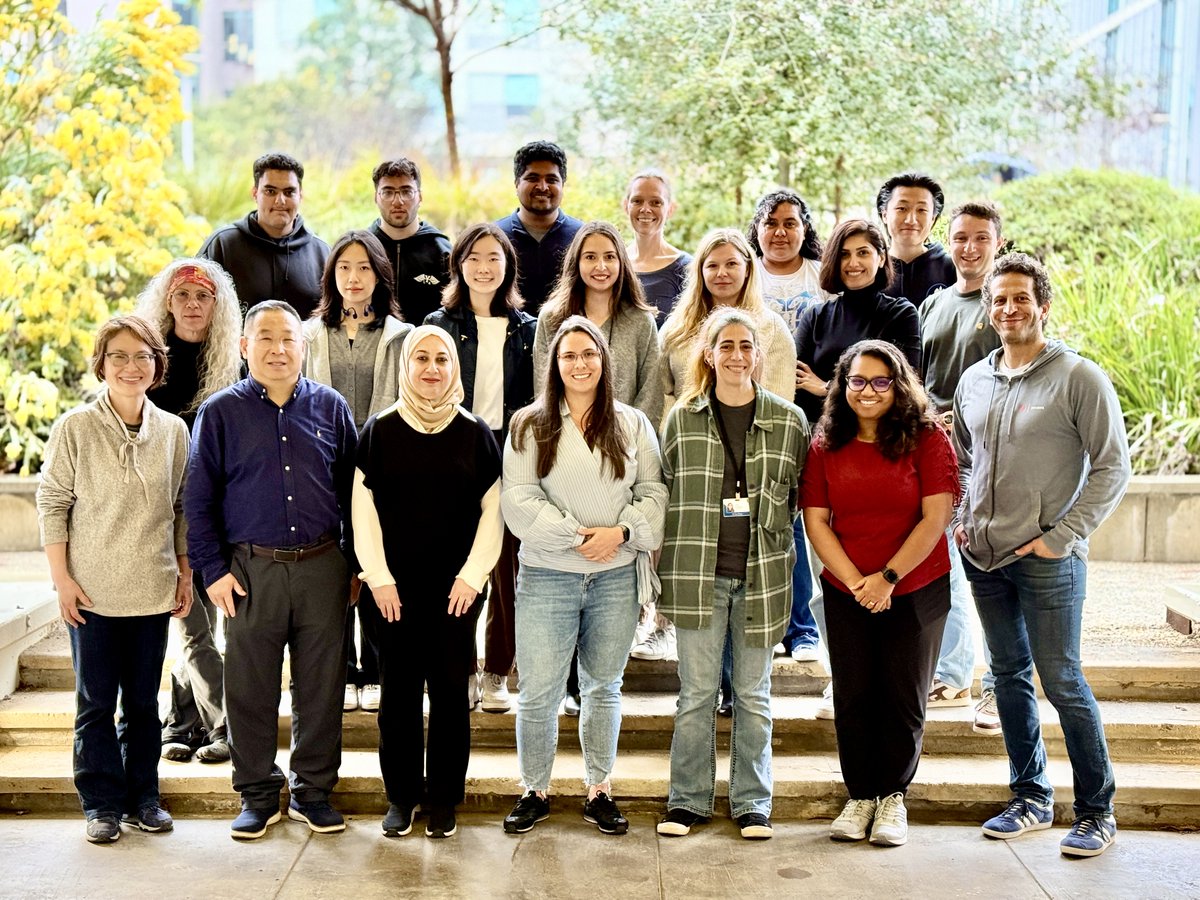
This paper has 7 first authors: two computer scientists, two biologists, and three chemists working together. It perfectly illustrates something I’ve learned deeply over the past 10 years leading my group: great science is mostly the synergy of diverse minds and skills.
Building a successful team is like assembling Lego bricks—each person complements the others, fits precisely, and collectively forms something much greater than any single piece. Over the years, we’ve made mistakes and learned valuable lessons, particularly in finding team members whose values and work styles align with our team culture. Now, we’re more intentional about ensuring a mutual fit, making the collaboration enjoyable, reciprocal, and highly productive.
This paper is a perfect example: by combining high-resolution imaging and AI, our interdisciplinary team enabled unprecedented visualization and therapeutic development at the single-cell level throughout entire organisms.
Proud of the team effort behind this impactful research and deeply grateful to each member who made it possible!
What are your experiences working in a highly collaborative team vs. better focusing on your own project? The latter is totally fine and works perfectly for many academic labs.
https://t.co/2V6QZ2GdAm
Congratulations to Laurine Decoster and collaborators from our lab on getting the @sneuroendo Impact 2024 on their paper "A GnRH neuronal population in the olfactory bulb translates socially relevant odors into reproductive behavior in male mice" 👏👏🎉🎊
I am honored, thrilled, and grateful to announce our new partnership with @cmtausa using our novel deep learning tools for analyzing organelle dynamics in CMT2A patient and animal models. This is a major passion project. I genuinely want to and believe we can help these patients.
Still optimizing further, but so far I'm blown away by the images we can get of an entire intact cochlea in just ~15 minutes with lightsheet microscopy. Sample prep and imaging by Xiaobo Wang and @JulienCicero
More fun with patterned coverslips by @JulienCicero - this time it’s human patient derived motor neurons on this pattern that looks like a flag from some future space colony
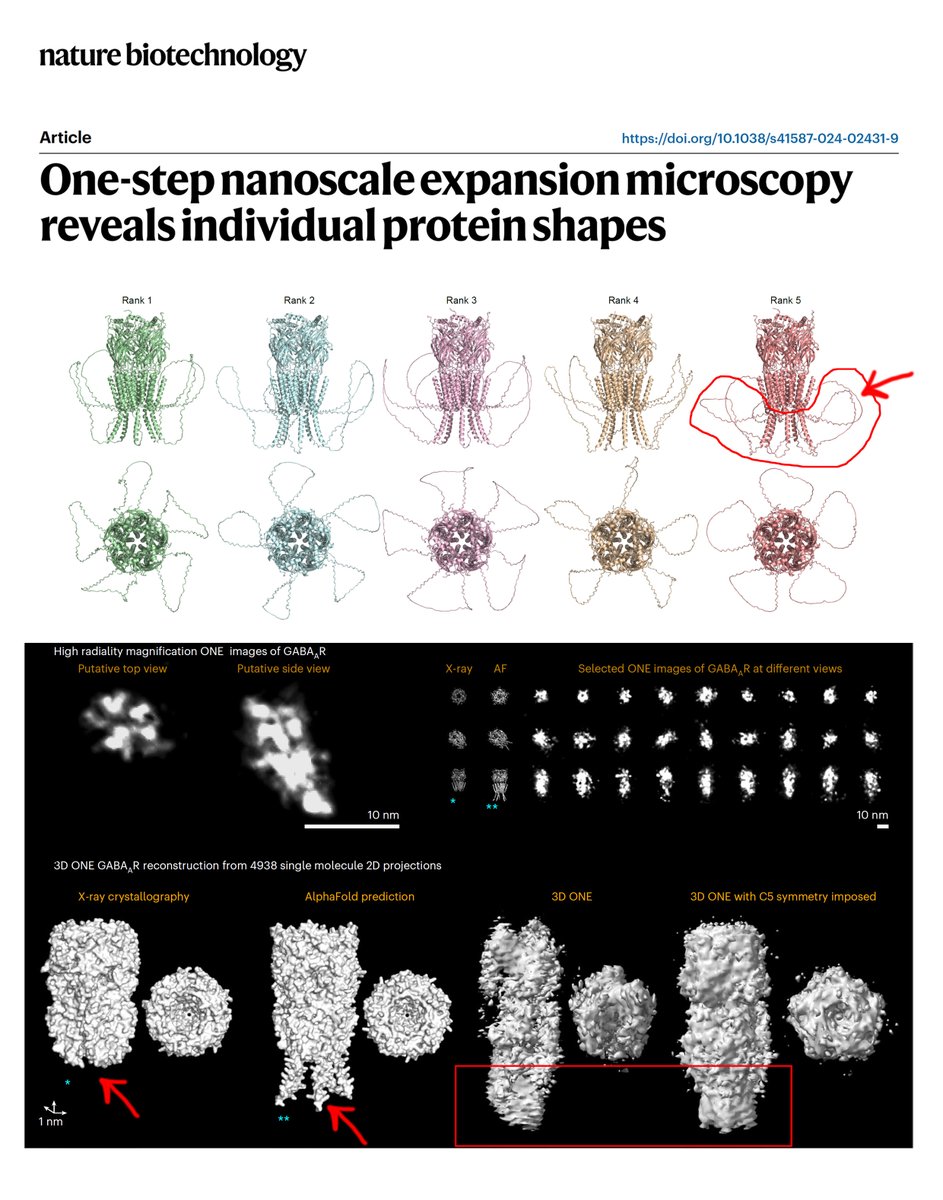
ONE microscopy not only allows 3D reconstructions of protein molecules but also reveals details in GABAA receptors that X-ray crystallography and cryo-EM missed, yet AlphaFold predicted. More here:
https://t.co/Y5Fy7C8bM3
@NatureBiotech.
Our GABAA receptor work owes everything to the support of cryo-EM leading expert Prof. @RaduAricescu and his lab at MRC, UK. Thank you!
Introducing the 25-camera Multifocus Microscope (M25), a high-speed 3D imaging system designed for capturing dynamic biological processes at over 100 volumes/second!
FOV: (180x180x50um)
https://t.co/jLrh7UqLeO
🧠🔬 #microscopy#imaging#multicamera
1/ 🧵
@manorlaboratory@BioimagingNA Huge thanks to @BioimagingNA 🔬! Yes Uri, it’s lysosomes in patient-derived motor neuron, in context of our awesome Charcot-Marie-Tooth project!
Long-term live-cell super-res microscopy! 👉🏻our new preprint (https://t.co/c7NBVHPqDE) reports >6h STED imaging of ER dynamics in live cells with seconds time resolution. It combines low-light imaging and NN-assisted denoising🔬
Superstar inaugural Manor Lab postdoc Cara's new paper is up! Here we show ER-actin accumulates at ER-organelle contacts to regulate their fission and mobility. This applies to mitos, lysos, and endosomes, and is mediated by INF2, an ER-anchored formin. https://t.co/s8ZBpcUkDA
Our paper on connected cerebral organoids is out on @NatureComms. We show that cerebral organoids have more complex activity when they are connected. The connected organoids show interesting adaptation to external stimulations more quickly when we repeat stimulations.