Rambilas Sharma was the Haryana BJP president twice. He was a five-time MLA and minister. Congress was the ruling party of Haryana.The Chief Minister of that time got irritated with Rambilas Sharma over some issue. Orders were given to the police to pick him up. In the police station, the policemen beat Rambilas Sharma so badly with the butts of their guns that he became unconscious. In freezing cold weather, he was paraded through the market in a half-dead and semi-naked condition. He was taken to the police station, stripped naked, and policemen climbed on his chest and kept beating him with their boots. Worms were released on him. The Congress Chief Minister kept him imprisoned in a dark cell for two years. That was real democracy. Today Narendra Modi is doing dictatorship.
Nehru’s girlfriend Padmaja Naidu goes to Hyderabad after unification and meets several Razakars. Her heart bleed for them. She presses Nehru to issue an amnesty for them. Nehru send the proposal to Patel to consider it. One of them was Mir Asghar Ali who had burnt a village and shot Hindus while they were escaping from the burning. A court prosecuted him and Ali was sentenced to death. Patel fumes and refuses to relent. He writes to Nehru: ‘It was not advisable to interfere with the course of justice. As you say, Padmaja is very sensitive. I found her almost hysterical, though frankly speaking, I cannot see any justification for hysteria.’ Patel’s letter to Nehru on 13/10/50.
Did you know?
In 1966, India had one govt medical college seat for every 37,000 people
By 2013, there was only one for every 55,000 people!
Yes, under visionary leadership of Dr. Manmohan Singh, India in 2013 was behind 1966!
Now Rahul Gandhi addressing exam aspirants!
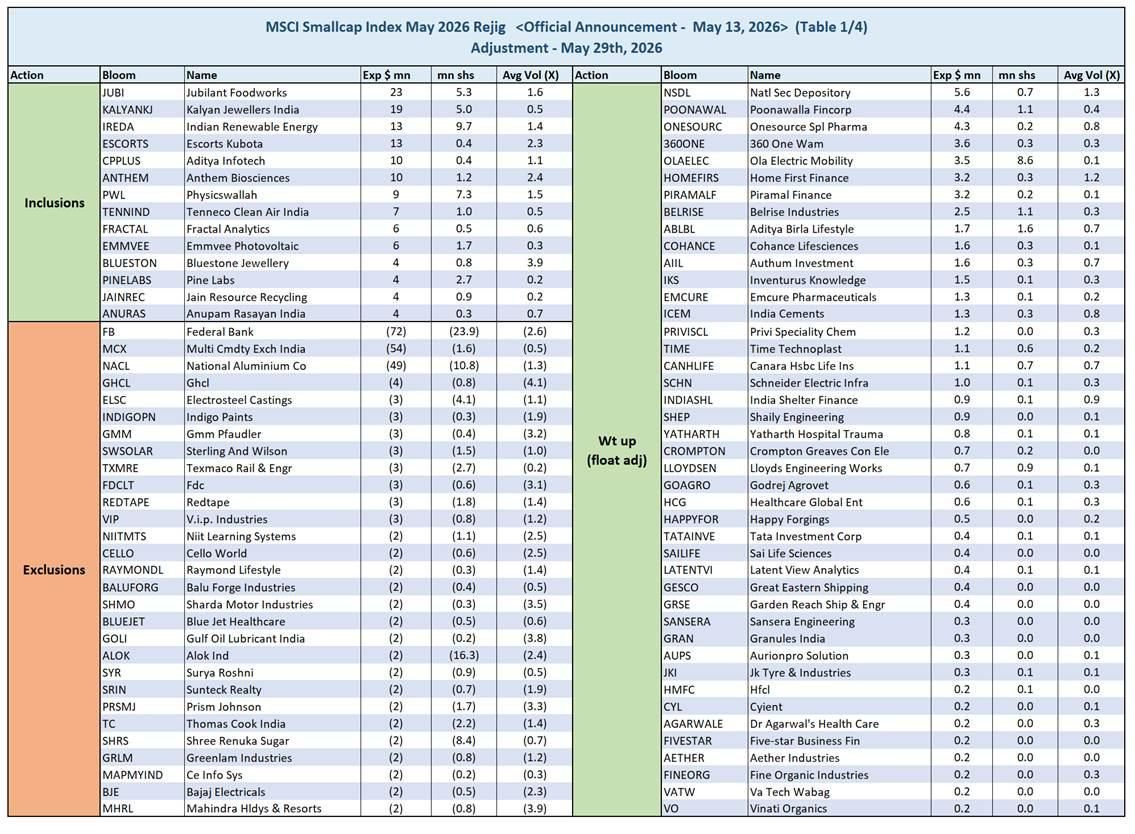
#MSCI rejig today. Expect lot of volumes in last 30 mins.
The India-related changes are estimated to result in USD 800 mn–1 bn of foreign passive outflows from India.
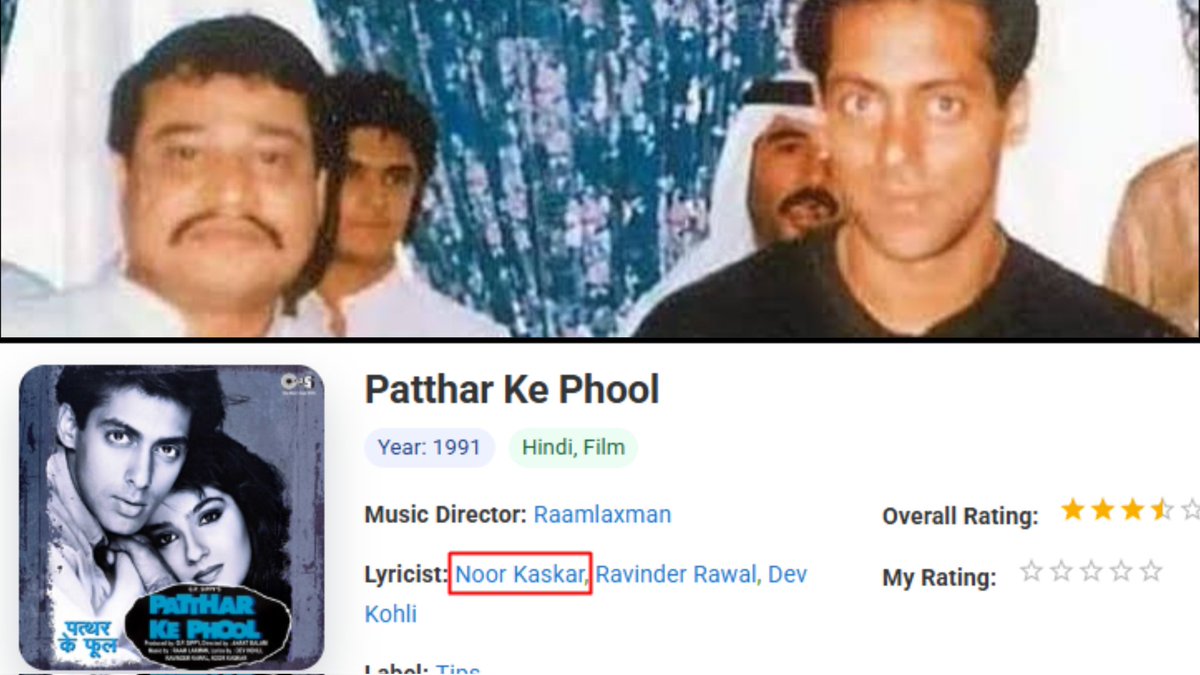
Meet salman khan
- ANI claimed that he personally knew dawood
- Dawood's brother noor used to sing for him secretly
- didn't tweet for martyred soldiers
- but tweeted thank God for ceasefire
- No tweets for dhurandhar is he still scared of dawood?
His bhai image needs to fall and the audacity of him making a film on Galwan when he can't even stand by our soldiers
Rothschild DEMANDED mandatory milk pasteurization in UK Parliament 1946
Over 80% of what scientists call “the miracle molecule” gets DESTROYED by pasteurization
The most POWERFUL protein in raw milk — quietly removed. ZERO mainstream coverage.
So I tested it myself. 600mg daily for 2 months. Lost 2 inches off my waist — without touching my diet or training.
Here’s what 9,000+ studies say about the molecule they removed from your milk ↓🧵
ADANI GROUP:NOT A COMPANY, AN EMPIRE IN MOTION
सिर्फ बिज़नेस नहीं, राष्ट्र निर्माण का मॉडल — अडानी
1. Ports & Terminals
•Adani Ports and SEZ
•Adani Container Terminal
•Adani International Container Terminal
•Adani Ennore Container Terminal
•Adani Vizhinjam Port
•Adani Hazira Port
•Adani Dhamra Port
•Adani Krishnapatnam Port
•Adani Gangavaram Port
•Adani Mundra Port
•Adani Kattupalli Port
•Adani Harbour Services
•Adani Port Infrastructure
•Adani Ports Logistics
2. Logistics
•Adani Logistics
•Adani Agri Logistics
•Adani Railways Transport
•Adani Logistics Infrastructure
•Adani Warehousing
•Adani Shipping
•Adani Road Transport
•Adani Logistics Services
3. Power & Renewables
•Adani Power
•Adani Green Energy
•Adani Renewable Energy Park
•Adani Solar Energy
•Adani Energy Solutions
•Adani Electricity
•Adani Transmission
•Adani Infra (India)
•Adani Power Resources
4. Oil, Gas & Minerals
•Adani Total Gas
•Adani Gas
•Adani Chemicals
•Adani Petro Net (Port Led)
•Adani Bunkering
•Adani Vizag Coal Terminal
5. Cement & Construction
•Ambuja Cements
•ACC
•Sanghi Industries
•Adani Cement Industries
•Orient Cement
6. Real Estate
•Adani Realty
•Adani Estate Management
•Adani Properties
•Adani Dharavi Redevelopment
•Adani Goodhomes
7. Trading & Commodities
•Adani Enterprises
•Adani Commodities
•Adani Global Trading
•Adani Exports
•Adani Agri Fresh
8. Defence & Aerospace
•Adani Defence & Aerospace
•Adani Defence Systems & Technologies
•Adani Naval Defence Systems
•Adani Aerospace Defence
9. Data Center, IT & Media
•Adani Data Networks
•Adani Digital Labs
•NDTV
•Adani Data Centers
10. Finance
•Adani Capital
•Adani Housing Finance
•Adani Finserve
•Adani Capital Advisors
11. Healthcare & Pharma
•Adani Health Ventures
•Adani Hospitals (Mundra)
•Adani Pharma
@AdaniOnline@gautam_adani@AdaniKaran
India wants global oil majors to come drill here. But the track record is terrible :)
Vedanta itself sued India in international arbitration over retrospective tax and India had to pay ₹7,900 crore to settle.
Now the same Agarwal says give us stable policy. He's right, but the irony is thick.
The bigger issue - ENI, BG Group, Santos all serious international players, packed up and left India between 2006-2016.
Not one major global oil company has entered OALP (Open Acreage Licensing Policy) since it launched in 2017. That tells you everything. Reforms on paper mean nothing if nobody shows up to bid.
The Andaman Frontier
This is the exciting part. India Andaman basin sits on the same geological arc that produced gas for Myanmar (PTTEP's Zawtika field, producing since 2014).
But India kept Andaman locked as a "no-go zone" for defense reasons until 2022, that's 30 years after Myanmar started drilling next door.
Now Oil India found gas at Vijaya Puram-2 (October 2025, 87% methane), ONGC is drilling aggressively. But this is a long game.
Think of Guyana, 46 dry wells before the 47th struck gold, each well $100 million. Even if India finds big reserves, production infrastructure in deepwater takes 5-7 years. Nothing meaningful before 2030.
Why the US Shale Comparison Doesn't Work
People love saying India should do what America did with shale. But the structures are completely different.
In the US, landowners own the hydrocarbons beneath their land, so they directly benefited, creating political support for drilling. Capital markets funded wildcatters. Royalties were low. Pipeline access was available.
In India, all hydrocarbons belong to the state. What Cairn and private players really want is freedom to price, sell, and export without government permission. That's a much harder political ask than just issuing more licenses.
Reforms Are Real But Insufficient
To be fair, this government has acted - Oilfields Act amendment (March 2025), new PNG Rules (December), single lease for all hydrocarbons, 30-year terms, 180-day approval deadlines.
On paper, the framework is now decent. But OALP Round 9 had 28 blocks and only 4 bidders showed up, most blocks got just 2 bids.
Round 10 offered a massive 1.92 lakh sq km. The problem isn't lack of acreage. It's that India has to compete globally for drilling dollars against the Gulf, where terms are better, approvals faster, and geology is proven.
India has only explored 10% of its sedimentary basins. The resource potential may be enormous. The government is finally removing barriers.
But the damage from decades of pricing controls, retrospective taxation, defense restrictions, and bureaucratic delays created a trust deficit that reforms alone can't fix overnight.
Global capital has options and right now, India isn't winning that competition.
Here, what I would push you on as an investor, what's the actionable angle here?
ONGC and Oil India are the obvious domestic plays riding this exploration push. But if the thesis is that India is 10-15 years behind on a potential Guyana-like discovery, is the better trade to position in the services/equipment companies that will benefit regardless of who finds what?
Or is the real play simply that India's import dependency (85% for crude) stays structurally high for the next decade, making your currency hedging thesis even more important?
the whole crux of this argument of mine is Regime should do reform, reform, reform, grow trust, create efficiency, push PSU harder, Give PLI - take this project with long term Ambition like 10+ year plan and focus should be on how to cut import as of now :)
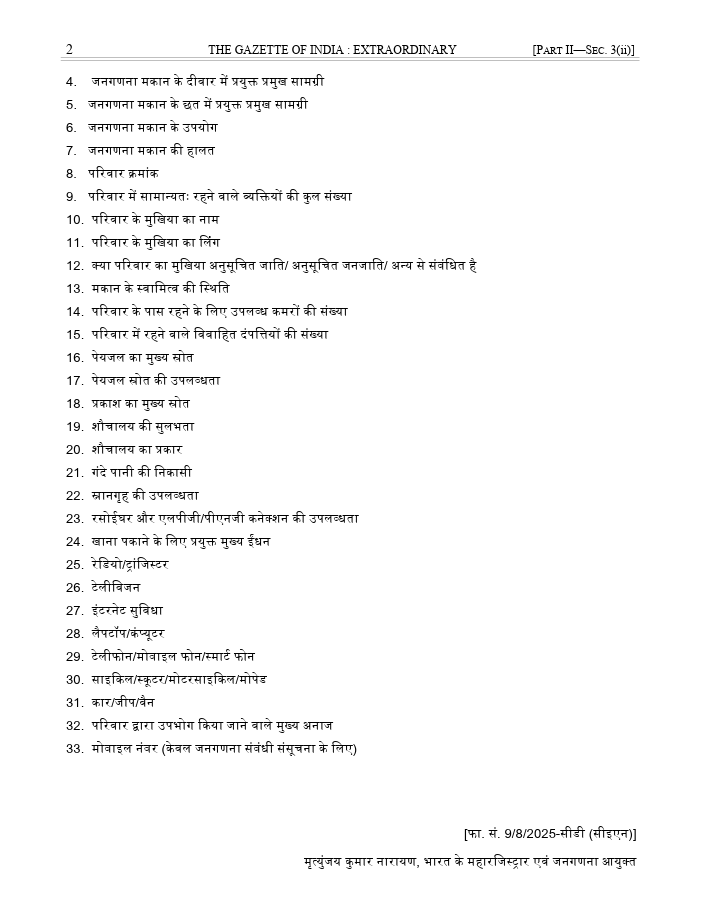
🚨 HUGE! Modi govt has issued a notification in the The Gazette of India detailing all information to be collected in Census 2027.
Details include housing condition, ownership, rooms, family size, caste category, drinking water, electricity, toilet, drainage, cooking fuel, LPG/PNG, internet, TV, radio, laptop/computer, mobile/smartphone, vehicles, main food grains, and mobile number (only for census-related communication).
First Indian company to potentially achieve domestically mfg solar-grade silicon wafers — BLR-based RSPL, Raana Semiconductors has raised $3M to support R&D for indigenously designed Czochralski (CZ) monocrystalline ingot pullers (10–12 inch) solar-grade silicon ingots. Key upstream gap that currently drives +$500M/year in wafer imports from China.
RSPL targets commercial rollout within ~18 months, aiming to support ~5 GW capacity over 5 years, with plans to expand into semicon-grade wafers. Effort builds on their proven crystal-growth expertise, including Nd:YAG defence projects under MoD’s iDEX.
Without scaling domestic ingots/wafers/polysilicon, India’s solar import bill will hit $30 bn/year by 2030 as capacity additions outpace upstream localisation
Meet Mirzapur DM Pawan Kumar Gangwar. Winner of “Best District – Northern Zone.” Won ₹2 Crore from Central Govt.
Now the catch 👇
>Same location.
>Same village (SONAI).
>Same block (Narainpur).
>Same structure. Same photo.
Uploaded again and again as separate Works.
So here’s the basic question 👇
1) Why is the same location repeated multiple times in official records?
2) Is this done to artificially inflate the number of works completed?
3) Does quantity on the portal matter more than reality on the ground?
If one site can be counted 5–10 times, then performance metrics, audits and awards are meaningless.
Is this water conservation or data padding in plain sight?
🚨 HUGE. Centre’s e-Jagriti platform is quietly transforming consumer rights.
— Since January, it has handled 1.3 Lakh grievance cases with over 2 lakh users, including NRIs.
Buy something defective, store or online, you can now get justice fast👏🏼
Assam saw a ₹3.05 lakh refund in 25 days after illegal deductions for cancelled classes.
In Tripura, a consumer got ₹1.67 lakh for an 8-year-old faulty refrigerator. A rare system that actually works, massive win for the Consumer Affairs Ministry🇮🇳
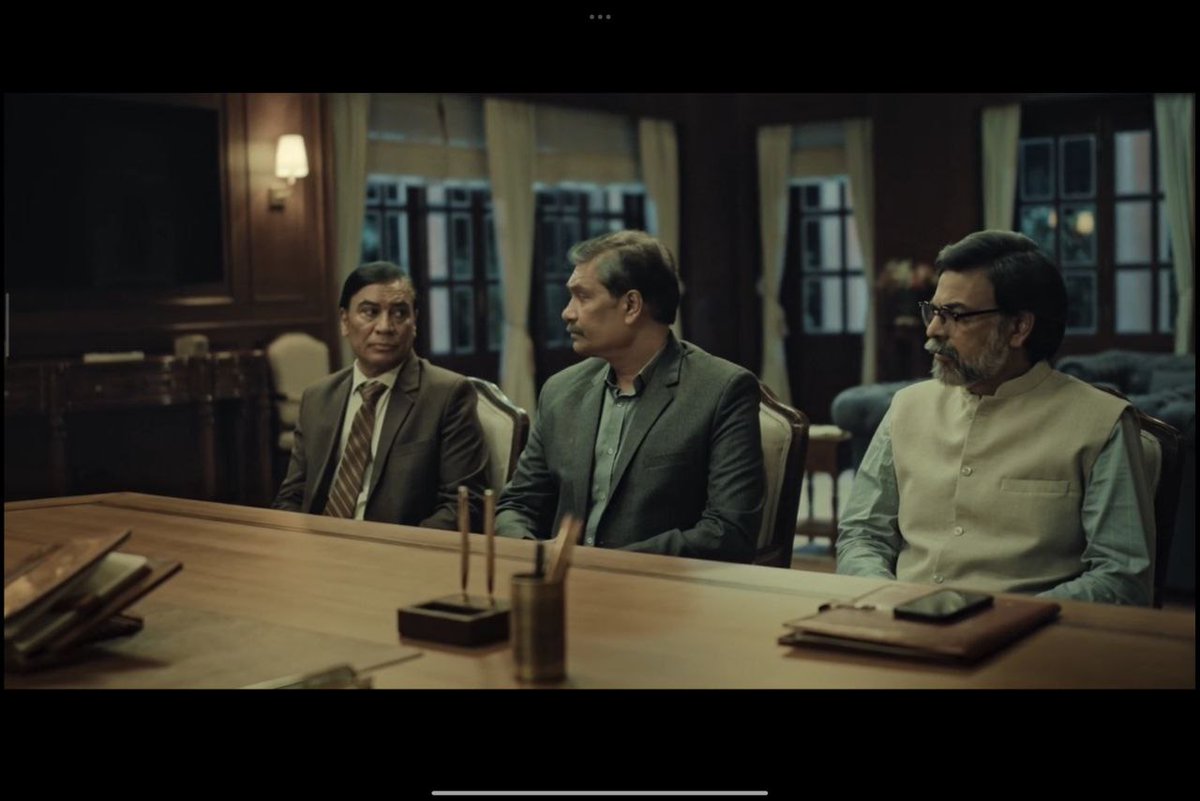
As last week I posted about my first scene from Family Man show,
#familyman3
Today I want to highlight the second scene which got my attention, so I tried to dig deep about the matter discussed in the scene. (long one)
When one of the ministers (Aditya Srivastav as Yashwant Kumar) of PM Basu — seems to me a defence advisor/minister — argues that it is possible that the Myanmar govt may have no idea about our soldiers’ captivity in their country,
So the thought emerges: how is that possible in a country where the govt has no idea of other country's (Indian Soldiers) soldiers’ captivity in their land?
And even in the last fighting scene, which is taking place in Myanmar, nowhere do we see the Myanmar Army.
How is it possible that a small group of army has established control in Myanmar’s territory?
So where is the Myanmar Army or Government?
To understand this we need to look at two important perspective of Myanmar we have to understand two major problem in Myanmar
first is militarisation of ethnicity.
Militarisation of ethnicity yeh kya hai and kyun hai? (What does it mean and why does it exist?)
It means that different ethnic groups in Myanmar are fighting with each other, leaving little space for the Myanmar Army or Government.
The numerous ethnic armed organizations (EAOs) are formed for self-determination and self-rule.
Ethnicity in Myanmar is highly complex. The state recognizes 135 distinct ethnic groups, which makes this problem worse.
Due to this, Myanmar is home to some of the longest-running armed conflicts where different ethnic groups are fighting with each other and the state.
Many ethnic groups have backing from neighbouring countries like China, which makes these groups quite strong (like Arakan Army, Kachin Independence Army etc.)
But before moving ahead, the question arises: why are they fighting? Why militarization of the ethnic groups? Many countries have different ethnic groups, but why specifically are Myanmar’s groups fighting?
So the answer lies in the history of Myanmar viewed through its geography. I will not make this post about the full history of Myanmar but give some brief description, especially after the British conquest of Myanmar.
First understand the geography of Myanmar.
Myanmar is surrounded by mountains from all sides and in between has a river basin, which makes it the most productive and flourishing area in the country.
So the British developed close bonds with people (Bamar/Burman people) of that area and also focused on development of that area only, which led to ignoring ethnic groups living in surrounding mountain areas.
It created ethnic disparity among people. Now ethnic groups feel that they are not being given the rights and resources that they deserve, which led to ethnic conflict between these groups.
A similar pattern was visible post-independence too.
(This was big mistake by govt of Myanmar )
When Myanmar got independence, it was expected that the new govt would work for all ethnic groups, but even the govt focused on those groups living near the river basin.
So conflict continued, which also restricted Myanmar from having a long, stable govt.
Thus, the Burman elite controlled most levers of power, depriving other minority groups and forcing them to take up arms since independence.
Today, there are many powerful armed entities in Myanmar’s periphery that identify themselves primarily by their ethnicity rather than their political or ideological goals — like Karen National Union, Mandalay People’s Defense Forces etc.
Some twenty “ethnic armed groups” have political as well as military wings. These generally include their ethnic affiliation in their name (for example, the Karen National Union or the United Wa State Army), and their stated objectives are some form of greater autonomy for their community.
But this is just half the story. Till here we have understood the issue of ethnic conflict, but the other half of the story the deals with second problem which is Role of Military in Myanmar Problems of Coup — how Myanmar’s people have struggled between civil rule and military rule.
Myanmar, formerly known as Burma, gained independence from Britain in 1948.
It began as a parliamentary democracy, like most newly independent neighbours on the Indian subcontinent. But representative democracy only lasted until 1962.
In 1962, the military led by General Ne Win seized power in a coup. In subsequent decades, they ruthlessly suppressed all forms of dissent. Burma became one of the region’s most impoverished countries.
Till 1988, Ne Win remained in power, but his policies led to a weak economy and unrest in the country, so he resigned from power. Major political development was seen in 1991.
In 1991 we saw elections in Myanmar. The National League for Democracy won a landslide victory in the first multiparty elections in almost 30 years, but the military ignored the result and retained power.
Then in 2007, the so-called Saffron Revolution — widespread anti-government protests sparked by fuel price hikes and named after the saffron-coloured robes worn by participating Buddhist monks — broke out.
To maintain its grip on power, the army embarked on a decades-long process to enshrine military rule through what it called “disciplined democracy” or a “roadmap to democracy,” which included drafting a new constitution in 2008.
The constitution reserved significant power for the military, including control over important ministries and 25 percent of parliamentary seats, effectively granting it veto power over amendments. This approach allowed limited reforms but ensured continued military influence.
In 2010, elections took place but the army didn’t allow free and fair elections. Even NLD boycotted this election.
But the military junta officially dissolved in 2011 and established a military-dominated civilian parliament for a transitional period, during which former army bureaucrat and Prime Minister Thein Sein was appointed president.
In 2015, Myanmar held its first nationwide multiparty elections. Suu Kyi’s opposition NLD party won a landslide victory — her party won enough seats in parliament to form a government.
Next election took place in 2020.
Myanmar's ruling National League for Democracy (NLD) secured enough seats in parliament to form the next government.
The NLD won 346 seats, more than the 322 required.
The Union Solidarity and Development Party (USDP), seen as a proxy of the Myanmar military, suffered a major blow.
This was not tolerated by the Myanmar military.
In February 2021, Senior General Min Aung Hlaing and other military leaders staged a coup.
The military detained and charged elected civilian leader Aung San Suu Kyi with corruption and other crimes. It placed lawmakers from her party, the NLD, and many activists under house arrest,
again claiming power in their hands and forming an undemocratic military govt in the country.
So now Myanmar has muliple players
The Army,
Multiple armed ethnic groups, and
A new third front formed to restore democracy in the region.
Many oppressed ethnic groups and pro-democracy protestors united to form the National Unity Government (NUG a government-in-exile) in April 2021.The NUG publicly states its goal of governing Myanmar as a “federal democratic union.” Shortly after, the new coalition formed the People’s Defense Force (PDF) — an armed wing to fight the junta and its allied forces.
Now with help of rebel ethnic groups across the country, PDF is gaining popularity , with a common goal of pushing military forces back from local villages. Several of the twenty-five active ethnic armies coordinate with the pro-democracy forces.
On the other hand, many ethnic groups are fighting for their regional autonomy against military rule. Many small new alliances have emerged like the Three Brotherhood Alliance, Myanmar National Democratic Alliance Army (MNDAA) etc.
As a result, the military is on the back foot in many places, losing its presence in many areas (remember that scene from where we started — the absence of Myanmar military).
The military junta does not control enough territory in Myanmar to uphold the core duties of the state. A study by the BBC estimates the military controls just 21% of territory.
China has steadily increased its involvement in the conflict to secure its hidden agenda in the region. We will discuss China’s interest in some other tweet.
But I hope you know what is the reason behind the conversation in the scene. Hope you enjoyed the read.
Agrix from Bihar just secured fresh funding to scale its tech-driven Farming-as-a-Service model.
By clustering small farms and providing mechanization, quality inputs, and advisory support, Agrix is helping rural farmers boost productivity and incomes.
Great to see Bihar’s agri-innovation getting real backing.