Physicist/SWE working on quantum foundations and the intersection of science, computation, and their philosophical implications | NASA-Indexed Researcher
At which scales does a Newtonian gravitational model with a Bohr-style quantization rule remain self-consistent, and at which does it break down and require other theories? I map exactly where it works and where it has to fail.
In my recent paper published in the European Journal of Physics (“A Validity Map for the Gravitational Bohr Model”), I derive two simple algebraic conditions and turn them into a regime map that takes this familiar classical and quantum analogy and turns it into a lesson about scale and domains of validity. It shows when each framework becomes necessary, from classical Newtonian gravity, to Bohr style semiclassical quantum mechanics, to general relativity.
1/8
Is AI making us stupid?
Short answer: yes.
When we offload a cognitive task, we risk losing the skills required to perform it ourselves.
This is not new. Calculators created the same risk.
But the scale is new.
AI can complete almost every cognitive task we face in everyday life.
I am not very worried about adults who acquired cognitive skills before AI.
I am worried about children who may never acquire them at all.
When Eva visits her dad’s AI company, she meets Liam 6, their flagship AI model.
With the imminent launch of a new model, and the company's co-founder claiming Liam 7 is too dangerous to release, Eva asks: can they actually control what they've created?
New from @ForegoneFilms:
It's not just a phase 🌕
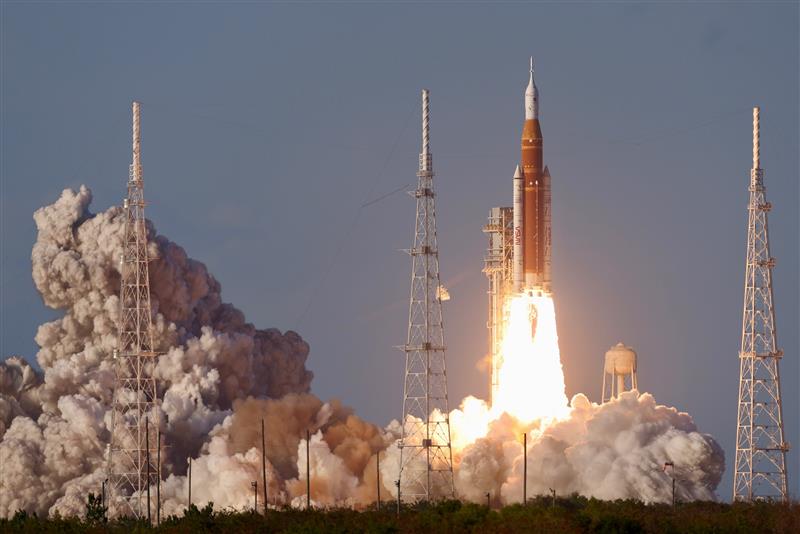
Artemis II astronauts captured these views of the Moon as the Orion spacecraft flew around the far side of the Moon on April 6, 2026.
For the first time in over 50 years, humans are Moonbound.
At 6:35 p.m. EDT (2235 UTC) NASA’s Space Launch System rocket and the Orion spacecraft lifted off from the agency’s Kennedy Space Center in Florida, sending four astronauts on a planned test flight around the Moon and back. https://t.co/0Q9ZB4IWVI
One of the problems is that the whole system [of funding scientific research] is institutionally biased against fundamental innovation.
That's not by anyone's fault. It's simply because the method of choosing recipients goes through this bureaucratic process where the people judging it are asked to make a judgment on things that they can't possibly know.
~Conjecture Institute Advisor @DavidDeutschOxf
When Copernicus proposed heliocentrism in 1543, it was actually less accurate than Ptolemy's geocentric model - a system refined over 1,400 years with epicycles precisely tuned to match observed planetary positions.
It took another 70 years before Kepler, working from Tycho Brahe's unprecedentedly precise observations, replaced Copernicus’s circles with ellipses - finally making heliocentrism empirically superior.
Terence Tao's point is that science needs a high temperature setting. If we only fund and follow what's most state of the art today, we kill the ideas that might need decades of work to surpass some overall plateau.
I’m often asked why I stay on X when most of the responses I get aren’t driven by intellectual curiosity, but by personal attacks.
My answer is always the same: because as scientists, we have a responsibility to share what we know - in good faith, with the best intentions, especially in difficult moments.
Because if we don’t, who will?