Say this prayer. "Almighty. Grant me contentment. Don’t let my mind believe that everyone seems to have a better life than I do. Teach me to be grateful for all that You have given me and all that You took away. Aameen."
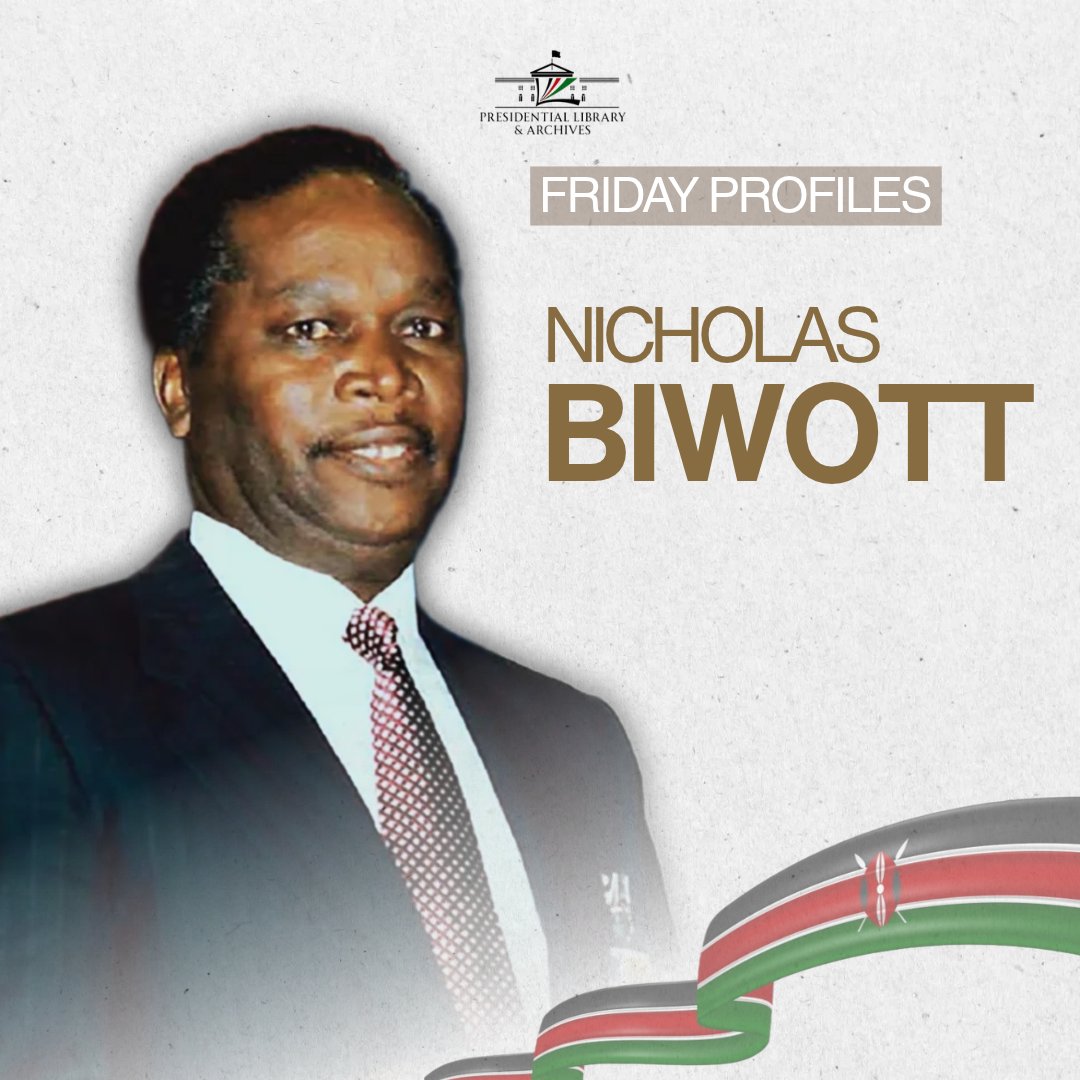
The Man Behind the Throne
Some men wield power from the highest office in the land. Others wield it from just outside its door.
Kipyator Nicholas Kiprono arap Biwott belonged to the second category.
For nearly a quarter of a century, during the presidency of Daniel arap Moi, Biwott occupied a rare place in Kenya's political establishment. He was not the President, nor was he Vice President. Yet, to many who operated within the corridors of power, he was a man whose influence could not be ignored.
His nicknames told their own story. Mr Fix-It. The Total Man. The Man Behind the Throne. Others simply called him the Steel.
Nicholas Biwott was born in 1940 in Chebior, in what was then Keiyo District. His schooling took him from Mokwo Primary to Tambach Intermediate and then to Kapsabet High School.
In 1959, fresh out of high school, he took his first step into public life, working at the Department of Information office in Eldoret, where he helped publish the Kalenjin Monthly newsletter. Two years later he left for Australia, enrolling at Taylors College in Melbourne and then the University of Melbourne. He graduated with a Bachelor of Commerce and a Diploma in Public Administration, majoring in Economics and Political Science.
Biwott returned home at the end of 1964 and began his career as a District Officer in Meru. By 1968 he had moved to Nairobi, starting as personal assistant to Agriculture Minister Bruce McKenzie. In 1971 he was promoted to Senior Secretary at the Treasury, then under Mwai Kibaki. There, his ability caught attention, and on President Jomo Kenyatta’s personal recommendation he moved to Home Affairs as personal assistant to Vice President Daniel arap Moi. It was the start of a relationship that would shape Kenya’s politics for decades.
When Moi became President in 1978, Biwott was already positioned close to the centre of power. A year later, he won the Keiyo South parliamentary seat and entered the Cabinet as a Minister of State in the Office of the President.
He would go on to serve in Parliament for 28 uninterrupted years.
But Biwott's power was not simply a matter of titles. It was about access.
During the Moi years, politicians, diplomats and business people reportedly queued for his attention, sometimes waiting hours for meetings that lasted barely minutes. Even senior government officials were said to seek his intervention when they needed a matter brought to the President's attention.
His reputation for secrecy was legendary. He was known to change vehicles repeatedly during the day, avoid predictable routines and leave telephone communications to his assistants. Accounts of his working habits describe a man who preferred to keep visitors standing rather than seated and who sometimes conducted meetings in waiting rooms rather than his office.
At his desk, according to one account, three telephones served different purposes: red for calls from Moi, green for ministers and prominent business people, and black for calls relayed through his secretary.
Whether by design or reputation, Biwott cultivated an aura that made people wonder not merely what he knew, but whom he could reach.
His influence also extended into the business of running a country.
As Minister for Energy, he was associated with oil exploration agreements involving international companies and the Turkwel Gorge hydroelectric project, which became a subject of fierce political debate before eventually gaining wider acceptance.
In Trade and Commerce, he oversaw changes to licensing arrangements. Later, as Minister for East African and Regional Cooperation, he played a role in negotiations that led to the re-establishment of the East African Community in 2000, following the collapse of the first Community in 1977.
But his legacy was also shadowed by the 1990 murder of Foreign Affairs Minister Dr Robert Ouko. In 2005, the Gor Sunguh-led Parliamentary Select Committee (2003-2005) concluded that Biwott had been involved, directly or indirectly, in Ouko’s disappearance and murder. But when the report was finally debated in Parliament in December 2010, MPs overwhelmingly rejected it, faulting its credibility and accusing the committee of shoddy work and settling political scores. The murder remains one of Kenya’s most enduring political mysteries.
Biwott’s political career was never without controversy, either. Critics accused him of helping consolidate Moi's political dominance, weakening opposition unity and using the machinery of government to reward loyalty. His name also featured in contentious accounts of the allocation of public land and the distribution of political patronage. Such allegations remain part of the wider debate about power and accountability during the era.
In Parliament, opposition politician James Orengo (now Siaya governor) once captured the unease surrounding Biwott's influence with the remark: “President Moi is a prisoner of people like Biwott.”
It was a striking assessment of a man who held no constitutional claim to the presidency but was widely perceived to exercise extraordinary influence around it.
Back home in Keiyo South, however, Biwott cultivated a different kind of political relationship. His annual fundraisers attracted ministers, senior politicians and business people contributing to local development projects, including Mama Soti School, named after his mother. His constituency remained the foundation of a political career that survived changing political winds for almost three decades.
Away from politics, Biwott's private life attracted almost as much curiosity as his public one. His family connections extended across continents, while reports of his considerable business interests, property holdings and wealth reinforced his image as a man whose reach extended far beyond government.
For 24 years, in the long shadow of the Moi presidency, one man remained a fixture in the corridors of power.
His name was Nicholas Biwott.
He died on July 11, 2017, leaving behind a complicated legacy.
And for a country trying to understand how power really worked in that era, his story remains impossible to ignore.
Tilil Tilil’ Jehovah!
Tarus met a street karaoke in Yerevan, Armenia, and the gospel was AMAZING! 🇦🇲🇰🇪
Kalenjin music knows no borders. From the Rift Valley to the streets of Armenia, the tune remains the same!
Long live the Kalenjin Tune!
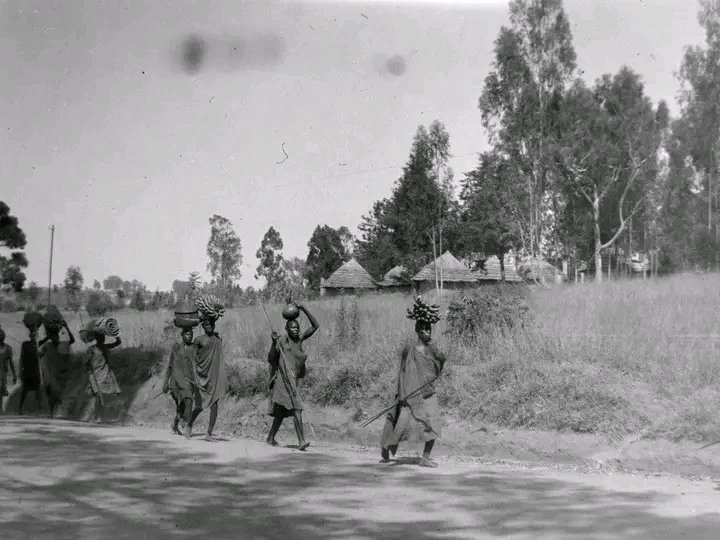
Rare 1940s photos taken near Eldoret, Uasin Gishu, showing locals in traditional dress going about their normal business.
The subjects are almost certainly Nandi.
📷 credit: Keith Brigstock
President @WilliamsRuto :
‘Our young people have stepped forward to engage on the affairs of their country. They’ve done their democratic duty, to stand&be recognized.
I’m proud of them. We’ll have a conversation with you to identify your issues & work together as a nation.’
Dear God,
Thank You for the gift of life this morning. We are grateful for Your grace and mercy. Gracious God, please guide and bless us throughout this day. Protect us from all dangers and help us to walk in Your path. Fill our hearts with peace and love. In Jesus' name, Amen