Researcher : Biochemistry & Nanomedicine, Interested in History...Spirituality...Cosmic consciousness....& I believe Indic, Dharmic Renaissance will must come.
See how Wikipedia is propagating absolutely Bogus things about ayurveda and trying to demean it.
This is a psychological warfare, to create a misconception among the present generation.
Just not acceptable!!!! #FraudWikipedia#Bewareofwiki#Shameonwiki
Do you know how "comrades" raped dozens of women in Calcutta and left their bodies floating in Rabindra Sarobar?
Did you know how "comrades" slaughtered the VC of Jadavpur University on the street?
Read the story of the "Bloodlands of Bengal"
My piece
The Chuknagar massacre is among the deadliest attacks on Hindus during the 1971 war, yet it remains largely unknown.
The Pakistan Army k!lled fleeing Hindus who had gathered in Chuknagar, on 20th May 1971. They moved around in 2-3 trucks equipped with semi-automatic rifles and light machine guns, and shot dead the Hindus.
I am giving some witness accounts ~
1. On 20th May 20 in 1971, thousands of people took shelter at Chuknagar Bazar, Patkhola ground under Maltia village and on the banks of the River Bhadra. Suddenly, Pakistani troops arrived from Satkhira. They first killed a farmer Chikan Morol, while he was cultivating his paddy field.
2. The Pakistani army detachment was not very large, possibly a platoon or so. Within a few minutes a lively town turned into a city of death.
3. There were bodies over bodies, thousands of bodies. I did not get any space to step out by-passing the blood-stained bodies,’ - said a witness, Anser Ali, as he recalled the memories.
4. Almost 100 people were found dead under the root of the banyan tree at the 'Kali-mondir. Later that tree was cut down for extending the temple’ ~ said another witness.
5. Another witness to the massacre, Shafiqul Islam (principal of
Chuknagar College), said ~ the invading Pakistani troops had taken pos ition on two sides of the local bazaar and started firing, indiscriminately.
Many of those who succeeded in evading the bullets, lost their lives in the stampede of the fleeing crowd," he told BSS.’
The tide of blood was meeting the river. l briefly halted at one place when I saw a baby girl sucking her deceased mother's breast. I was shouting and crying. I will never forget the scene in my life time," he said in tearful eyes.
Local people rescued the baby and called her ‘Sundari Dasi.’ The six- month-old Sundari is now mother of two children and she was passing her days in great hardship.
(Reference : Bangladesh Sangbad Sangstha , DHAKA, Mar 3, 2014)
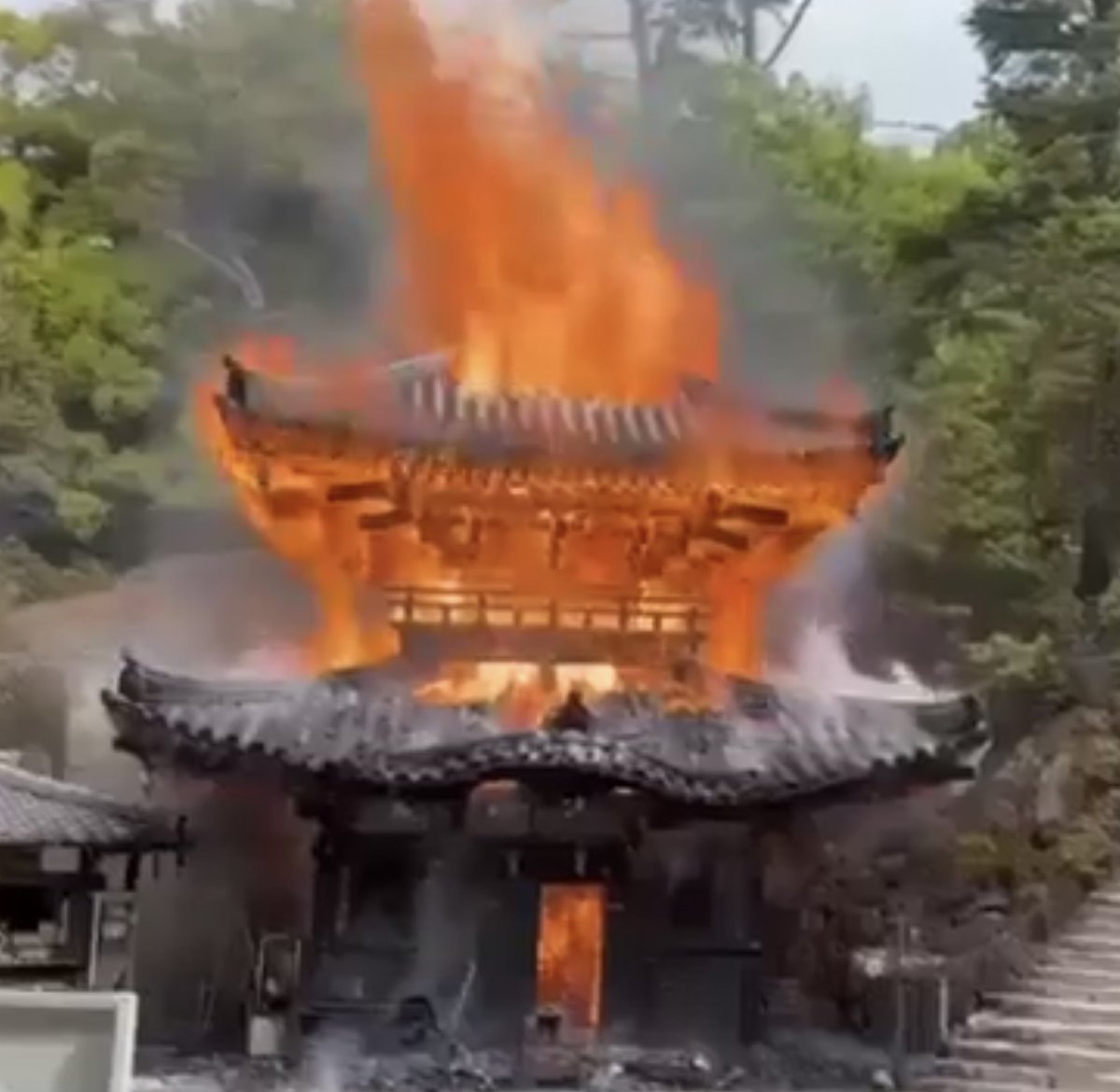
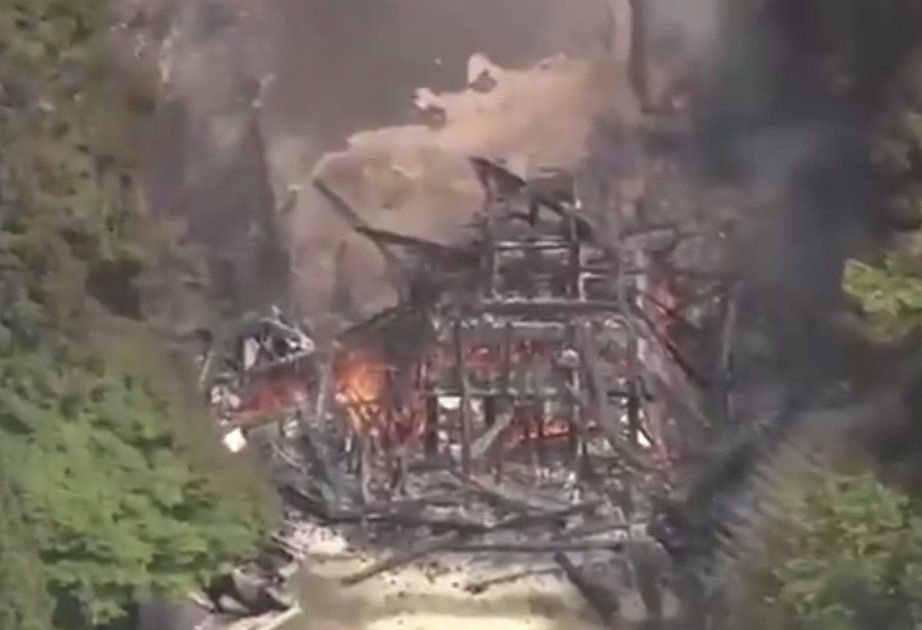
In just the first five months of 2026, nine major shrines and temples have burned across Japan.
・January 15: Suga Shrine, Kitakyushu, Fukuoka
・February 7: Horenji, Matsuyama, Ehime
・February 13: Hottoji, Kuma Highland, Ehime — 1 person died
・February 20: Shorinji, Shimonoseki, Yamaguchi — 5 people died
・April 24: Renshoji, Toyama City, Toyama
・April 27: Uruwashitsune Shrine, Nabari, Mie
・May 6: Furumachi Atago Shrine, Niigata City, Niigata
・May 16: Daishoji, Takaoka, Toyama
・May 20: Reikaido at Itsukushima Shrine, Hatsukaichi, Hiroshima (World Heritage site)
These are not ordinary fires.
Many of these sacred places had stood for hundreds — some over a thousand — years.
I’m not a politician.
I’m not an activist.
I’m just an ordinary Japanese who loves this country.
Every time I see another irreplaceable piece of our history and culture go up in flames, I feel a quiet fear.
Japan was supposed to be the one place where this kind of thing almost never happened.
When did our temples and shrines start burning one after another?
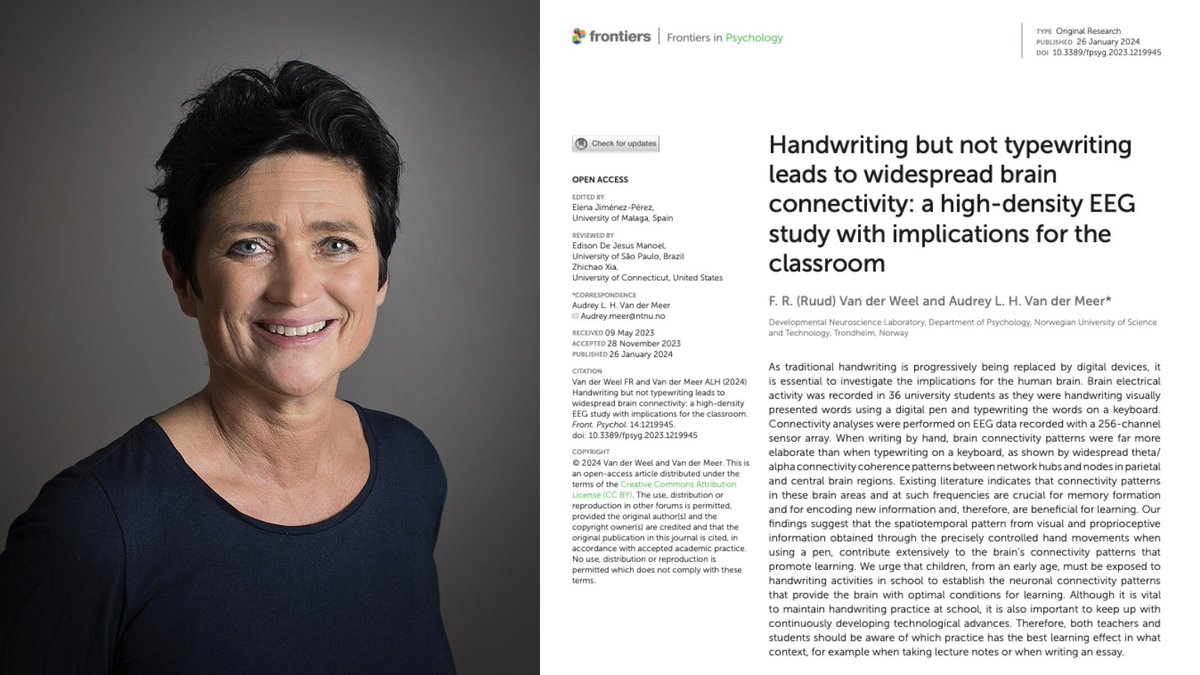
A Norwegian neuroscientist spent 20 years proving that the act of writing by hand changes the human brain in ways typing physically cannot, and almost nobody outside her field has read the paper.
Her name is Audrey van der Meer.
She runs a brain research lab in Trondheim, and the paper that closed the argument was published in 2024 in a journal called Frontiers in Psychology. The finding is brutal enough that it should have changed every classroom on Earth.
The experiment was simple. She recruited 36 university students and put each one in a cap with 256 sensors pressed against their scalp to record brain activity. Words flashed on a screen one at a time.
Sometimes the students wrote the word by hand on a touchscreen using a digital pen, and sometimes they typed the same word on a keyboard. Every neural response was recorded for the full five seconds the word stayed on screen.
Then her team looked at the part of the data most researchers had ignored for years, which is how different parts of the brain were communicating with each other during the task.
When the students wrote by hand, the brain lit up everywhere at once.
The regions responsible for memory, sensory integration, and the encoding of new information were all firing together in a coordinated pattern that spread across the entire cortex. The whole network was awake and connected.
When the same students typed the same word, that pattern collapsed almost completely.
Most of the brain went quiet, and the connections between regions that had been alive seconds earlier were nowhere to be found on the EEG.
Same word, same brain, same person, and two completely different neurological events.
The reason turned out to be something nobody had really paid attention to before her work. Writing by hand is not one motion but a sequence of thousands of tiny micro-movements coordinated with your eyes in real time, where each letter is a different shape that requires the brain to solve a slightly different spatial problem.
Your fingers, wrist, vision, and the parts of your brain that track position in space are all working together to produce one letter, then the next, then the next.
Typing throws all of that away. Every key on a keyboard requires the exact same finger motion regardless of which letter you are pressing, which means the brain has almost nothing to integrate and almost no problem to solve.
Van der Meer said it plainly in her interviews.
Pressing the same key with the same finger over and over does not stimulate the brain in any meaningful way, and she pointed out something that should scare every parent who handed their kid an iPad.
Children who learn to read and write on tablets often cannot tell letters like b and d apart, because they have never physically felt with their bodies what it takes to actually produce those letters on a page.
A decade before her, two researchers at Princeton ran the same fight using a completely different method and ended up at the same answer. Pam Mueller and Daniel Oppenheimer tested 327 students across three experiments, where half took notes on laptops with the internet disabled and half took notes by hand, before testing everyone on what they actually understood from the lectures they had watched.
The handwriting group won by a wide margin on every question that required real understanding rather than surface recall.
The reason was hiding in the transcripts of what the two groups had actually written down.
The laptop students typed almost word for word, capturing more total content but processing almost none of it as they went, while the handwriting students physically could not write fast enough to transcribe a lecture in real time, which forced them to listen carefully, decide what actually mattered, and put it in their own words on the page.
That single act of choosing what to keep was the learning itself, and the keyboard had quietly skipped the choosing and skipped the learning along with it.
Two studies. Two countries. Same answer.
Handwriting makes the brain work. Typing lets it coast.
Every note you have ever typed instead of written went into your brain through a thinner pipe. Every meeting, every book highlight, every idea you captured on your phone instead of on paper was processed at half depth.
You did not forget those things because your memory is bad. You forgot them because typing never woke the part of the brain that would have made them stick.
The fix is the thing your grandmother already knew.
Pick up a pen. Write the thing down. The slower road is the faster one.
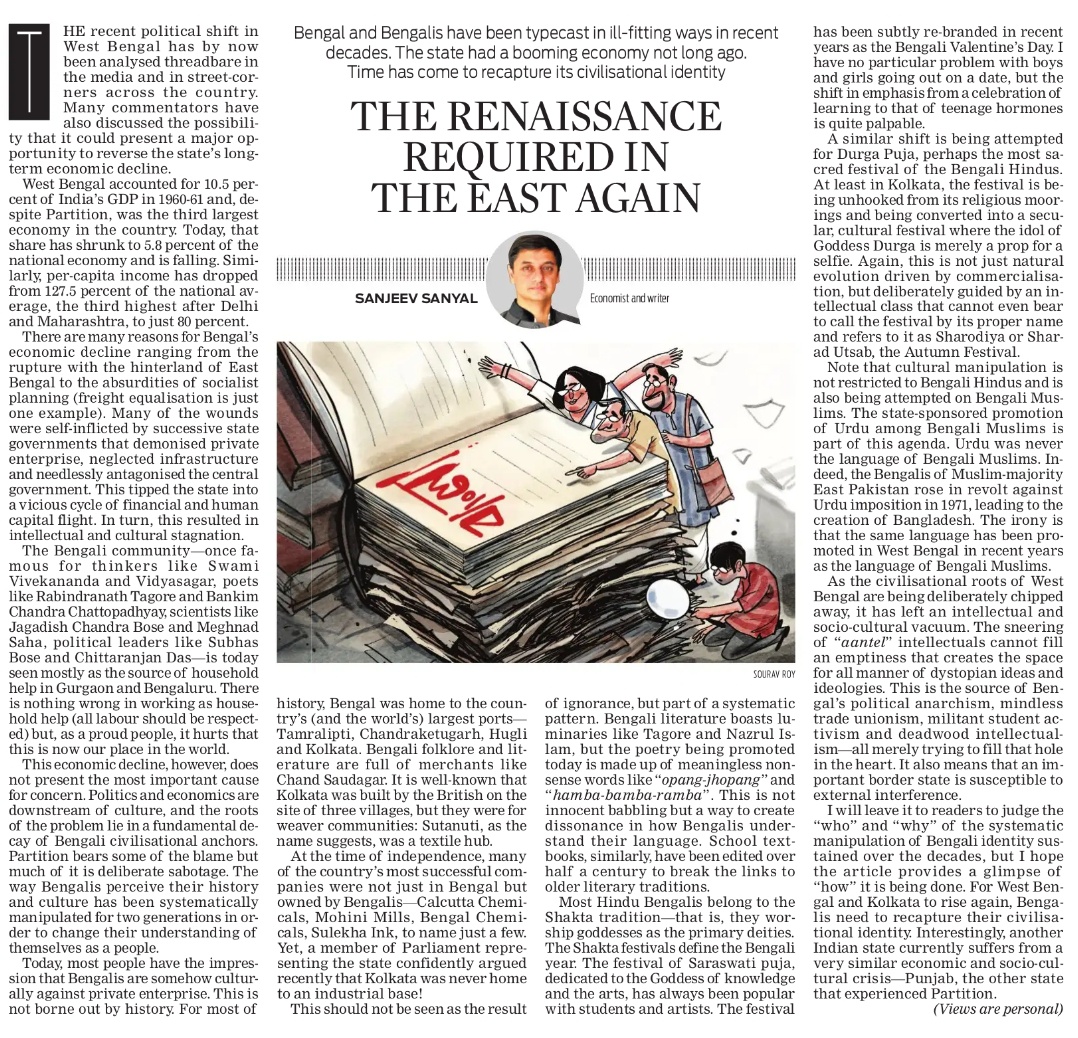
"The Renaissance Required in West Bengal" - my article in today's New Indian Express where I argue that Bengal's economic revival depends on recapturing its civilizational identity after decades of deliberate manipulation. As the civilizational roots of Bengalis were deliberately chipped away, it left an intellectual and socio-cultural vacuum. The sneering of “aanteil” intellectuals cannot fill the emptiness. This is the source of Bengal’s political anarchism, mindless trade unionism, militant student activism and deadwood intellectualism; all merely trying to fill that hole in the heart. As an aside, a similar story can be told of another state - Punjab, the other state that was Partitioned.
https://t.co/MjUdrFYTuN
1. Just got off a call with @UnSubtleDesi. I couldn't be happier for her and both of us couldn't help but discuss the harrowing days of post poll violence in West Bengal in 2021. So I am going to share what happened five years ago just so ppl know what happened. #WestBengal2026.
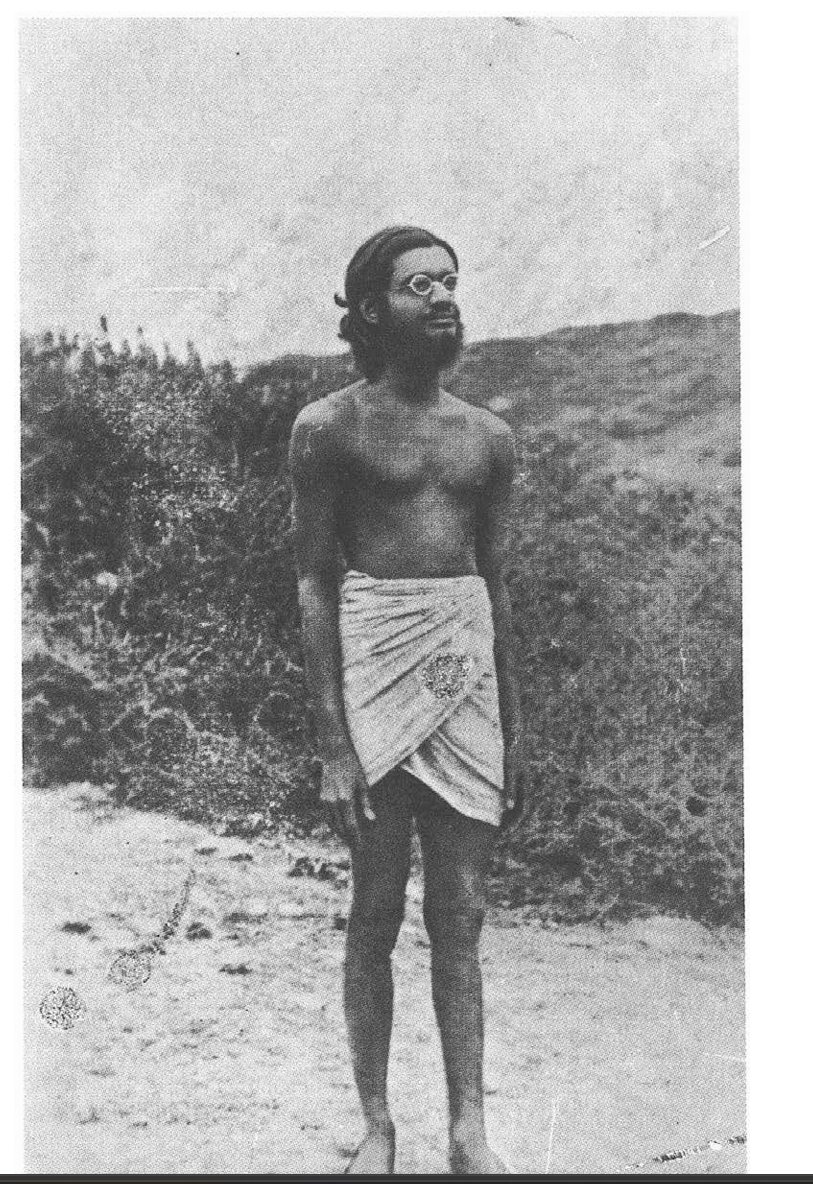
Do you know who started Nuclear Physics department in #AndhraUniversity. A saint who did his tapsya for 10 years in Himalayas and was asked by his guru to go study Physics. Studied in Germany, Published wide variety of books across physics, Vedanta , Nuclear physics
Seattle becomes the first city in the US to install a Swami Vivekananda monument in its downtown, marking a symbolic recognition of the Indian philosopher’s global legacy
(Source: Consulate General of India, Seattle/ANI)
Swami Vivekananda’s statue unveiled in Seattle the first such monument hosted by a city government in the US.
A timeless symbol of Vedanta, Yoga and India’s global spiritual legacy now stands tall in Seattle’s skyline.
🚨 BIG RELIEF for Janta
TRAI proposes MANDATORY voice-only mobile packs to match data plans.
=> Draft rules would require telecom operators to offer SMS & voice packs at LOWER prices for users who do NOT need data.
As part of our thought-building efforts in the critical space of IKS-based education, Bṛhat and key partner organizations working towards IKS-led education, had the opportunity to collaborate with the Private School Principals’ Association (PSPA) for a series of webinars on ‘IKS for Schools’ conducted between Oct 14-24, 2025.
Make no mistake - India will avenge this terror attack with all its might.
But this time round a billion Indians demand an assurance - that anyone who attends the funeral of terrorists who carried out this attack, will be considered a potential terrorist. Enough is enough.