WATCH 👀: Alexander Olawaiye, MD, of @UPMC discusses the final overall survival data from the phase 3 ROSELLA trial in platinum-resistant ovarian cancer.
See the whole video here ➡️: https://t.co/NVeOlBR8Bf
#ovca#oncology
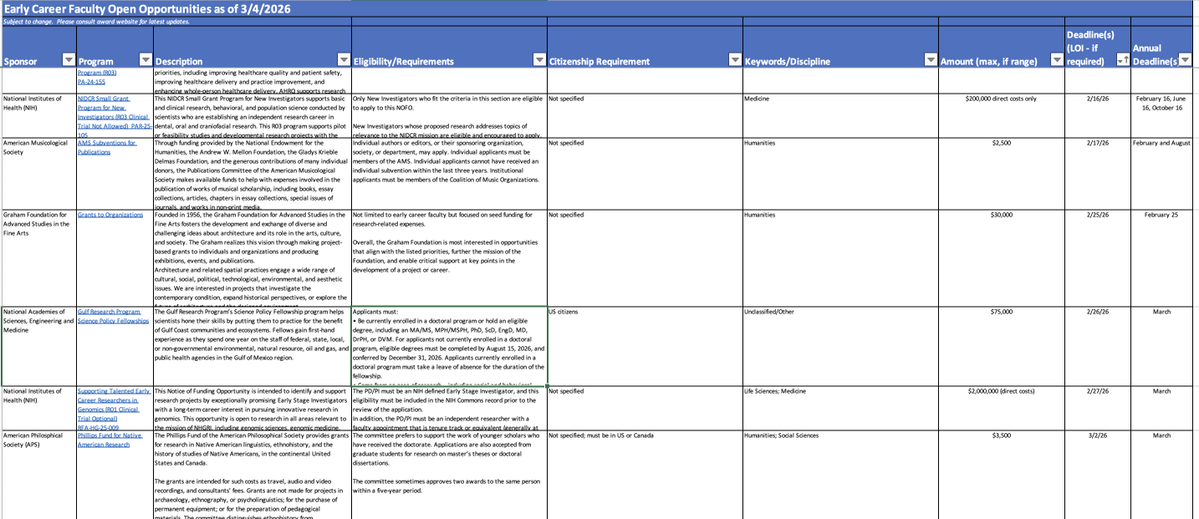
Here is our updated database of grants for early careers researchers in all fields.
It goes way beyond traditional NIH and NSF funding opportunities. We list 428 types of grants.
Download it here: https://t.co/RGXGrdp2uf
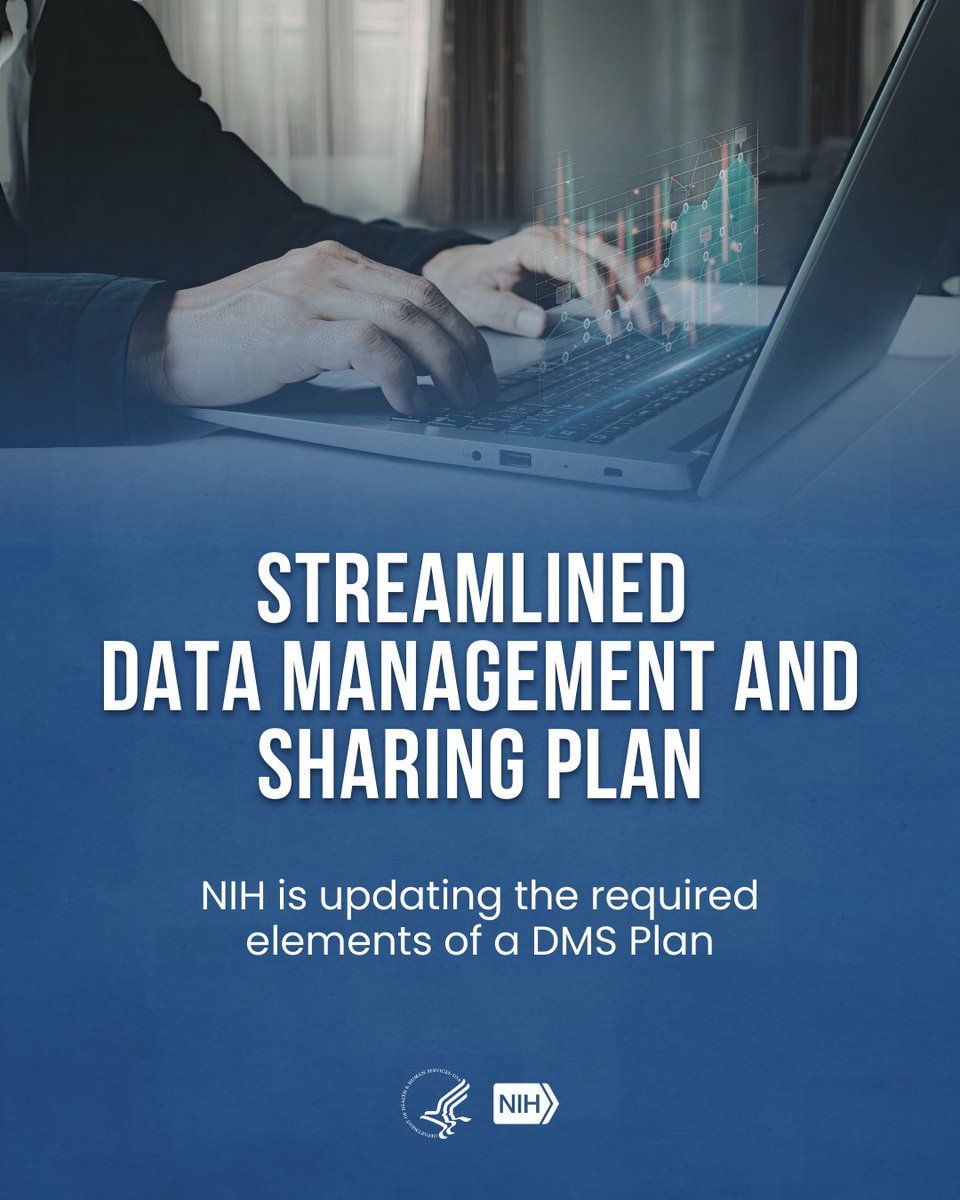
As part of ongoing efforts to increase efficiency and minimize applicant burden, NIH is updating the required elements of the Data Management and Sharing Plan required for any NIH-funded research that will generate scientific data.
Read the full DMS Plan announcement: https://t.co/ZVklnlyTfQ
The first time you start a research lab, there’s no manual.
So I made one.
A practical toolkit for postdocs and early-career faculty launching their first lab: hiring, startup planning, collaborations, and building a sustainable research program.
https://t.co/a30LLykjKq
What America Can Learn From Pittsburgh - This long-depressed city has overcome some of its most serious problems. Maybe others can accomplish the same thing - My look at @chrisbriem's book for @GOVERNING https://t.co/58eS5wUszm
Which Pitt team, among the most competitive in the country, is facing the loss of nearly half of its budget? Maddy Franklin of @PublicSourcePA reports on how "reallocated" funds may undermine a team's nationals dreams https://t.co/CXnyLBuG5G
Tonight is Worst Mistakes Made by Startups!
January 27, 5-6:15 P.M.
A panel of lawyers will share the ‘horror stories’ of mistakes that startups have made and the consequences. Learn from the mistakes of others so you can avoid the pitfalls.
https://t.co/cEhyn0G6Ox
Applications for the Nonprofit Security Grant Program are open! I encourage all eligible nonprofits to see if you may benefit from these funds. I'm very proud that the 2025-26 PA budget secured $10 million to keeping the organizations serving vulnerable Pennsylvanians safe.
Updated Application Policies: NIH Administrative Burden Reduction Effort Removal of Requirements for Letters of Intent and Unsolicited Applications Requesting $500,000 or More in Direct Costs https://t.co/O588ezqHQi
I need your help, Pittsburgh.
My @BusStopsHereFdn is still short on gifts for underserved youth this holiday season. Even a small act of generosity can make a big impact.
🎁 Amazon Wishlist: https://t.co/rezN1aZWAt
💛 Donate: https://t.co/YNAFNlC34f
Let’s make sure every child feels seen, supported, and celebrated this season. Thank you for anything you can do.
Jonas Salk, whose vaccine work at #PittMed saved millions of lives, is among the inaugural inductees in Pittsburgh’s Walk of Fame.
His commitment to health equity continues to inspire us.
https://t.co/DmOZTgps9L
🦼Something exciting is coming to Frick Park! And we need YOUR help launching it. Soon, all-terrain wheelchairs, designed for smooth navigation of outdoor trails, will be available for rent at the FEC, as part of our promise to make Pittsburgh's parks among the most accessible in the nation!
♿We are seeking youth, at least 5 years old, and adults with limited mobility to take part in our Trackchair Pilot Program in Frick Park, this September and October. Be amongst the first to test them out before they become available to the public in the spring!
➡️Follow the link to sign up and learn more about the pilot program: https://t.co/xhEYieIhQU
The @NIH Stephen I Katz Early Stage Investigator (ESI) RO1 application cycle is OPEN! This award supports an innovative project in an area of science that represents a change in research direction for an ESI. For more details visit: https://t.co/NVOYF6jhAr
Dear Esteemed Reviewers of Research Proposals,
As we gather to evaluate the future of science through the lens of today’s proposals, let us pause to reflect on the legacy we inherit—and the responsibility it bestows.
In moments of scientific reckoning, history has shown that progress is not born from caution—it is ignited by courage. When Faraday explored electromagnetism, or when Pasteur pursued germ theory, they did so not with perfect data, but with bold vision. Galileo’s telescope revealed a cosmos that defied orthodoxy. Darwin’s theory of evolution lacked molecular evidence, yet it reshaped biology. The Wright brothers flew with intuition and grit, not with exhaustive aerodynamic data. Einstein’s relativity was once a radical abstraction. CRISPR began as a bacterial curiosity. These ideas were not perfect—they were powerful.
In our role as reviewers, we are not merely gatekeepers of rigor; we are stewards of possibility. When we encounter a proposal brimming with bold vision but still gathering its data, let us not default to delay. “I want to see (even) more data” must not become a refrain that stifles innovation. Certain scientific weaknesses we know are not flaws—they are frontiers awaiting exploration.
If we fail to support bold science today, we risk breeding generations of scientists conditioned to play it safe—trained to seek certainty over creativity, consensus over scientific courage. The price of such caution is steep: a slow erosion of our nation’s scientific vitality, and a future where transformative ideas are never born in this land of innovation because the culture no longer knows how to embrace them.
Let us rise to the cause. Let us advocate fiercely and uniformly for the best science, supporting it with urgency and unity. In doing so, we honor the spirit of discovery and ensure our nation remains a beacon of progress, driven by courage, collaboration, and the relentless pursuit of knowledge.
Warmly and respectfully,
A Fellow Advocate for Bold Science
🦻 Do you have single-sided deafness? You may qualify for a Pitt study using cutting-edge brain imaging to reveal the best time for a cochlear implant. Learn more 👉https://t.co/erc2CNXALU