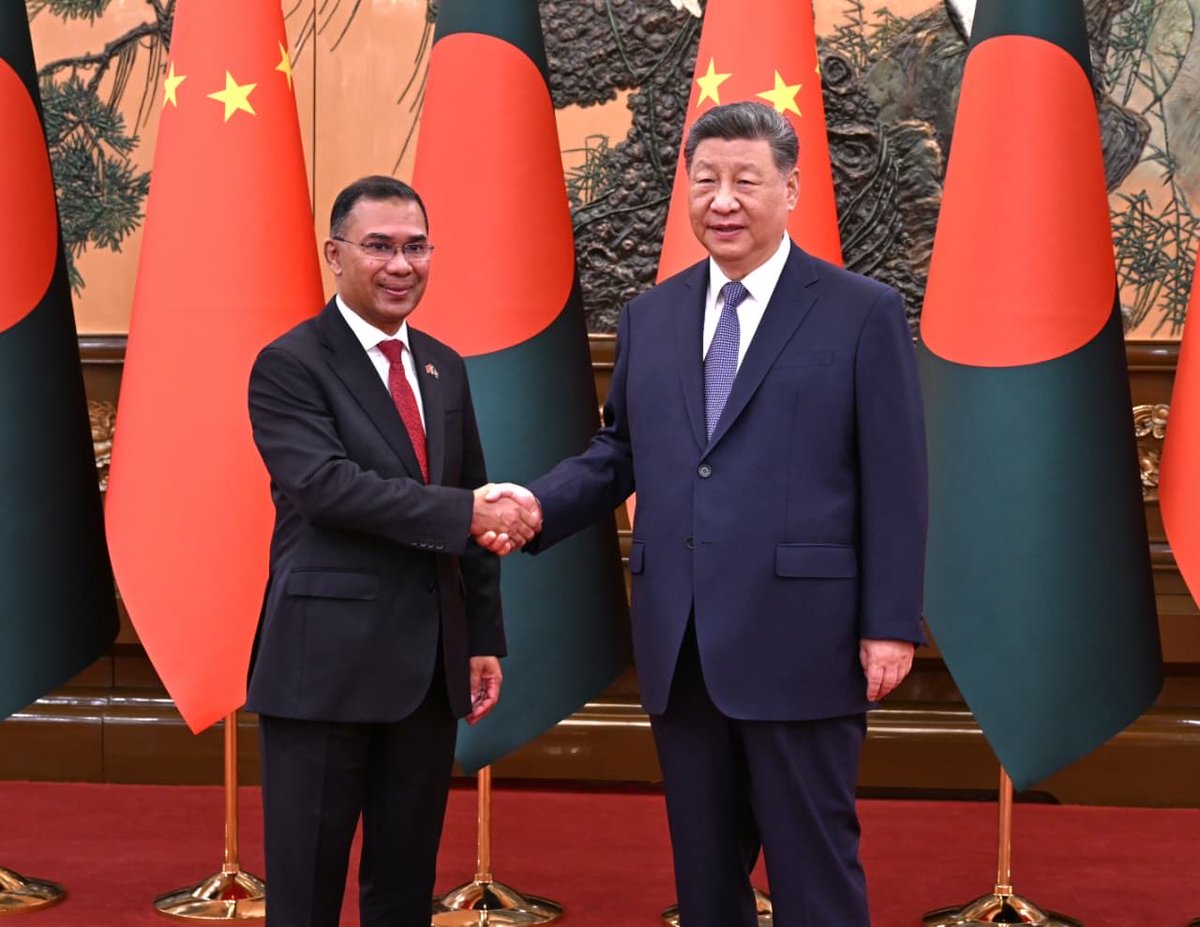
Many congratulations to our Minister of Foreign Affairs, Khalilur Rahman, on his election as the President of the 81st Session of the United Nations General Assembly.
This achievement reflects Bangladesh’s increasing contribution and credibility on the global stage. We believe he will proudly represent Bangladesh and forge connectivity, dialogue, and cooperation in addressing multilateral, shared challenges. We wish him every success in this new responsibility.
Strongly condemning the cowardly act of violence at the White House Correspondents’ Association Dinner. Relieved to learn that the @POTUS, the First lady and others are unharmed. We stand firmly against all forms of violence.
Bangladesh has emerged as champions by defeating India in the SAFF U-20 final. I extend my heartfelt congratulations to the team on this proud achievement.
The government has already begun implementing its plans to establish sports as a viable professional path. This remarkable success of our young athletes will undoubtedly inspire millions of sports enthusiasts across the country. Driven by patriotism and strong team spirit, our talented youth have demonstrated that with unity and determination, Bangladesh’s journey of success will continue both at home and abroad, InshaAllah.
On the occasion of the great Independence and National Day, 26 March, I extend my heartfelt greetings and congratulations to the people of Bangladesh at all levels, as well as to all Bangladeshis living abroad.
March 26 is a glorious and historic day in our national life. On this day, I remember with profound respect the nation's finest sons, whose sacrifices enabled us to achieve an independent and sovereign Bangladesh. At the same time, I recall with deep gratitude the brave freedom fighters who took part in the Liberation War, the mothers, sisters who suffered oppression and all those who devoted themselves to the struggle for independence. I pray for the eternal peace of the departed souls of all the martyrs.
The Great Independence Day inspires us anew with the spirit of courage, sacrifice and patriotism. The fundamental goal of independence was to establish a Bangladesh that is free from discriminations, and to be democratic, peaceful and prosperous.
Keeping that goal before us, we must work together and continue to move the country forward.
To further accelerate the progress and development of our beloved motherland, we must uphold in our hearts the spirit of national unity, mutual tolerance and patriotism.
Let us draw inspiration from the significance of the Great Independence and National Day and dedicate ourselves, from our respective positions, to the welfare of the country. Together, let us work to build a developed, prosperous and dignified Bangladesh.
I wish every success to all programmes organised on the occasion of the Great Independence and National Day.
Congratulations to the Government and the people of Nepal on the successful and peaceful parliamentary elections held on 5 March 2026. This important democratic exercise reflects the aspirations and resilience of the Nepali people and the strength of their democratic institutions. Bangladesh looks forward to working closely with the new Government and the people of Nepal to further strengthen our longstanding friendship and cooperation.
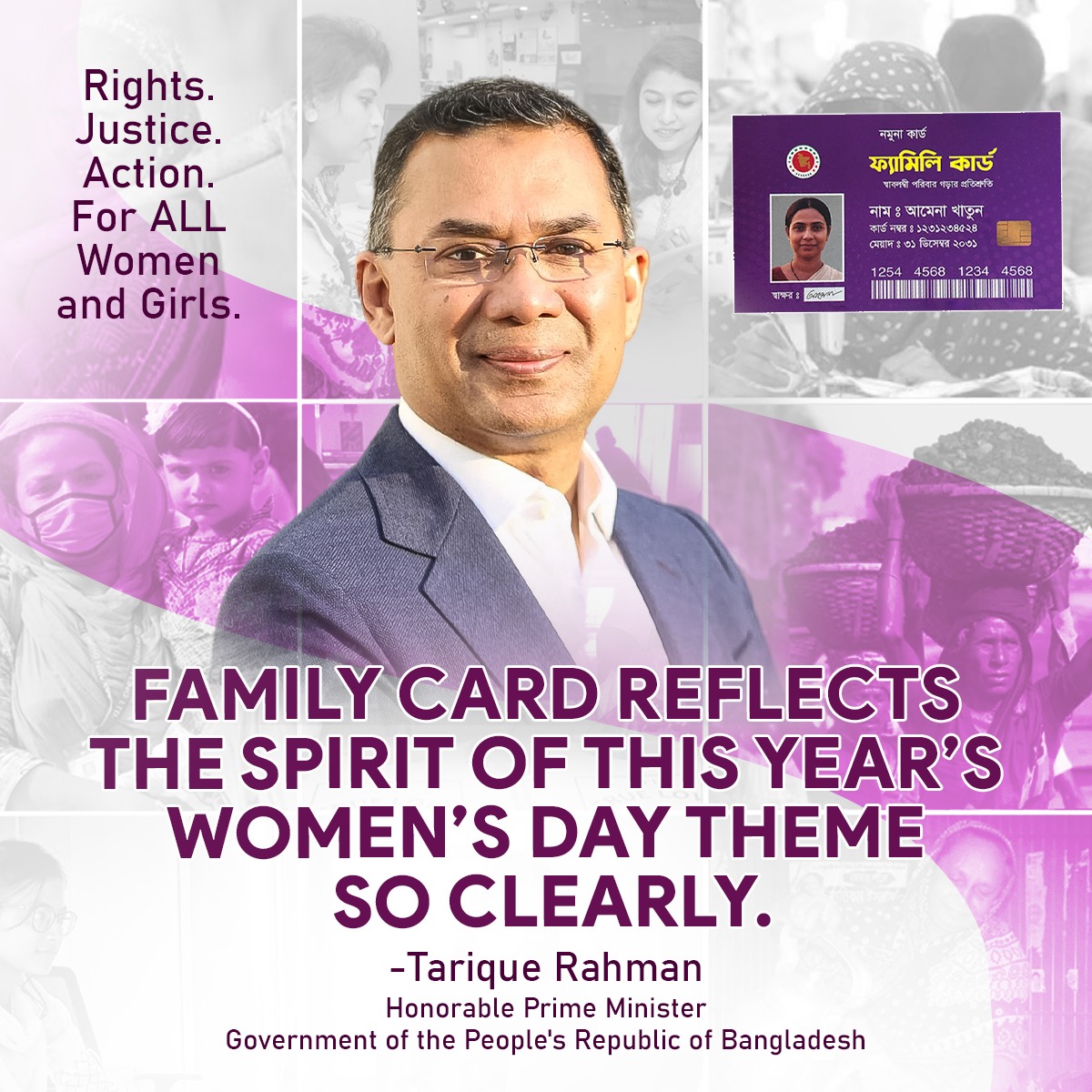
On the occasion of International Women’s Day, I extend my heartfelt greetings and best wishes to all women in Bangladesh and across the world.
This year’s theme, 'Rights. Justice. Action. For ALL Women and Girls', is both timely and deeply meaningful. It reminds us that the advancement of women cannot be secured by words alone. Rights must be protected in practice, justice must be felt in everyday life, and action must bring real improvement to the lives of women and girls.
For Bangladesh, this message carries special importance. Women are not only half of our population; they are the strength of our families, the foundation of our communities, and an essential force in our national progress. Their contribution is visible in every sphere of life - in the home, in education, in agriculture, in industry, in public service, and in leadership. No nation can achieve balanced and sustainable development unless women are empowered to participate fully, live with dignity, and move forward with confidence and security.
It is in this broader national vision that the Family Card holds such significance. This is a pioneering initiative, not only in design but in purpose. By issuing the card in the name of the mother or female head of the household, it recognises a simple but profound truth: in countless families across our country, women are the main pillar of resilience, sacrifice, and care. They carry the responsibility of holding families together through hardship, managing limited resources, and safeguarding the well-being of children and elders alike.
The true value of this initiative lies in what it can mean for ordinary people. For a woman facing economic hardship, direct support can provide a measure of financial security and dignity. For a household living close to poverty, it can offer stability in uncertain times. For children, it can help protect nutrition, education, and health. When support reaches women directly, it strengthens not only the individual woman, but the entire family unit. In this way, the Family Card can become a powerful instrument for reducing vulnerability, easing the burden of poverty, and creating a more secure social foundation.
That is why the Family Card reflects the spirit of this year’s Women’s Day theme so clearly. It speaks to rights, by affirming the place of women at the centre of family and national life. It speaks to justice, by seeking to support those families who bear the greatest economic burden. And it speaks to action, by translating commitment into practical assistance that can improve daily life.
Women’s empowerment must not be understood in narrow terms. It is not only a matter of representation; it is a matter of human dignity, social balance, and national development. A stronger woman means a stronger family. A stronger family means a stronger society. And a stronger society means a stronger Bangladesh.
On this International Women’s Day, let us renew our collective commitment to building a Bangladesh where every woman can live in safety, walk in dignity, and contribute with full confidence to the future of the nation.
Let rights be meaningful, justice be visible, and action bring lasting change to the lives of all women and girls.
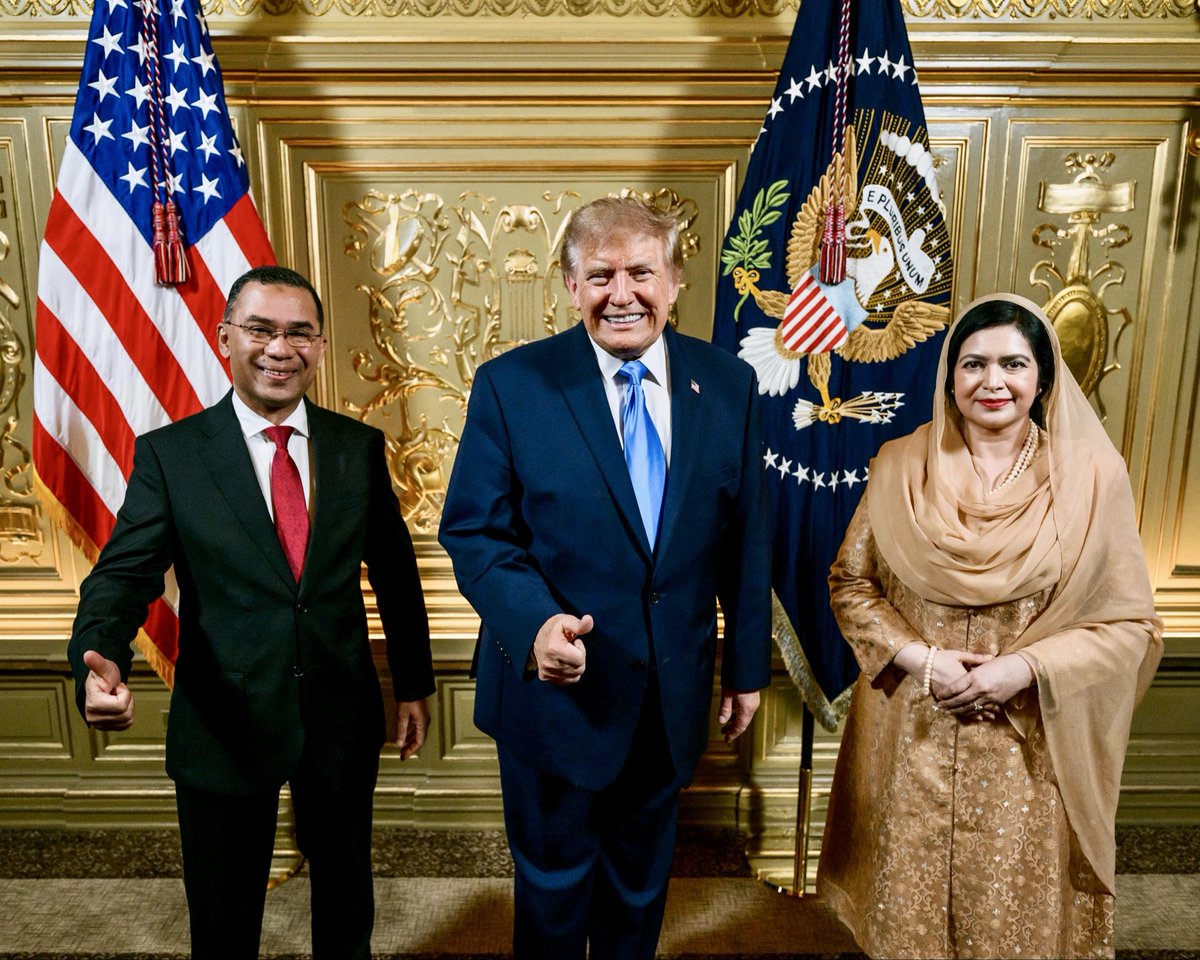
The President of the United States, @realDonaldTrump , has congratulated the Hon’ble Prime Minister of Bangladesh, H.E. Mr. @trahmanbnp , on his assumption of office.
In his message, President Trump expressed his commitment to working together in a spirit of mutual respect and shared interests, strengthening the longstanding ties between the United States and Bangladesh.
Endless faces. Silent tears.
A nation stood together to say goodbye to Begum Khaleda Zia.
Forever in the heart of Bangladesh.
#KhaledaZia#Bangladesh#BNP
My mother, BNP Chairperson Begum Khaleda Zia, has responded to the call of Almighty Allah and left us today. Inna lillahi wa inna ilayhi raji'un (Indeed, we belong to Allah, and to Him we shall return).
To many, she was the leader of the nation, an uncompromising leader, the Mother of Democracy, the Mother of Bangladesh. Today, the country mourns the loss of a guiding presence that shaped its democratic aspirations.
To me, Khaleda Zia was a tender and loving mother who devoted her entire life to the country and its people. Throughout her life, she stood firm against autocracy, fascism, and domination, leading the struggle for freedom, sovereignty, and the restoration of democracy.
Though her life was illuminated by sacrifice and struggle, at home she was our truest guardian, a mother whose infinite love gave us strength in our darkest moments. She endured repeated arrests, denial of medical care, and relentless persecution. Yet even in pain, confinement, and uncertainty, she never stopped sheltering her family with courage and compassion. Her resilience was not loud, but it was unbreakable.
For the country, she lost her husband; she lost her child. In that loss, this nation and its people became her family, her purpose, her very soul. She leaves behind an unforgettable legacy of patriotism, sacrifice, and resistance, a legacy that will live on in the democratic conscience of Bangladesh.
I ask you all to pray for my mother. For the profound emotion, love, and respect shown by the people of this country and by the world, my family and I remain eternally grateful.
For sixteen long years, Bangladesh lived beneath a darkened sky. Some felt it sharply, others carried the weight quietly. But for many, especially those whose politics diverged from the deposed regime’s ruling line, the darkness was a lived reality: midnight knocks, fabricated cases, brutality endured, terror seeping into daily culture, and families waiting by doors that never opened again.
No party bore this burden more than BNP. Across extrajudicial killings, enforced disappearances, custodial deaths, and false charges, BNP leaders, activists, and supporters formed the largest share of the wounded and missing. And in the 2024 mass uprising, it was again BNP’s ranks that suffered the highest number of deaths and injuries.
But the suffering stretched far beyond one political group. Students, writers, journalists, bystanders, and ordinary citizens also felt the impact of a climate where fear replaced the ‘everyday essentials’ that today’s Human Rights Day asks us to protect, the essentials of dignity, safety, and freedom of expression.
In those years, even I was stripped of the most basic rights of voicing my opinion. Since 2015, I was silenced by an order prohibiting newspapers, electronic media and social media in the country from publishing or airing my words. Yet even from enforced silence, I kept fighting for the rights and democracy denied to millions, proving that a spirit committed to justice cannot be muted by decree.
Throughout these long dark years, Deshnetri Khaleda Zia became one of the clearest symbols of endurance. Her years marked by imprisonment, politically driven cases, and persistent attempts to erase her mirrored the broader experience of a society bulldozed into living under an increasingly authoritarian regime. Yet she remained steadfast in the principles she had upheld throughout Bangladesh’s democratic journey. She has always championed that rights belong to every citizen, and that a nation cannot thrive when fear shapes its public life.
Her resilience was never hers alone; it reflected the resilience of countless ordinary people. My mother too, like so many others across the nation, was made to endure the agony of seeing her son imprisoned and physically tortured. Like families everywhere torn apart by targeted repression, I lost my brother, and she lost a son.
But here is what history often overlooks: pain does not always produce bitterness. Our Deshnetri, my mother, exemplifies this more than anyone I know. It can shape people into guardians of a better future, and into people who understand that a nation cannot be rebuilt by repeating the injustices it survived.
What Bangladesh needs now is larger than politics. We envision a united country where human rights are guaranteed, where plurality of opinions are welcomed, where opposition is a healthy part of democracy rather than a threat, and where no one is erased for their beliefs.
BNP stands strong, choosing resolution over retribution. We reject the politics of vengeance and affirm that no Bangladeshi, whether ally or opposition, should ever again fear the institutions created to protect their rights.
On this 10 December, the global reminder that human rights are ‘everyday essentials’ feels especially urgent. We hold the stories of Abrar Fahad, Mushtaq Ahmed, Ilias Ali, Sajedul Islam Sumon, Sagor-Runi and so many others to ensure such injustices and impunity are never repeated.
BNP have suffered deeply, yet emerged stronger, guided by the belief that truth, justice, accountability, reconciliation and a shared commitment to the rule of law can build a Bangladesh that honours every voice and every life, a nation where human rights are defended as essential to our collective future.
How does corruption cripple Bangladesh? Ask a graduate searching for a job based on merit. Ask a farmer waiting months for a routine service. Listen to a young family struggling to access healthcare or entrepreneurs forced to pay extra just to keep their businesses alive. From food prices to school quality to road safety, corruption cripples daily life for millions.
For decades, the fight against corruption has been central to Bangladesh’s governance debates. International Anti-Corruption Day reminds us of that long struggle and of moments when Bangladesh made real progress, especially during BNP's tenure.
Early governance efforts under President Ziaur Rahman prioritised administrative discipline, clean public service, and economic reforms that reduced gatekeeping and discretionary power. Later, the administrations of Prime Minister Khaleda Zia modernised institutions through procurement rules, financial administration laws, strengthened audits, and clearer oversight mechanisms.
A major milestone came in 2004 with the formation of the Anti-Corruption Commission (ACC) as an independent statutory body. This replaced the Bureau of Anti-Corruption and aligned Bangladesh with global standards by granting independent investigative and prosecutorial authority. Development partners such as the World Bank and ADB recognised this as a significant step toward accountability.
Despite reservations about Transparency International Bangladesh’s (TIB) methodology at the time, even they reported improved CPI performance: Bangladesh’s score rose from 1.2 in 2002 to 1.7 in 2005. Transparency International’s Global Corruption Barometer (2003) found that 66% of citizens felt corruption had decreased. These gains reflected reforms that strengthened clarity, reduced discretion, and expanded oversight.
BNP takes pride in key developments from these eras, including:
1. Stronger financial governance: improved treasury systems, tighter budgets, better audits, and early anti-money-laundering and banking regulations.
2. Early procurement reforms: standardised procedures and competitive bidding that laid groundwork for the Public Procurement Act.
3. Market liberalisation: expanding telecom, media, aviation, and trade competition, reducing bureaucratic bottlenecks and increasing public scrutiny.
4. Decentralisation and civil service improvements: shifting authority closer to communities and making administration more predictable and less discretionary.
The record speaks for itself: BNP is the only party so far to make sustained progress in reducing corruption.
We aim to continue that fight through:
1. Institutional independence — ensuring the judiciary, ACC, election bodies, public service, and law enforcement operate without interference.
2. Transparency and accountability — open procurement, asset declarations, real-time audits, and stronger Right-to-Information systems.
3. Judicial and law-enforcement reform — professionalised policing, case-tracking, efficient prosecution, and digital evidence systems.
4. Deregulation and e-governance — digitising licences, land records, and payments to cut in-person services, which international studies show can reduce corruption by 30–60%.
5. Whistleblower protection — safeguarding informants so wrongdoing can be reported safely.
6. Ethics and civic education — embedding integrity in schools and universities to build long-term cultural change.
7. Stronger financial oversight — independent audits, digitised spending trails, and empowered parliamentary budget scrutiny.
Fighting corruption will be an uphill battle after years of systemic abuse. But Bangladesh’s own history proves progress is possible. With commitment, discipline, and public support, meaningful reform can return. If entrusted by the people, BNP is prepared to lead that charge, once again.
I want to take a moment, on behalf of the Zia family and BNP, to give our most profound thanks for the remarkable outpouring of support for Begum Khaleda Zia's recovery. The widespread expressions of concern from leaders, diplomats, and friends across the world, as well as the overwhelming love and prayers from the people of Bangladesh have been incredible.
This collective support has been a source of immense strength for all of us. We continue to pray for her recovery and appreciate the unity, compassion, and solidarity shown during this difficult moment.
বিশ্বের নানা প্রান্ত থেকে দেশনেত্রী বেগম খালেদা জিয়ার সুস্থতার জন্য যেভাবে সহযোগিতা ও শুভকামনা জানানো হচ্ছে, জিয়া পরিবার ও বিএনপির পক্ষ থেকে আমরা সবার প্রতি আন্তরিক ধন্যবাদ জানাই। বিভিন্ন দেশের নেতৃবৃন্দ, কূটনীতিকবৃন্দ ও বন্ধুগণের উদ্বেগ ও উৎকণ্ঠা, পাশাপাশি বাংলাদেশের মানুষের অপরিসীম ভালোবাসা ও দোয়া, সবকিছু আমাদের আবেগ ও অনুভূতিকে গভীরভাবে স্পর্শ করছে।
দেশবাসীর সম্মিলিত সমর্থনই আমাদের পরিবারের শক্তি ও প্রেরণার উৎস। মমতাময়ী দেশনেত্রীর দ্রুত আরোগ্যের জন্য আমরা সবাই নিরন্তর দোয়া করছি। এই কঠিন সময়ে ঐক্য, সহমর্মিতা ও সংহতির জন্য প্রতিটি মানুষের প্রতি অসীম কৃতজ্ঞতা রইলো।
Picture a small garment factory owner in Gazipur. He has spent more than a decade building his business, employing over a hundred workers, managing tight margins, and competing in an unforgiving global market. One day, without any visible ceremony, the tariff advantages that once kept his prices competitive quietly disappear. It leads to his orders slowing down and the pressure rises to keep his factory open, his employees paid, and his family safe.
Now picture a young graduate in Narayanganj, watching her family disappear into uncertainty. Her father works in a factory. He depends on overtime to make ends meet. When export pressure builds, overtime disappears first. Then shifts are cut. Then jobs. These are not headlines. These are silent crises inside ordinary homes.
They never voted on that decision. They were never asked. They were never shown the real numbers.
That is why the debate around Bangladesh’s LDC graduation matters so much more than official statements make it seem.
The BNP has stated this before: that moving ahead with the 2026 graduation timeline without keeping the option of deferral alive is purely a political decision, being taken by an interim government that does not carry an electoral mandate. And yet, is making long-term commitments that will shape the country’s economic future for decades.
We are told that delay is ‘impossible', that even asking for it to be deferred would be a ‘humiliation’ which the United Nations (UN) would not even consider.
But if we all look closer, history tells a more complex story.
Countries such as Angola and Samoa have had their graduation timelines adjusted. The UN rules themselves allow flexibility when countries face economic shocks. Asking for time on country shaping consequences is just responsible governance by an interim government.
But why are we pretending that there is no choice? Why are we limiting our future?
By publicly removing the option of deferral, we weaken our own negotiating power. We enter international discussions with our hands already exposed, giving away leverage before we even sit at the table.
Even the government’s own documents acknowledge the business community in Bangladesh already feeling the pressure on the banking sector, stress on foreign exchange, rising debt risk, slowing exports.
This is not an argument against graduation. Bangladesh has earned the right to move forward. But having the ‘right’ to graduate is not the same as being ‘ready’ to graduate.
I consider real national strength not as the absence of doubt in decision making. Real national strength is to have the discipline to ask hard questions before the cost becomes irreversible.
Now look at Chattogram Port, the gateway to Bangladesh’s economy. What happens there shapes the lives of millions more than any political speech ever will.
Recent long-term decisions about the port are not routine. They are strategic commitments over a national asset, pushed forward by an interim government without a democratic mandate to bind future generations.
What we see at Chattogram Port mirrors what we see with LDC graduation. Strategic options are closed. Public debate is treated as inconvenience. Legitimate concerns are brushed aside in the name of speed and ‘inevitability.’
Let me be very clear: this is not about personalities or attacking individuals. It is about protecting institutions and the principle that decisions which shape decades of national life should be made by governments that are accountable to the people.
No one is saying we should not graduate from LDC status or reform our ports. The argument is simpler, and more fundamental: the future of a nation should not be locked in by a government that the nation did not elect.
Strategic patience is not weakness. Public consultation is not obstruction. Democratic legitimacy is not delay. And in my opinion, perhaps this is the most important truth beneath all of this.
The people of Bangladesh have never been passive about their future. They have endured hardship and sacrifice because they believe in dignity, voice, and choice.
Their ask is simple: to be heard, to participate, to be respected.
That is why so many of us look ahead to the national elections scheduled for February 2026, a chance for the people of Bangladesh to speak, to choose, and to reaffirm a simple truth:
The future of this country must be shaped by those who live in it, believing in ‘Shobar age Bangladesh.’
What happens when a young mother leaves her job or a female student drops out because she cannot find adequate childcare? Bangladesh loses out on potential, productivity, and progress.
The BNP’s goal is simple: to build a modern, people-centred Bangladesh where no woman has to choose between her family and her future.
According to the 2024 BBS Labor Force Survey, only 43% of women participate in the labour market compared to 80% of men. That gap is warning us that we are leaving more than half of our nation’s talent behind.
That is why the @bdbnp78 is considering to introduce an initiative across the nation to make childcare part of Bangladesh’s economic growth strategy.
We envision implementing:
• Daycare centres in all public universities
• Nationwide plans to gradually establish daycare centres in government offices
• Mandatory daycare at large private institutions and factories
• Tax incentives and CSR credits for employers providing childcare
• Training and certification for caregivers under the Ministry of Women and Children’s Affairs’ standards
This single reform can help raise women’s employment, increase family income, allow the growing middle class to find financial stability, and add up to 1% to our GDP. With women making up nearly two-thirds of the garments industry workforce, the contribution of working mothers should not be undervalued. Studies from The International Finance Corporation (IFC) and International Labour Organization (ILO) show factories with childcare enjoy higher retention, lower absenteeism, and recover costs within a year.
Childcare is not charity - it is part of the socio-economic infrastructure. Just as roads connect markets, daycare connects women to opportunity.
We have a clear vision to build an inclusive trillion-dollar economy by 2034 that creates millions of jobs, where every citizen, especially women, contribute to their country’s growth with pride.
We reject any regressive idea that limits women’s potential. Empowering women through childcare, equal pay, and workplace safety is not only fairness - it’s smart economics.
Together, let’s build a nation where every working mother and every student has the freedom to thrive, and where care within one’s community is recognised as the foundation of progress.
I am deeply saddened by the tragic fire at the Mirpur RMG factory and chemical warehouse that claimed at least 16 lives. May Allah grant eternal peace to the departed souls, and may He bless the injured with a swift and full recovery.
Heartbreaking incidents like these repeat themselves, leaving behind grief and many questions. We must work to ensure workplace safety standards are implemented so that no more lives are lost due to negligence.
I call upon the authorities to take immediate, decisive action to ensure transparency in the investigation, hold those responsible to account.
My thoughts and prayers are with the families who have lost loved ones, and with all those affected.
Shahidul Alam’s bold step onto the Gaza flotilla is not just an act of solidarity, it is a roar of conscience. By carrying Bangladesh’s flag, he reminds the world of what the people of Bangladesh stand for - never bowing down to oppression and injustice. BNP stands with him and the people of Palestine, today and always.
Sharadiya Durga Puja, one of the main religious festivals of the Hindu community in Bangladesh and around the world, begins this Sunday.
I extend my warmest greetings to the Hindu community of the country on this Sharadiya Durga Puja.
May all Hindus across the country be able to celebrate the festival with enthusiasm, joy, with safety and security. I ask that all Bangladeshis, regardless of religion, spread the message of harmony and goodwill.
Our party, the BNP, and I believe that religion is for the individual, but the state is for everyone. Religion is for the individual, but the right to security is for everyone.
On behalf of myself and the BNP, I once again extend my best wishes to the Hindu community of the country for Sharadiya #DurgaPuja.