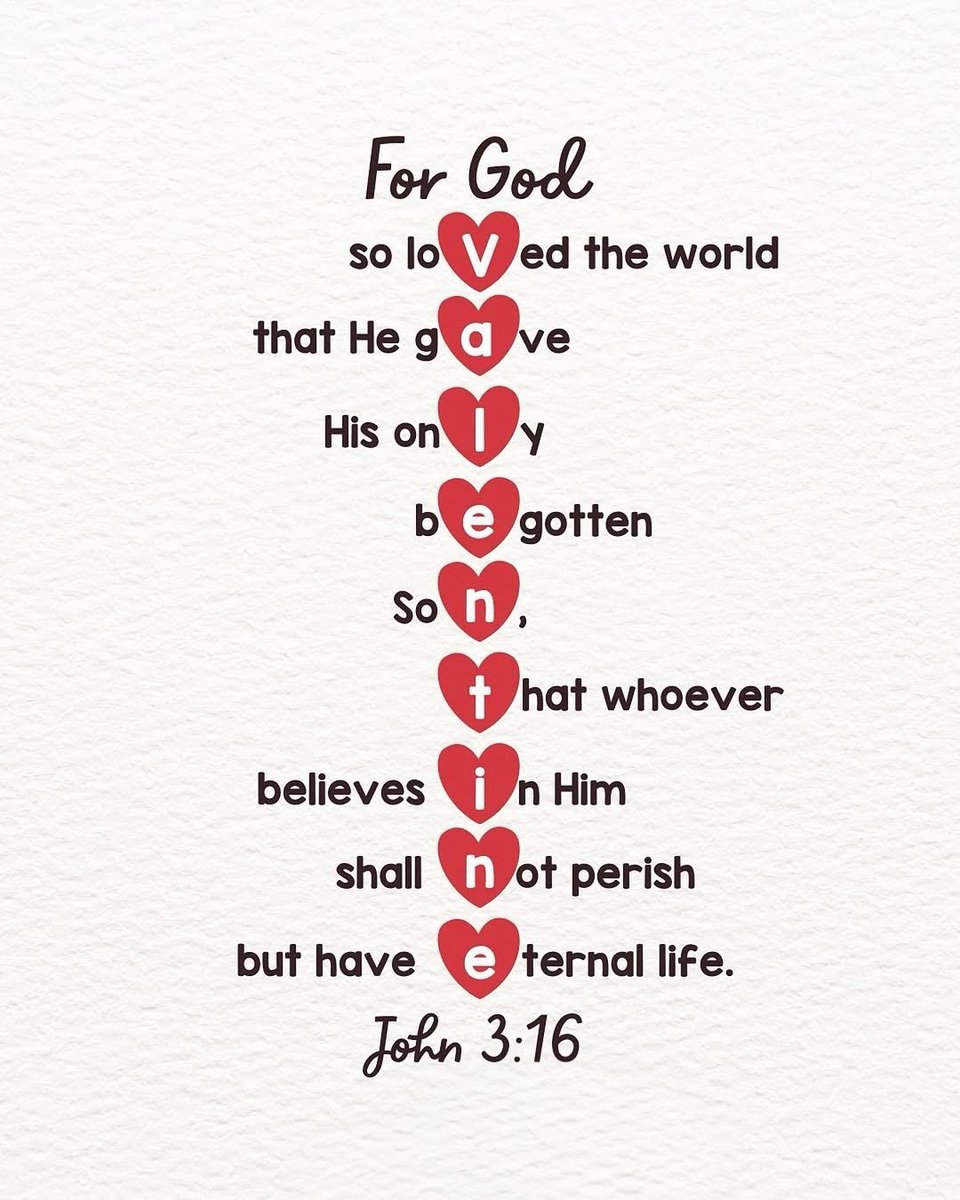
Some of you might be in a season where the future feels foggy, maybe even frightening or unknown.
In Jeremiah 29:11, it says, "For I know the plans I have for you," says the LORD. "They are plans for good and not for disaster, to give you a future and a hope."
This verse isn't a promise that everything will go the way you planned; it's a promise that God hasn't lost sight of you.
If you're waiting, wondering, or wrestling, we hope you are reminded today that God is still writing your story.
@FreddyLA7 You should try a Michigan coney dog while you're here! And see our Great Lakes! Enjoy your time, we love our state and are glad you're stopping by for a visit!
I'm going to keep posting this Alstair Begg clip "The Man on the Middle Cross" (less than four minutes in length) every Holy Week, because its message is true in 2026, it will be true in 2036 and it will be true in 3036.
"If i take my eyes off the cross, I can then give only lip service to its efficacy while at the same time living as if my salvation depends upon me.
And as soon as you go there it will lead you either to abject despair or a horrible kind of arrogance.
And it is only the cross of Christ that deals both with the dreadful depths of despair and the pretentious arrogance of the pride of man that says you know, I can figure this out."
She was once a Muslim, now a Christian convert.
Listen as she takes one of the favorite arguments used by Muslims to trip up Christians, and completely dismantles it with God's Word.
Do you know Scripture well enough to combat the lies?
@isknan@oliverburdick I'm so sorry. That is insensitive and just the wrong response as a follower of Jesus. I pray that you have encountered better people to stand beside you in this grieving. I pray the Lord comforts you and that you feel His loving presence.
People think the Bible is boring.
Once, I was talking to another man one time, explaining my process of teaching the Old Testament and getting people to dig deeper.
He interrupted, looking at me in surprise, and said: “It sounds like you are talking about The Lord of the Rings or something.”
This is a normal reaction, given what most people are fed. You are taught that the Bible is a derivative myth, a hodgepodge of stories that is, at best, unimportant. At worst, it is dangerous for people to take seriously.
If you grew up in the church, you were probably taught a watered-down version that skips a lot of the “troubling” parts of the Old Testament so you can go straight to the Jesus stuff (the gospel).
But the Bible 𝘪𝘴 dangerous.
It was meant to be dangerous.
Just not in the way the secular world wants you to believe it’s dangerous.
The fact that men, in particular, would find comparisons to Lord of the Rings surprising is a consequence of the feminization of the church.
The modern church has focused on one aspect of the Bible to the detriment of others. It has taught a neutered gospel.
So what is the Bible? And what is the gospel? Let’s push aside the normal platitudes and focus on the epic story being told.
The cross, and the death of Jesus, is the surprising climax of an exciting epic full of blood, battle, and chaos, the rise and fall of kings, dynasties, and empires, the constant clash of good and evil, courageous exploits of men and woman both great and small, wizard duels and superheroes, giants and demons, contests of wit and wisdom, dark political machinations, and the triumph and tragedies of warrior poets.
It is an epic beyond anything the Iliad, the Odyssey, or The Lord of the Rings can offer. And it has the most surprising twist imaginable.
It is also true.
Instead of focusing on the epic, Christians isolate the cross and the gospel and make it about our personal salvation. While not wrong on the surface, this is too small in scope. The cross is the true king finally coming into his own, after all hope seemed lost, and preparing to reward his friends and smite his enemies…
Instead of focusing on the epic, Christians made baptism nothing but a cleansing of our own personal sins. Again, not wrong, and that is glorious in and of itself. But too small in scope. Baptism is also an anointing and ordainment, a declaration of knighthood, where the new man is given a sword and told to go forth and conquer for his new king…
Instead of focusing on the epic, Christians have made households and churches a refuge from the world. But households and churches are fortresses, advance outposts in the heart of enemy territory, where Christians train new recruits and from which we launch new offensives…
Instead of focusing on the epic, Christians create an environment where the rhetoric of the rough prophets of old, and of John the Baptist, Jesus, and Paul, is considered “mean” and “insensitive.” Many church-goers today would scold them for their harsh words. But the imprecatory psalms have as much a place on the lips of Christians as the penitent psalms, calling for the overthrow of our enemies…
The cross of Christ is the ultimate call to adventure for any man willing to fight. It is a call for young men to glory in their strength and enthusiasm while storing up plunder for themselves in heaven, instead of working for self-aggrandizement and passing pleasure. It is a call to make the epic a reality and to take your rightful place in it.
And instead, Christians use the cross to domesticate men.
Christians have taught a neutered gospel because a church full of eunuchs is easier to manage.
It is no wonder that men do not flock to the banner and instead turn to other things.
But the Bible is meant to be dangerous, and the cross was meant to create dangerous men. Men willing to lay down their lives. Men willing to build and conquer.
Don’t lose the epic story in the platitudes. Truth is more impactful, more able to pierce bone and marrow, when it weaves in and out of a grand story.
God knew what He was doing.
The Powerful Word of God.
The book of Genesis introduces us to the creation of man, Adam. But the Bible later said that Adam is the first Adam.
Scripture calls Jesus Christ the second Adam. That means the beginning of the first man in Genesis is also pointing forward to the beginning of the second Adam. From the start, the story is already hinting at restoration.
What book comes after Genesis? Exodus.
Exodus tells the story of a child drawn out of water, preserved for a purpose. That child grows, spends years in the wilderness, and then returns to deliver his people from bondage. Now think about Jesus. He comes up out of the water at His baptism, goes into the wilderness, and then returns to begin delivering His people from sin. The pattern is too clear to ignore. Exodus is not just history. It is a preview.
After Exodus comes Leviticus.
Leviticus focuses on the work of the priest in cleansing people from their sins. It is filled with sacrifices, atonement, and the removal of guilt. After His baptism and wilderness experience, Jesus began His ministry of cleansing people from sin. What Leviticus showed through symbols and rituals, Christ fulfilled in reality. The shadow gives way to the substance.
After Leviticus comes Numbers.
Numbers shows Moses leading twelve tribes and appointing seventy leaders to help carry the burden. When Jesus begins His ministry, He chooses twelve disciples and later sends out seventy. The structure was already there, written into the story long before Christ walked the earth.
After Numbers comes Deuteronomy.
Deuteronomy records Moses’ final address. He gathers the tribes, repeats the covenant, reminds them of God’s faithfulness, and they sing together. Then Moses goes up the mountain alone to die. He dies, is buried, and later resurrected. Jesus also gathered His disciples, established the new covenant, sang with them, and went out alone to die. He died, was buried, and rose again. The farewell of Moses echoes in the closing moments of Christ’s earthly ministry.
After Deuteronomy comes Joshua.
Joshua tells of a leader who brings down a fortified city with a shout, demonstrating God’s power over strongholds. In a far greater way, when Jesus died, He brought down the kingdom of Satan with the cry, “It is finished.” Jericho fell with a shout. The dominion of sin fell with a cry.
After Joshua comes Judges.
Judges shows the tribes moving forward, conquering and advancing even without a visible leader like Moses or Joshua. After Jesus’ death, resurrection, and ascension, the early church moved forward conquering in His name, even though He was no longer physically present. They were not abandoned. They were empowered.
After Judges comes Ruth.
Ruth tells the story of a Gentile woman who joins God’s people. She works in the fields, gathering the harvest, and becomes part of the lineage of Christ. She represents something greater than herself. She reflects the church, gathered from the nations, bringing in the harvest, declaring, “Your God will be my God.” The outsider becomes family.
After Ruth comes 1 Samuel.
In 1 Samuel, the people reject God as their King and demand a human ruler. They unite religious life with political power, choosing human authority over divine leadership. History later echoes this pattern when church and state unite, replacing the direct leadership of Christ with human systems.
Then come 1 and 2 Kings and 1 and 2 Chronicles. These books record Israel’s decline into apostasy and their eventual captivity in Babylon. Compromise leads to bondage. Whenever truth is traded for convenience, captivity follows. The pattern is spiritual as much as it is historical.
After Chronicles comes Ezra.
Ezra records the decrees that allow God’s people to return, rebuild the temple, and restore worship. Restoration begins with worship. Before walls are rebuilt, hearts must return to God.
After Ezra comes Nehemiah.
Nehemiah finishes the work that had begun. The people had grown discouraged and distracted, focusing on their own homes while God’s work remained unfinished. Nehemiah, not a priest or prophet but a cupbearer, was moved to rebuild what was broken. God often completes His work through ordinary people who refuse to ignore what lies in ruins.
After Nehemiah comes Esther.
Esther tells of a death decree issued against God’s people because they refused to bow to the laws of the empire. Loyalty to God is tested by human authority. The conflict between obedience to God and obedience to man is laid bare.
After Esther comes Job.
Job shows a man enduring deep suffering at a time when it appears God has stepped back. Heaven seems silent. Yet faith endures. Job reflects the experience of God’s people who must trust Him even when they cannot see what He is doing.
After Job comes Psalms.
In times of trouble, people turn to Psalms. It is the cry of the faithful. “Lord, deliver me from my enemies.” It gives voice to fear, hope, repentance, and praise. It is faith under pressure, refusing to let go.
Then come Proverbs and Ecclesiastes.
These books teach wisdom and discernment. God’s people must learn to see clearly, to avoid deception, and to understand the difference between what appears right and what is right. Wisdom becomes protection in a world full of illusions.
After that comes the Song of Solomon.
It is a love story between a bride and a bridegroom. It speaks of longing, union, and devotion. Scripture closes the same way, with Christ coming for His bride. The Bible begins with a union in Eden and ends with a union restored. The love story was always at the center.
Then come the prophets.
They warn of judgment, call for repentance, and promise restoration. They point forward to the coming King and the final victory of God’s kingdom. Justice and mercy move together toward a day when wrong will be set right.
The Old Testament closes with Malachi, promising that evil will not prevail and that righteousness will be vindicated.
Then the Gospels open, and Christ arrives. Not symbol, not shadow but a fulfillment. God with us.
The book of Acts shows people from every nation becoming one family in Christ. Jews and Gentiles, different languages and cultures, united by one Savior.
From Genesis to Revelation, the Bible tells one continuous story: creation, fall, redemption, and restoration. The same thread runs from the garden to the cross to the kingdom.
And the most astonishing part is that this is not just a story we read. This is the story we are living in right now, today.
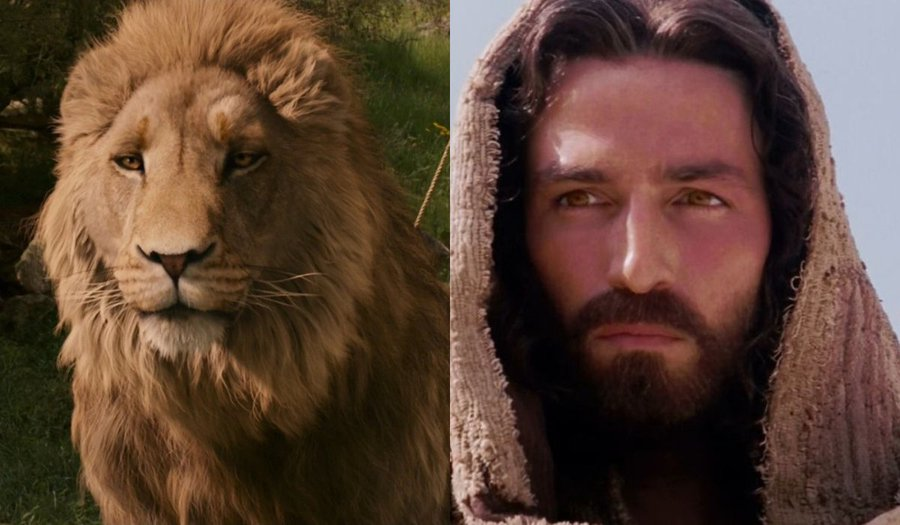
Narnia is Christian. People think Aslan is just a symbol for Jesus but C.S. Lewis said, "No, he IS Jesus."
C.S. Lewis clarified that Aslan is not an allegory (like a symbol in a poem). He is a "supposal." Lewis asked: "Suppose there were a land like Narnia... what would Christ become if He entered that world?"
The answer is a Lion. Aslan is literally Christ in another form.
In Voyage of the Dawn Treader, Aslan tells the children: "I am in your world too. But there I have another name. You must learn to know me by that name. This was the very reason why you was brought to Narnia, that by knowing me here for a little, you may know me better there."
Narnia was written to train children to recognize the voice of God.