The clipboard is out. The future of patient-centered care is here.
CMS is teaming up with innovators to give patients control of their data, reduce burdensome paperwork, and harness AI to deliver faster, smarter, more compassionate care.
Healthcare should be focused on patients—not paperwork. https://t.co/USUnM9v6J5
Patient Access APIs were designed to empower consumers, but what happens when friction takes over?
During our recent webinar, co-hosted with the CARIN Alliance, we unpacked how refreshability and token validity can make or break the patient experience. As Jill DeGraff highlights, these APIs must be effortless to meet consumer expectations.
Check out the full-length webinar and explore more insights in the State of the Patient Access API report:
https://t.co/K1TTwjZPGf
@healthapiguy PHRs are not engaging as the average person only goes to the doctor 1.4x per year. It’s largely static data when looking across populations. However, don’t underestimate that data as the base of a solution designed to solve specific use cases allows unparalleled personalization
@halletecco The two medications that keep my rare disease daughter alive cost 550k a year. Shes 21. I am petrified for when she turns 26 and needs to come off my insurance. We’ve just been approached to source her meds overseas and import them at a fraction of the cost.
@ashleycapoot Until we untether patients from a portal login and pw it will not get easier for patients to access their health data. Tefca held the promise of leveraging a more secure identity approach via IAL2 (and is using it for RLS) but still let Epic push to keep oauth.
Exclusive: It's about to get a lot easier for patients in the U.S. (yes, you!) to access their health data.
Epic Systems announced patients will be able to release their records to apps they choose to use. Sounds simple, but it's a big deal! More here👇
https://t.co/KxfffskSE9
@chrissyfarr 🙋♀️ I would love to attend. There are so many topics ripe for debate in health tech and so many more that people seem afraid to talk about. We can’t move forward if we don’t take on the big challenges.
Congrats @julesyoo@davidko, @joannastrober, @kvaldes13, Julian and Julie - we are standing on your shoulders in so many ways! Thank you for your enduring leadership and vision!
Excited to join this panel at #ATANexus with friends & colleagues from @ONC_HealthIT@icanbwell@SEQSTER@amplifymd
Today | 5:40pm | Room N224B and On Demand
Topics include:
- Consumer-directed exchange
- How telehealth can engage in interoperability
- TEFCA
- APIs, AI, & apps
@mcuban@EdGainesIII My fav part of most contracts is the language on oversight. Even if an employer proves a TPA paid claims twice or incorrectly, most have NO ability to demand adjustments/recoupments. Contracts are based on how fast a TPA can give away your money, not how accurately.
@johnp_driscoll@WBA_Global Trusted local connection, easy access, and integrating AI and other health technologies within community frameworks is essential when addressing challenges that patients often face.
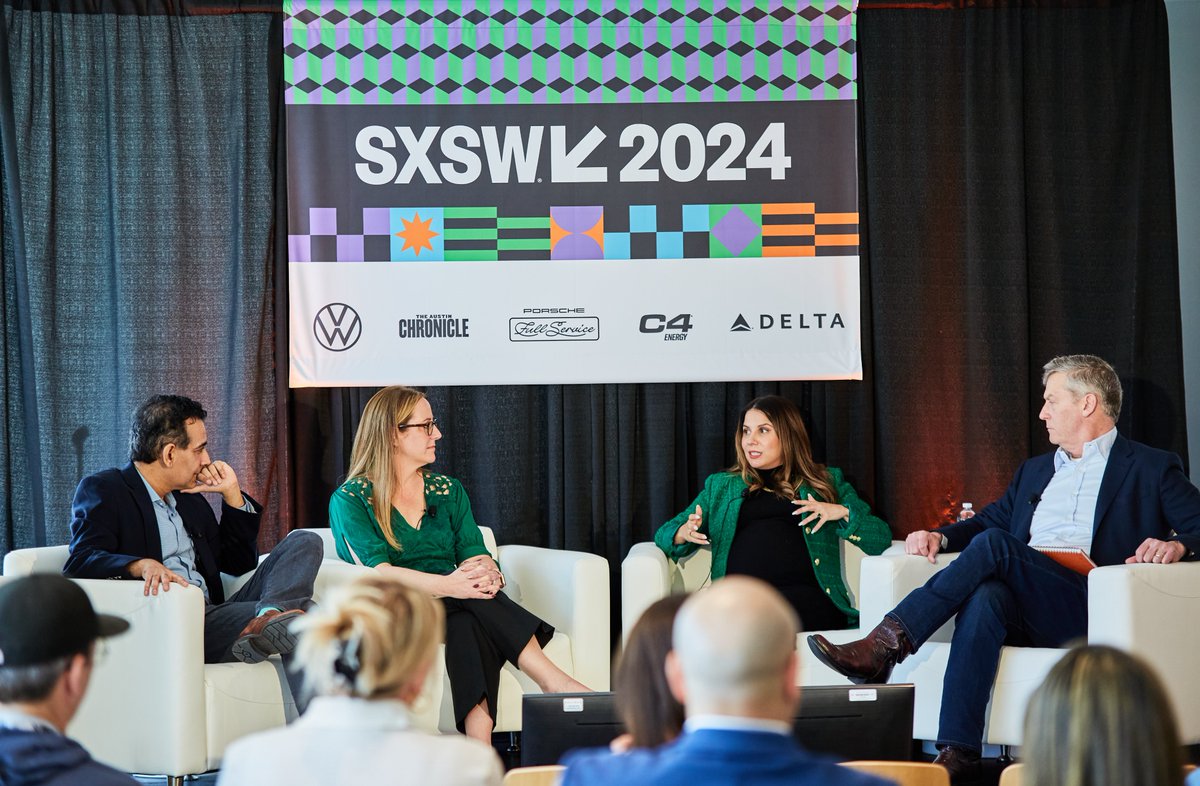
Great conversation at #RealChemSXSW - big thank you to our speakers for sharing your POV. #client
Over 10 years ago, I went down the rabbit hole of preventing readmissions.
Like many I thought: if we could monitor these patients, could we prevent readmissions?
🛜 RPM 1.0: Monitoring the Top 5%, High-Risk Patients
For decades, our healthcare system lacked the incentives or means to do so. However, adoption of device RPM became mainstream in 2020 as COVID-19 forced stragglers to get on board.
Today, traditional RPM includes patients receiving a tablet & wireless devices for daily biometric monitoring.
For these top 5% of patients (e.g., hospitalized for exacerbation of CHF), the results on improved outcomes have been incredible.
This success begged the question of whether digital care could benefit the other 95% of patients.
📲 Rise of the Digital Savvy, Healthcare Consumer
The pandemic woke health systems to the realization that it’s no longer patients, but rather digital-savvy, Healthcare Consumers that we care for.
Today, health systems require Digital Transformation strategies for the other 95%: from low to high risk, and across surgery, oncology, and maternity care.
No longer is it only the 65-year-old with heart failure and COPD who needs digital care.
It’s the 70-year-old with a knee replacement surgery who wants to use her tablet to self-monitor her knee pain and watch physiotherapy videos.
It’s the 30-year-old woman who wants pregnancy instructions on her smartphone and her mood and blood pressure monitored after her delivery.
Providers and administrators want this too.
It’s the orthopedic surgeon who wants to track a patient’s knee pain and surgical incision photos.
It’s the Women’s Health executive who wants to grow market share by offering a differentiated experience to digital savvy young women.
🌎 RPM 2.0: Emergence of Digital Care Journeys to reach 100% of Patients
However, traditional RPM alone cannot fulfill this vision – it is too costly and labor intensive to deliver at scale.
It is also not clinically necessary – most patient journeys do not need continuous biometric monitoring but would benefit more from better adherence with care plans, broader symptom tracking (e.g. pain) and longer engagement (e.g., 12+ months for cancer care).
Meeting the digital needs for the other 95% has led to the recent rise of App-based RPM solutions, a.k.a. Digital Care Journeys, which can be scaled across surgery, oncology, maternity care, and more.
This involves engaging patients via the patient’s own smartphone, tablet, or desktop computer to send surgery or condition-specific reminders, deliver pre- and post-care education and monitor symptoms.
10+ years ago, @SeamlessMD pioneered RPM 2.0 or Digital Care Journeys. Now we’re seeing leading hospitals and health systems apply these principles at scale to ensure every patient has a high quality, digitally supported journey – no matter their age, risk level or condition.
The future is finally here.
But we’re not done yet.
Fabulous to see @HealthPrivacy share our work regarding how to improve @HL7#FHIR API access at the #ONC2023 meeting.
Read more here —> https://t.co/FBVSkwh7qN
Important feedback for data holders who share data via APIs with patients, providers, apps, and plans. 👍🏻
b.well Connected Health and CLEAR (https://t.co/GwfF9eQlqV) are thrilled to announce their partnership that aligns with both companies' dedication to consumer-centric healthcare solutions.
https://t.co/OHvIEItEld