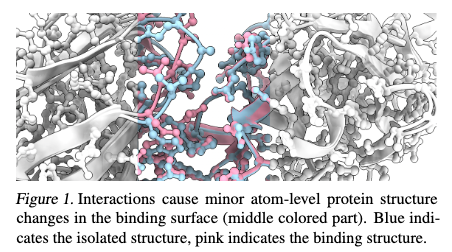
Ecstatic to share my 1st first author publication out in @ACS_Omega. We studied substrate Vs inhibitor binding to the active site of a pharmacological target of M. tuberculosis using MD simulation, quantum calculations and free energy computation. https://t.co/y0Aom2Efpv
The knowledge that makes AI useful is diffused. It lives with scientists, engineers, clinicians, firms. For AI to benefit from distributed knowledge, it must itself be distributed. Agree with Jensen that this is a future worth building.
Meta, Google, and Microsoft all use encryption built by the same 50-person nonprofit.
Zero revenue from 2 billion users. The founder uses a fake name. And when the FBI subpoenaed them, they only provided 2 pieces of data.
Here's how a non-profit secures the internet🧵
You weren't dreaming— the @NotebookLM mobile app started rolling out this morning! We were eager to get the app into your hands, so this initial version has an MVP feature set with more functionality coming soon!
Here are a few of the features we're most excited about: 🧵🧵🧵
AI for Proteins is moving from sequence-only to structure-function-aware protein generation.
In case you missed it this weekend, meet APM from two ByteDance interns:
The first generative model that can directly design multi-chain protein complexes at the all-atom level
Things known to improve your health that cost nothing (but time). Morning sunlight viewing, post meal walks, running, lifting heavy (for you) objects (or bodyweight & rocks; done right = real work), hydration, physiological sighs (fastest de-stress there is). NSDR (see below):
🧬 Meet Lyra, a new paradigm for accessible, powerful modeling of biological sequences. Lyra is a lightweight SSM achieving SOTA performance across DNA, RNA, and protein tasks—yet up to 120,000x smaller than foundation models (ESM, Evo). Bonus: you can train it on your Mac.
read our paper here: https://t.co/oh1czZLlW5
Small Molecule Optimization with Large Language Models
Galactica- and Gemma-like LLMs are trained on a large dataset of molecules...
P: https://t.co/fYIvxc5JE3
Signed by over 120 experts, our letter highlighting the urgent need for a collaborative effort to establish a #FAIR database for #MolecularDynamics simulation data, is now on Arxiv.
📎 Read it here: https://t.co/VE3qMULPRX
📝Support our statement: https://t.co/7vp58TPy1A
#MDDB
I’m thrilled to present the KAN Convolutional Layer, a promising neural architecture for image processing. Last week KANs came out, as an alternative to the MLP. We extended this idea to Convolutional Layers, creating the KAN Convolution. Join me in this thread to more about it🧵
New Study Redefines Human Sound Localization
Researchers overturned a 75-year-old theory on how humans determine the origin of sounds, suggesting implications for future audio technology.
The study demonstrates that humans, like other mammals, use a simpler and more energy-efficient neural network for spatial hearing, rather than the complex systems previously assumed.
This simpler network also helps differentiate speech from background noise, potentially solving the 'cocktail party problem' that challenges current hearing devices and smart assistants.
These findings could lead to the development of more adaptable and efficient hearing aids and smartphones, enhancing how they process auditory information.
1/3
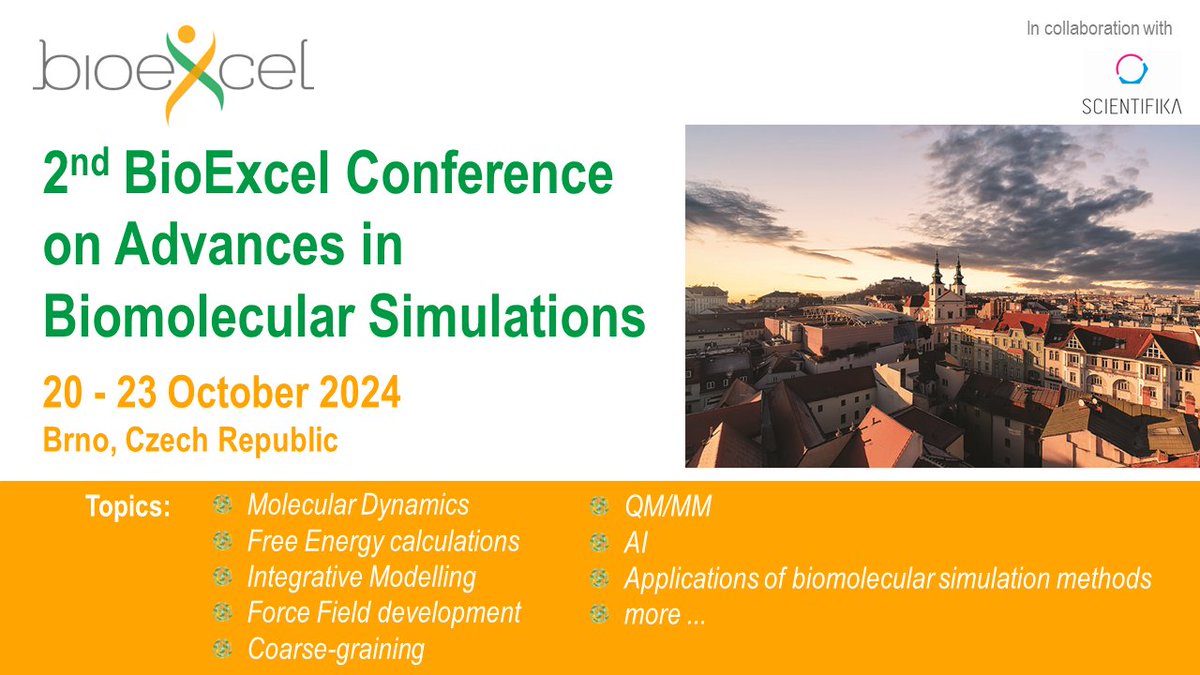
📢Registration is open for the "2nd BioExcel Conference on Advances in Biomolecular Simulations"
➡️ https://t.co/rI60l9mQcy
🗓️ 20 - 23 October 2024
📍Brno, Czech Republic
📩Submit your abstract to give a talk alongside an already great line-up of speakers❗️
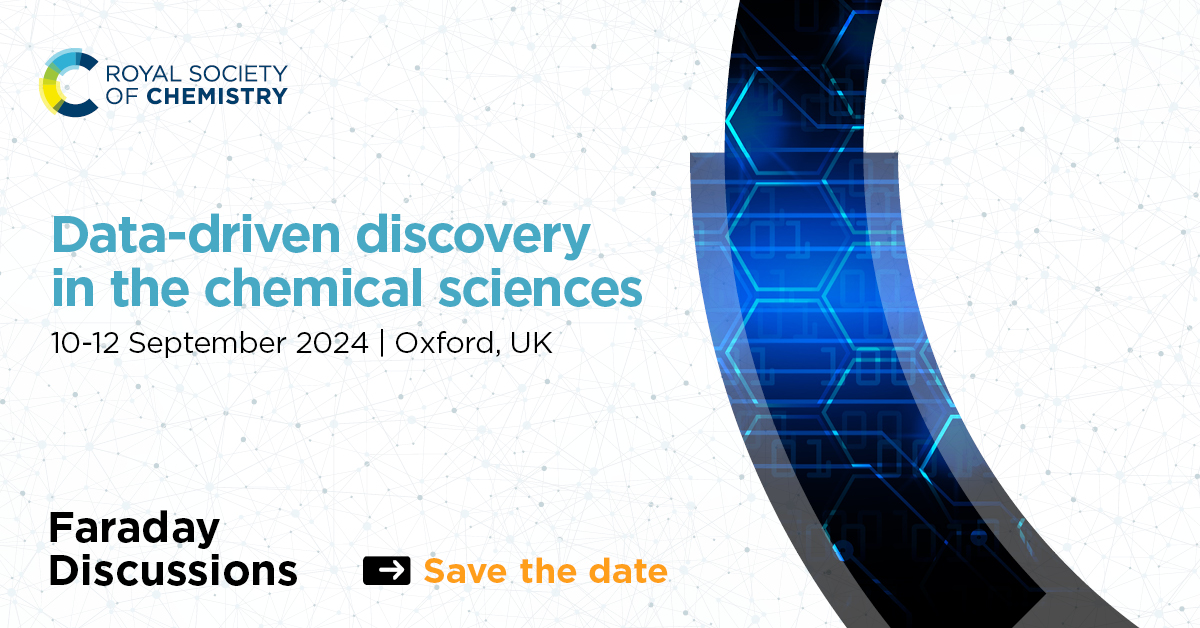
Join us in Oxford this September for a Faraday Discussion to explore the role of data in the chemical sciences in our unique format – with Alán Aspuru-Guzik, Kim Jelfs, Heather Kulik and Aron Walsh.
Discover our @Faraday_D#FD_Data#DigitalChemistry: https://t.co/6GyB2DpYnM
ChatGPT just introduced custom GPTs. Now you can make ChatGPT a reliable research assistant.
Here's how to create your personal AI-powered research assistant in less than 10 minutes: