6 GTD GIVEAWAY
1989 Pixel Art NFTs on @inkonchain from @RushINKnft
Waitlist is live : https://t.co/FpqJLysp2g
👑Mint Date : TBA
👑Supply : 1989
👑 Price : TBA
To enter:
→ Follow @RushINKnft & @Mikuhaana
→ Like + RT the pinned post
→ Drop your wallet below
Let’s see who gets lucky. 👀
Just taking things one day at a time
Learning, growing and enjoying the journey as it comes. There’s still a lot to learn and many things to explore.
No rush, no pressure Just staying consistent and moving forward one step at a time.
Every moment is a market.
Crypto pumping or dumping? Your team winning? That transfer actually happening?
On @playtaunt you call it before it's real and if you're right, the Skulls stack up.
No losses. No cap. Just you vs the outcome.
It's free, Join me👇
https://t.co/jCi8Xo0dTf
The community is growing, the team is building, and the momentum is picking up.
If you’re researching $Telegram now is a good time to DYOR before making any decisions
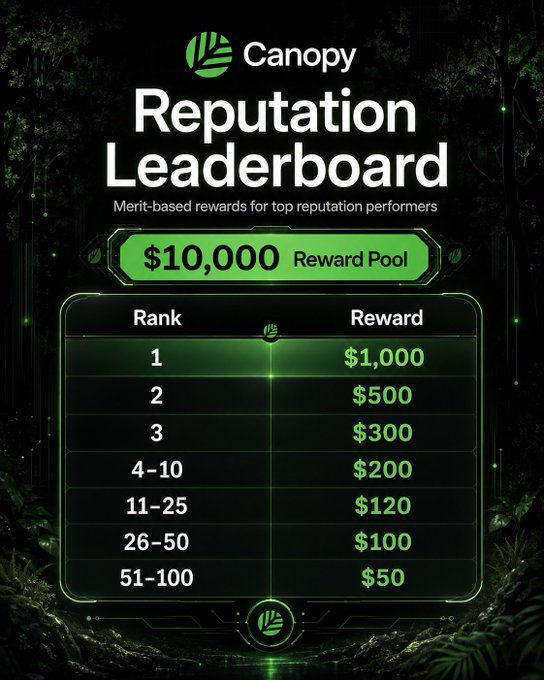
I have been paying closer attention to what @CNPYNetwork is doing lately.
A new campaign has just opened with a $10,000 token reward pool, and only the Top 100 participants will make the cut.
What caught my attention is the concept behind it: bring your own artificial intelligence tools, build with Canopy, and turn ideas into onchain applications.
That sounds much more interesting than simply farming points for engagement.
If Canopy can attract developers who actually build, test, and launch useful applications, this could become a strong way to grow the ecosystem from the ground up.
The campaign is running for a limited time, while the leaderboard is still empty. That makes this an interesting moment to watch.
Maybe this is an early push ahead of a bigger ecosystem expansion. Maybe it is simply a way to recognize the first builders contributing to Canopy.
Either way, I am curious to see what happens next. 👀
What do you think @CNPYNetwork is building toward?
Most campaigns still hide the scoring logic until after you’ve already posted.
That’s how creators end up guessing.
@swaymarkapp shows the weights and the rules before you start.
No more working blind.
𝗘𝘃𝗲𝗿𝘆𝗯𝗼𝗱𝘆 𝘄𝗮𝗻𝘁𝘀 𝘁𝗼 𝗯𝗲 𝗲𝗮𝗿𝗹𝘆. 𝗡𝗼𝘁 𝗲𝘃𝗲𝗿𝘆𝗯𝗼𝗱𝘆 𝗵𝗮𝘀 𝘁𝗵𝗲 𝘁𝗼𝗼𝗹𝘀 𝘁𝗼 𝗮𝗰𝘁𝘂𝗮𝗹𝗹𝘆 𝗴𝗲𝘁 𝘁𝗵𝗲𝗿𝗲.
@Velvet_Capital just changed that for Robinhood Chain.
The Robinhood Chain Trenches are now live on VelvetX, and this is not just another token discovery page. It is the earliest possible entry point into what is moving on Robinhood Chain, with AI built directly into the experience so you are never going in blind.
𝗪𝗵𝗮𝘁 𝗬𝗼𝘂 𝗖𝗮𝗻 𝗗𝗼 𝗡𝗼𝘄
✅ Find tokens early, before they gain mainstream attention
✅ Track them across the bonding curve as momentum builds
✅ Analyze any opportunity with Velvet Unicorn AI before committing
✅ Trade directly without leaving the terminal
𝗪𝗵𝗮𝘁 𝗜𝘀 𝗔𝗹𝗿𝗲𝗮𝗱𝘆 𝗟𝗶𝘃𝗲
The Trenches already cover launches from Pons, LetsCash, Bankr, Uniswap, Virtuals and more, so the token discovery is wide and the opportunities are real from day one.
𝗪𝗵𝘆 𝗧𝗵𝗲 𝗔𝗜 𝗣𝗮𝗿𝘁 𝗠𝗮𝘁𝘁𝗲𝗿𝘀
Finding a token early means nothing if you cannot quickly tell whether it is worth acting on.
Velvet Unicorn AI sits inside the Trenches experience, so the moment you spot something gaining momentum you can analyze it immediately. Tokenomics, social signals, wallet activity, risk indicators, all before you make a move.
That combination of early discovery and instant AI analysis is genuinely what separates profitable early entries from expensive mistakes.
The Robinhood Trenches are open. The tools are already there.
Check it out here: https://t.co/A4TPXkIV33
#VelvetX #RobinhoodChain #Trenches
Hello guys 👋
6 days ago, I called $CASHCAT around $88M MC and highlighted $300M as the next level to watch.
Now we’re around $215M MC. 🔥📈
That’s already a 2.4x move from my call.
$88M → $215M
$300M is still the target to watch. Let’s see what happens next. 👀
CA: 0x020bfC650A365f8BB26819deAAbF3E21291018b4
#DYOR. #NFA
𝙏𝙍𝙀𝙀 𝙁𝙄𝙉𝘼𝙉𝘾𝙀 𝙄𝙎 𝙉𝙊𝙒 𝙇𝙄𝙑𝙀
If you've been following the ecosystem, you've probably seen the new layer being built around $TREE and AAPLx.
And if you're completely new to TREE, I previously put together a guide explaining how the Garden works, how $TREE can lead to AAPLx, AAPLx can lead to Seeds, and Seeds can grow into Trees.
Check the guide here → https://t.co/wohMXZ6XLE
But that guide only answered one question:
What can you grow with TREE?
TREE Finance introduces a different question:
What can you do with the $TREE and AAPLx you already have?
Because after a harvest, between Garden cycles, or while simply holding assets, $TREE and AAPLx don't necessarily have to sit idle.
That's the idea behind TREE Finance.
If you've been wondering how this new layer actually works, here's a simple guide to understanding it.
Let's get into it. 🌳
╰─➤𝙒𝙃𝙀𝙍𝙀 𝘿𝙊𝙀𝙎 𝙏𝙍𝙀𝙀 𝙁𝙄𝙉𝘼𝙉𝘾𝙀 𝘼𝘾𝙏𝙐𝘼𝙇𝙇𝙔 𝘾𝙊𝙈𝙀 𝙁𝙍𝙊𝙈?
To understand why Finance exists, you first need to understand the assets it is built around.
At the centre is $TREE.
Holding $TREE can generate AAPLx through trading activity.
That AAPLx can then become part of the Garden:
$TREE → AAPLx → Seed → Tree → Harvest
The important part is what happens along the way.
The Garden doesn't just create another token to hold.
It creates assets that can keep moving through the TREE ecosystem.
AAPLx can become a Seed.
A Seed can become a Tree.
A Tree can eventually be harvested back into $TREE.
And that creates a natural question:
Once you already have the $TREE or AAPLx, what else can you do with them?
That's the space TREE Finance is built to explore.
Not another Garden cycle.
Not another way to grow a Tree.
A different layer built around the assets the ecosystem is already producing.
And that's where Apple Bank and Golden Apple come in.
╰─➤ 𝙏𝙍𝙀𝙀 𝙁𝙄𝙉𝘼𝙉𝘾𝙀, 𝙁𝙍𝙊𝙈 𝙏𝙃𝙀 𝙄𝙉𝙎𝙄𝘿𝙀 TREE FINANCE, FROM THE INSIDE
There are three main ways to interact with the assets already moving through the ecosystem:
$TREE → Lending
$TREE → Golden Apple
AAPLx → Borrowing
They may look like separate features on the interface, but each one answers a different question.
I have $TREE. What can I do with it?
Put it into Apple Bank's Lending side and earn AAPLx.
I have $TREE, but I don't want to lend it.
Put it into a Golden Apple position and commit it for seven days.
I have AAPLx and want access to $TREE.
Use AAPLx as collateral on Apple Bank's Borrowing side.
That's the basic map.
Now let's look at what actually happens inside each route.
╰─➤ 𝘼𝙋𝙋𝙇𝙀 𝘽𝘼𝙉𝙆 — 𝙇𝙀𝙉𝙁𝘿𝙄𝙉𝙂
You start with $TREE.
When you deposit it into the Lending side of Apple Bank, your TREE enters the lending pool.
That liquidity can then be used by borrowers, while lenders can receive AAPLx rewards.
The interface gives you several numbers to keep track of your position:
➺ TREE value — how much $TREE is currently in your lending position.
➺ Claimable AAPLx — the AAPLx rewards you've accumulated and can claim.
➺ Utilization — how much of the available lending capacity is currently being used.
➺ Realized 7-day APY — the annualized rate based on the Bank's recent seven-day performance.
There is also an 80% utilization ceiling, meaning the system doesn't allow the entire available pool to be utilized at once.
One detail is easy to miss:
Depositing isn't simply a 1:1 wallet transaction because of the ecosystem's 3% transfer tax.
For example, if you want a 100,000 TREE lending position, approximately:
100,000 TREE principal + 3% tax = 103,092.783 TREE
would leave your wallet, while the Bank credits exactly 100,000 TREE to the lending position.
So when using the interface, distinguish between what leaves your wallet and the principal that actually enters your position.
And Lending isn't risk-free.
The liquidity you're providing is being used by a borrowing system. If a borrower's position reaches its liquidation condition, that position can be liquidated, and lenders can be affected.
So the simple mental model is:
Deposit TREE → provide liquidity → earn AAPLx → take lending risk
╰─➤ 𝘼𝙋𝙋𝙇𝙀 𝘽𝘼𝙉𝙆 — 𝘽𝙊𝙍𝙍𝙊𝙒𝙄𝙉𝙂
Now reverse the direction.
Instead of starting with $TREE, you start with AAPLx.
You deposit AAPLx as collateral and can borrow $TREE against it.
The current borrowing limit is 80% LTV.
In plain English, if your collateral is worth 100 AAPLx, the maximum borrowing capacity is worth 80 AAPLx in $TREE.
The borrowing rate is:
0% interest
But the borrowed TREE isn't simply sent to your wallet as unrestricted funds.
It is automatically placed into a linked Golden Apple position.
So the route looks like this:
Deposit AAPLx as collateral → borrow TREE → linked Golden position opens
Your AAPLx remains locked as collateral while the borrowed TREE enters that Golden position.
And 0% interest doesn't remove the main risk.
If the value of the AAPLx backing the position falls far enough, the collateral can become insufficient relative to the amount borrowed.
That can push the position toward liquidation.
So the important relationship to remember is:
Your AAPLx is what secures the TREE you've borrowed.
╰─➤ 𝙂𝙊𝙇𝘿𝙀𝙉 𝘼𝙋𝙋𝙇𝙀
The third route starts with $TREE again, but it works very differently from Lending.
Golden Apple is a seven-day time-based position.
➺ You don't need a Seed.
➺ You don't need a Garden plot.
➺ You simply commit $TREE to the position and wait for maturity.
The position reserves a payout equal to 120% of the principal.
For example:
100,000 TREE principal → 120,000 TREE reserved payout
before the outgoing transfer fee.
If you withdraw early, you don't receive the maturity boost. You receive the principal back subject to the applicable fee.
At maturity, the reserved payout is released, again subject to the outgoing transfer fee.
So the basic mechanic is:
Commit TREE → wait 7 days → receive the maturity payout
And then Golden Apple has another layer:
╰─➤ 𝙂𝙊𝙇𝘿𝙀𝙉 𝙋𝙐𝙇𝙇𝙎
A Pull costs 10,000 TREE.
You can make multiple Pulls, provided you have enough TREE and the position allows them.
The interface also displays an expected value (EV) for a Pull.
That number needs to be understood correctly.
EV is not a guaranteed payout.
For example, imagine a 100,000 TREE Golden Apple position with:
➺ Principal: 100,000 TREE
➺ Reserved payout: 120,000 TREE
If one 10,000 TREE Pull produces:
Common ×1 → +6,000 TREE bonus
the position becomes:
➺ Principal: 100,000 TREE
➺ Bonus: 6,000 TREE
➺ Reserved payout: 126,000 TREE
The Pull doesn't turn every 10,000 TREE into a guaranteed 6,000 TREE bonus.
That's simply one possible outcome.
The EV represents the expected value across the possible outcomes, while an individual Pull can produce a different result.
That's why understanding the mechanic matters more than simply reading the biggest number displayed on the screen.
╰─➤ 𝙏𝙃𝙀 𝙎𝙄𝙈𝙋𝙇𝙀 𝙈𝙀𝙉𝙏𝘼𝙇 𝙈𝙊𝘿𝙀𝙇
If you're new to TREE Finance, remember it this way:
Have $TREE?
→ Lend it and earn AAPLx
→ Or commit it to Golden Apple
Have AAPLx?
→ Use it as collateral to borrow $TREE
Borrowing $TREE?
→ A linked Golden position opens
That's TREE Finance at its core.
The rest is understanding the conditions, fees, risks and possible outcomes attached to each route.
╰─➤ 𝙏𝙃𝙍𝙀𝙀 𝙍𝙊𝙐𝙏𝙀𝙎, 𝙏𝙃𝙍𝙀𝙀 𝘿𝙄𝙁𝙁𝙀𝙍𝙀𝙉𝙏 𝙎𝙄𝙏𝙐𝘼𝙏𝙄𝙊𝙉𝙎
Once you understand the mechanics, the three routes become much easier to separate.
They aren't three versions of the same thing.
They're built around what you have and what you want to do with it.
You have $TREE and want it to keep working.
That's where Lending fits.
Your TREE becomes part of the liquidity available to borrowers, and you can earn AAPLx from the lending system.
The question is:
𝙡 𝙖𝙡𝙧𝙚𝙖𝙙𝙮 𝙝𝙖𝙫𝙚 𝙏𝙍𝙀𝙀. 𝘾𝙖𝙣 𝙡 𝙥𝙪𝙩 𝙞𝙩 𝙩𝙤 𝙬𝙤𝙧𝙠 𝙬𝙞𝙩𝙝𝙤𝙪𝙩 𝙨𝙞𝙢𝙥𝙡𝙮 𝙨𝙚𝙡𝙡𝙞𝙣𝙜 𝙞𝙩
𝙇𝙚𝙣𝙙𝙞𝙣𝙜 𝙞𝙨 𝙩𝙝𝙚 𝙖𝙣𝙨𝙬𝙚𝙧.
You have $TREE but want a defined time-based position.
That's where Golden Apple is different.
You're not supplying liquidity to borrowers.
You're not growing a Seed.
You're committing $TREE to a seven-day position with a reserved maturity payout.
The question becomes:
𝙒𝙝𝙖𝙩 𝙞𝙛 𝙡 𝙬𝙖𝙣𝙩 𝙢𝙮 𝙏𝙍𝙀𝙀 𝙞𝙣 𝙖 𝙥𝙤𝙨𝙞𝙩𝙞𝙤𝙣 𝙬𝙞𝙩𝙝 𝙖 𝙙𝙚𝙛𝙞𝙣𝙚𝙙 𝙢𝙖𝙩𝙪𝙧𝙞𝙩𝙮 𝙞𝙣𝙨𝙩𝙚𝙖𝙙
𝙏𝙝𝙖𝙩'𝙨 𝙬𝙝𝙖𝙩 𝙂𝙤𝙡𝙙𝙚𝙣 𝘼𝙥𝙥𝙡𝙚 𝙥𝙧𝙤𝙫𝙞𝙙𝙚𝙨.
And the Pull mechanic adds another variable by giving you different possible outcomes that can affect the eventual payout.
You have AAPLx and want access to $TREE.
Now we reverse the direction completely.
You use AAPLx as collateral to borrow $TREE.
The borrowed TREE then enters a linked Golden Apple position.
The question becomes:
𝙄 𝙝𝙖𝙫𝙚 𝘼𝘼𝙋𝙇𝙭. 𝘾𝙖𝙣 𝙞𝙩 𝙜𝙞𝙫𝙚 𝙖𝙘𝙘𝙚𝙨𝙨 𝙩𝙤 𝙏𝙍𝙀𝙀 𝙬𝙞𝙩𝙝𝙤𝙪𝙩 𝙢𝙚 𝙨𝙚𝙡𝙡𝙞𝙣𝙜 𝙩𝙝𝙚 𝘼𝘼𝙋𝙇𝙭?
𝙏𝙝𝙖𝙩'𝙨 𝙬𝙝𝙚𝙧𝙚 𝘽𝙤𝙧𝙧𝙤𝙬𝙞𝙣𝙜 𝙘𝙤𝙢𝙚𝙨 𝙞𝙣.
So instead of memorizing what each button does, think about the situation first:
Have TREE → want to earn AAPLx
→ Lending
Have TREE → want a seven-day position
→ Golden Apple
Have AAPLx → want access to TREE
→ Borrowing
The product is essentially giving the assets you already hold different possible jobs, depending on what you're trying to accomplish.
╰─➤ 𝘿𝙊𝙉'𝙏 ��𝙐𝙎𝙏 𝙇𝙊𝙊𝙆 𝘼𝙏 𝙏𝙃𝙀 𝙔𝙄𝙀𝙇𝘿 𝙇𝙊𝙊𝙆 𝘼𝙏 𝙏𝙃𝙀 𝙋𝙊𝙎𝙄𝙏𝙄𝙊𝙉
This is one distinction I think is important when looking at Finance.
Each route puts your assets into a different kind of position.
𝙇𝙚𝙣𝙙𝙞𝙣𝙜 𝙞𝙨 𝙖 𝙡𝙞𝙦𝙪𝙞𝙙𝙞𝙩𝙮 𝙥𝙤𝙨𝙞𝙩𝙞𝙤𝙣.
You're supplying TREE to a pool and taking on the risks that come with lending.
𝙂𝙤𝙡𝙙𝙚𝙣 𝘼𝙥𝙥𝙡𝙚 𝙞𝙨 𝙖 𝙢𝙖𝙩𝙪𝙧𝙞𝙩𝙮 𝙥𝙤𝙨𝙞𝙩𝙞𝙤𝙣.
You're committing TREE for a defined period and accepting the conditions attached to that position.
𝘽𝙤𝙧𝙧𝙤𝙬𝙞𝙣𝙜 𝙞𝙨 𝙖 𝙘𝙤𝙡𝙡𝙖𝙩𝙚𝙧𝙖𝙡𝙞𝙯𝙚𝙙 𝙥𝙤𝙨𝙞𝙩𝙞𝙤𝙣.
You're locking AAPLx to access TREE, while the value of that collateral determines how safe the position remains.
So the question shouldn't simply be:
𝙒����𝙞𝙘𝙝 𝙤𝙣𝙚 𝙜𝙞𝙫𝙚𝙨 𝙢𝙚 𝙢𝙤𝙧𝙚?
A better question is:
𝙒𝙝𝙖𝙩 𝙖𝙢 𝙡 𝙖𝙘𝙩𝙪𝙖𝙡𝙡𝙮 𝙥𝙪𝙩𝙩𝙞𝙣𝙜 𝙢𝙮 𝙖𝙨𝙨𝙚𝙩𝙨 𝙞𝙣𝙩𝙤?
The headline numbers don't tell the whole story.
A reward comes with conditions.
A maturity payout comes with a time commitment.
0% borrowing comes with collateral risk.
And a displayed EV describes an expectation, not a guaranteed outcome.
Once you look at Finance this way, the interface becomes much easier to read.
You're not just choosing between three buttons.
You're choosing what kind of position you're comfortable taking with the assets you already own.
╰─➤ 𝙒𝙃𝙔 𝙎𝙃𝙊𝙐𝙇𝘿 �� 𝙉𝙀𝙒𝘾𝙊𝙈𝙀𝙍 𝘾𝘼𝙍𝙀?
You don't have to start by putting money into anything.
You can start by understanding the system.
If you're completely new to TREE, the Garden gives you the foundation for understanding where $TREE and AAPLx come from.
Finance then shows you what those assets can do once they already exist.
That makes it worth exploring even if you're simply trying to understand the ecosystem.
You can:
→ Look at the Lending interface and see how a lending position is structured.
→ Look at Golden Apple and understand maturity and Pulls.
→ Explore Borrowing and see how collateral connects to the position.
→ Read the conditions before deciding whether any route actually makes sense for you.
The point isn't to use every feature.
The point is to understand what you're looking at before you decide what to use.
That matters even more when a product has multiple mechanics, fees, possible outcomes and risks.
So if you're coming across TREE Finance for the first time, don't start with:
What can I earn?
Start with:
How does this work?
Once you understand that, you can make your own decision about whether there's something here worth using.
And that's why I think TREE Finance is worth exploring.
Not because every route will make sense for everyone.
But because there's enough happening here that it's worth understanding the system for yourself.
Start with the interface.
Read the numbers.
Understand the conditions.
Follow the assets.
Then make your own call.
🌳 TREE Finance
https://t.co/sy80Q8ndZW
@treeonsf
honestly i feel so bad for people who are not paying attention to @quipgg 💔
the next chapter of quip is already being built
season 3 airdrop officially came to an end last night, the leaderboard winners were announced on discord
congrats to everyone who made it to the top
now that season 3 is over, all eyes are on what's next for quip
the team is focused on building quip with tons of new features
s3 was just the beginning
that means this is the time to start paying attention
➱ start here https://t.co/aYjpV5bFLe
➱ join the discord https://t.co/qYHU5Jkvfk
stay ready for what quip WRLD brings next
Yesterday on @trylimitless the top 10 traders made over $116,000 in 24 hours.
8 out of 10 did it on short-term crypto and financial markets.
Not long-dated narratives.
Not week-long bets.
5-minute, 15-minute and hourly BTC, ETH and rates markets. 🧵
$XRP is no longer just a token people are trading.
The capital flowing into it is becoming the bigger story.
XRP ETFs have now crossed $1.55B in cumulative inflows, with nearly $40M added last week alone, the strongest weekly inflow since May. XRP also ripped roughly 70% from the $1 area, recently trading around $1.50.
And this is exactly why Xora matters.
Xora is building infrastructure around the XRP Ledger that can put this growing XRP liquidity to work, rather than leaving it sitting idle.
More institutional capital entering XRP + deeper utility for XRP liquidity = a much bigger opportunity for the XRPL ecosystem.
The ETF flows are showing where the money is moving.
Xora is focused on what that liquidity can actually become.
The $XRP narrative is getting bigger, and @xora_finance is positioned right in the middle of it.
A leaderboard built from posts can be farmed.
A leaderboard built from history is a different game.
Canopys new $10K Reputation campaign on Nucleus is analyzing connected wallets, with AI focused portfolios scoring higher.
That caught my attention because suddenly the question isnt who can create the most noise this week?
Its who was already here before the reward appeared?
For @CNPYNetwork, that feels like an interesting distribution experiment.
Attention can spike overnight.
Followers can be rented.
Engagement can be manufactured.
A relevant onchain footprint takes time to compound.
The campaign ends Aug 26, but the bigger question lasts much longer:
Can wallet history become a better signal of ecosystem fit than audience size?
For me, keeping crypto isn’t about hype.
It’s about knowing where I’m keeping my assets and feeling confident about that choice.
That’s why I use Tangem Ring and Tangem Card.
They give me a simple way to keep my crypto in my own hands, without making things complicated.
No hype. Just security, self-custody, and peace of mind.
Tangem Ring and @Tangem Card are what I’ve been using, and I’ll continue using them.
⚠️ TON users: take note.
The TON Token Bridge is scheduled to shut down on September 1.
If you still have assets bridged through it, now is the time to check your holdings and understand what action you need to take.
https://t.co/IJ8pdzhTkv is already highlighting alternative routes for moving assets across chains.
The bigger lesson? Cross-chain liquidity matters.
DeFi is becoming less about staying on one network and more about being able to move liquidity where it’s needed.
DYOR and don’t wait until the deadline.