🧠 Applied Anatomy of the Duodenum — Part 1
How well do you know the duodenum beyond its four parts?
This video focuses on the parts & anatomical relations of duodenum, building the foundation for understanding hpb and upper GI surgery.
🎥 Watch: https://t.co/x6CzFMGu1A
🏆Anastomotic leak after colorectal surgery: current landscape and future directions
Our most popular read this month!
➡️https://t.co/nZT9YMxhYi
@GormsenJohanne
🖥️ How to read a CT abdomen — step by step
A systematic approach is the key to not missing findings.
This video takes you through a practical sequence for reading CT abdomen, an easily applicable technique for reading CT scans.
🎥 Watch: https://t.co/aBFOvXXYxx
Intestinal anastomosis is a fundamental surgical skill.
This video covers the basic principles, techniques, and key concepts required to perform safe bowel anastomosis.
Watch here:
https://t.co/VIVvYZWZBk
When and how should we stop endoscopy surveillance in older patients?
Here is a summary of the 2026 AGA Clinical Practice update on surveillance of metaplastic and premalignant conditions of the oesophagus and colorectum in older adults 🆕📌
🔗: https://t.co/trYc3CzvEl
In minimally invasive #rectalCancer surgery, low ligation of the inferior mesenteric artery did not significantly reduce symptomatic anastomotic leakage compared to high ligation. https://t.co/pd15cumYJj
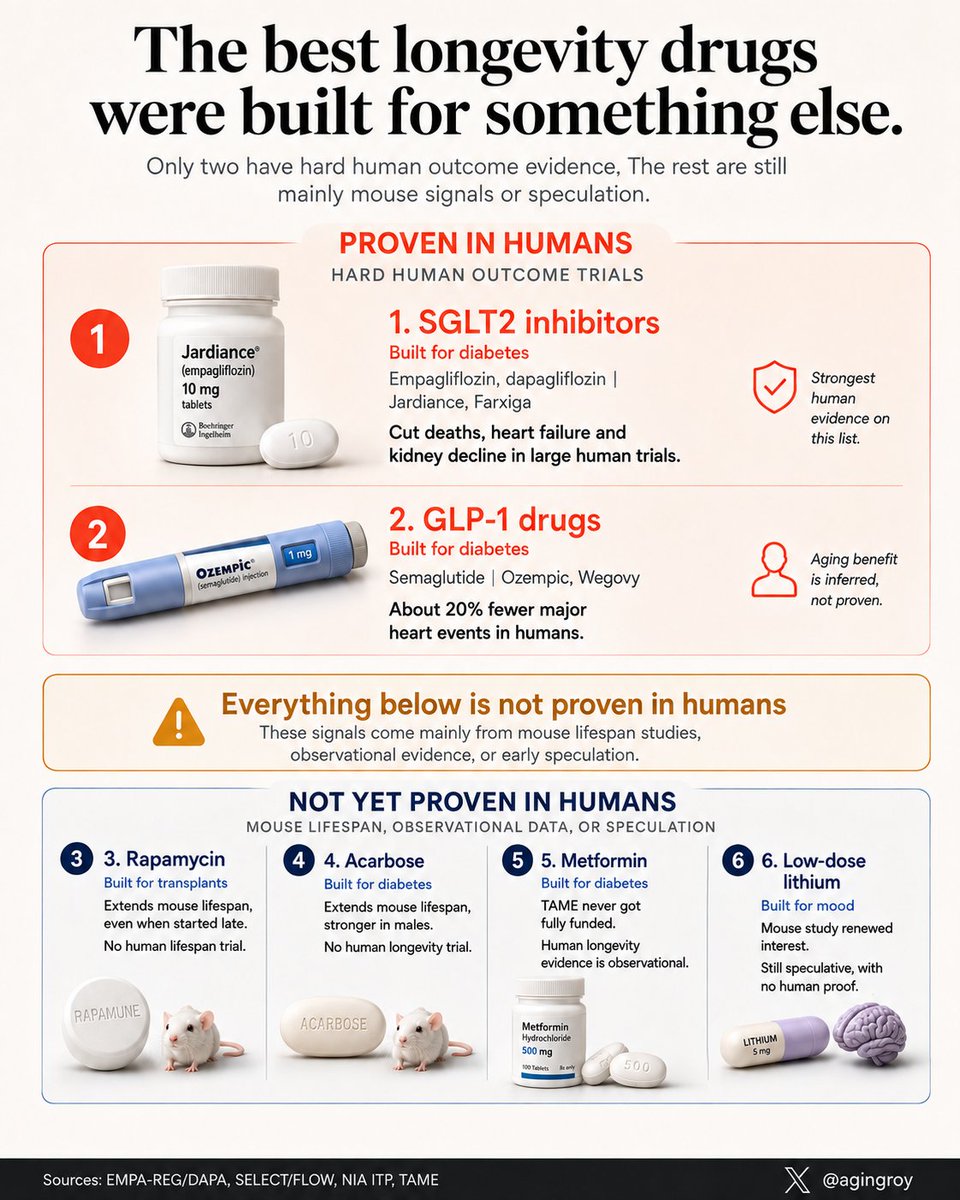
The most promising longevity drugs weren’t designed to target aging at all. They were first developed for diabetes, transplants, and mood disorders, and only later did someone realize they might add healthy years. Ranked below by the strength of the human evidence, since most of the data still comes from mice.
1. SGLT2 inhibitors. Built for diabetes. In large human trials, they cut deaths, heart failure, and kidney decline. This is the strongest human evidence on the list.
2. GLP-1 drugs. Also for diabetes. Human trials cut heart attacks by about 20%, even in people without diabetes, plus kidney and brain signals. The aging-specific benefit is still inferred, not proven.
3. Rapamycin. A transplant drug. It reliably extends lifespan in mice, even when started late in life. In humans, there’s no lifespan data, only small safety studies.
4. Acarbose. A diabetes drug. It extends life in mice, more in males. No human longevity trial.
5. Metformin. The famous one. The trial designed to prove it slows aging, called TAME, never got fully funded, and the human evidence is observational and hotly debated.
6. Low-dose lithium. A mood drug. A 2025 mouse study renewed the buzz. Still speculative, with no human proof.
Caveats. Only the top two have hard human outcome trials. Everything below rests mainly on rodents, and mouse lifespan is not human evidence.
The best longevity drugs we have were developed for something else. So far, only two have proven it in people.
ESTE TIPO USÓ CLAUDE PARA CONSTRUIR UN SISTEMA DE TRADING AUTOMATIZADO QUE GANÓ 847 $ DE LA NOCHE A LA MAÑANA
Todo empezó con un solo artículo sobre bots de Trading.
Claude lo leyó, seleccionó 7 repositorios de GitHub, los conectó en un pipeline funcional y desplegó el sistema de principio a fin.
A partir de ahí, todo funcionó de forma autónoma.
El sistema escaneó más de 412.000 operaciones, rastreó wallets de ballenas, detectó actividad de insiders y tomó decisiones en tiempo real.
Según él, cada pocos segundos analizaba datos, decidía si comprar, vender o pasar, y ejecutaba las operaciones automáticamente.
47 operaciones después, el sistema terminó la noche con 847 $ de ganancia, sin ninguna intervención manual.
LOCURA
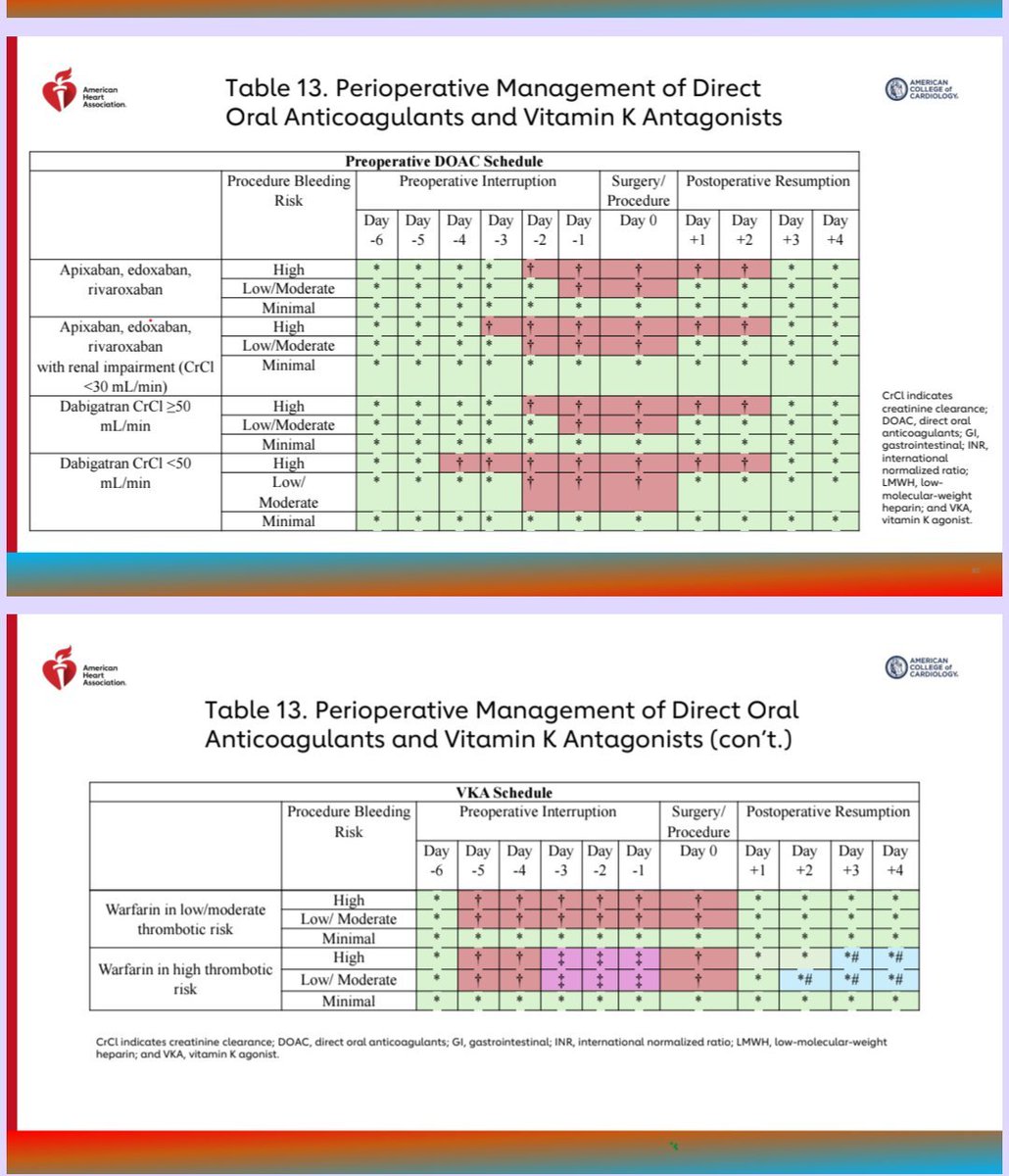
How long should anticoagulants be withheld before elective surgery?
◻️Apixaban: 1 day (low/moderate bleeding risk), 2 days (high risk)
◻️Rivaroxaban: 1 day (low/moderate), 2 days (high)
◻️Edoxaban: 1 day (low/moderate), 2 days (high)
◻️Dabigatran: 1-4 days depending on bleeding risk & renal function
◻️ Fondaparinux: 36-42 hours
◻️ LMWH: 12 h (prophylactic), 24 h (therapeutic)
◻️ UFH: IV 4-6 h; SC 12–24 h
◻️ Warfarin: Stop 5 days before surgery; confirm INR before the procedure.
Adjust timing for renal impairment, neuraxial anesthesia, and individual patient risk. Bridging is reserved for selected high-thrombotic-risk patients.
Reference: 2024 AHA/ACC Guideline for Perioperative Cardiovascular Management for Noncardiac Surgery, Table 13.
Gallbladder polyp management isn’t just size-based. European vs SRU guidelines differ on size, morphology, risk & follow-up. Some polyps may be malignant, surgical planning matters.
Do you use European, SRU, or individualized approach?
When consider extended cholecystectomy?
#MedNews: The latest #colorectal#cancer screening guidelines from the American Cancer Society include a blood test.
But #colonoscopies and stool tests are still the better options, the authors say.
Here’s why.
https://t.co/tfPDcZavC7
Editor’s Choice: Endoscopic diagnosis and management of peptic ulcer bleeding: ESGE Guideline – Update 2026
Find the article at: https://t.co/QbwPJsbyx0
Ian M. Gralnek et al.
@ESGE_news