Passionate about Diversity, Inclusion, Ethical Leadership. Aspiring patron of the arts. @wef Young Global Leader. Retweets aren’t endorsements. Views are my own
1/3 Always lovely to meet with the @HekimaCounsel team and to share about my life and insights about my entreneurial journey, specifically founding Capital Art.
This is a wide ranging interview, even scratching the surface on AI ethics and governance and even covering …
@MokoenaDee@Mashstartup I really hope Department of Sports, Arts and Culture and its various agencies and companies like DALRO can come together to protect our culture and our artists on this one…
It’s easy and dangerous to inspire violence and hate. The greatest and hardest kind of leadership inspires people to do something beyond the immediate anger. It inspires peace and community.
I thank God I paid that extra R1500 for travel insurance before I left South Africa.
It SAVED me when I was really ill and needed my family.
I am not getting sponsored for this - I just want to urge anyone travelling to ensure you have solid insurance.
it is life saving. 2/2
The difference that good travel insurance makes when (like me) you end up having emergency surgery in a foreign country:
Santam paid all my medical costs, flew my sister to Rome and paid for her hotel. Plus got us business class tickets home (because I had to lie down). 1/2
@TSManyakalle@robertmarawa Totally agree with you. But maybe each football association should be appealing the decisions and backing their teams
That said, I also don’t think CAF will back then which is a shame
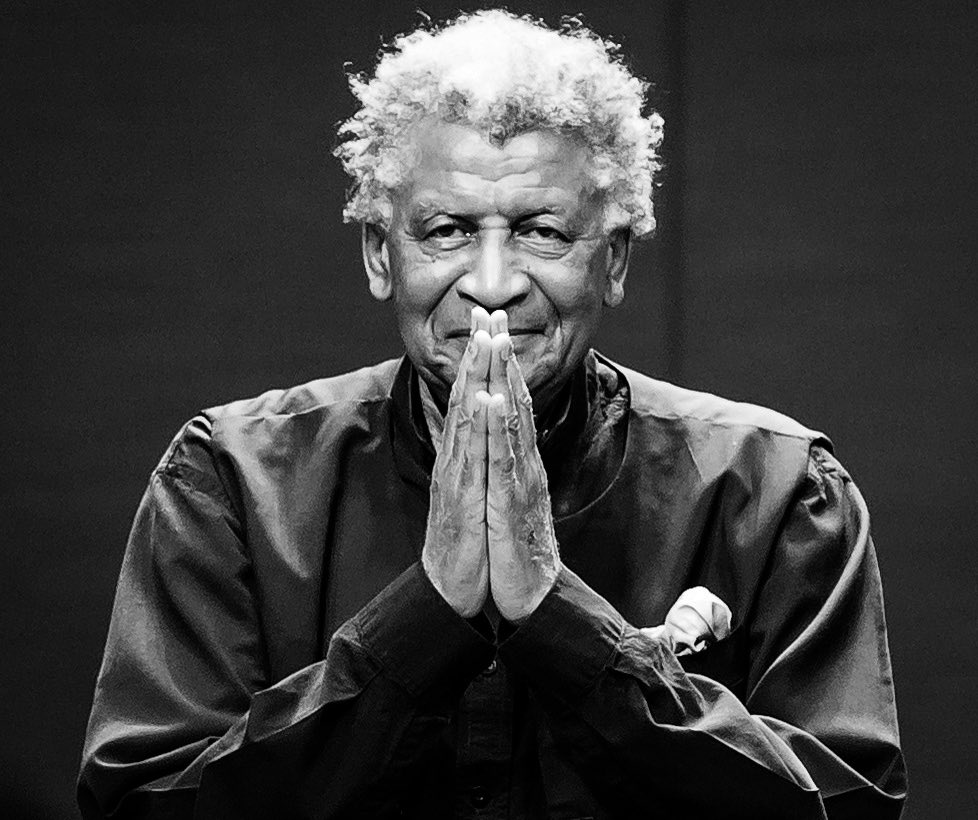
Abdullah Ibrahim was a difficult man to interview. He spoke in parable. In metaphor. In metaphysics. You could not pin him down. I later found he was a very difficult. Period. The first time I bumped into him walking anonymously on Plein street circa 2003 he literally growled.
Today, we mourn the loss of Abdullah Ibrahim (1934-2026).
A giant of South African and global jazz, we are honoured that his final public performance took place on the Rosies Stage at CTIJF on 27 March 2026.
Rest in peace, maestro. Your music lives on. 🕊️🎹
Anyone who has travelled on a weak passport will celebrate investigative reporting into VFS global, the near monopoly intermediary that handles visa applications for 71 countries. https://t.co/ALB7KQM9e3
JPMorgan hired four autistic employees in 2015 as a small test. Six months later, those four were 48% faster than colleagues who'd been doing the same job for three to ten years. In some roles, they were 90 to 140% more productive.
That small test grew into a global program. Today JPMorgan's autism hiring program spans 10 countries and over 70 different job types, with hundreds of people hired through it and 99% staying long-term. Other companies have been doing the same thing, some for longer.
SAP (the German business software giant) started even earlier, back in 2013. They now have 215 autistic employees across 15 countries. One of them rebuilt how the company processes its giant credit card statements (think American Express, 20,000 line items per bill). What used to take 2 or 3 days now takes 20 minutes. 94% of these hires stay.
EY (the consulting giant) started its own program in 2016, focused on automation and data analysis. The team has grown to over 500 people across 23 offices in 10 countries. EY says the tools they've built have saved or made the company close to $1 billion. 92% retention.
Hewlett Packard tried the same idea in Australia, on software testing teams. Same result: 30% more productive than the rest. Microsoft, 10 years into its own program, reports the same kind of gains across its teams.
There's a biological reason. Harvard Business Review and JPMorgan's internal data both point to it. Autistic brains tend to use more of their processing power for visual analysis and pattern recognition. Picture spotting one small bug buried inside millions of lines of code. Less mental energy goes to social cues and impulse control. Add hyperfocus, the ability to lock onto one task for hours without losing attention, and you get a brain built for software, fraud detection, and AI.
85% of autistic adults with college degrees can't find a job. The general US rate is 4.3%. A huge pool of qualified people sitting unemployed, while the handful of companies that figured out how to hire them are getting double-digit productivity gains.
Palantir's new fellowship lands right in that gap. Pay: $110K to $200K plus stock. Over 2,000 applications came in for the first round, and CEO Alex Karp does the final interviews himself. No formal diagnosis required. Karp's own words: "the neurally divergent (like myself) will disproportionately shape America's future."
Reads like marketing copy. 10 years of data from SAP, JPMorgan, Microsoft, EY, and HPE suggest the bigger story is hiring strategy.