I would strongly suggest reading 'Apple in China'.
From China to South Korea to Taiwan which were once very mediocre in electronics manufacturing became global leaders after they started doing work for Apple.
Apple's standards are extremely tough; they demand exceptionally high quality and throw a lot of temper tantrums even if there is a mild deviation.
Tamil Nadu is the number one state in India for Apple's ecosystem. We've got all of its major suppliers and are being appreciated for providing quality output with skilled labour.
This is one of the reasons why Tamil Nadu is excelling in advanced electronics.
Working for an extremely tough customer has its own benefits.
Do you know something?
Tamil Nadu has almost achieved zero defects in electronics manufacturing.
Earlier the yardstick was zero parts per million. Now in some areas, the state has achieved what only countries like Japan have achieved: a zero parts per billion defect rate.
This perfection has been made possible not only in routine electronics manufacturing, but even in advanced electronics.
Even Japanese companies which have invested in Tamil Nadu are surprised that the state is able to achieve zero parts per billion in areas even Japan is not able to do.
International investors are sending teams to study how Tamil Nadu has developed such low defect manufacturing techniques.
Tamil Nadu has become so good at manufacturing that we are able to attract investments from across the world in numerous industries.
Today’s story on ordinary people contributing extraordinarily to society.
In a quiet Coimbatore village, Pethanayakanur Government High School was once almost empty. Parents preferred bigger schools nearby.
Then Tamil teacher Balamurugan arrived in 2013 and quietly started changing everything.
He planted 110 saplings in a single week. Today those trees give shade, and students have planted over 960 more while making 45,000 seed balls for reforestation. The barren campus turned green.
Next came books. The library grew to more than 6,000 titles through donations, networks, and his own money. Students didn’t just read, they wrote. Their poems, stories and essays got published.
One girl’s article on the environment appeared in a state magazine read by over 8 lakh students. Suddenly kids felt like real writers.
After regular classes, two hours of Tamil folk arts began- Parai drumming, Mayilattam, Oyilattam, Karakattam.
Sports, nature walks and a plastic free culture followed.
When COVID finally ended, Balamurugan had one more idea: paint every classroom like a bright train coach. He put in ₹35,000 of his own money; parents added the rest.
Students returned to music, celebration and colourful "train" classrooms. One Class 10 girl still calls that day unforgettable.
The numbers followed. Enrolment more than tripled. The school has kept a 100% Class 10 pass rate since 2015. A former student cleared NEET.
Students have also attended seminars on forests, biodiversity and climate change.
"Climate change will shape their lives. We want our students to grow up respecting nature,"says Balamurugan.
Balamurugan’s simple goal never changed:
"Whether it is reading, writing, folk arts or environmental education, everything we do is to help students become good thinkers and good human beings."
One teacher. A few trees. Some books. A coat of paint. And a government school that kids are proud to call their own.
Source: The Better India
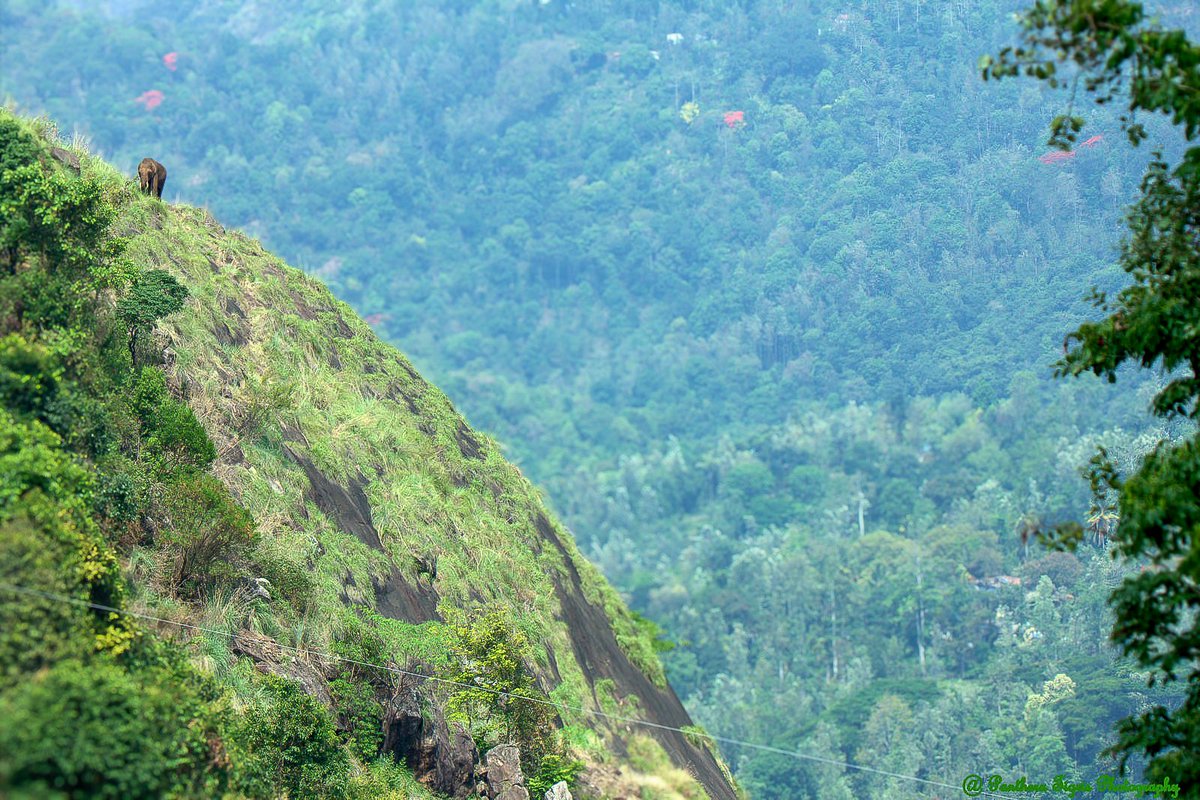
Look closely, there is an elephant on that steep hill. Many people imagine elephants as animals of the plains. But the truth is far more fascinating. Asian elephants are remarkably sure-footed and can negotiate surprisingly steep hills and rocky slopes.
This photograph captures an elephant making its way across a steep hillside in the Nilgiris. And now, researchers have documented wild elephants in Arunachal Pradesh at an astonishing 3,266 metres above sea level, the highest elevation ever recorded for Asian elephants. This remarkable discovery reveals the extraordinary adaptability of these gentle giants and challenges one of the most enduring assumptions about them.
What a fascinating fact to learn on the eve of #WorldElephantDay2026, celebrated on 12 August!
#WorldElephantDay #Elephants
📸 Credits: Chandrasekar Das
In 1964, a polio survivor cracked the JEE. Then IIT Bombay's medical officer initially rejected him.
The boy persisted with all his grit, the doctor finally gave him the fitness certificate.
That student was Romesh Wadhwani. After @iitbombay, he went to @CarnegieMellon (CMU) for his PhD, started his company, and eventually sold it in 2000 for $9.3 billion, the largest software deal in history at the time.
His younger brother Sunil Wadhwani cracked IIT Madras @iitmadras in 1970, also went to CMU, and eventually sold his own company to @Capgemini for $4 billion in 2015.
The Sindhi family that fled Pakistan in 1947 with nothing and started over in Delhi produced 2 IITians - both becoming billionaires independently.
The example kids should not be Sharma ji ka beta, it should be Wadhwani ji ke bete, right?
I’m approaching 50. I looked at what happened to my college batch after nearly 27-28 years in the tech industry.
The numbers are uncomfortable:
15% - got laid off and never found their way back into tech.
15% - left IT and moved into business.
25% - stuck in middle management, fearing the next layoff.
10% - retired early.
10% - moved into consulting/training.
5% - senior leadership.
20% - still hands-on, learning and reinventing themselves.
The interesting part?
The people who stayed relevant weren't necessarily the smartest or most experienced.
They kept learning.
They stayed hands-on.
They reinvented themselves.
And whoever I talk to - those numbers are mostly true for most of the middle and senior management for tech industry in India.
The problem isn't age. The problem is that we stop learning.
Six faculty members from IIT Madras have been selected for the Anusandhan National Research Foundation (ANRF) J.C. Bose Grant, one of India’s highest honours for senior scientists and engineers. The grant provides ₹25 lakh annually for five years to support frontier research.
Their work spans prosthetics, clean water, next-generation optical networks, sustainable energy, biomedical innovation and fundamental chemistry, demonstrating how cutting-edge research at IIT Madras is translating into technologies that improve millions of lives.
The six professors and their impactful research are:
Prof. Sujatha Srinivasan develops affordable prosthetics and assistive devices tailored for Indian users.
Prof. Thalappil Pradeep creates low-cost water purification technologies that have brought safe drinking water to millions and founded the International Centre for Clean Water.
Prof. Deepa Venkitesh leads India’s first multicore optical fibre testbed and advances high-capacity optical communication systems.
Prof. Jitendra S. Sangwai works on carbon capture, gas hydrates and sustainable energy solutions for reducing emissions.
Prof. Ramakrishnan Swaminathan designs biomedical devices and instrumentation to improve diagnosis of brain and muscle-related conditions.
Prof. Sundargopal Ghosh advances transition-metal boron chemistry for better catalysis and small-molecule activation.
We need to celebrate these real-life heroes.
News Source: Times of India
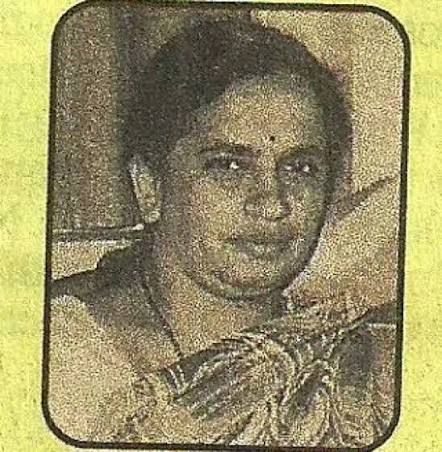
Meet the brilliant women scientists at the Central Drug Research Institute (CDRI), Lucknow.
So knowledgeable, yet so simple.. ❤️✨
This is real Nari Shakti. Intelligence never needs abuse to make a point like we saw in those protests.
Agni College of Technology in Chennai is not widely known.
It is an ordinary engineering college, but with a difference.
What sets it apart is its strong focus on entrepreneurship through its MSME-recognised Incubation Centre, Agni Incubation Foundation, and Entrepreneurship Development Cell.
The goal of this incubation foundation is to create 100 student owned tech startups.
Its first success story is already there.
Garuda Aerospace was incubated at Agni, and its founders are the college’s students.
Garuda has grown into one of India’s leading dronetech companies. It manufactures drones for defence, agriculture, and logistics.
Another success story from Chennai’s deeptech startup space.
As I keep repeating, no need to fear, but understand the sense of urgency in being prepared.
Visa has laid off about 1,400 employees at its technology centre in Bengaluru, nearly 40% of its India workforce.
Visa employs around 3,500 people in India. About 500 engineers and 900 non engineers were part of the layoff.
This is part of an AI driven efficiency push.
A few points:
Skilling, reskilling and continuous learning are no longer optional. They are the bare minimum essential for survival.
Since there can be a time lag between two jobs, having cash to the extent possible becomes critical. When I say cash, it refers to Savings Bank Account, Fixed Deposits and Overnight Funds.
If you cannot avoid debt, minimise it as much as possible.
Salaries would stop. But EMIs won���t.
News Source: Business Standard
Let me tell you a few stories of Vishnu Sahasranaam stotra:
This applies to many stotras but for the record:
Many years back, a friend was taking USMLE…. he barely had 20 days to prepare for the exam.
I told the person after bit of thought, no eggs, no meat, no alcohol and chant Vishnu Sahasranaam stotra x 3 daily till exam ends.
Person was but sceptical and didn’t do what I said. This is probably 1999 or something like that.
Person finally came to the 3 days prior to USMLE exam. In total sweat and nervousness, he was not at all prepared.
So, early morning chanted VS x3 and started reading study material.
Like this third day, early morning, he chanted Vishnu Sahasranaam x3 and went for exam. In the train, he suddenly realised that he forgot to read some big topic, so brings out the study material and reads.
Guess what?
That USMLE, there was a special section devoted just to that thing he read on the day of the exam.
Plus material what he reads in last 3 days is what the exam questions 80% MCQ was about.
He passes with flying colours.
So… people will say lots of things here… but VS phalsruti is there for us.
One more thing… today, one of the famous cardiothoracic surgeons of Maharashtra … one of my class mates, he and me with another friend used to chant Vishnu Sahasranaam in BJ medical College Pune canteen.
So… this person today is the award winner.
Pratyaksha Pramana… so many doctors I know are alive and working and getting income only because of Vishnu Sahasranaam.
Another great doctor I know, double professor in England, will not touch coffee also without doing Vishnu Sahasranaam. He also ascribes his stupendous success to this.
People here in England can meet these people with me and check my story.
What does VS say?
Na Vasudev Bhaktanaam ashubham vidyate kwachit!!!
One point to understand about Devi Bhagwati is that:
No matter what situation of life you get thrown into as a Bhakt (let me repeat, this applies to deep devotees only)… if you accept it, do not question it too much and continue your sadhana, then after some time you will begin to understand the deep hand and thought of Devi behind your situation which may even become quite often a blessing in disguise.
Devi never abandons Her Bhaktas. This I have experienced myself, time and again.
Another point is that, just like Devi has Kalyana Dristi towards Her devotees, She can literally destroy the enemies of the Devotee with one Kataksha… NO MATTER how powerful they seem to be.
Picture a roaring, icy river slicing through the isolated Spiti Valley in 1972. The local villagers are completely cut off by a mountain collapse. The military says a traditional concrete/riveted steel bridge will take yrs to bring heavy machinery up the treacherous cliffs.
Then, a young woman steps out onto the frozen mud wearing a hard hat, carrying a set of rolled up blueprints under her arm.
She does not have bulldozers. She does not have massive cranes. Instead, she brings trucks loaded with small, lightweight steel components, like a adult-sized structural Lego set. In just 4 months, w/o a single piece of heavy machinery, her team hand-assembles a rock-solid, load-bearing steel bridge across the gorge.
Her name was Shakuntala Bhagat & she was changing the rules of civil engineering forever.
Born in 1933, Shakuntala was the daughter of S.B. Joshi, a legendary figure known as the "Father of Bridge Engineering in India". While other young girls of the 1940s were expected to follow quiet, traditional paths, Shakuntala spent her childhood staring at bridge trusses & stress diagrams.
In 1949, she walked into the classrooms of VJTI in Bombay. The lecture hall went dead silent. Dozens of male students turned to stare at the only woman in the room. In 1953, at just 20 yrs old, she walked out with a degree, making history as India’s 1st female civil engineer.
She flew to the United States, earned her Master's in Structural Engineering from Penn & trained across Germany & the UK.
When she returned home in the 1960s, she joined IIT Bombay as an Assistant Prof, taking charge as the Head of the Heavy Structures Lab.
At IIT Bombay, Prof. Shakuntala was obsessed with a single problem: Why did Indian infra take so long to build?Traditional steel bridges relied on slow, dangerous, on-site welding & heavy riveting. If a flood wiped out a road in Arunachal Pradesh/Kashmir, cut-off communities had to wait yrs for a replacement bridge.
In the late 1960s, turning her small Bombay apartment into a late night workshop littered with steel prototypes & stress formulas, Shakuntala & her engineer husband, Anirudh Bhagat, cracked the code.
They invented & patented the Quadricon Modular Bridge System & the Bhagat Unishear Connector.
Instead of custom-casting a bridge for every river, their system used mass-produced, interchangeable, lightweight steel modules. They could be packed onto small trucks, hauled up narrow mountain tracks & assembled on-site using simple hand tools, reducing bridge construction time from yrs to weeks.
Yet, when they took this revolutionary idea to institutional investors & govt departments for R&D funding, they were met with cold skepticism.
"If advanced Western nations have not developed a total-system modular steel bridge like this, how can an Indian couple do it?"
The establishment refused to back them. She & her husband took massive personal financial risks, mortgaging their own assets to build & test the prototypes themselves. In 1972, the Invention Promotion Board awarded them the highest honor for the Unishear connector.
The skeptics were forced to eat their words.
Shahkuntala Bhagat went on to design & oversee the construction of 200+ Quadricon steel bridges worldwide, including 69 vital superstructures across India’s most dangerous border terrains, from the high passes of Kashmir to the dense forests of Arunachal Pradesh, as well as projects in the US, the UK & Germany.
In 1993, she was named Woman Engineer of the Year.
When she passed away in 2012 at the age of 79, she left behind an army of students & a country connected by her steel.
We celebrate the famous monuments of concrete and glass in our metros, yet few history books mention the woman in a hard hat who stood on freezing riverbeds to connect India's most forgotten corners.
The next time you travel through a remote mountain pass in the Himalayas & your vehicle rolls smoothly over a steel bridge spanning a deadly gorge, look closely at the steel joints beneath you. You are driving across the indestructible genius of Shakuntala Bhagat.
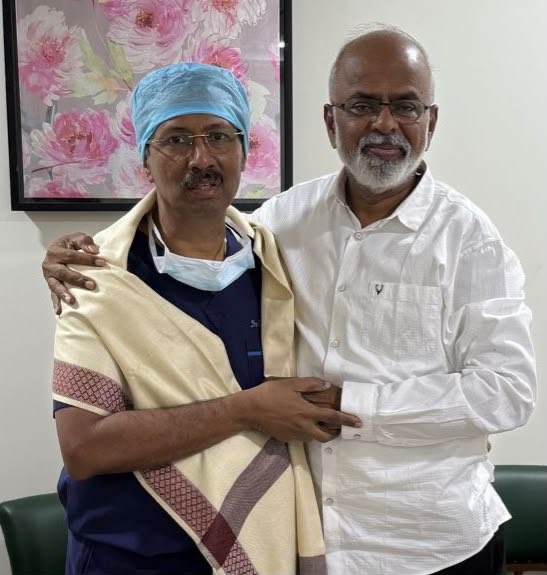
Dr S. Rajasekaran, Chairman of Ganga Hospitals #Coimbatore is a rare asset to country. If one hospital and one consultant gets to TN that much #MedicalTourism it is he. Though in Orthopaedics and spine Surgery, he is no:1 he was not known to many. Silent healer.
Why Ram Charan chose it over his own brand is simple. Once you know a single speciality for you is there why to go multi specialty hospital.
Thyroid samples came to #Thyrocare in Mumbai in 2010 itself, traveling more than 1000s of KMs. #Focus gets attention
Proud to be a #Coimbatorian.
.
JOB INTERVIEW:
"Can you explain this 8-month gap in your resume?"
Most candidates say:
"I took some time off to recharge, travel, and figure out my next career steps."
THE WINNING ANSWER:
நண்பர்களே..
மகிழ்ச்சியான மனிதர்களை அவசரப்படுத்துவது மிகவும் கடினம் என்பதை நான் சமீபத்தில் அதிகம் உணர்கிறேன்.
சமீபத்தில் பேருந்துப் பயணம் ஒன்றில், ஒரு முதியவருக்கு அருகில் அமரும் வாய்ப்பு கிடைத்தது. நாங்கள் உரையாடத் தொடங்கி, பயண நேரம் முழுவதும் பேசிக்கொண்டே இருந்தோம்.
பேருந்து நிறுத்த நிலையம் வந்ததும், மற்ற அனைவரும் தங்கள் பைகளை எடுக்க மிக வேகமாக எழுந்து நின்றனர். ஆனால் அவர் மட்டும் அசையாமல் அமர்ந்திருந்தார்;
அவரு��ைய பையை எடுத்துத் தரவா என்று நான் கேட்டேன், ஆனால் அவர் மறுப்பதாகத் தலையசைத்தார். நான் அவரை ஒருவித விசித்திரமான பார்வையுடன் பார்த்திருப்பேன் என்று நினைக்கிறேன்; அதைப் பார்த்து அவர் புன்னகைத்தார்:
"இந்த அவசரம் எதற்காக என்று எனக்குப் புரிந்ததே இல்லை. சொல்லப்போனால், நாம் அனைவரும் ஒரே இடத்திற்குத்தானே செல்கிறோம்."
அந்த இடத்திற்கு மற்றவர்களை முந்திச் செல்ல வேண்டும் என்ற எந்த அ��சரமும் அவரிடம் இல்லை.
எல்லாவற்றிலும் நீங்கள் அவசரப்பட வேண்டும் என்றே உலகம் விரும்புகிறது. அவசரமான முடிவுகள், அவசரமான உரையாடல்கள், அவசரமான உறவுகள், அவசரமான காலக்கெடுவுகள் என அனைத்தும் அப்படித்தான்.
அப்படிச் செய்யும்போது, உங்கள் வாழ்க்கையின் மீதான உங்கள் கட்டுப்பாட்டை நீங்கள் மெல்ல இழக்கிறீர்கள். உங்கள் வாழ்க்கையைத் தீர்மானிக்கும் உரிமையை விட்டுக்கொடுக்கிறீர்கள். ஒருபோதும் உங்களுடையதாக இல்லாத ஒரு பேனாவின் கையில் உங்கள் வாழ்க்கையை எழுதுவதற்கான அதிகாரத்தை ஒப்படைக்கிறீர்கள்.
நீங்கள் அவசரப்பட வேண்டும் என்று விரும்பும் இந்த உலகில், 'தற்போதைய தருணத்தில் முழுமையாக இருத்தல்' (presence) என்பதே ஒரு மிகப்பெரிய கிளர்ச்சியாக அமைகிறது.
மகிழ்ச்சியான மனிதர்களை அவசரப்படுத்துவது மிகவும் கடினம் என்றே எனக்கு எப்போதும் தோன்றுகிறது.
அவர்கள் நிதானமாகவும், ஆழ்��்து யோசித்தும் செயல்படுகிறார்கள். அவர்கள் அவசரமாகச் செயல்பட வேண்டிய சூழல் ஏற்பட்டால், அது அவர்கள் விரும்பியதால் மட்டுமே நிகழ்கிறது; ஏதோ ஒரு தேவையற்ற அழுத்தத்தினால் அல்ல.
சில சிறிய விஷயங்கள் இதை வெளிப்படுத்துகின்றன:
• போக்குவரத்து நெரிசலில் மற்றவர்களை முந்திச் செல்ல அனுமதிக்கிறார்கள்
• காபி கடையில் பணிபுரிபவர்களை அன்புடன் வரவேற்கிறார்கள்
• எப்போதும் தங்கள் கைபேசியையே பார்த்துக்கொண்டிருக்காமல், நிமிர்ந்து பார்க்கிறார்கள்
நானும் தினமும் சில சிறிய 'நிதானமான கிளர்ச்சி'ச் செயல்களை மேற்கொள்ளத் தொடங்கியு��்ளேன். அவசரப்பட வேண்டும் என்ற உந்துதல் இன்னும் எனக்குள் இருந்தாலும், ஒவ்வொரு முறையும் அதை நான் எதிர்க்கும்போது, பேருந்தில் சந்தித்த அந்த முதியவர் என் நினைவுக்கு வருகிறார்.
புன்னகைத்தபடி, நாம் அனைவரும் செல்லும் அந்த இடத்திற்கு மற்றவர்களை முந்திச் செல்ல வேண்டும் என்ற எந்த அவசரமும் இல்லாமல் இருந்த அந்த முதியவர்.
Some are mocking Apollo Hospitals for Ram Charan choosing Coimbatore based Ganga Hospitals for his wrist surgery.
There is no need to mock Apollo and understand more about Ganga.
Ganga Hospital in Coimbatore is one of South Asia’s largest and most specialised centres for orthopaedics, trauma, hand & wrist surgery, and microsurgery.
That's why Ram Charan chose it for his complex wrist surgery despite his wife Upasana’s family links to Apollo Hospitals. Ganga Hospitals has unmatched expertise in such cases.
Dr S. Rajasekaran, Chairman of Orthopaedics, Trauma & Spine Surgery, has been ranked by Stanford University among the top 1% of global researchers contributing to orthopaedic surgery.
Ganga Hospital handles extremely high volumes of complex limb and hand cases with world class outcomes.
Given the growing healthcare ecosystem, Coimbatore is rapidly emerging as a major medical tourism destination in India.
Coimbatore is also now among the most preferred cities in India for retirement.
Be it education, healthcare, industries, entrepreneurship, quality of life, technology or retirement - Coimbatore is an all rounder that is yet to receive the full recognition it deserves.
Fabheads is one of the most important deep tech companies to emerge from Chennai and India’s quiet edge in the global race for advanced composites.
Founded by two former ISRO engineers, Fabheads set out to solve a problem they had seen firsthand inside India’s space programme: the painfully manual, wasteful, and error prone way carbon fibre and continuous fibre composites are still made around the world.
Today, Fabheads is the only company in India and one of just a handful globally that has successfully automated the production of continuous fibre composites at commercial scale.
Their patented Adaptive Tow Placement technology and indigenous continuous fibre 3D printers replace labour intensive hand layup with robotic precision.
The results are striking: significantly lower costs, reduced material waste, fewer rejections, and faster production cycles.
This is classic deep tech with strategic national value.
It strengthens Atmanirbhar Bharat in a domain where technological sovereignty truly matters.
It turns Indian engineering talent into world class manufacturing IP.
It positions India not just as a consumer of advanced materials, but as a potential supplier of both the technology and the components.
In a world racing toward lighter, stronger, and more efficient systems, Fabheads is proof that Chennai can birth companies that sit at the intersection of materials science, robotics, and national capability.
India stands to gain not just better parts, but greater control over a technology that will shape the next decade of aerospace, defence, and mobility.
Quietly, one of the most consequential deep tech stories in Indian manufacturing is being written on Old Mahabalipuram Road in Chennai.
That's true, Naan Mudhalvan scheme is likely to be dropped it seems. I would be happy if that continues. But I won't parktake anymore.
As an official Naan Mudhalvan faculty trainer, we visit colleges and teach IT courses for 1-2 hours a day, with a good pay nearly a lakh for a month. Luckily, I'm just a part time worker, I can compensate this.
But now that's obsolete anymore. Somehow I could easily focus on my other works, people who relied on this now should find for any alternative. Our WhatsApp group is no more, people whoever submitted their documents got it back.
Thanks, to MK Stalin for this wonderful opportunity and literally feel I have put my immerse effort to teach whatever I could.
Just waiting for the official confirmation from the government too.
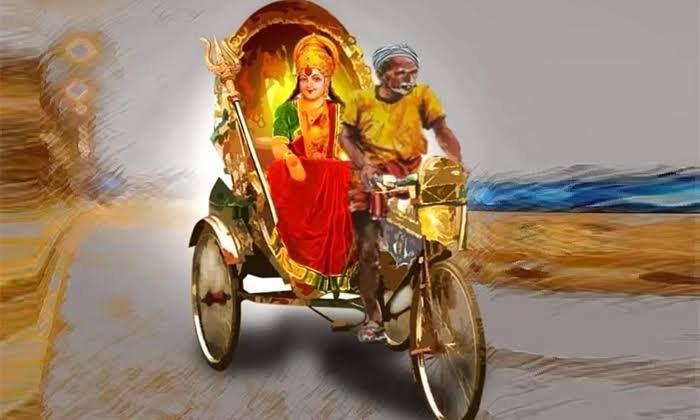
In 1955, in the city of Vijayawada, a rickshaw driver came out from a late-night movie.
As he stepped out, a married lady, who seemed divine like a goddess (Peddha Mutthaiduvu), approached him and requested a ride to Indrakeeladri Mountain. He agreed to take her.
During the journey, she asked, "Aren't you afraid to be out so late?" He replied confidently, "Why should I fear when Kanaka Durgamma Devi is watching over me?"
She smiled, and when they reached Indrakeeladri Mountain, she disappeared into the night, seemingly blending into the mountain. The driver called out, "Amma, what about my fare?" She responded, "It's in your turban."
When he unwrapped his turban, he found cash and a gold bangle. Overwhelmed with awe at the sight of the gold bangle, he shouted in the midnight silence. People gathered around, and it became clear that Kanaka Durgamma herself had traveled with him and gifted him her bangle and cash.
This miraculous event was reported in the Andhra Kesari newspaper in 1955.
#Vijayawada
#Kanakadurga