Incoming Minerva Fast Track Research Group Leader "Artificial Justice" @maxplancklaw | legal history & history of science | legal modernism & law and AI
Really pleased to see my article "How Hermann Kantorowicz Changed His Mind About America and Its Law, 1927-1934" out @history_law! Thanks to @MPIPRIV & @maxplanckpress for making it open access. https://t.co/23149FQb2p
Just under a week left to apply for this three-year postdoc opportunity in my new Max Planck Research Group "Artificial Justice." Junior scholars of all fields encouraged to apply! Happy to answer questions.
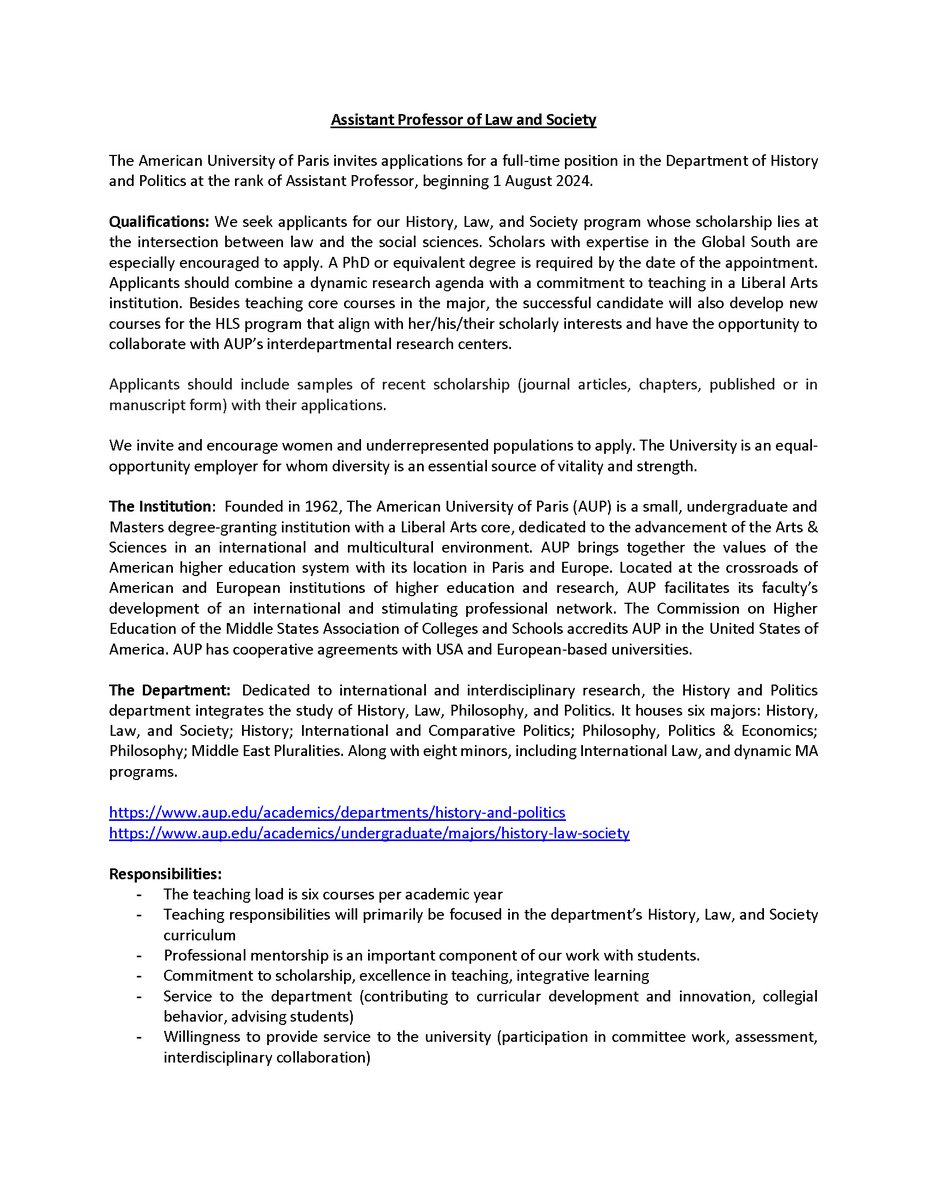
Please circulate widely! 3-year-postdoc in my new Max Planck Research Group "Artificial Justice." Open to junior scholars of all fields, including history, anthropology, linguistics, and computer science. Deadline 31 July, start date relatively flexible. https://t.co/S8hOACJQiX
Please circulate widely! 3-year-postdoc in my new Max Planck Research Group "Artificial Justice." Open to junior scholars of all fields, including history, anthropology, linguistics, and computer science. Deadline 31 July, start date relatively flexible. https://t.co/S8hOACJQiX
The postdoc is open to junior scholars of all disciplines, including law, literature, philosophy, linguistics, history and anthropology of science, media studies, and computer science.
Curious about how #AI is transforming legal reasoning and decision-making? MPI-Hamburg is looking for a Postdoc to join the Research Group 'Artificial Justice' led by Katharina Isabel Schmidt @KatIsaSch. For more information and to apply by 31 July: https://t.co/3dNp8ZsbsY
MPI-Hamburg is looking for a PhD student to join the newly founded Minerva Fast Track Research Group 'Artificial Justice' led by Katharina Isabel Schmidt @KatIsaSch. For more information and to apply by 15 July: https://t.co/lDDCNteEz3
📣 Exciting Opportunity Alert! 📣 The Max Planck Summer Academy for Legal History 2024 is calling early-stage research students, especially PhD candidates, for an immersive exploration of legal history. Apply now! 👇 1/
Looking forward to contributing some preliminary thoughts on "Law Melodies, Mnemonics, and Housewives' Manuals: Popular Guides to the German Civil Code of 1900." Thanks @cj_historian for having me!
29th Sept. : Regimes of Codification 1700-1900
Organised by: Charlotte Johann.
An opportunity to rethink codification as a historical phenomenon by exploring how it was conceived and defined by legal scholars, practitioners and reformers.
https://t.co/v8OcuwXkwv
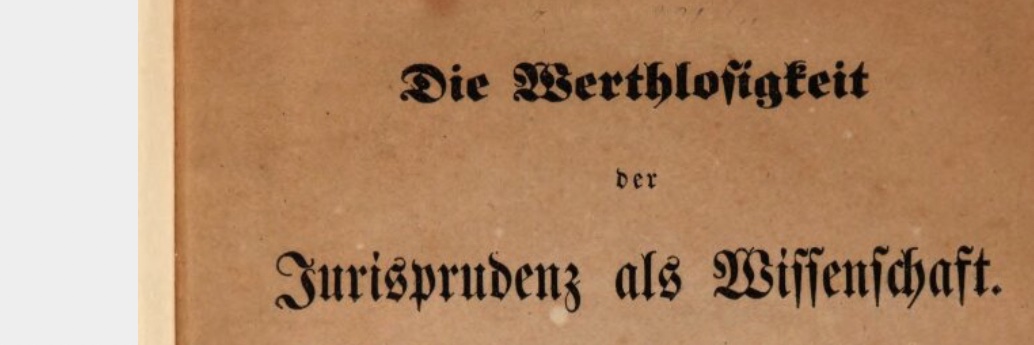
"Un-knowing what the law is"--my review of Alexander Somek's Legal Theory in a New Key is out in Jurisprudence now. What might a history that foregrounds subterfuge & obfuscation, myth, enigma, & farce in legal theory look like? #legaltheory#legalhistory https://t.co/wHhjTyGeH6
First thought of this article in 2015, the summer before grad school. Corrected proofs this spring, with a baby on my lap. So pleased the piece is finally out—next to my @princetonhist grad colleague @tealarcadi’s work no less! Available open access here: https://t.co/23149FQb2p
Latest issue of @history_law is out, and it looks *fantastic.* Thrilled to see the great pieces by @KatIsaSch, @TealArcadi, and Lauren Feldman’s in print. Excited to read the others. Congratulations to all the authors and to EIC @gauthamrao — bravo!!
In light of K.’s concerns, my article excavates life-law's delicate suspension between peril and potential. My sources reveal a striking, triangular relationship between German free law, American legal realism, and Nazi life-jurisprudence.
Really pleased to see my article "How Hermann Kantorowicz Changed His Mind About America and Its Law, 1927-1934" out @history_law! Thanks to @MPIPRIV & @maxplanckpress for making it open access. https://t.co/23149FQb2p
I show that K. worried about parallels b/t New Deal and Nazi law. Both Roosevelt’s and Hitler’s jurists had started turning his moderate “free law” ideas into a radical—and dangerous—legal nihilism: in designating law as life's only source, they shunned scientific legal methods.