Academic Fellow @VanderbiltLaw. Writing about market governance, agriculture, antitrust, and the law of networks, platforms, and utilities. Iowan. Views my own.
From big chain pharmacy closures to corporate pressure on independent pharmacies, access to medicine is under strain in New York City. In a new paper, Dana Brown & I have a plan to fix it.
🗽💊Introducing CityRx
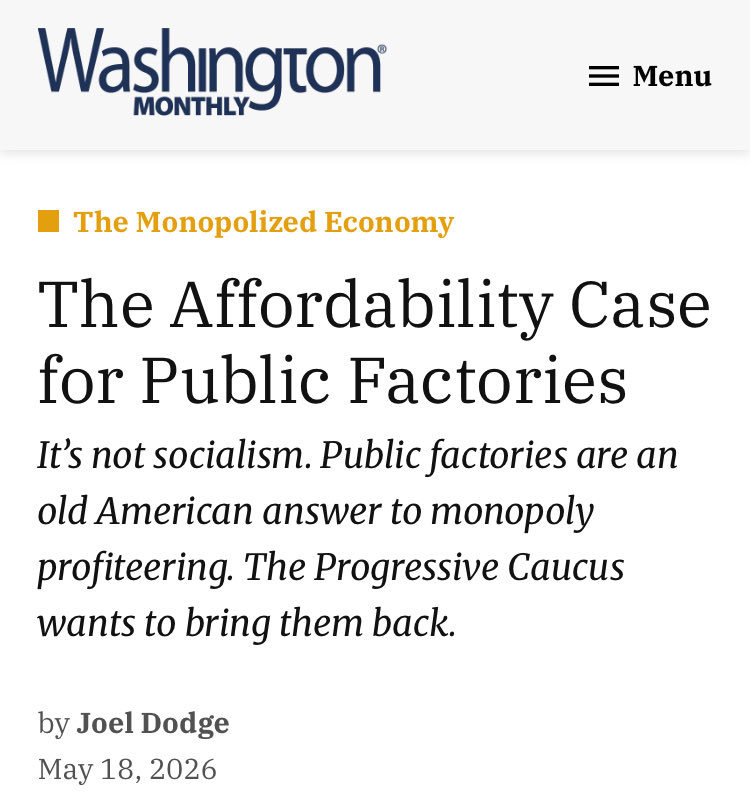
In a new piece for @monthly, I explain how this agenda plank from @RepCasar & @USProgressives revives a long American tradition of DIY progressivism that uses public factories to counter monopoly power in order to promote affordability:
@TedTatos@ProMarket_org@KateMConlow Must-read article, "Financial Conflicts of Interest and Academic Economists in Law and Policymaking," by @KateMConlow:
https://t.co/RCCGooDrbz
https://t.co/aDkQ8kgzf2
In a new @ProMarket_org piece, @KateMConlow argues this captures a systemic problem: academic economics is an ethics outlier.
Unlike doctors or lawyers, academic economists operate with shockingly slim disclosure rules.
According to Conlow, these hidden conflicts of interest shape our reality and harm consumers.
Ever wonder why your grocery bills stay high while economic experts claim corporate monopolies aren't to blame?
When the government recently investigated the "Big Four" meatpackers controlling 85% of U.S. beef, an official report produced by academic economists defended the status quo.
But there was a catch...the economists who wrote the report had ties to the very meatpackers they were evaluating.
@TedTatos@ProMarket_org@KateMConlow Absolutely. Almost all for sale for 50k to write a “helpful”memo for a client. A toy model and a small report together with a consultancy 100k+. Antitrust economics has been a lot about academics legitimizing consultants for cash. I know because I was hiring so many.
Excellent new piece on @ProMarket_org by @KateMConlow on the rampant conflicts of interests among academic economists. Would add that this issue isn't endemic to economics, it's multidisciplinary problem.
https://t.co/ujW8wHBxGm
Whether it's Uber paying for academic research to avoid labor regulations, or Wall Street influencing the policies that led to the 2008 crash, industry-funded data consistently favors the funder.
Conlow suggests a vital question for the future: as policymakers begin to tackle massive new frontiers like artificial intelligence. Can we trust the proposed regulatory frameworks if the advising economists rely on those same tech giants for funding and data?
In a new ProMarket piece, @KateMConlow argues this captures a massive, systemic problem: academic economics is an ethics outlier.
Unlike doctors or lawyers, academic economists operate with shockingly slim disclosure rules. According to Conlow, these hidden conflicts of interest shape our reality and harm consumers.
Ever wonder why your grocery bills stay high while economic experts claim corporate monopolies aren't to blame?
When the government recently investigated the "Big Four" meatpackers controlling 85% of U.S. beef, an official report produced by academic economists defended the status quo.
But there was a catch: the economists who wrote the report had ties to the very meatpackers they were evaluating.
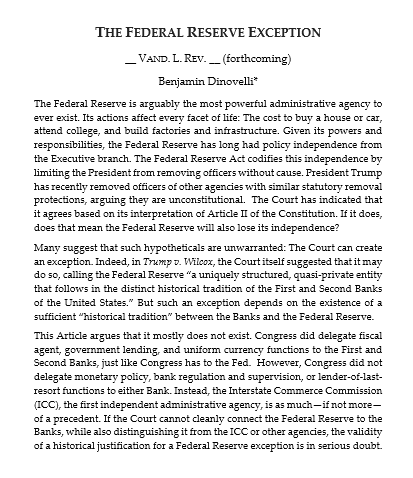
Happy to share that my paper, The Federal Reserve Exception, is forthcoming in @VandLRev!
I question the strength of the Supreme Court's analogy of the Federal Reserve to the First & Second Banks, especially when it is compared to the ICC and 20th century regulatory agencies.
Here in Iowa City we made buses fare free and it worked so well we voted to make the move permanent. The fear mongering on free public transit is woefully inaccurate. They make drivers safer, it’s cost effective, it reduces traffic, and clears the air.
https://t.co/HsydUA0gwj
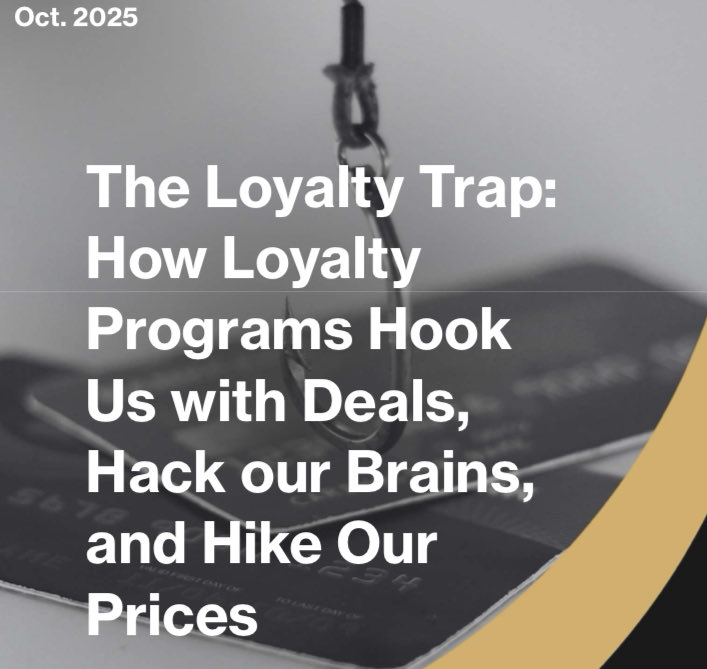
Loyalty programs that promise discounts can become engines of surveillance pricing.
Excellent new report by @saalevine and @stephtngu lays out how businesses can use discount programs to quietly hike prices and extract more from their customers.
“Are Starbucks’ most loyal customers … getting the fewest coupons? That’s certainly what this report suggests," says @saalevine.
A must-read report from Vanderbilt Policy Accelerator shows how companies are twisting loyalty programs into "engines for surveillance pricing."