I am excited to share our most recent manuscript entitled "Exploiting dysregulated iron homeostasis to eradicate persistent high-grade serous ovarian cancer" published in Cell Death Discovery. @cddpress@PeterMacCC
https://t.co/tZLj1hdVrg
A/Prof Shom Goel finds playing chess with his son, both calming and exciting. Like a master chess player, @ShomGoel—a cancer biologist & oncologist at the @PeterMacC—anticipates cancer’s next move, thinking many steps ahead to outmaneuver it.
Congrats to A/Prof @shomgoel, has today been awarded the Gottschalk Medal from @Science_Academy!
His research is reshaping how we treat and understand #breastcancer. A huge honour and well deserved. 👏
🔗 https://t.co/5lTSIjPyaI
Cartherics is excited to announce the publication of a paper in Molecular Therapy: Oncology, exploring innovative strategies to enhance CAR-T cell therapies for solid tumors like ovarian cancer. Read more: https://t.co/7QziJhRBZ9
#CancerResearch#Oncology
Delighted to share our research @Cancer_Cell@MSKCancerCenter ! We explore the mechanisms behind variable #BreastCancer responses to CDK4/6 inhibitors. TP53 mutation is linked to lack of long-term disease control.
https://t.co/VK4gRpkp70
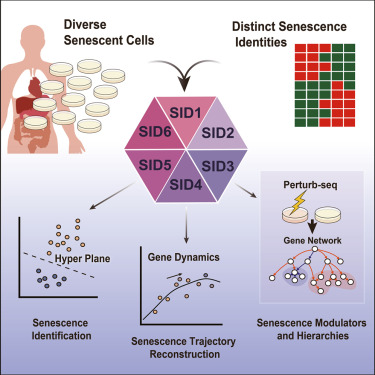
Happy to see our latest manuscript on the minimal set of markers to identify senescent cells in vivo out! Big effort with many excellent colleagues https://t.co/ziVyT3c9QO @Demarialab1@UMCG_ERIBA@researchumcg
We are deeply saddened by Leonard Hayflick’s passing. His revolutionary discoveries opened new scientific avenues, and his inspirational story will endure. We would like to share the seminar he gave us, detailing the journey behind his groundbreaking work.
https://t.co/CeHjQiAvvO
I am sad to hear of the passing of Leonard Hayflick, a giant in aging research. One of the most amazing exchanges I’ve ever witnessed at a conference was related to the Hayflick limit. It was one of my first conferences as a PhD student, in beautiful Vancouver, Canada.
Although it was a big gerontology conference, there were many parallel sessions, and I was in a not-very-popular session in a small room, with only a few people attending.
I was sitting in the front row. A Russian scientist was presenting a new theory of aging. Halfway through the talk - which apart one incident I barely remember - someone from the back asked a question. The presenter went on to explain in his Russian accent that his theory was based on the Hatflick limit and that, for reasons I don’t remember, it led to aging of tissues.
A couple of minutes later, the same American voice from behind me interjects again. A bit annoyed, the Russian scientist again brings up the Hayflick limit and repeats his arguments before continuing the talk.
A few minutes later and - you’ve guessed it - yet again the same person from the back interrupts and questions the presenter. You can see the frustration building up in the Russian scientist's face. He stares behind me and in a patronising voice asks: “Excuse me, sir, are you familiar with the Hayflick limit?”
And I just hear a voice from behind me go: “I am Leonard Hayflick!”
RIP Dr Hayflick
The value of ‘wasting time’ on deep thinking is often overlooked in a scientific ecosystem increasingly tainted by Wall Street’s productivity mindset.
https://t.co/hNTA74DNOr
I am co-editing the research topic "Deciphering the Mechanisms of Therapy-Induced Senescence and Escape in Cancer" with Tareq Saleh and Halina Waś for Frontiers in Cell and Developmental Biology. @FrontCellDevBio
Submissions are welcome!
https://t.co/4V3CLb0MBY
We are currently recruiting a senior postdoc to join our lab in Melbourne, Australia. Great projects and a bright and welcoming team - please consider applying (or contacting me directly) if you are interested. More here: https://t.co/v0KZLPG9bT
Our team is very grateful to @CDMRP for supporting our work on senescence in cancer. We are proud to receive this award and determined to use it wisely, bridging the gap between fundamental biology and development of new therapies. @PeterMacCC @UniMelbMDHS @SnowMedical
Peter Mac A/Prof @shomgoel has won a USD $3 million @USDoDGov grant for his research into developing the next revolution in #breastcancer treatment.
He's the first Australian to win the prestigious Era of Hope Scholar Award.
Read more👇 https://t.co/yDNQtdgaIx
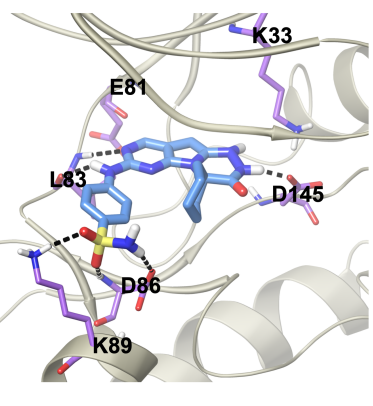
New research published in @CD_AACRo describes INX-315’s antitumor activity and ability to overcome drug resistance in #cancer. Learn more about our potent and selective #CDK2 inhibitor from our collaboration with @shomgoel and @PeterMacRes: https://t.co/GS0LMiSlw4
Research by @shomgoel and his lab, published in Cancer Discovery reports on a potent & selective CDK2 inhibitor developed by Incyclix Bio. The study shows that inhibiting CDK2 pharmacologically is a very promising strategy for 2 groups of high-risk cancers
https://t.co/qdwziHlxdN
#OnlineFirst: INX-315, a Selective #CDK2 Inhibitor, Induces Cell Cycle Arrest and Senescence in Solid Tumors, by Catherine Dietrich, Alec Trub, Patrick Roberts, @shomgoel et al.
https://t.co/DiGe77fPmN
@incyclixbio@PeterMacCC