🔴 @jillrussia is a Fellow at the Kennan Institute.
A longtime @CNN correspondent and former Moscow Bureau Chief, she has spent decades reporting on Russia, foreign affairs, and U.S. politics.
She is also the author of My Russia: What I Saw Inside the Kremlin.
#KennanInstitute #GlobalFellow #Russia
⚫ Did Western companies really leave Russia?
@kirlant argues that for many firms, a legal exit and an economic exit were two very different things.
As Russia adapted to sanctions, it built a system that generated revenue, gathered corporate intelligence, and helped keep foreign business tied to the Russian market.
Read:
https://t.co/eq4RTCKXwI
#RussiaFile #Russia #Sanctions #PoliticalEconomy
⚪ “Ukraine has always mattered to Russia, and this is not new with Putin.”
@DAlperovitch explains how centuries of invasions shaped Russian security thinking and why #Ukraine has long occupied a central place in #Russia’s strategic worldview.
Listen to the full episode now:
https://t.co/ORmMd1q5b5
🔴 Meet Elizabeth Culp, Associate Director of Programs at the Kennan Institute.
Elizabeth brings expertise in #Russia, #Ukraine, and the post-#Soviet states, with experience at the National Endowment for Democracy, the U.S. Department of State, and organizations across the region.
🔴 “At the beginning of the 1990s, bestseller lists were totally dominated by names we might recognize… Stephen King, Danielle Steele…”
So how did Russian authors reclaim the market by the end of the decade?
@bradleygorski explains a surprising chapter in post-Soviet publishing.
Watch now on YouTube:
https://t.co/By5KoMABjd
#TheLongView #RussianLiterature #PostSoviet #Russia
⚫ Dagestan is home to more than 30 ethnic groups and 14 mutually unintelligible languages.
How has Russia governed one of Europe’s most ethnically complex regions?
Evgeny Romanovskiy explores the paradox of stability without integration in Dagestan.
Read now:
https://t.co/VIgDuN9Ms0
#RussiaFile #Dagestan #Russia #NorthCaucasus
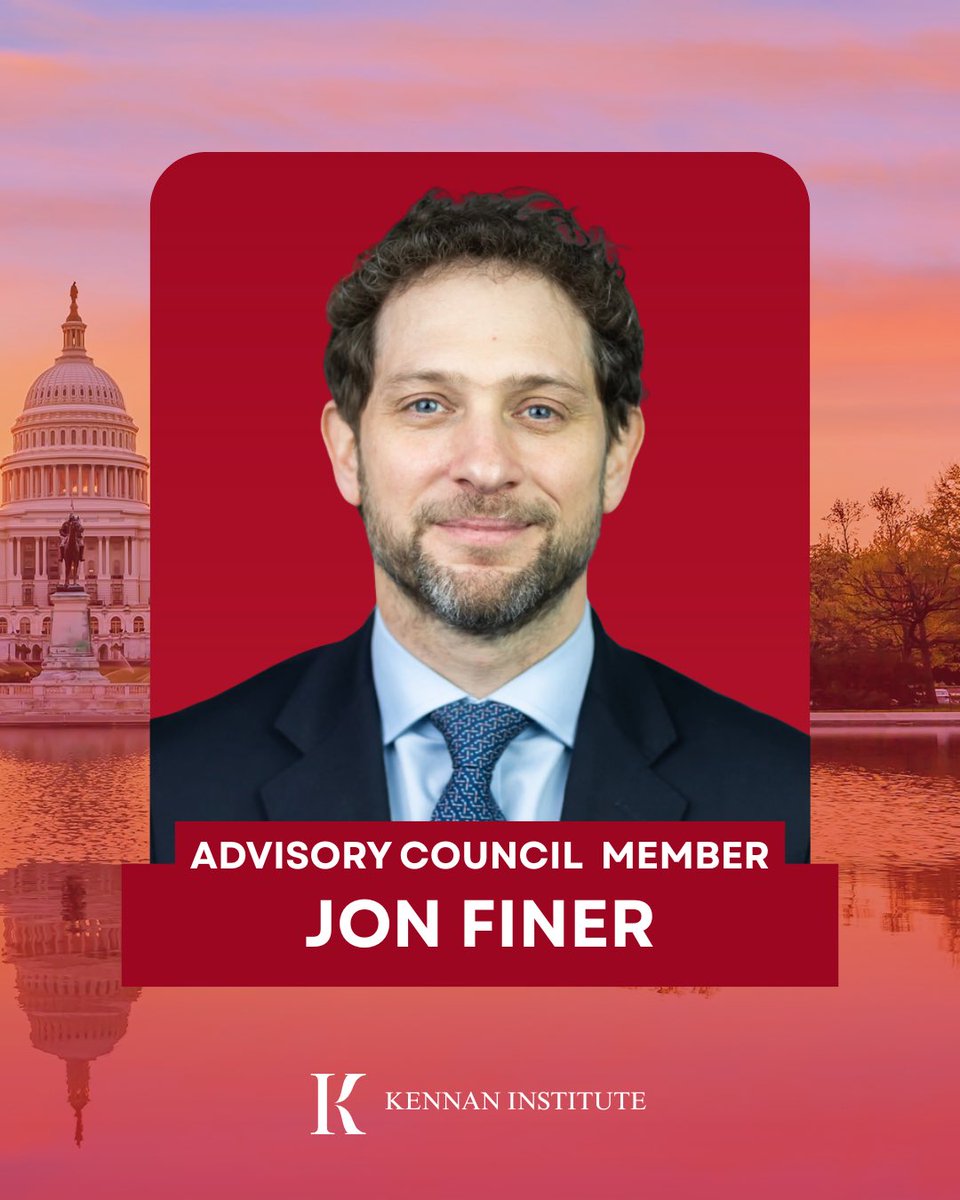
🔴 Jon Finer is a member of the Kennan Institute Advisory Council.
Finer served as Principal Deputy National Security Advisor from 2021 to 2025 and previously held senior positions at the U.S. Department of State.
Learn more about the leaders supporting the Institute’s mission at https://t.co/1iHkFCXNTF
⚫ Can the Kremlin afford to ban one of the platforms it relies on most?
Despite mounting pressure on #Telegram, Russian officials, soldiers, pro-war networks, and millions of users continue to depend on the app. In this article, @russiafiles examines the tensions between state control, security interests, and digital reality in today's Russia.
Read the article:
https://t.co/9ajDw8QNvS
🔴 New in @nytimes
Kennan Institute Director @mkimmage argues that Putin’s system may look stable, but the war in Ukraine has created a trap with no easy exit for Russia’s leadership.
Read Now:
https://t.co/Tn1dRpWBiJ
#Russia#Ukraine#Putin#MichaelKimmage
🔴 “For the first time, the war is really hitting home.”
@CatherineBelton discusses the growing impact of the conflict on everyday life inside #Russia
🎧 Listen now on Spotify
https://t.co/W4R0gF9TMb
🔴 Oksana Antonenko serves as a Global Fellow at the Kennan Institute.
An expert in geopolitical risk, European security, and Eurasian affairs, Antonenko has held senior roles at Control Risks, the European Bank for Reconstruction and Development, and the International Institute for Strategic Studies.
Her research focuses on Russia-NATO relations, arms control, and protracted conflicts across Eurasia.
#KennanInstitute #Russia #Eurasia #EuropeanSecurity #Geopolitics
⬤ What do jokes reveal about life under #authoritarianism?
Social anthropologist Alexandra Arkhipova examines how memes, reels, rumors, and satire have become “weapons of the weak” in contemporary #Russia.
Read more: https://t.co/92mzCi42wW
⚪ “On January 22, the British Foreign Office warned that Russia planned to invade Ukraine and install a puppet government.”
@shaunwalker7 reflects on the intelligence warnings before February 2022 and the skepticism surrounding claims that #Moscow believed it could rapidly reshape #Ukraine’s political leadership.
Watch now: https://t.co/hGKRCQpNxk
🎙️ Last week, the Kennan Institute welcomed @mashagessen for a timely conversation on writing, Russia, exile, identity, and political imagination.
Moderated by Maria Lipman and @mkimmage, the discussion explored the #immigrant experience, Russian #literature, #journalism under pressure, and the challenge of understanding #Russia in moments of upheaval.
Thank you to everyone who joined us for this special evening.
📸 Photography by our Creative Co-Director Jude Schroder
🔴 How do historians study the Soviet past when archives are incomplete?
@SusanGrunewald1 explains how GIS mapping, OCR digitization, and big data methods uncovered new insights into German POW camps in the USSR.
Read more ⬇️
https://t.co/BsphcXae9H
⚪ Origins of the War
History offers more than precedent, it broadens the range of strategic possibilities.
@Alexander_Bick on why historical thinking matters in policymaking.
Listen on Spotify ⬇️
https://t.co/CorCIvu1wG
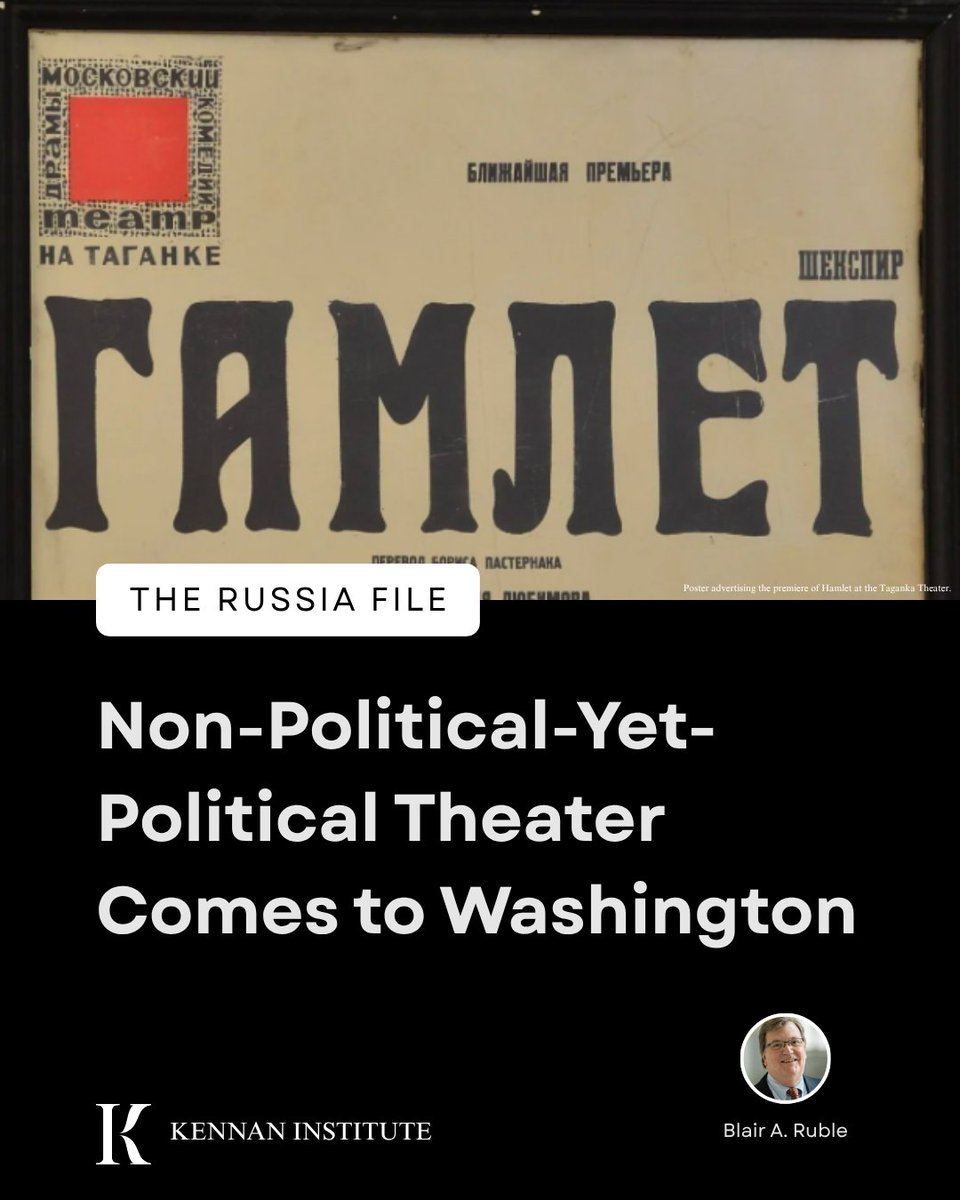
⚫ The Russia File
Blair Ruble explores how Washington’s current theater moment echoes the “non-political-yet-political” artistic resistance of the late Soviet era.
Read more ⬇️
https://t.co/Nzvd8yA2xF
⚪ Origins of the War
“There is something strikingly 19th century about Vladimir #Putin…”
@OAWestad on empire, power, and Putin’s worldview.
Watch ⬇️ 📺
https://t.co/3I66bLxWdf