ARA has patented an AI model that anticipates circulatory shock — a life-threatening ICU condition with 50–60% mortality — before it starts, per the company. Tested at Mayo Clinic's ICU, it's now in U.S. ICUs through a collaboration with Ambient Clinical Analytics.
Royal Berkshire NHS is the first UK hospital to use ARTHUR from @ROPCA3, a robot that pairs robotics with AI to image hand and wrist joints in rheumatoid arthritis — a move the trust says will speed up scans and ease pressure on radiology and MRI.
Universal Brain's FDA-cleared dry-EEG cap is now in clinical use: Acacia Clinics deployed the UB ERP System to measure brain function objectively in psychiatric care — a three-month pilot alongside TMS and esketamine for treatment-resistant depression.
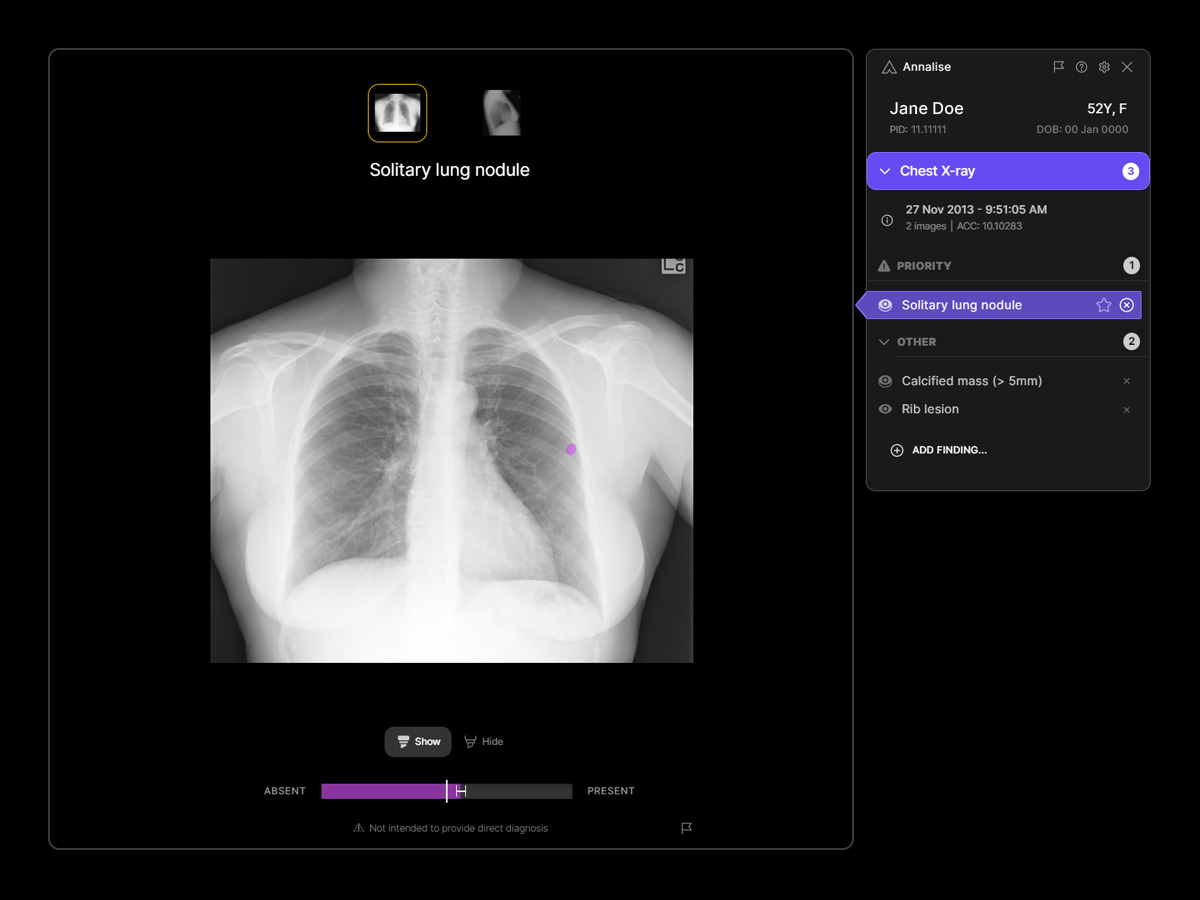
Royal Surrey NHS says a woman went from a GP visit for a persistent cough to a lung cancer diagnosis in 48 hours after https://t.co/3g3HoypD6M flagged her chest X-ray — caught at Stage 1. The AI now prioritizes urgent chest X-rays across five NHS trusts. @annalise_ai
Artisight's All-In-One device — NVIDIA-powered edge AI for ambient documentation, virtual nursing and patient monitoring in hospital rooms and ORs — made TIME's Best Inventions of 2026. According to the company, users report fewer adverse events and shorter lengths of stay.
Implicity won FDA clearance for its next-gen ILR ECG analyzer — a cloud-based AI layer working across Abbott, Biotronik, Boston Scientific and Medtronic monitors that cuts false-positive alerts by up to 76%, according to Medical Product Outsourcing. @ImplicityHealth
Masimo won FDA 510(k) clearance for AFib detection on its Radius VSM wearable, part of its smartSET platform — the company says its PPG-based algorithm flagged rhythms suggestive of AFib with 97% sensitivity and 100% specificity in validation testing. @Masimo
@AmerMedicalAssn released a governance framework for agentic AI in clinical care, per the AMA. AI performing clinical functions must be evidence-backed and high-performing; its four questions cover what an agent may do and who is accountable.
Nearly 1M US physicians, PAs and NPs asked OpenEvidence's AI clinical questions over 2.5 years: 51.9% on treatment and management, 13.9% on diagnosis, often outside their specialty, per a Harvard Medical School/Brigham study published in JAMA. @OpenEvidence
ModMed launched ModMed AI Analytics, letting specialty practices query their data in natural language instead of building dashboards, per the company. The AI chat answers questions with text and charts; anomaly detection flags off-trend KPIs. @modmed
Sequel's twiist insulin delivery system just got FDA clearance for adults with insulin-treated type 2 diabetes, per the company. In the 307-patient pivotal trial, time in glucose range rose from 57% to 73% — 3.8 extra hours a day — with no severe hypoglycemia.
10-20% of cancer molecular tests fail because the tissue sample lacks enough tumor, per Aignostics — so it launched HETA Clinical, AI that scans pathology slides to check slide quality, flag tumors, count mitoses, and confirm enough tumor before testing. @aignostics
FDA cleared @ThinkSono Guidance — the first AI-powered ultrasound guidance software for suspected DVT. It guides non-ultrasound-trained clinicians through a bedside scan in real time, reviewed remotely by a specialist. 92.9% sensitivity across 1,691 patients, per the company.