BREAKING: Apple TV has signed a 5-year deal with Formula 1 for its exclusive media rights in the US.
Here's what you need to know 👇
1. Apple TV is replacing ESPN as F1's exclusive broadcast partner in the United States. ESPN was most recently paying $90 million annually, with reports indicating that Apple TV will now pay $140 million per year (+55%).
2. Formula 1's US rights have skyrocketed over the last 7 years. F1 initially let ESPN broadcast its races for free in 2018. That then turned into a $5 million deal, then $75 million to $90 million, and now $140 million annually.
3. F1 TV will continue in the US. You will need an Apple TV account to access F1 TV, but if you already subscribe to both services, you will actually save money (because your Apple TV subscription will now work for both).
4. Apple TV will have broadcast all sessions — practice, qualifying, sprint races, etc. — every grand prix weekend.
5. Apple is still determining who will be on the broadcast and production team.
6. The production on Apple TV should be extremely high-quality, as Apple doesn't typically compress its video as much as others (and is usually willing to try new things, like unique camera angles, etc.).
7. All F1 content on Apple TV will be available in both English and Spanish, taking advantage of the ~42 million people who speak Spanish in the US.
8. Formula 1 is hoping that Apple's large customer base in the United States will offset the audience loss that traditionally comes with switching from cable to streaming (i.e., a paywall).
Similar to the company's partnership with MLS, Apple will send push notifications to iPhone users, integrate F1 content into its news app, create custom playlists in Apple Music, and allow users to follow each race live via a dedicated widget on the iPhone home screen.
9. Apple's Eddy Cue says that the success of the new F1 movie (with Brad Pitt) created a strong relationship with the sports leadership team, ultimately helping get the deal done.
The F1 movie was an Apple Original film and has surpassed $628 million at the global box office, making it the highest-grossing sports movie ever.
10. Apple will put some of the races in front of its paywall, allowing users to watch certain F1 content inside the Apple TV app without a subscription.
Ultimately, this deal makes a lot more sense for Apple TV than it would have for ESPN. The inability to sell commercials during races limited how much higher ESPN could have gone with its rights fee, but that problem goes away on a streaming service like Apple TV.
Apple also gets to follow its thesis of owning an entire league end-to-end, similar to its deal with MLS. If someone in the US wants to watch F1, every event will be available in one place, rather than having to switch between multiple cable channels and streaming services.
And while the $140 million price tag might seem high, it's important to remember that some brands pay $100 million per year just to sponsor individual Formula 1 teams.
Apple TV will make some of the money back by adding new subscribers and reducing churn through a more diversified offering. But F1's premium audience is the perfect marketing platform for Apple, and there are also a ton of other benefits when it comes to hospitality, etc.
P.S. If you enjoyed this recap, join 135,000 others who read my 3x weekly newsletter breaking down the business and money behind sports: https://t.co/lvfWKfa7Dk
I stole this idea and now use it with every single employee.
It’s the best illustration I’ve seen of teaching someone to be high agency.
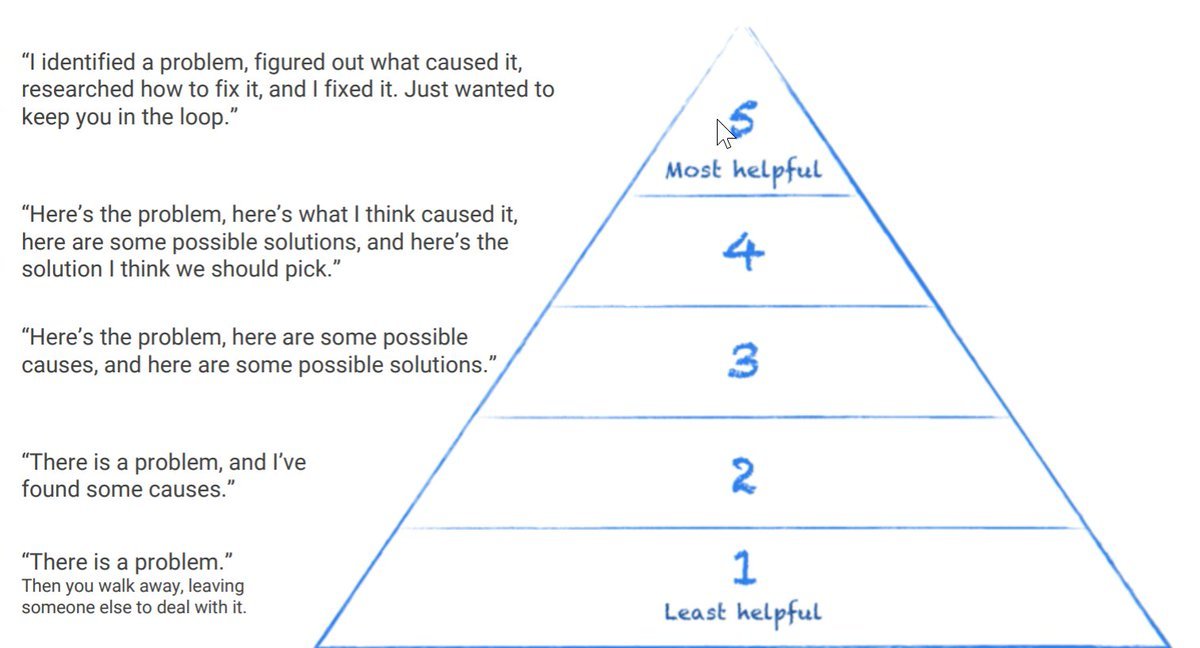
It says there are 5 levels of work:
Level 1: “There is a problem.”
Level 2: “There is a problem, and I’ve found some causes.”
Level 3: “Here’s the problem, here are some possible causes, and here are some possible solutions.”
Level 4: “Here’s the problem, here’s what I think caused it, here are some possible solutions, and here’s the one I think we should pick.”
Level 5: “I identified a problem, figured out what caused it, researched how to fix it, and I fixed it. Just wanted to keep you in the loop.”
Using this framework, here’s what I say to every new employee…
You will live at Level 4 from Day 1 and as we build trust you will rise to Level 5.
Being high agency doesn’t just mean tackling problems in this way. It means your entire way of working should be oriented to being a Level 4+ employee.
Plz feel free to steal it as well.
And ty @stephsmithio for the framework!
Holy sh*t… nobody’s talking about JSON prompting
but it’s the cheat code to unlock God-tier outputs from GPT-4, Claude, and Gemini.
Here’s how it works (with copy-paste templates): 👇
This is literally my new workflow now:
Real-time research/search → Grok 4
Planning & Reasoning → Grok 4 Heavy
Coding → Claude 4 Sonnet w/ Claude Code
Write Test Cases → Gemini 2.5 Pro
Run Test Cases → Codex
Debug → o3
Bookmark this.
Charlie Munger:
“The secret to life is easy because it's so simple:
You don’t have a lot of envy or resentment. You don’t overspend your income. You stay cheerful in spite of your troubles. You deal with reliable people and you do what you’re supposed to do.”
🚨 BREAKING: Microsoft just launched “Computer Use” for Copilot Studio.
Now agents can interact with any app like a human would.
No dev work. No API dependency.
Here’s everything you need to know:
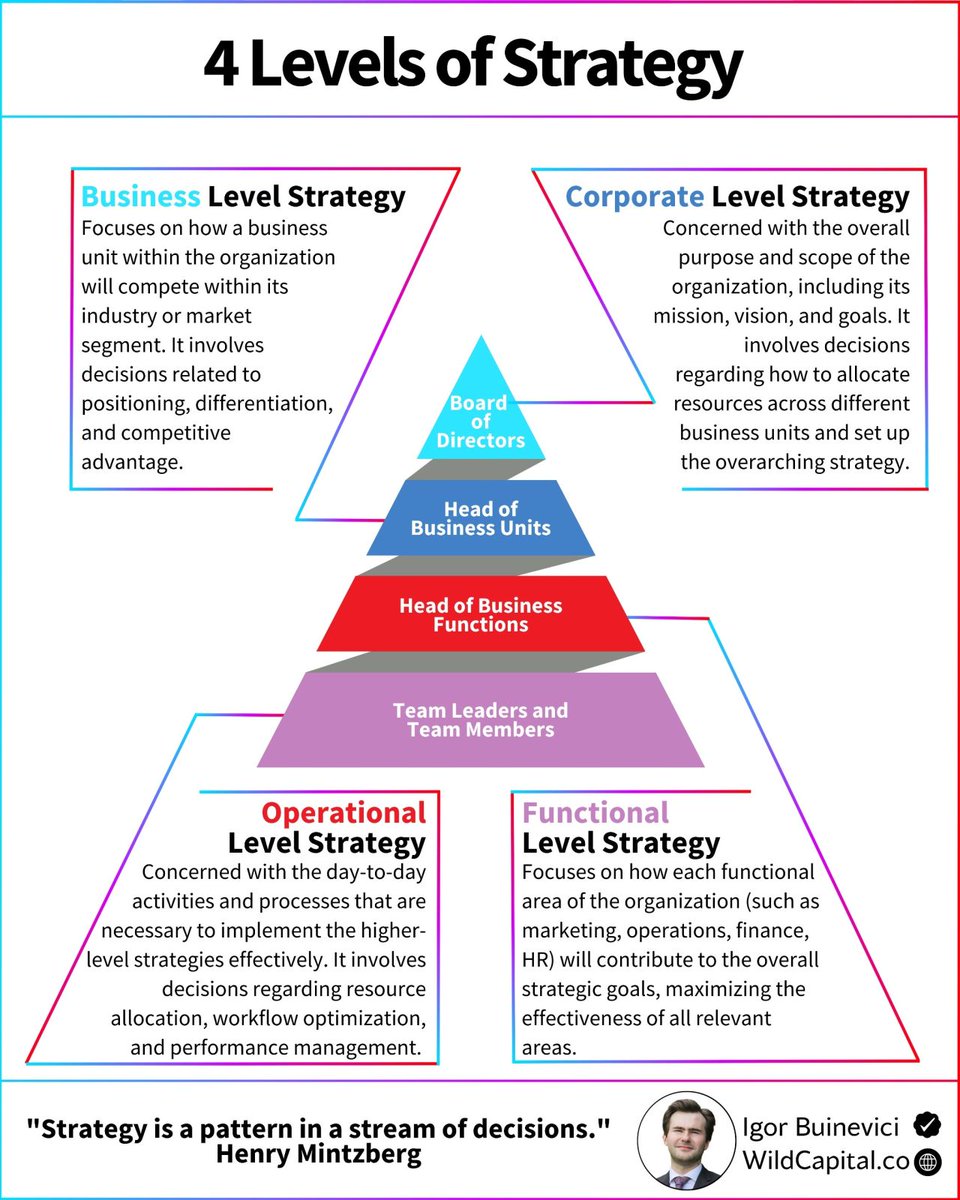
Have you heard about the 4 levels of strategy?
Corporate, Business, Functional, and Operational.
Every leader should understand these for business success.
The complexity of strategy can vary based on the business, but core principles apply universally:
Whether you're leading a global corporation or a startup.
Here’s a quick breakdown:
Corporate-Level Strategy:
➟ Crafted by top executives to guide the organization.
➟ Sets the long-term vision (3-5 years) for the business.
➟ Defines the company’s overall direction and business scope.
Business-Level Strategy:
➟ Focuses on the goals of individual business units.
➟ Involves decisions like differentiation or cost leadership.
➟ Aims to create a competitive advantage in specific markets.
Functional-Level Strategy:
➟ Aligns with broader business objectives.
➟ Focuses on specific departments like marketing or HR.
➟ Addresses departmental challenges and identifies opportunities.
Operational-Level Strategy:
➟ Converts plans into actionable results.
➟ Ensures smooth, efficient daily operations.
➟ Manages short-term goals and resource allocation.
A strategy alone won’t guarantee success:
But it is the foundation for achieving it.
To succeed, you must understand and prioritize each of these levels.
P.S. Are you giving enough attention to each level of strategy?
♻ Share with others to ensure their strategic success!
----
📌 Wild Capital Academy is LIVE!
The top community-powered business scaling program,
I will cover strategy, finance, marketing, leadership etc.
(sharing my experience from helping 250+ companies).
Founder Member rate is almost sold out.
Secure the spot at the best rate ever:
(only until 9PM CET today)
https://t.co/LQL7DG3yyy
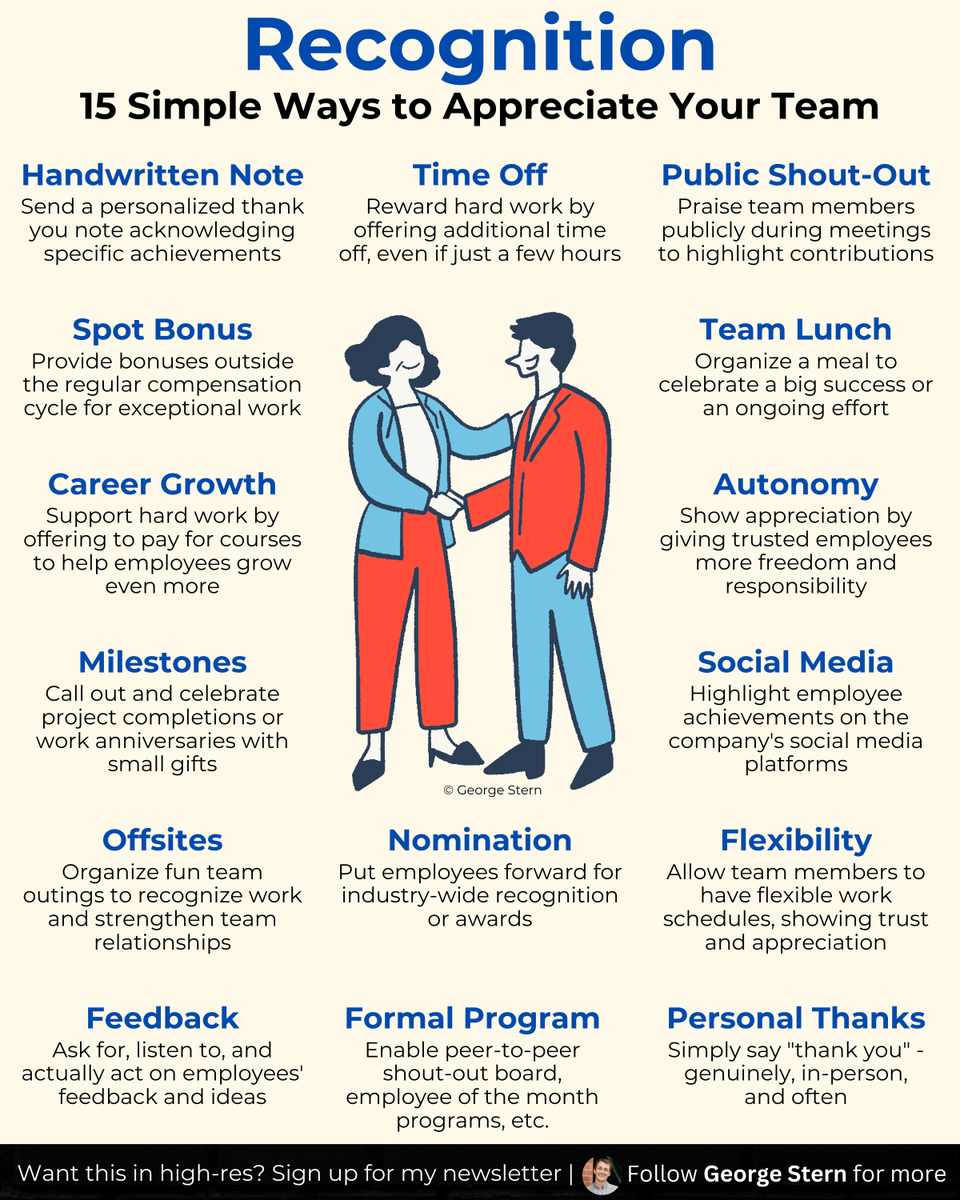
"A person who feels appreciated will always do more than what's expected."
Recognition is a massively underrated leadership skill.
Here are 15 ways leaders can better recognize their team members:
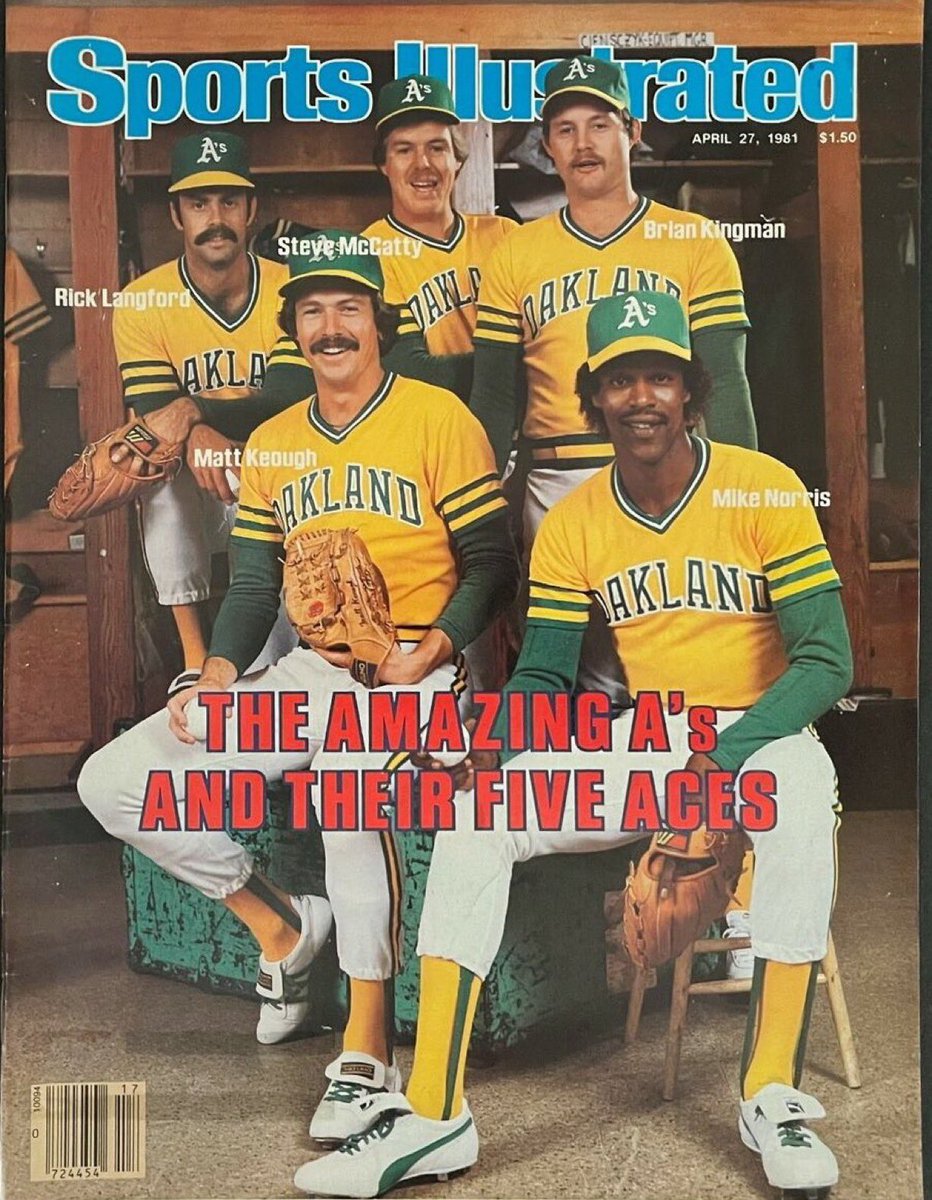
John Tudor had twice as many shutouts in 1985 as Max Scherzer has in his entire fucking career. He didn’t even win the Cy Young Award. Starting pitching is a lost goddamn art, my friends.
Embarrassing to admit but had no idea how big of a deal ASML is until recently. Changing this now, starting with this book.
ASML one of the most important companies almost no one outside of hardware is aware of.
Founded and HQ’d in the Netherlands.
"In the midst of winter, I found there was, within me, an invincible summer.
No matter how hard the world pushes against me, within me, there's something stronger – something better, pushing right back."
- Albert Camus
I return to this quote often, and a lot recently, going through some rough challenges.
I love you all ❤️
I thought I was rational.
Then I read Daniel Kahneman's Nobel Prize-winning work on human decision-making.
He routinely asks 8 questions to expose cognitive traps you fall into daily.
Test yourself with these questions (it's the ultimate BS detector for your brain):
If
by Rudyard Kipling
If you can keep your head when all about you
Are losing theirs and blaming it on you,
If you can trust yourself when all men doubt you,
But make allowance for their doubting too;
If you can wait and not be tired by waiting,
Or being lied about, don’t deal in lies,
Or being hated, don’t give way to hating,
And yet don’t look too good, nor talk too wise:
If you can dream—and not make dreams your master;
If you can think—and not make thoughts your aim;
If you can meet with Triumph and Disaster
And treat those two impostors just the same;
If you can bear to hear the truth you’ve spoken
Twisted by knaves to make a trap for fools,
Or watch the things you gave your life to, broken,
And stoop and build ’em up with worn-out tools:
If you can make one heap of all your winnings
And risk it on one turn of pitch-and-toss,
And lose, and start again at your beginnings
And never breathe a word about your loss;
If you can force your heart and nerve and sinew
To serve your turn long after they are gone,
And so hold on when there is nothing in you
Except the Will which says to them: ‘Hold on!’
If you can talk with crowds and keep your virtue,
Or walk with Kings—nor lose the common touch,
If neither foes nor loving friends can hurt you,
If all men count with you, but none too much;
If you can fill the unforgiving minute
With sixty seconds’ worth of distance run,
Yours is the Earth and everything that’s in it,
And—which is more—you’ll be a Man, my son.