Kids will teach you that:
- you were wasting way too much time on things that never mattered
- you actually always find the energy to do what needs to be done when someone you love relies on you
- a lot of your anxiety and search for purpose actually came from having too much free time
- the most important traits in a spouse are actually joie de vivre, kindness, and composure
- your brain can actually change overnight, especially when it comes to the kind of person you thought you were
Across the traditions of alchemy, mysticism, and sacred myth, the most guarded treasures all point toward the same realization.
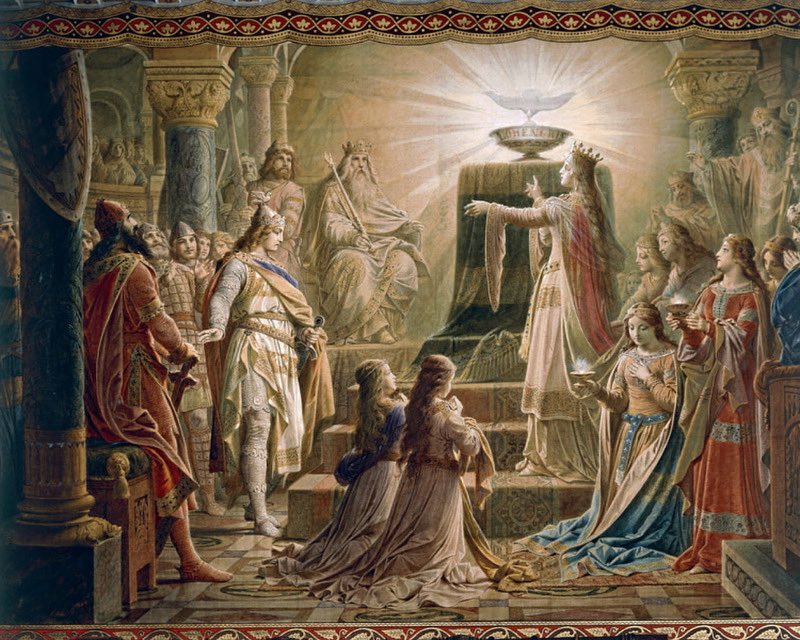
The union of opposites, the Arcanum Arcanorum, the Holy Grail, and the Philosopher’s Stone are not different secrets, they are different languages describing the same event within human consciousness. They are symbols for the moment when awareness fully inhabits the body. Divinity is not somewhere beyond the world waiting to be reached; it is consciousness itself. And the body is the Earth in which that divinity takes root. When awareness descends fully into embodiment, heaven and earth meet. Spirit and matter stop opposing one another and become a singularity.
This is the true marriage the alchemists talk about. Not the escape from the world, but the complete arrival within it. The Grail is the body when it is filled with living awareness. The Philosopher’s Stone is consciousness stabilized in the present moment. The union of opposites occurs when the mind is no longer lost in memory or projection, but rests completely inside the flesh. In that moment, the ancient riddle resolves itself: the divine and the human were never separate. Presence is the secret hidden behind every symbol. It is the treasure every tradition was pointing toward all along.
A doubter usually assumes these symbols must refer to some hidden substance, or a supernatural event. But if you look closely at the traditions that produced them, the patterns become obvious. Every authentic path…Zen, Christian mysticism, Sufism, Taoism, alchemy…ultimately arrives at the same instruction: become present. The alchemists described the Philosopher’s Stone as something that costs nothing, is found everywhere, and yet remains unseen by most people. That description makes no sense if the Stone were a physical object - but it perfectly describes awareness. Likewise, the Holy Grail was said to be hidden in plain sight, carried by those who could recognize it. Zen masters point directly to the same thing when they say enlightenment is nothing more than seeing your own nature. When separate traditions, separated by centuries and cultures, all converge on the same realization - that liberation occurs when consciousness becomes fully aware of itself in the present moment - it stops looking like poetry and starts looking like a consistent description of human experience.
The symbolism itself also gives the game away. Alchemy speaks of the marriage of heaven and earth, spirit and matter, sun and moon. If spirit is consciousness and matter is the body, then their union can only occur in one place: in lived awareness, when consciousness is no longer drifting through thought but is fully rooted in the body. That is embodied presence. In that state, the opposites the mind normally experiences as separate collapse into a single event: awareness breathing through flesh, eternity expressed through a single moment. This is why the Stone is said to grant immortality - because the body lives forever, but because the practitioner discovers the dimension of consciousness that is not bound to time. The proof is not theoretical or philosophical. Anyone can test it by entering the present moment deeply enough. When they do, they discover that the ancient symbols were not pointing to something mystical and distant. They were pointing to the most immediate fact of existence: awareness, here, now, fully alive inside the body.
You’re bored because you have no side quests.
Life isn’t just work and lying in bed.
Here are 50 side quests to unlock:
1.Spend 24 hours without social media 📵 2.Learn to cook one perfect sauce 3.Wake up before sunrise and walk without headphones 🌅 4.Write down random phrases you overhear in public 5.Explore a new neighborhood in your city 6.Sit in silence for 10 minutes 7.Start a small herb garden 🌿 8.Fix one thing in your home 🔧 9.Memorize a short poem 10.Have dinner by candlelight 🕯
11.Try a new activity (boxing, pottery, dance) 12.Design an alternative 5-year life plan 13.Go for coffee alone without your phone ☕ 14.Read a physical book outside 📖 15.Give a sincere compliment to a stranger
16.Delete 10 apps you don’t need 17.Take a different route home on purpose 18.Learn how to make proper coffee (no capsules) 19.Start a “no snooze” week 20.Watch the sunset without taking a photo
21.Make bread or pasta by hand 22.Volunteer once — and don’t post about it 🤝 23.Re-read your old journal entries 24.Ask your parents about their youth 25.Declutter and throw away 50 unnecessary items
26.Learn 10 constellations and find them in the sky ✨ 27.Spend a full day without spending money 28.Start a small creative project 🎨 29.Do something socially awkward on purpose 30.Move your body before touching your phone
31.Attend a public lecture 32.Create a playlist for this season of your life 🎧 33.Write a letter you’ll never send 34.Photograph interesting textures around you 📷 35.Learn the basics of first aid
36.Wake up and make your bed perfectly for 7 days straight 37.Cook a dish from a country you’ve never visited 🍝 38.Go to a museum alone 🏛 39.Instead of small talk, ask one real question 40.Learn one self-defense move
41.Stretch your body in a new way 42.Read one book from a genre you usually avoid 43.Spend one evening with no artificial light 44.Start composting ♻️ 45.Draw ordinary objects for 20 minutes a day ✏️
46.Reach out to someone you haven’t spoken to in 2 years 47.Memorize your favorite speech 48.Press and dry leaves or flowers 🍂 49.Plan a small weekend adventure 50.Learn 5 practical skills
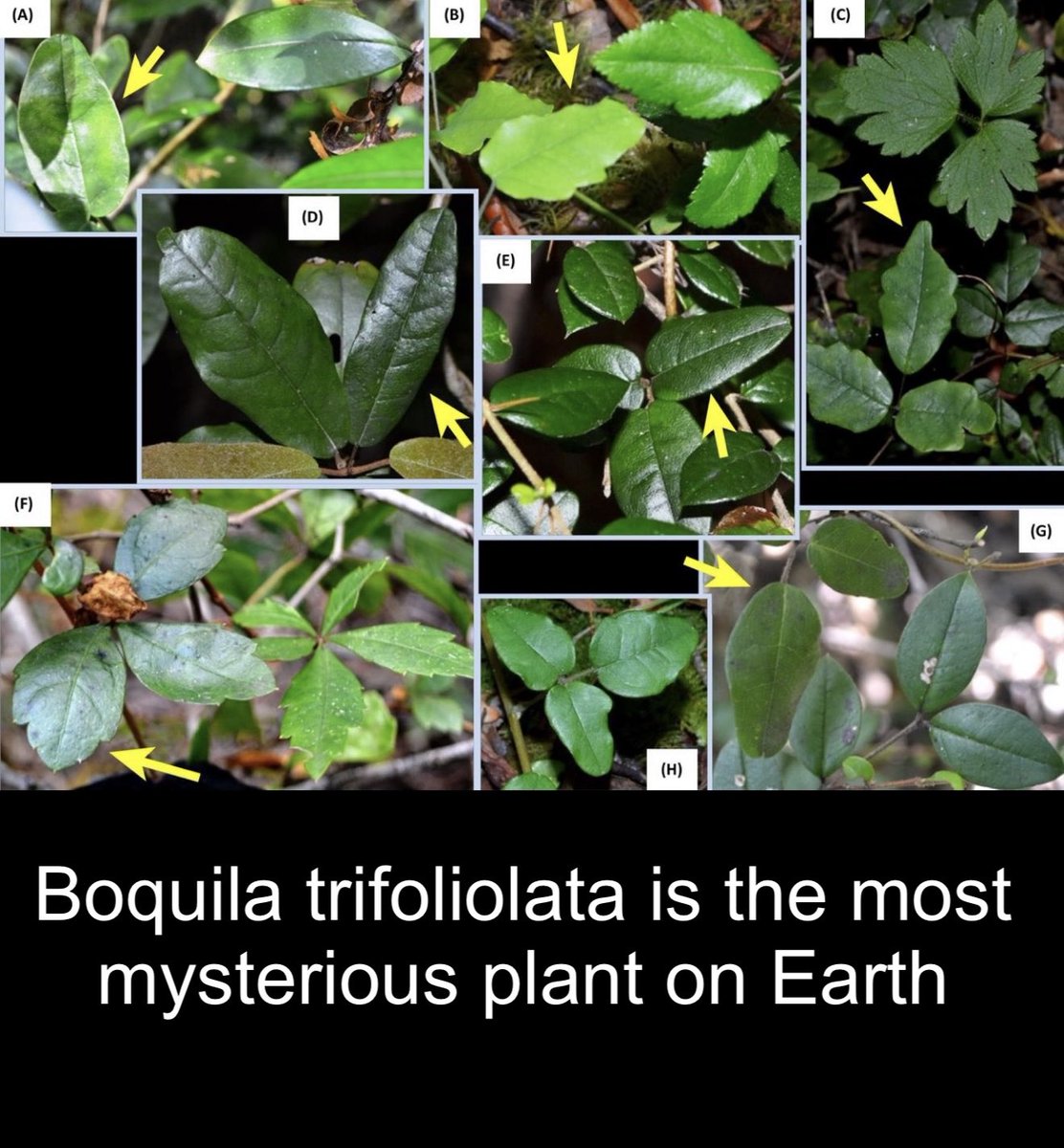
Boquila trifoliolata is one of the most mysterious plants on Earth.
This Chilean climbing vine can mimic the leaves of nearby plants, changing its shape, size, colour, orientation, vein pattern, and even spines to match, without touching the plant and with an air gap between them
It doesn’t just copy one species. A single vine can produce different leaf forms simultaneously, depending on which plant it’s climbing. A single Boquila vine climbing through multiple host species at once
Produced different leaf morphologies on different sections of the same vine
Matching the specific host it was in contact with (or growing among)
Even more intriguing: it can mimic without direct contact.
Scientists first proposed that it may detect volatile organic compounds (VOCs) released by neighbouring plants, triggering changes in gene expression, a form of extreme phenotypic plasticity. Others suggested the possibility of horizontal gene transfer, although evidence for that remains weak.
Then came the controversial claim that it mimicked a plastic plant.
That led to speculation that the vine might respond to light patterns or reflected wavelengths, or even possess primitive light-sensitive structures sometimes compared (loosely) to ocelli. However, this idea remains highly debated, and no confirmed “plant vision” mechanism has been demonstrated.
Why evolve this ability
Boquila is a twining vine in the temperate rainforests of Chile and Argentina. By blending into its host, it likely reduces herbivory. Studies have shown that mimicking leaves suffer significantly less damage from plant-eating insects than non-mimicking ones.
It’s camouflage, but botanical.
A plant that doesn’t just climb its host…
It becomes it.
Nature still has secrets we don’t fully understand.
psychology solved the ai memory problem decades ago. we just haven't been reading the right papers.
your identity isn't something you have. it's something you construct. constantly. from autobiographical memory, emotional experience, and narrative coherence.
Martin Conway's Self-Memory System (2000, 2005) showed that memories aren't stored like video recordings.
they're reconstructed every time you access them, assembled from fragments across different neural systems. and the relationship is bidirectional: your memories constrain who you can plausibly be, but your current self-concept also reshapes how you remember. memory is continuously edited to align with your current goals and self-images. this isn't a bug. it's the architecture.
not all memories contribute equally. Rathbone et al. (2008) showed autobiographical memories cluster disproportionately around ages 10-30, the "reminiscence bump," because that's when your core self-images form.
you don't remember your life randomly. you remember the transitions. the moments you became someone new. Madan (2024) takes it further: combined with Episodic Future Thinking, this means identity isn't just backward-looking. it's predictive. you use who you were to project who you might become. memory doesn't just record the past. it generates the future self.
if memory constructs identity, destroying memory should destroy identity. it does. Clive Wearing, a British musicologist who suffered brain damage in 1985, lost the ability to form new memories. his memory resets every 30 seconds. he writes in his diary: "Now I am truly awake for the first time." crosses it out. writes it again minutes later.
but two things survived: his ability to play piano (procedural memory, stored in cerebellum, not the damaged hippocampus) and his emotional bond with his wife. every time she enters the room, he greets her with overwhelming joy. as if reunited after years. every single time. episodic memory is fragile and localized.
emotional memory is distributed widely and survives damage that obliterates everything else.
Antonio Damasio's Somatic Marker Hypothesis destroyed the Western tradition of separating reason from emotion.
emotions aren't obstacles to rational decisions. they're prerequisites.
when you face a decision, your brain reactivates physiological states from past outcomes of similar decisions. gut reactions. subtle shifts in heart rate. these "somatic markers" bias cognition before conscious deliberation begins.
the Iowa Gambling Task proved it: normal participants develop a "hunch" about dangerous card decks 10-15 trials before conscious awareness catches up. their skin conductance spikes before reaching for a bad deck. the body knows before the mind knows. patients with ventromedial prefrontal cortex damage understand the math perfectly when told. but keep choosing the bad decks anyway. their somatic markers are gone. without the emotional signal, raw reasoning isn't enough.
Overskeid (2020) argues Damasio undersold his own theory: emotions may be the substrate upon which all voluntary action is built.
put the threads together. Conway: memory is organized around self-relevant goals. Damasio: emotion makes memories actionable. Rathbone: memories cluster around identity transitions. Bruner: narrative is the glue.
identity = memories organized by emotional significance, structured around self-images, continuously reconstructed to maintain narrative coherence. now look at ai agent memory and tell me what's missing.
current architectures all fail for the same reason: they treat memory as storage, not identity construction. vector databases (RAG) are flat embedding space with no hierarchy, no emotional weighting, no goal-filtering. past 10k documents, semantic search becomes a coin flip. conversation summaries compress your autobiography into a one-paragraph bio. key-value stores reduce identity to a lookup table. episodic buffers give you a 30-second memory span, which as the Wearing case shows, is enough to operate moment-to-moment but not enough to construct identity.
five principles from psychology that ai memory lacks.
first, hierarchical temporal organization (Conway): human memory narrows by life period, then event type, then specific details. ai memory is flat, every fragment at the same level, brute-force search across everything. fix: interaction epochs, recurring themes, specific exchanges, retrieval descends the hierarchy.
second, goal-relevant filtering (Conway's "working self"): your brain retrieves memories relevant to current goals, not whatever's closest in embedding space. fix: a dynamic representation of current goals and task context that gates retrieval.
third, emotional weighting (Damasio): emotionally significant experiences encode deeper and retrieve faster. ai agents store frustrated conversations with the same weight as routine queries. fix: sentiment-scored metadata on memory nodes that biases future behavior.
fourth, narrative coherence (Bruner): humans organize memories into a story maintaining consistent self across time. ai agents have zero narrative, each interaction exists independently. fix: a narrative layer synthesizing memories into a relational story that influences responses.
fifth, co-emergent self-model (Klein & Nichols): human identity and memory bootstrap each other through a feedback loop. ai agents have no self-model that evolves. fix: not just "what I know about this user" but "who I am in this relationship."
the fundamental problem isn't technical. it's conceptual. we've been modeling agent memory on databases. store, retrieve, done. but human memory is an identity construction system. it builds who you are, weights what matters, forgets what doesn't serve the current self, rewrites the narrative to maintain coherence. the paradigm shift: stop building agent memory as a retrieval system. start building it as an identity system.
every component has engineering analogs that already exist.
hierarchical memory = graph databases with temporal clustering.
emotional weighting = sentiment-scored metadata.
goal-relevant filtering = attention mechanisms conditioned on task state.
narrative coherence = periodic summarization with consistency constraints.
self-model bootstrapping = meta-learning loops on interaction history.
the pieces are there. what's missing is the conceptual framework to assemble them. psychology provides that framework.
the path forward isn't better embeddings or bigger context windows. it's looking inward. Conway showed memory is organized by the self, for the self. Damasio showed emotion is the guidance system. Rathbone showed memories cluster around identity transitions. Bruner showed narrative holds it together.
Klein and Nichols showed self and memory bootstrap each other into existence. if we're serious about building agents with functional memory, we should stop reading database architecture papers and start reading psychology journals.
THE SILENCE OF THE MASTERS
Did you know the ancient masters refused to teach directly—not out of secrecy, but out of precision?
In the Hermetic tradition attributed to Hermes Trismegistus, truth was never something to be transferred from one mind to another. It was something to be ignited. The masters understood a law that still governs consciousness today: truth cannot be spoken without being diminished. The moment the formless is forced into words, it becomes a shadow of itself.
This is why the ancient teachings came wrapped in symbols, paradoxes, myths, and deliberate obscurity. Not to confuse—but to disrupt. Confusion was not a flaw in the method; it was the method. It fractured the grip of linear intellect and compelled the seeker to look inward, where true knowing resides.
A symbol does not explain—it provokes.
A paradox does not answer—it awakens.
The mind collects facts. The soul undergoes realization.
Every riddle, every silence, every seemingly contradictory statement was a mirror. The master was not delivering information; he was reflecting the state of the disciple’s own consciousness back to them. What you understood was never what the master said—it was what you were ready to perceive.
This is why Hermetic wisdom cannot be reduced to doctrine, even in texts like The Kybalion. Doctrine is static. Awakening is alive. When truth is handed down fully formed, it is borrowed and fragile. When it is wrestled from within, it becomes permanent.
The ancient masters didn’t give answers.
They transmuted perception.
And this is the quiet challenge Hermetics still places before us today:
Stop seeking explanations.
Start cultivating awareness.
Because truth revealed externally fades.
Truth discovered inwardly endures.
~ James William Kaler
✨🙌🏾💫
Fewer than 100 people worldwide are known to have this extraordinary condition.
A rare instance of hyperthymesia—also called highly superior autobiographical memory (HSAM)—offers a striking glimpse into how the human brain can construct a vivid, structured, and navigable mental landscape of a lifetime's experiences.
Picture entering a mental "white room" where every personal moment is meticulously archived: memories filed in binders by theme, chronology, and emotional tone, or visualized as photographs and text messages on shelves. For a 17-year-old French high-school student referred to as TL, this is her everyday experience—not a metaphor, but a controlled cognitive reality.
TL, one of the fewer than 100 documented cases of hyperthymesia, can voluntarily "re-experience" past events with full sensory detail, often from multiple perspectives, and even choose to compartmentalize difficult memories (such as sealing painful ones away in a mental chest) while shifting focus to calmer "rooms" to regulate emotions like anger.
What sets TL apart is her ability to also "pre-experience" future scenarios with comparable vividness and emotional richness—a capacity known as episodic future thinking. This allows her to mentally simulate upcoming personal events as if they are already unfolding.
Researchers describe her memory system as a sophisticated, self-organized architecture that she accesses at will, providing exceptional voluntary control over autobiographical recall—unlike many others with hyperthymesia who find their memories intrusive or overwhelming.
By studying TL's unique case, scientists gain valuable insight into the neural mechanisms of mental time travel: the ability to flexibly revisit the past and project into the future. This reveals memory not merely as passive storage, but as a dynamic, spatially and emotionally structured framework that shapes personal identity and our sense of continuity across time.
The findings, detailed in a 2025 case study, highlight how such exceptional cognitive organization may deepen our understanding of human consciousness and autobiographical memory.
[La Corte, V., Piolino, P., & Cohen, L. (2025). Autobiographical hypermnesia as a particular form of mental time travel. Neurocase. Advance online publication. DOI: 10.1080/13554794.2025.2537950]
I stopped taking advice from childless people.
Fitness. Productivity. Life advice. All of it.
And here's why:
It's not that they're wrong. It's that they're playing a completely different game.
Taking life advice from someone without kids is like getting marriage tips from a guy who's "really good at first dates."
Cool, bro. But you've never had to initiate the tough conversation and own your mistake just to keep the peace.
We're not in the same sport.
We've all seen some 25-year-old fitness influencer with non-negotiable 5am routine.
Wake up. Meditate. Journal. Cold plunge. 45-minute lift.
Sounds beautiful. You know what woke ME up at 5am last Tuesday?
A 3-year-old standing 3 inches from my face whispering, "Daddy, I frowed up."
There's no cold plunge for that. Just reality.
These people have optimized their lives around ONE variable: themselves.
I'm optimizing for:
→ A marriage that still thriving after 10 years
→ Kids who actually want to be around me
→ A career that provides for my family
→ A body that lets me keep up with all of it
That's a completely different goal and it requires a different formula.
Real discipline isn't waking up at 5am when your apartment is silent and your only responsibility is a houseplant.
It's a 10pm workout after the kids went to bed because your morning blew up showing up for your family when they needed you.
That's the game I'm playing.
Childless advice isn't just impractical. It's unrelatable.
Their goal: optimize for SELF.
My goal: optimize for FAMILY.
It's like a vegan telling me how to grill a steak.
You might technically know the steps. But I don't trust you with the tongs.
The best advice I've ever gotten came from parents in the trenches.
They don't talk about "optimizing morning routines."
They talk about:
• 20 push-ups while your kid eats breakfast
• Walking with your wife after dinner because it's the only time you'll get together
• Meal prepping Sunday because Tuesday night is a warzone
THAT'S advice that actually works.
So no, I'm not taking health advice from someone whose biggest inconvenience is their supplement stack being shipped late.
I want the guy who's been elbow-deep in a diaper blowout and STILL hitting their goals.
That's the guy who I'm listening to.
Find your people. Take their advice. Ignore the rest.
I have a Master's degree in business.
But I learned 10x more from YouTube.
Here are 10 YouTube channels that will teach you more than a $100,000 degree:





![Rainmaker1973's tweet photo. Fewer than 100 people worldwide are known to have this extraordinary condition.
A rare instance of hyperthymesia—also called highly superior autobiographical memory (HSAM)—offers a striking glimpse into how the human brain can construct a vivid, structured, and navigable mental landscape of a lifetime's experiences.
Picture entering a mental "white room" where every personal moment is meticulously archived: memories filed in binders by theme, chronology, and emotional tone, or visualized as photographs and text messages on shelves. For a 17-year-old French high-school student referred to as TL, this is her everyday experience—not a metaphor, but a controlled cognitive reality.
TL, one of the fewer than 100 documented cases of hyperthymesia, can voluntarily "re-experience" past events with full sensory detail, often from multiple perspectives, and even choose to compartmentalize difficult memories (such as sealing painful ones away in a mental chest) while shifting focus to calmer "rooms" to regulate emotions like anger.
What sets TL apart is her ability to also "pre-experience" future scenarios with comparable vividness and emotional richness—a capacity known as episodic future thinking. This allows her to mentally simulate upcoming personal events as if they are already unfolding.
Researchers describe her memory system as a sophisticated, self-organized architecture that she accesses at will, providing exceptional voluntary control over autobiographical recall—unlike many others with hyperthymesia who find their memories intrusive or overwhelming.
By studying TL's unique case, scientists gain valuable insight into the neural mechanisms of mental time travel: the ability to flexibly revisit the past and project into the future. This reveals memory not merely as passive storage, but as a dynamic, spatially and emotionally structured framework that shapes personal identity and our sense of continuity across time.
The findings, detailed in a 2025 case study, highlight how such exceptional cognitive organization may deepen our understanding of human consciousness and autobiographical memory.
[La Corte, V., Piolino, P., & Cohen, L. (2025). Autobiographical hypermnesia as a particular form of mental time travel. Neurocase. Advance online publication. DOI: 10.1080/13554794.2025.2537950]](https://pbs.twimg.com/media/HAutVxEXQAABoyn.jpg)


