🚨JUST IN: The US Treasury announces a $125 billion quarterly refunding, raising $28.7 billion in new cash.
Next week’s sales include $58 billion in 3-year notes, $42 billion in 10-year notes and $25 billion in 30-year bonds.
Coupon and floating-rate note auction sizes will remain unchanged for at least several quarters, easing fears of a near-term supply shock for bonds and Treasury yields.
BREAKING: TOM LEE JUST SAID LIVE ON CNBC THAT QUANTUM COMPUTERS COULD BREAK BITCOIN IN 2 YEARS 🤯
"BITCOIN HAS NOT COME UP WITH A CONSENSUS ON HOW TO PREVENT IT"
"IT'S NOT GOING TO BE A PROBLEM FOR ETHEREUM OR SOLANA"
"GOOGLE THINKS ALL ENCRYPTION COULD BE BROKEN BY 2028"
THIS IS WILD!
The US 10-year Treasury yield is still trading as if oil were ~$110.
We've long since reached the point where pushing oil prices lower has only a minor effect on yields.
Since the April peak:
- Oil is down 35%.
- The US10y yield is up 7%.
The longer this war drags on, the higher yields will go...
...and the more likely YCC becomes
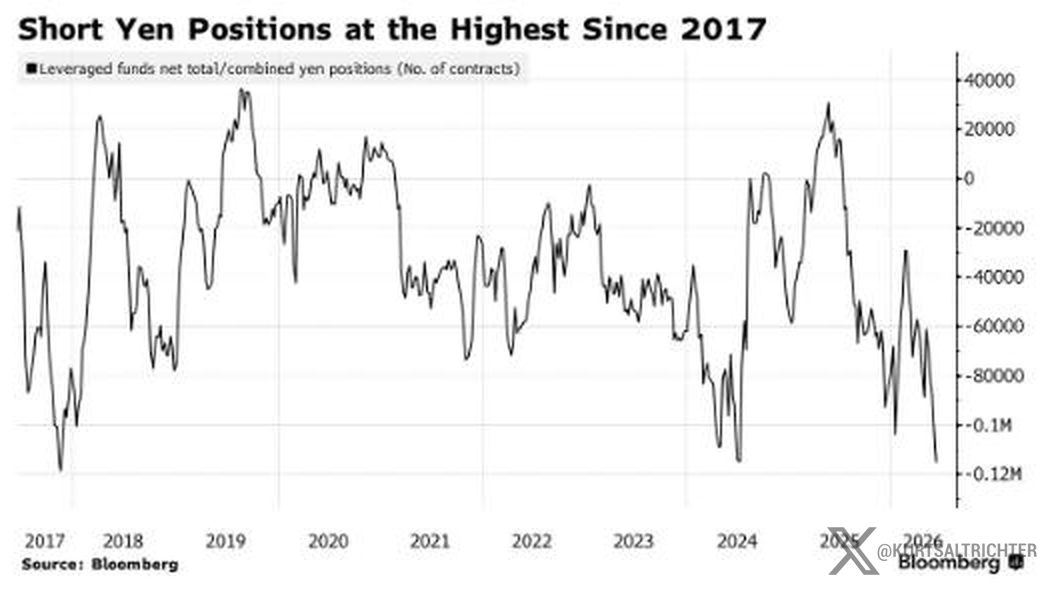
The most crowded trade on earth just hit a nine-year extreme.
Leveraged funds are more short the yen than at any time since 2017, borrowing it near zero to fund bets on US assets. That is the carry trade, and it is packed.
This is the same trade that blew up in August 2024. When it unwinds, they buy back yen and sell US tech to do it. A move in Tokyo becomes a Nasdaq selloff. $FXY
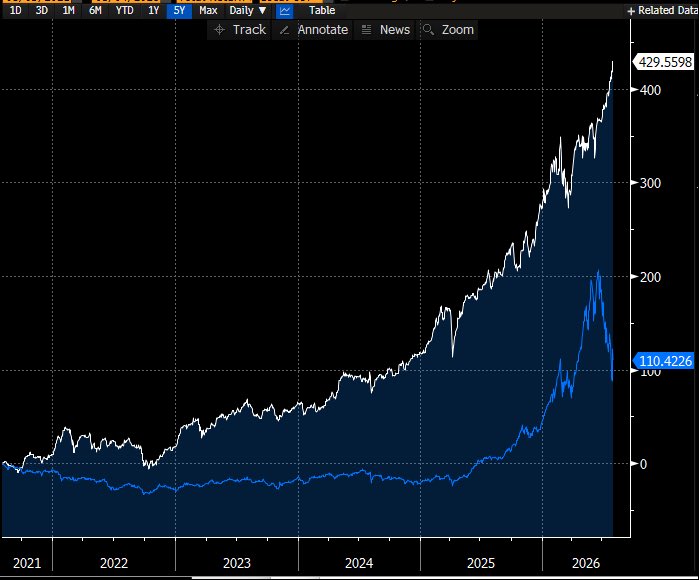
5-year total return of Korea’s KOSPI index and HSBC.
HSBC is the white line. 4X Korea
Nothing against Korea which has been all the rage (and for the most part for with good reason). But amid the generational AI theme, there’s always a place for “boring” stocks like banks
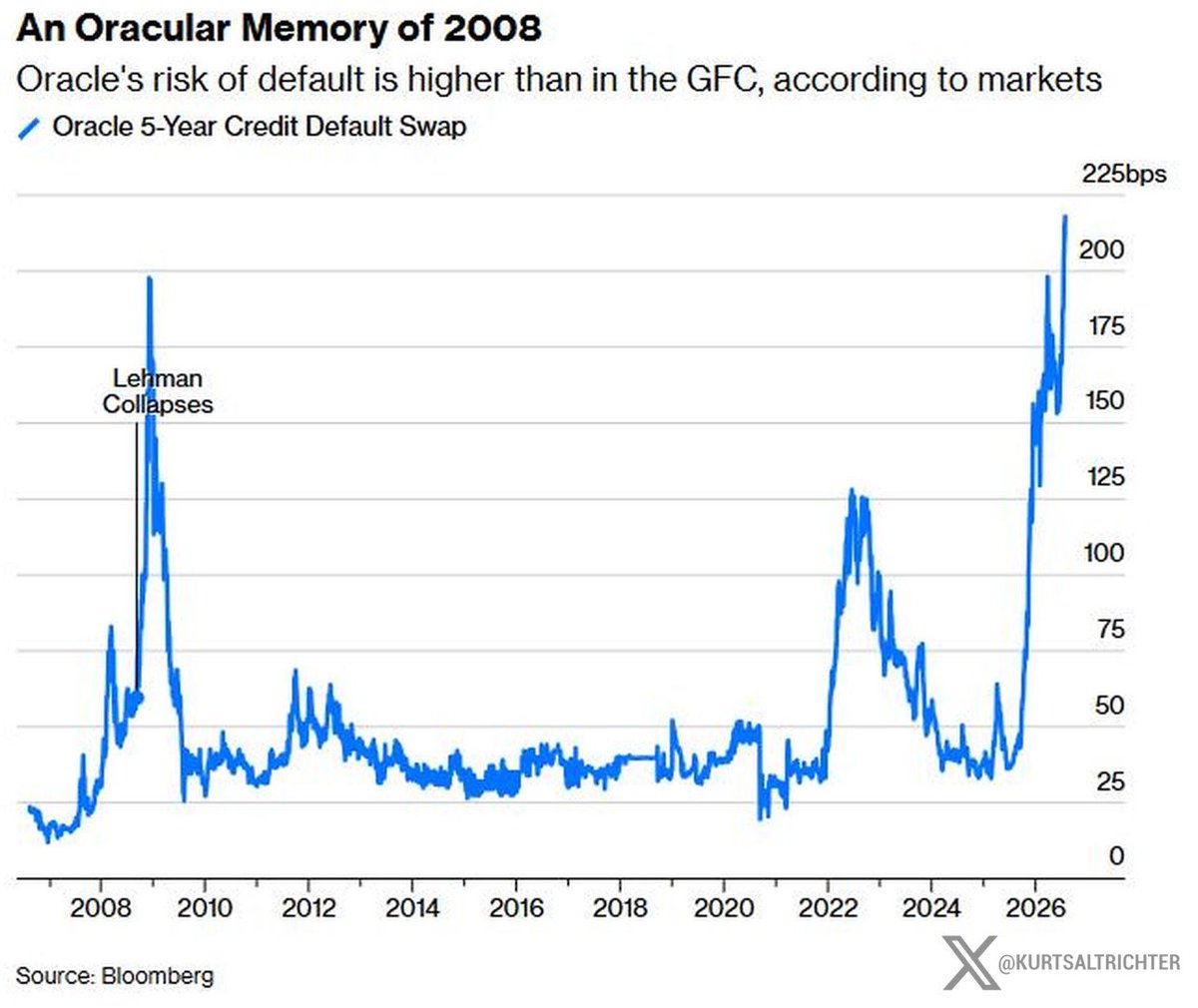
The credit market is pricing an AI blowup louder than the stock market.
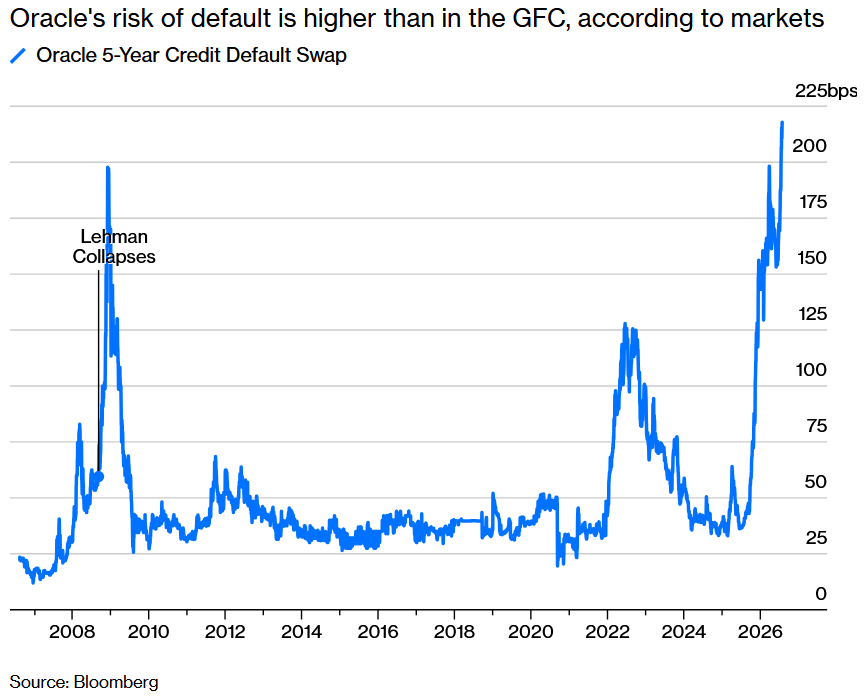
Oracle's 5-year CDS pushed past 215 basis points, higher than it ever hit in 2008. Traders now imply a 16% chance it defaults, and hyperscalers are about 80% more likely to default than the average investment-grade name.
Credit leads equities into every crisis. As those swaps widen, lenders charge more to fund the data-center buildout and the cheap debt behind AI capex dries up. The stock is the last to find out. $ORCL
How much dollar liquidity has been injected into the markets in recent days?🤐
Thursday--> The Bank of Japan sold approximately 53BN$
Friday --> The Bank of Japan sold an additional approximately 34BN$
Concurrently, reports indicated that the U.S. Treasury Department sold euros and purchased Japanese yen in the range of 5-10BN$ with indications of potential use of the FIMA facility.
However, this is not the end of the story… Last Friday, the TGA declined from 998BN to 876BN… representing an injection of another 122bn $$ into the banking system…
Is anyone surprised that the Nasdaq is surging?
#liquidity #repo #leverage #usdjpy
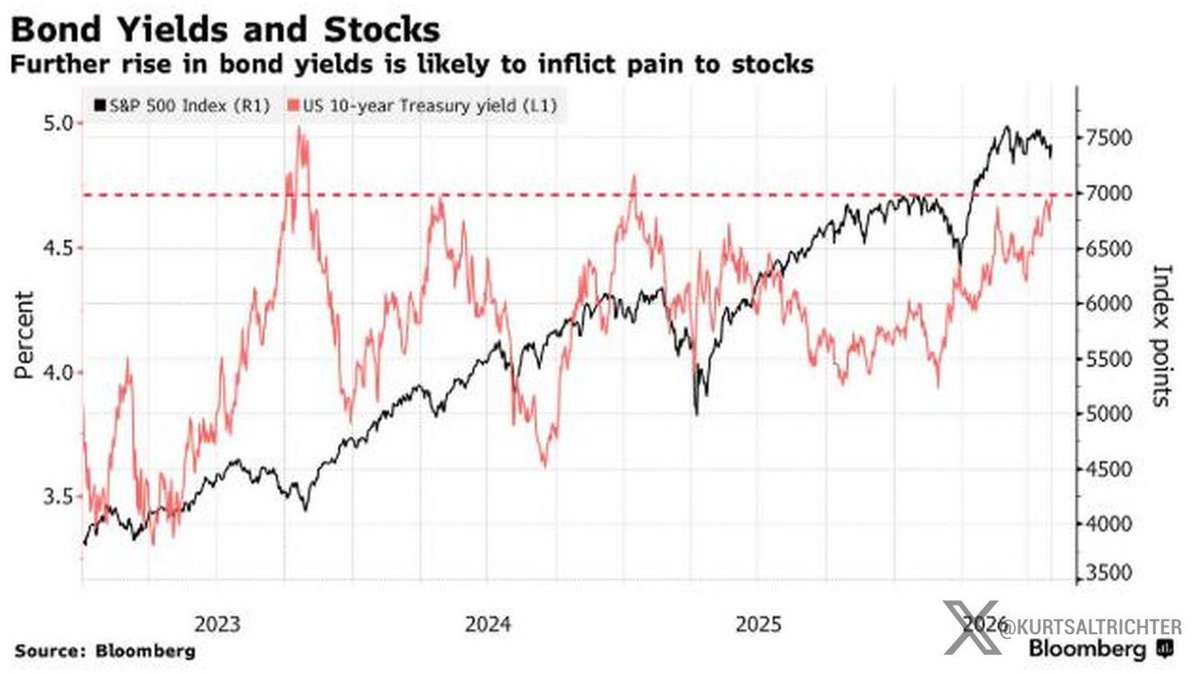
The 10-year Treasury is back at 4.7%, and it keeps capping stocks.
Every time the 10-year pushes toward 4.7%, the S&P 500 stalls, because a higher risk-free rate lowers what every future dollar of earnings is worth today.
Rising yields hit the longest-duration assets hardest, and that is Big Tech, where the valuation rests on cash flows years out. The higher rates go, the more the discount rate does the damage the multiple used to hide. The bond market is setting the ceiling here.
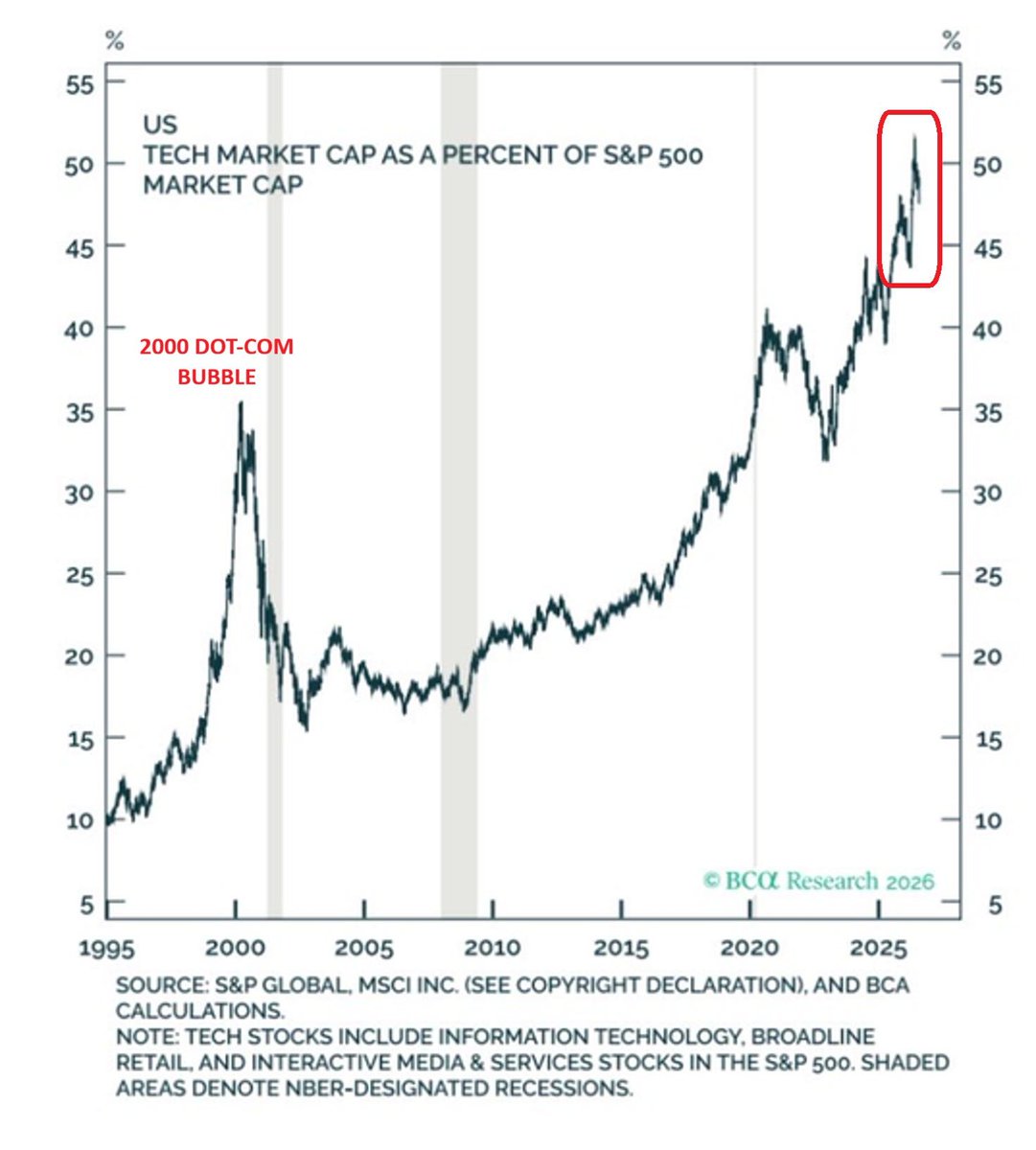
🔴THIS HAS NEVER HAPPENED:
The US technology sector's market capitalization has exceeded 50% of the S&P 500's total market capitalization for the first time EVER.
This share has DOUBLED over the last decade.
It now stands ~15 percentage points above the Dot-Com Bubble peak of ~35% in 2000.
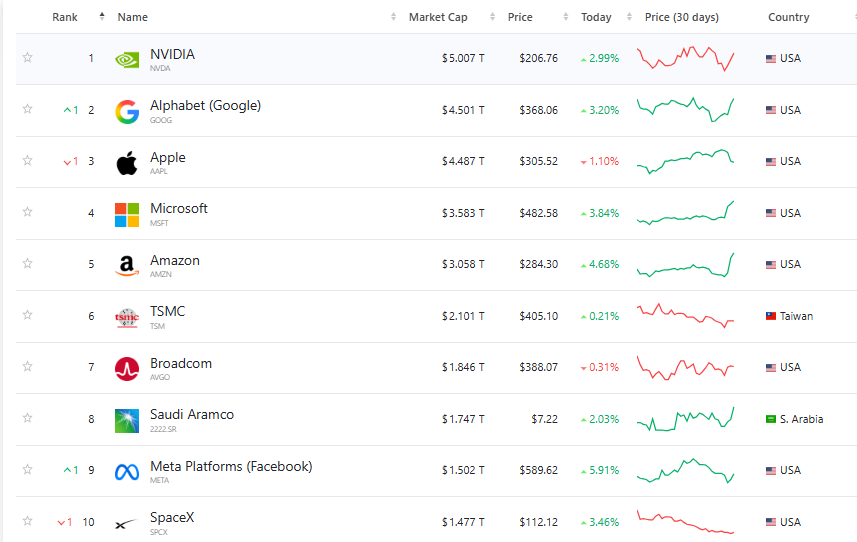
The 10 largest technology companies alone account for nearly 40% of the S&P 500's market value, near an all-time high.
The dominance of technology in the US stock market is unprecedented.
Et pendant ce temps-là, Amazon dépasse pour la première fois les 3'000 milliards de dollars de capitalisation boursière et Nvidia repasse les 5'000 milliards...
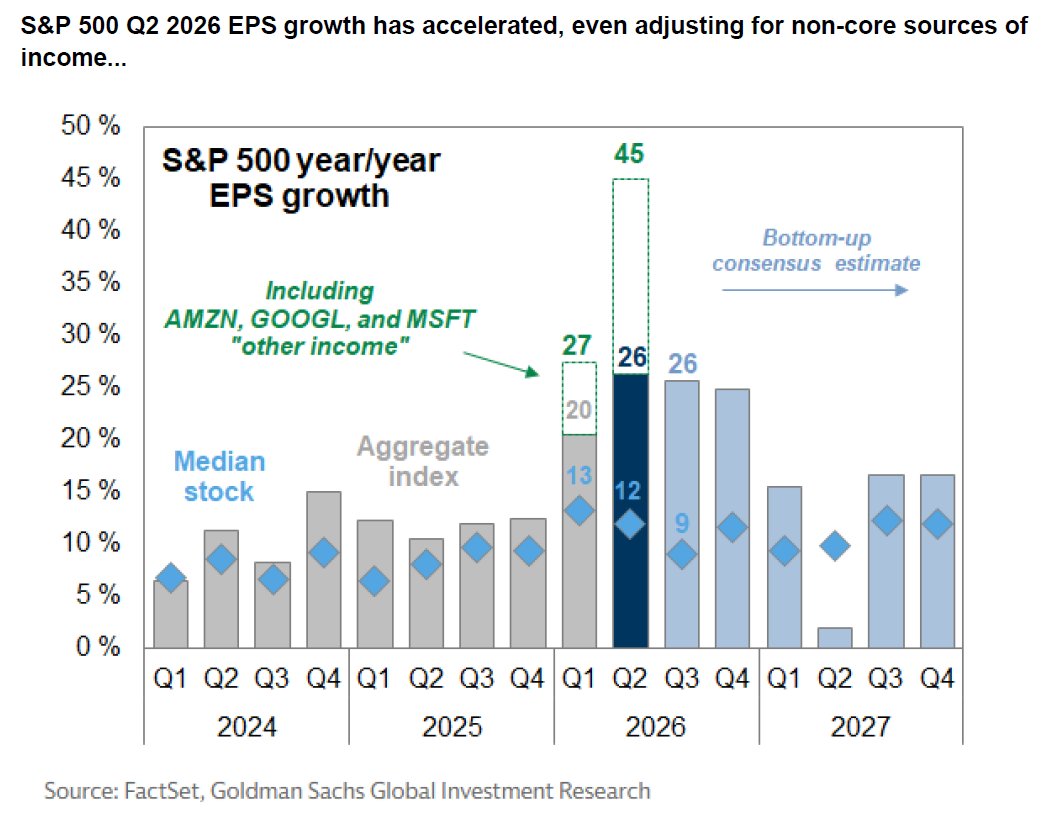
S&P 500 EPS growth is tracking 45% YoY in Q2 compared with a consensus estimate of 22% coming into the quarter. However, 19% of that growth is attributable to Alphabet and Amazon's combined $151 billion of "other income" related to equity investments. Excluding these gains, S&P 500 EPS growth is tracking at 26%, an acceleration vs. Q1 and the fastest pace of growth since 2021 - Goldman
🚨 BREAKING: Japan's 2-year and 5-year bond yields just hit their highest levels in 31 years.
The 2-year is at 1.579% and the 5-year at 2.098%.
Both were near zero just two years ago.
Japan's bond market crisis keeps getting worse.
US investment-grade bonds of tech companies lost 2.2% last month, with yields on the debt rising to the highest levels since late 2023 (see below). This debt is in the crosswinds of both concerns about interest-rate risk and anxiety around the cost of the AI buildout.
⚠️Bond markets are pricing in permanently higher interest rates:
The 10-year Treasury yield, 10 years forward, has risen to 6.24%, the highest level since 2004.
This measures what investors expect 10-year Treasury yields to be a decade from now, based on today's yield curve, effectively the market's estimate of the long-run "normal" level for interest rates.
The move to a 2-decade high suggests markets increasingly believe today's higher-rate environment reflects a structural shift rather than a temporary cyclical spike.
The move to a 2-decade high suggests markets increasingly believe today's higher-rate environment reflects a structural shift rather than a temporary cyclical spike, driven by expectations of higher-for-longer inflation, rising fiscal deficits, and a larger supply of government debt.
Markets are no longer pricing a return to the ultra-low interest rate environment of the 2010s.
It's official:
Oracle's debt is now riskier than at ANY point during the 2008 financial crisis.
5 years ago hyperscalers were 60% safer than the average investment grade company.
Now they're 80% riskier.
BREAKING: 🇯🇵 🇨🇳 Japan and China are slowly walking away from U.S. debt.
Japan cut its Treasury holdings by $96 billion in three months to $1.14 trillion, while China’s holdings remain near multi-year lows.
Who will finance America’s growing debt next?
The S&P 500 earnings yield minus the 1-year Treasury yield is extremely low. See the chart.
A return to historical norms can happen only three ways:
Around ten rate cuts, an unprecedented earnings boom from already extreme levels, or a major decline in stocks.