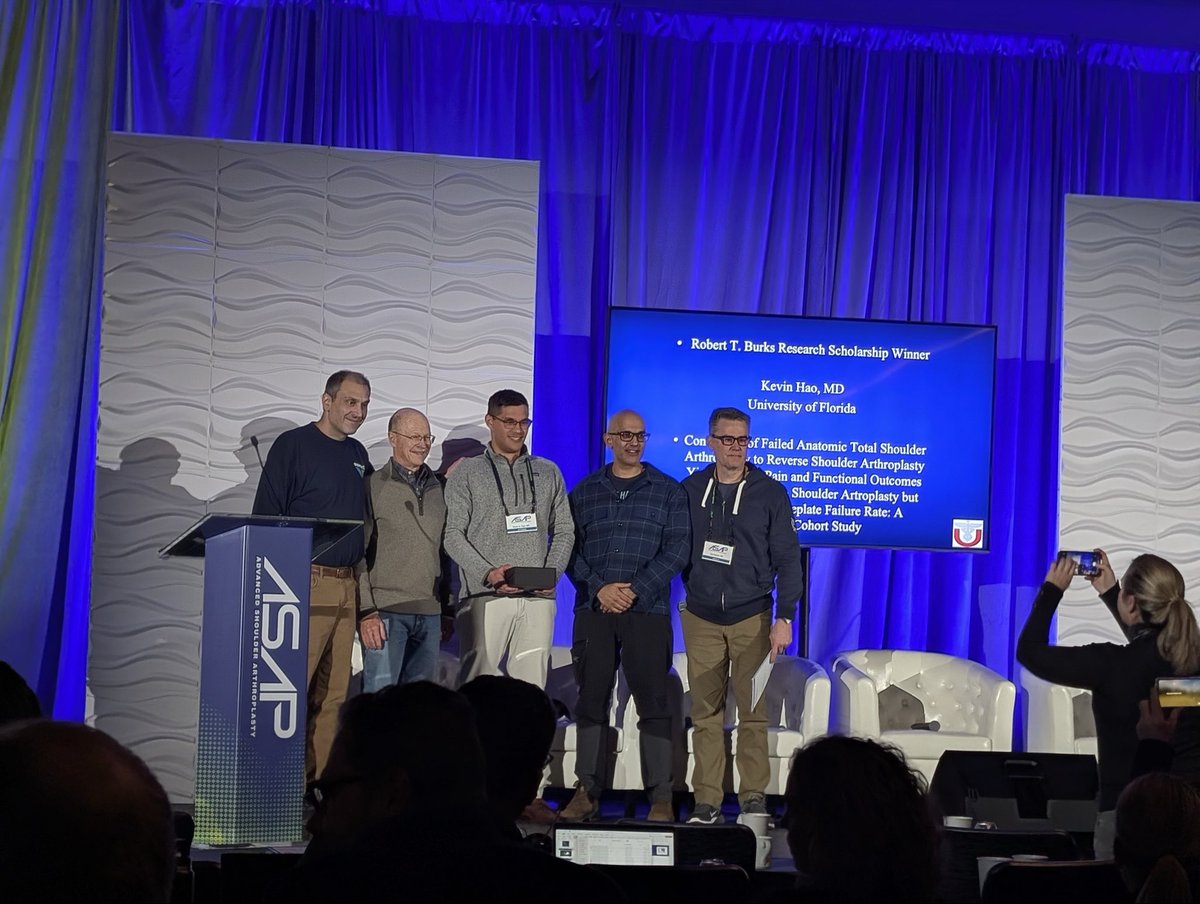
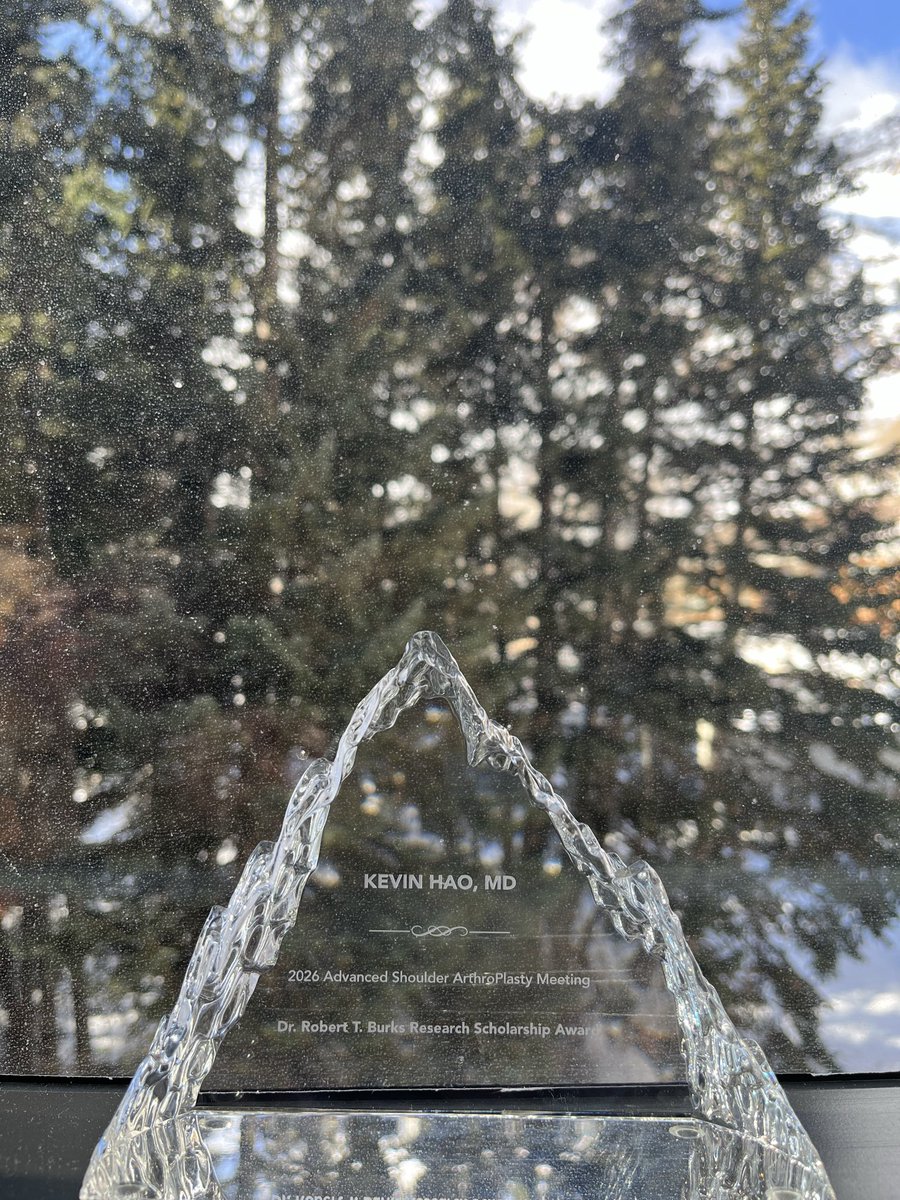
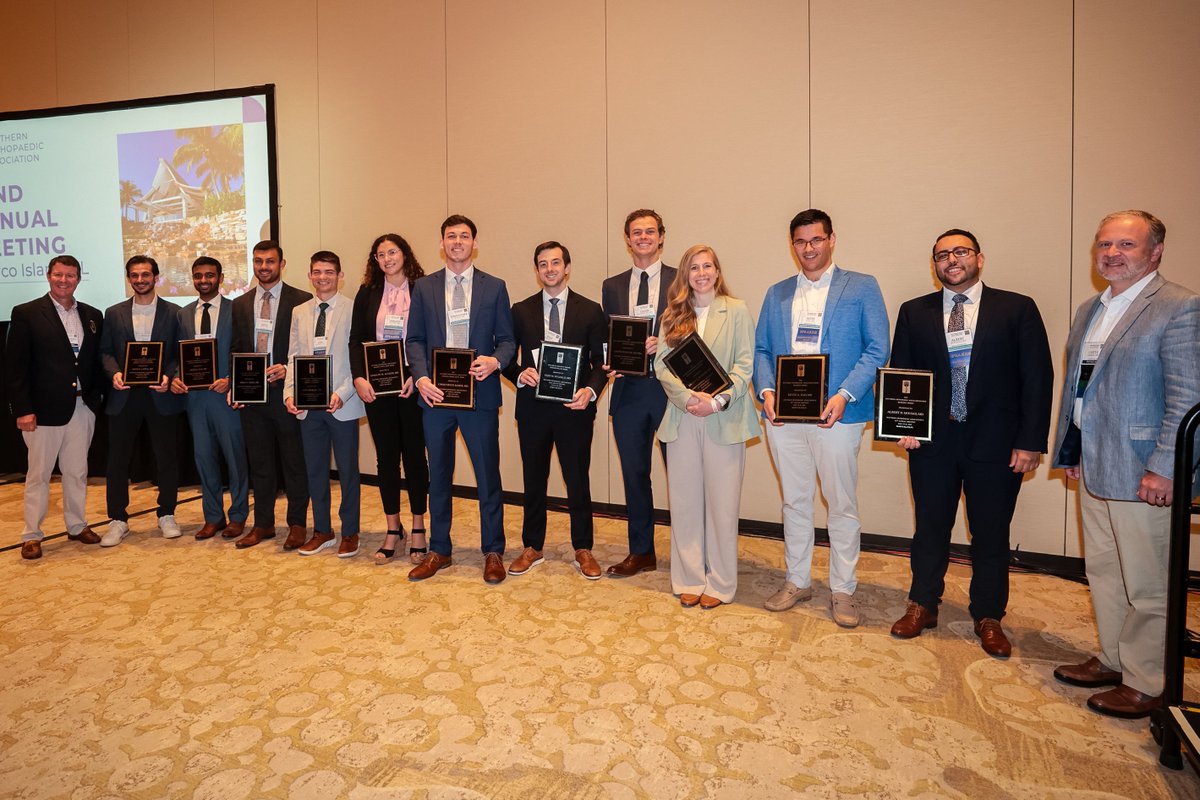
Honored to have received the Robert T. Burks research scholarship @asapshoulder 2026. Grateful to the meeting co-chairs and my mentors @UFortho for the opportunity to attend and learn at this world-class meeting.
Link to work: https://t.co/NOAcJh0ktw
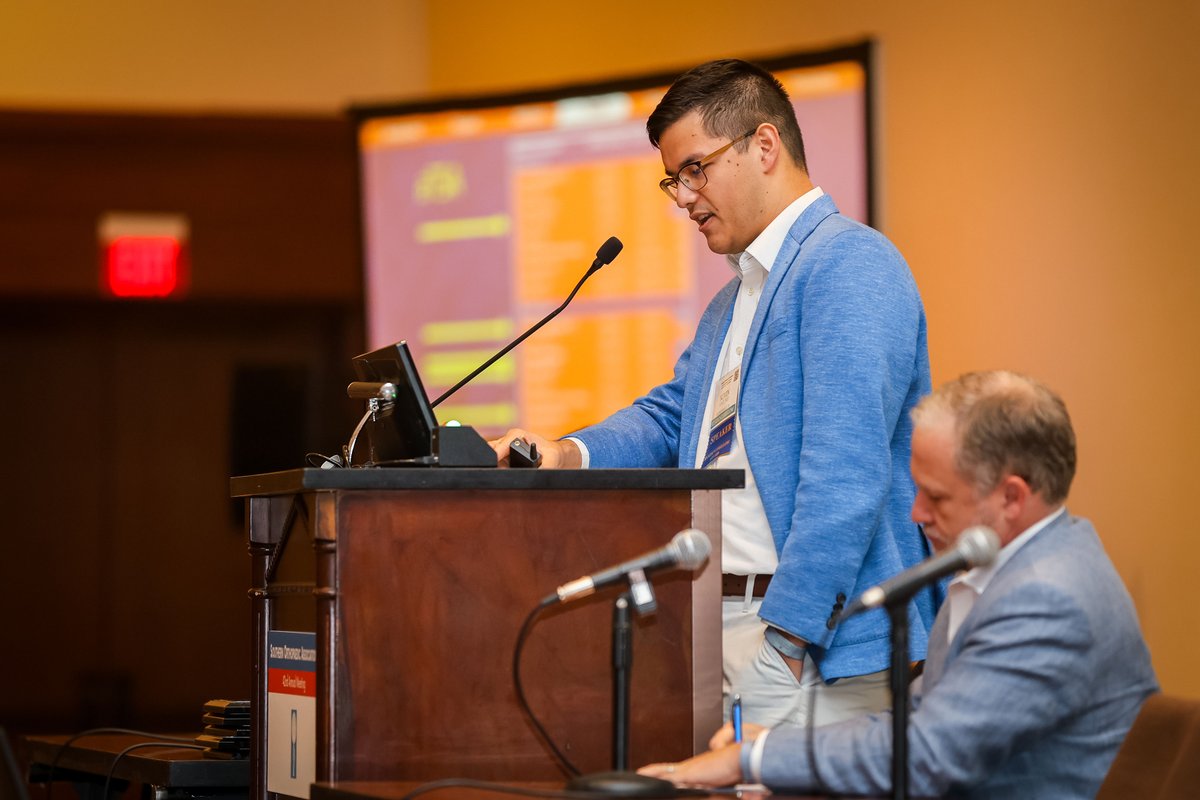
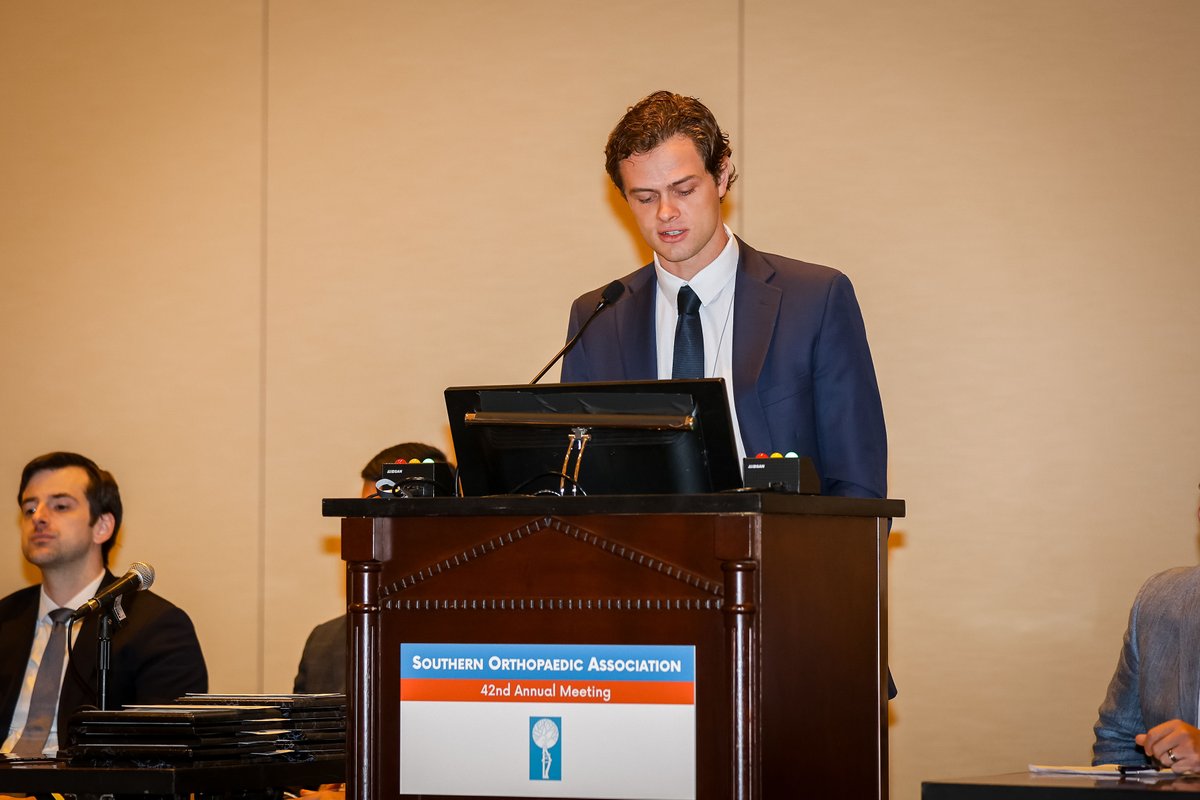
SOA/OREF Resident Award Winners:
Kevin J. Hao, MD – UF
Albert D. Mousad, MD – Geisinger
Calvin Chandler, MD, MBA – OrthoCarolina 📢
Residents: Submit your research → https://t.co/9lZZfRMdus
#SOA2026#Ortho#ResidentAwards
Missing data is problematic yet ubiquitous. Ignoring it may bias results. Our results demonstrate that researchers must consider whether imputation may be advantageous to mediate the bias from missing data when performing retrospective database research. https://t.co/tukozKSm2p
Exploring the latest research: Does Tranexamic Acid Improve Early Postoperative Shoulder Motion After Total Shoulder Arthroplasty? https://t.co/eLiAzu1Ow2 from @KevinAHaoMD@UFortho@bradschoch@kevinfarmermd
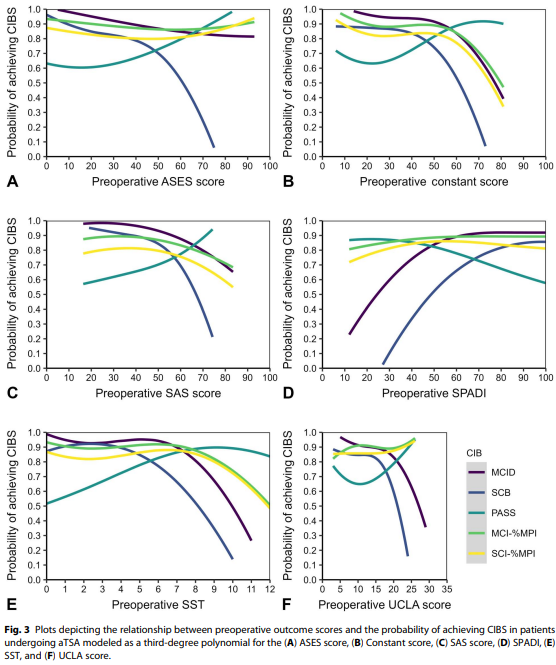
New in @Clinorthop! Achievement of clinically-important benchmarks of success (i.e. MCID, SCB, PASS, %MPI) depends on patients' preop status and whether success is defined as absolute improvement, absolute postoperative status, or relative improvement
https://t.co/uMAkOx9rij
New in JSES! Our critical assessment of the literature found biomechanical, but no clinical evidence supporting the "sling effect". Rather, the soft-tissue "sling" appears negligible compared to the contribution of the bony reconstruction.
https://t.co/gzTf3DfIQb
Proud of our teams' work synthesizing the complex, nuanced, and often contradictory literature on patient, surgical, and implant-related risk factors for instability after RSA. Find out how to mitigate it!
@UFortho@bradschoch
Is there an optimal subscapularis (SSc) repair method in RSA? Repair of the superior 2/3 of the SSc resulted in similar ROM and outcome scores compared to no repair, but more patients achieved functional IR to the small of the back @bradschoch@UFortho
https://t.co/7ZzHt5kx8l
Is preop weakness in forward elevation (FE) an indication for rTSA in patients with cuff-intact OA? In our matched cohort study, aTSAs achieved greater ER but had poorer improvement in overhead motion compared to rTSAs @bradschoch@UFortho
https://t.co/OadYtzu1dv