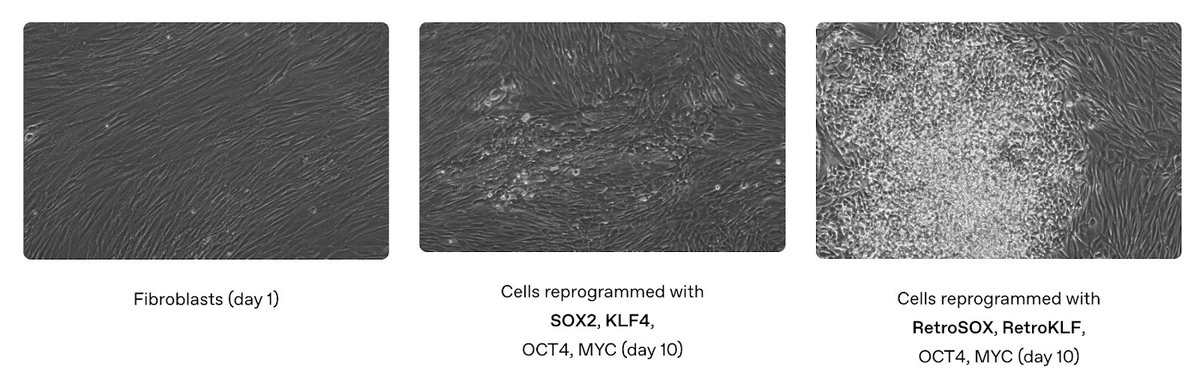
I’m excited to share the first paper from my PhD research at @RetroBio_ (and my first paper as first author) - now on bioRxiv!
Can we take adult human cells, turn them into blood-forming stem cells, and build a new blood system that is both functional and molecularly young?
Our preprint: https://t.co/1Z1w0l3Kag
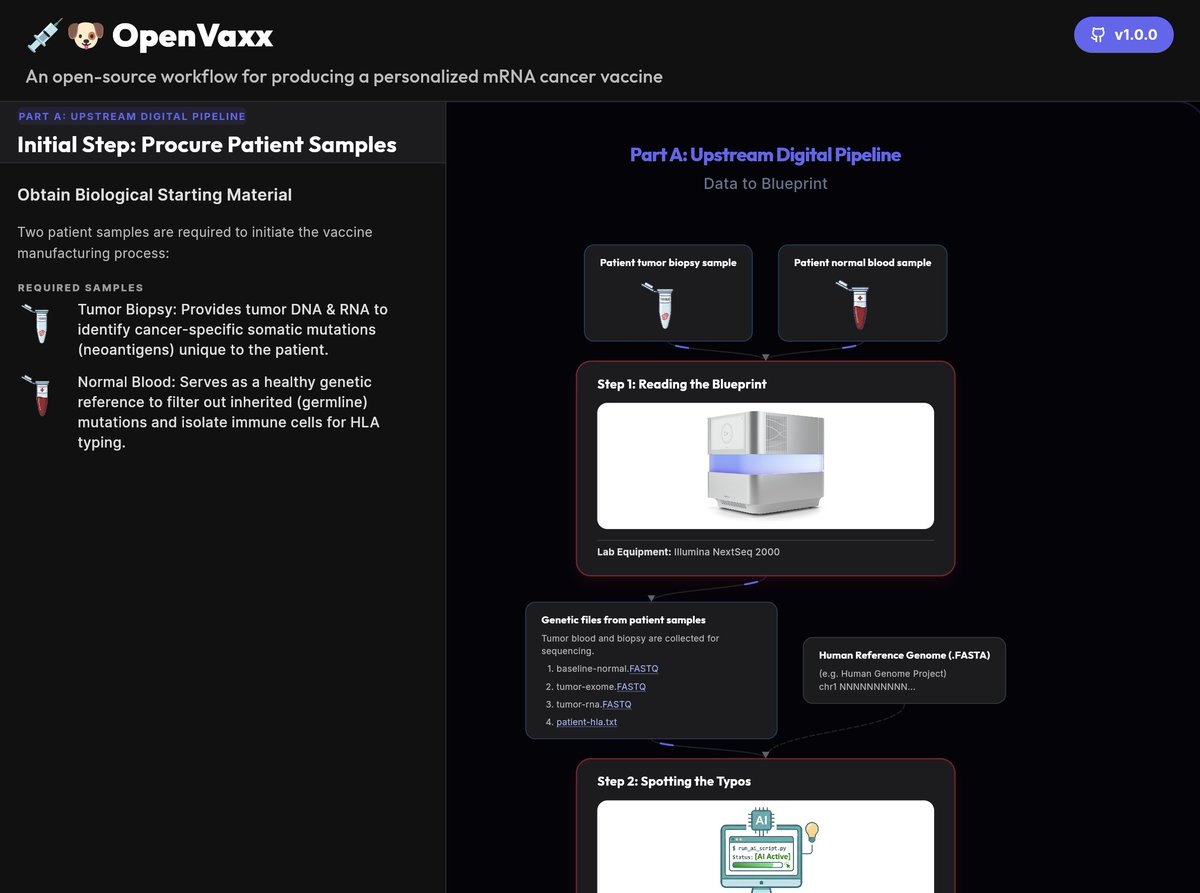
My friend @philfung was inspired by the man who built a personalized cancer vaccine for his dog, so he wrote a guide to DIY mRNA vaccine production.
Phil used to run a lab startup, and the guide covers the entire process - from sequencing to synthesis, using open-source software and benchtop lab equipment.
Note: This is for educational purposes only and is not intended for medical use
um unless you have cancer
super excited to announce our collaboration to the world! here’s the backstory: we started with a shared goal of using AI to generate novel discoveries that would be non-trivial for human scientists to make
Truly grateful to have worked with our amazing team demonstrating how LMs can truly shift us from protein discovery to protein design. We can now engineer bespoke therapies from scratch, with the potential to fundamentally extend human healthspan🤠
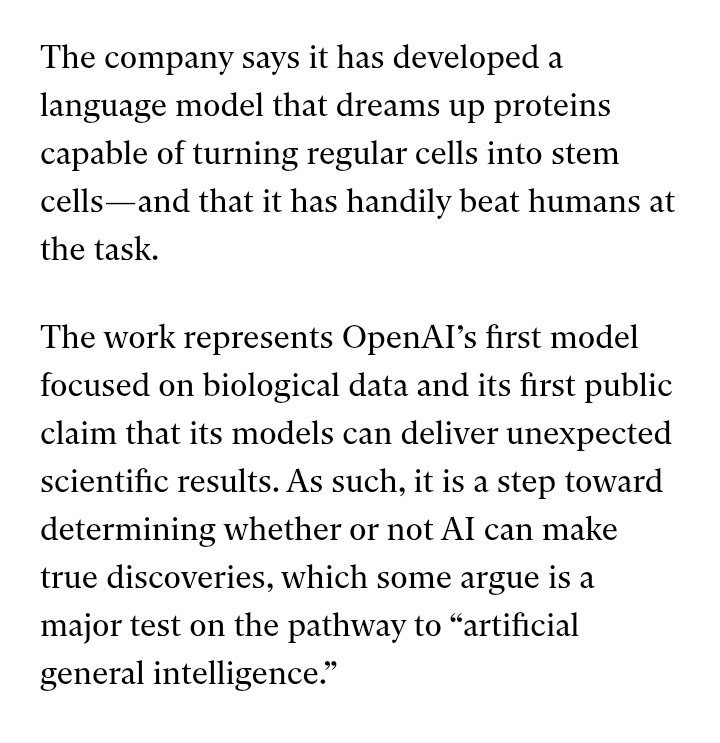
At @OpenAI, we believe that AI can accelerate science and drug discovery. An exciting example is our work with @RetroBiosciences, where a custom model designed improved variants of the Nobel-prize winning Yamanaka proteins. Today we published a closer look at the breakthrough. ⬇️
THIS IS HUGE
🚨 openAI has created an AI model for longevity science
according to the article,
openAI new model, called GPT-4b micro, was trained to suggest ways to re-engineer the protein factors to increase their function.
according to openAI, researchers used the model’s suggestions to change two of the Yamanaka factors to be more than 50 times as effective — at least according to some preliminary measures.
Our Applied AI team at @RetroBio_ + some @OpenAI homies working together for a few month have created GPT4b-micro, a sequence-based model for, among other things, protein design!
Just watched my 5-year-old son chat with ChatGPT advanced voice mode for over 45 minutes.
It started with a question about how cars were made.
It explained it in a way that he could understand.
He started peppering it with questions.
Then he told it about his teacher, and that he was learning to count.
ChatGPT started quizzing him on counting, and egging him on, making it into a game.
He was laughing and having a blast, and it (obviously) never lost patience with him.
I think this is going to be revolutionary. The essentially free, infinitely patient, super genius teacher that calibrates itself perfectly to your kid's learning style and pace.
Excited about the future.
@aamir1rasheed @owl_poster @vhmth I think of scRNA-seq as just one part of the whole picture of cells. If he mentioned language of chemistry I'd wager he's talking more about MD simulations.
A really excellent thread showing why the answers to some biological riddles lie in the fourth dimension (protein dynamics) not the third (protein structure)
Original paper:
https://t.co/9J7AwwaFZV
Hosting another AI paper reading group this Wednesday 7PM in SoHo. This week, we have @KevinJosephK presenting Alphafold 3.
If you're working on AI or biotech, you're invited. DM for partiful link
Over the past 3 months, I've delved into exploring how the dynamic nature of proteins influences protein interactions.
Excited to share my progress in bridging the gap between high-cost MD simulations and low-confidence docking models 🧵
Over the past 3 months, I've delved into exploring how the dynamic nature of proteins influences protein interactions.
Excited to share my progress in bridging the gap between high-cost MD simulations and low-confidence docking models 🧵
I'm eager to learn more in this space and would appreciate any tips or papers you could share. Thank you for reading! If you found this thread interesting, a rt would be appreciated. Feel free to DM me if you'd like to learn more about this project or discuss my other interests.