New open access paper at @polcommjournal with Joel Sievert: we find that messages oriented towards national politics polarize people's views and evaluations of candidates and that messages stressing local matters sometimes do the opposite.
https://t.co/n52OFhWI5K
🚨 New paper alert with @markovitis in AJPS!
1/ Will voters participate in the primary of a party they oppose to prevent the nomination of a candidate they fear?
We study crossover voting using surveys and a large field experiment (N=83,902) in the 2024 New Hampshire Republican presidential primary.
https://t.co/k9kK9r2Zgv
One could certainly interpret this as being a side effect of election denial messaging. See also my work with Moriah Harman on confidence in elections being lower among Republicans in states Trump claimed were stolen in 2020 vs other states.
I'll be at #SPSA this week. Let me know if you want to meet to chat about research, States United, working in the political nonprofit/tech/higher ed space, or anything else.
Confidence that other people's votes will be counted properly doesn't affect turnout, suggesting that this process is driven by concerns about one's own vote rather than those of others.
genuinely still impressed by the ludonarrative of Papers Please and how astutely it makes its point about participating in bureaucratic violence. "i play defensively, doing nothing illegal unless i have to, but i keep getting bad endings. how am i supposed to play?"
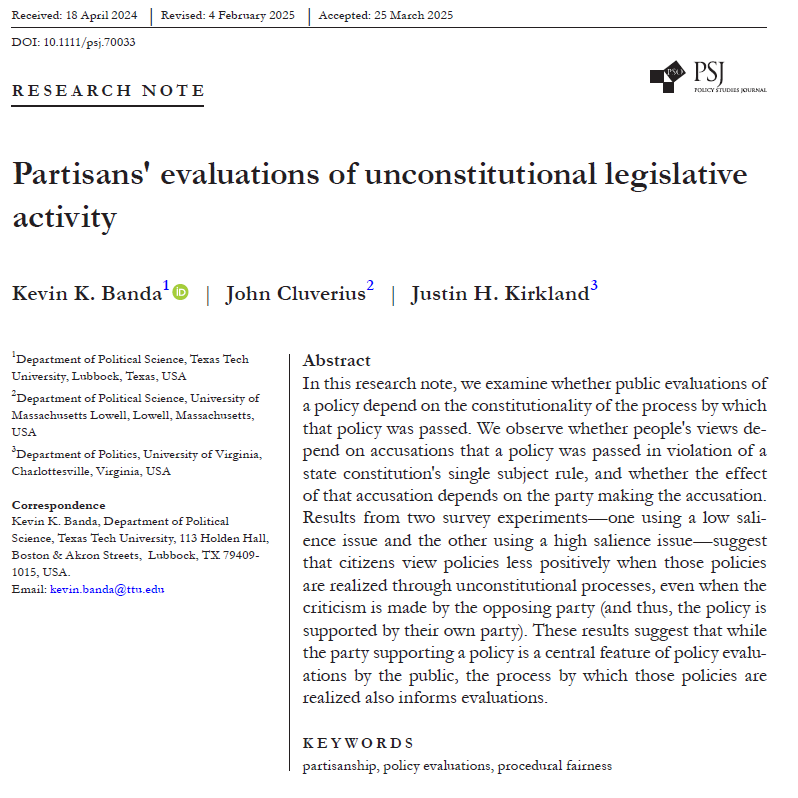
New at @PSJ_Editor with John Cluverius and Justin Kirkland: https://t.co/pPpQMzrCtl
We test partisan and procedural concerns against one another and find that both drive support for and perceived legitimacy of unconstitutional legislation.
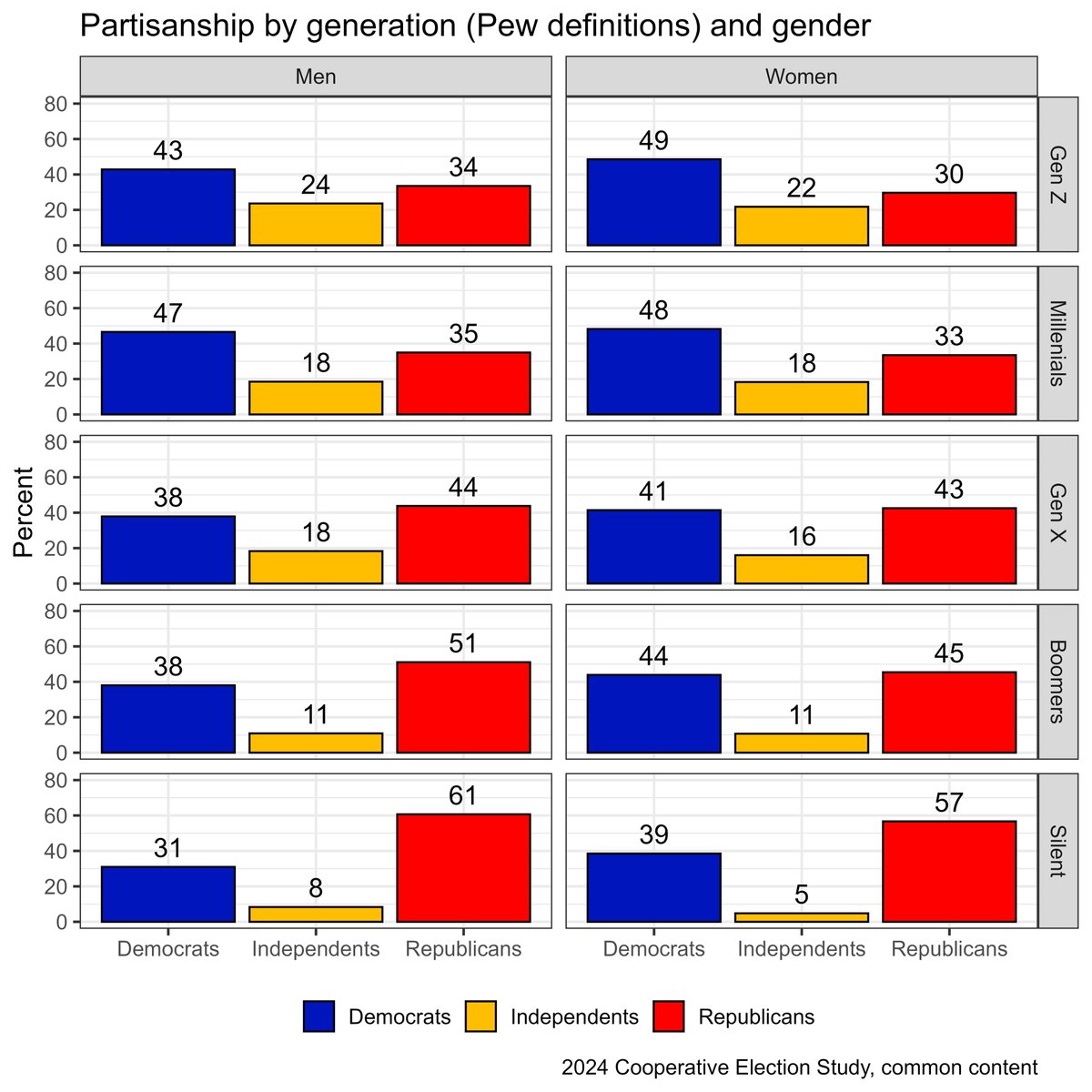
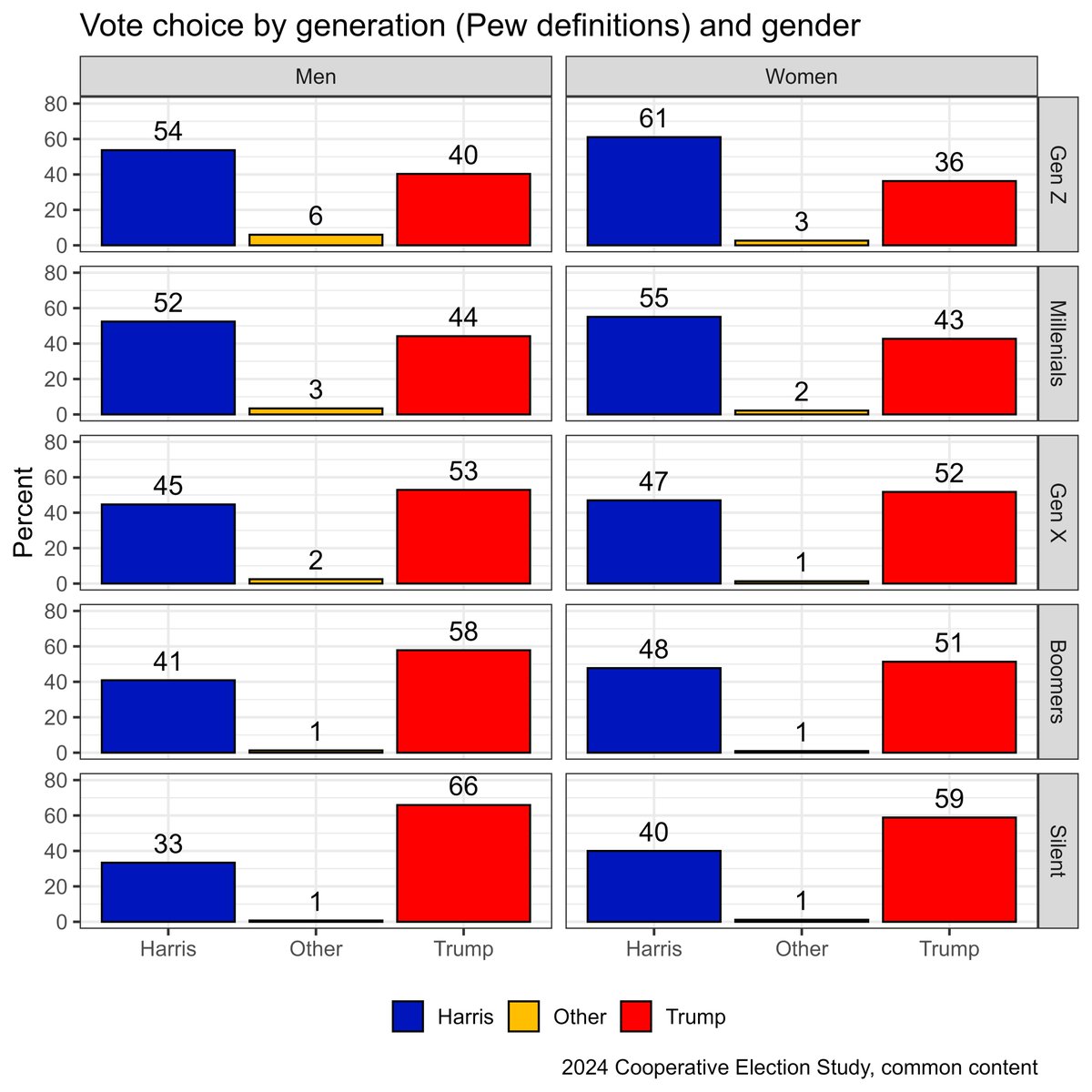
Lots of takes floating around out there about how young men have gone hard to the right in ways that differ from everyone else, but I'm not seeing that in the 2024 CES data. Gen Z men look a lot like Millennial men on partisanship, ideological identity, and vote choice.