How are genetic risk for mental illness, personalized functional brain networks, and overall psychopathology related during early adolescence? New preprint out now https://t.co/pc11gYp9ge and I'll be presenting a poster at #Flux2024 this Sunday! (1/17)
☀️ New preprint! ☀️ Cognitive tests from 23,000+ participants in 4 datasets show cyclical fluctuations across the calendar year, including a small but replicable “summer slide” where youth show worst performance after school vacation. https://t.co/idZiwpDQML
thread below! 👇
/1
Thank you @NatureNeuro for featuring women's health research so prominently.
It's been a revolutionary few years with such novel & exciting work from all-star scientists around the globe, building off decades of foundational work from the OGs. The fight continues.
Goodbye, X.
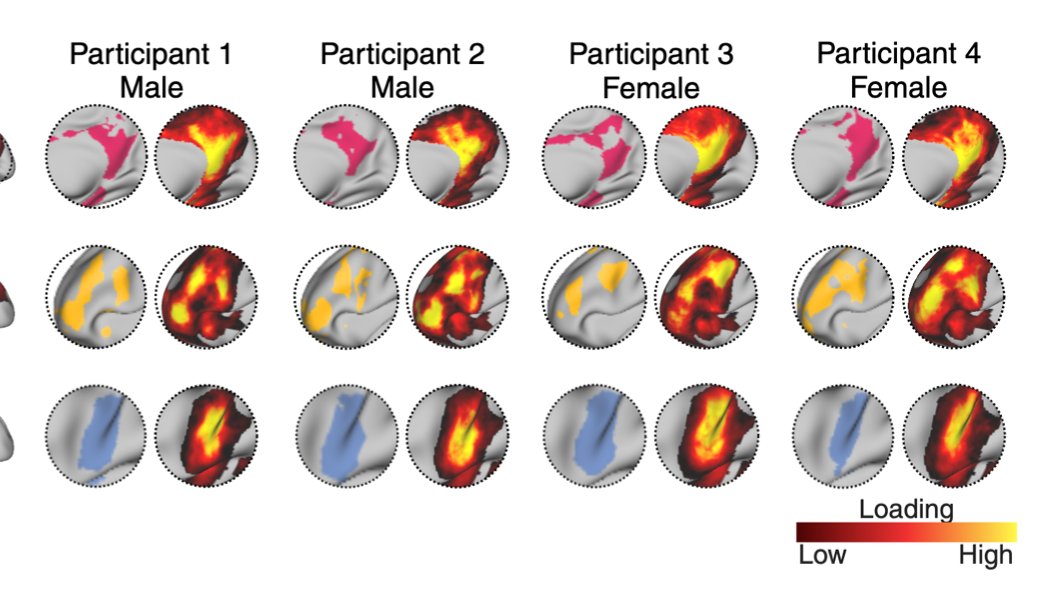
Excited to announce that the first preprint from the TReNDS lab is now up! Check out the awesome 🧵 below on how we used precision functional mapping and found robust, replicable sex differences in person-specific networks. 1/2
Interested in causal questions but working with observational data? Check out our new preprint, an accessible tutorial introduction to investigating causal questions in human development using marginal structural models (MSMs) & user-friendly R package!👇 https://t.co/aC6R77wqlG
✨New Preprint!✨ Sex differences in psychiatric disorders often show up in adolescence as disparities in prevalence, symptoms, and treatment outcomes. We aimed to better understand sex diffs in brain organization that might lead to these disparities!
https://t.co/zyZXtbwlb6
🧵⬇️
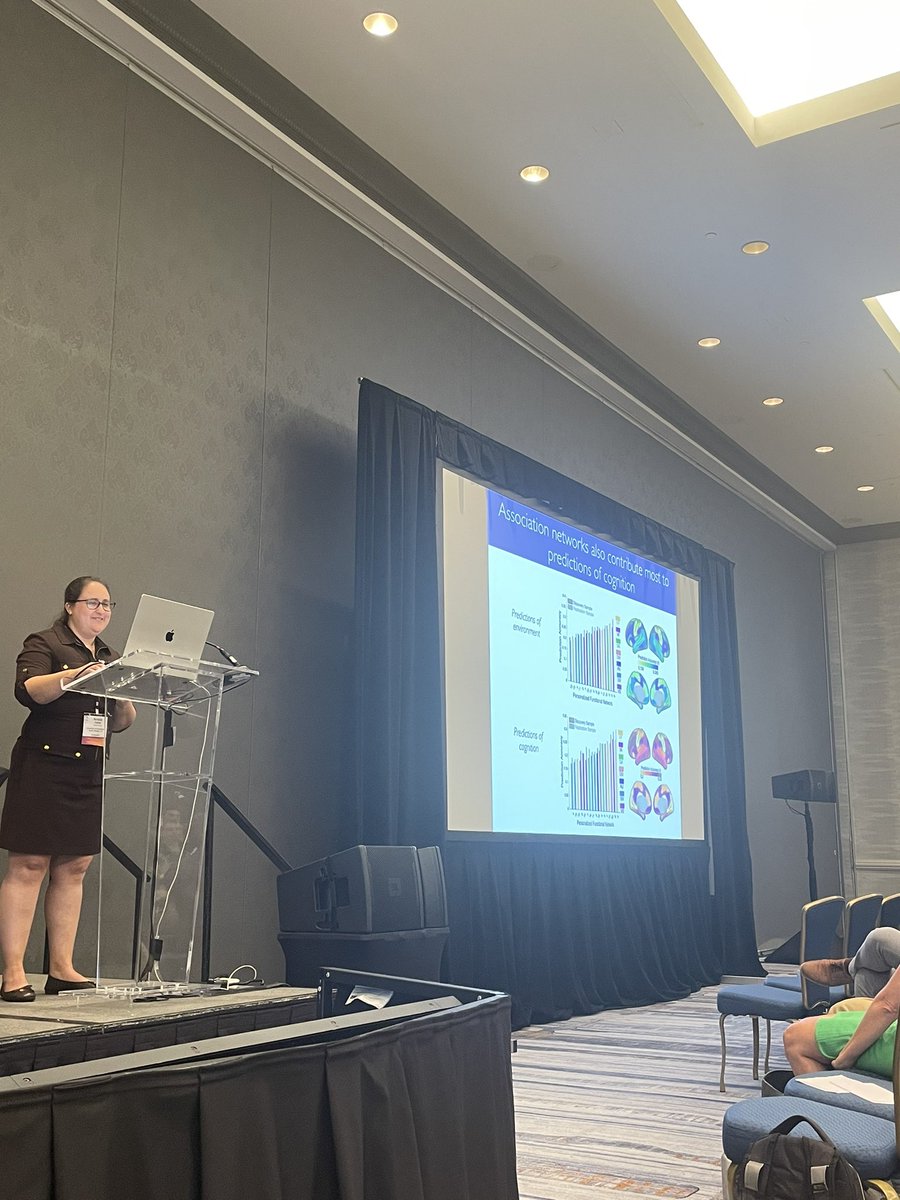
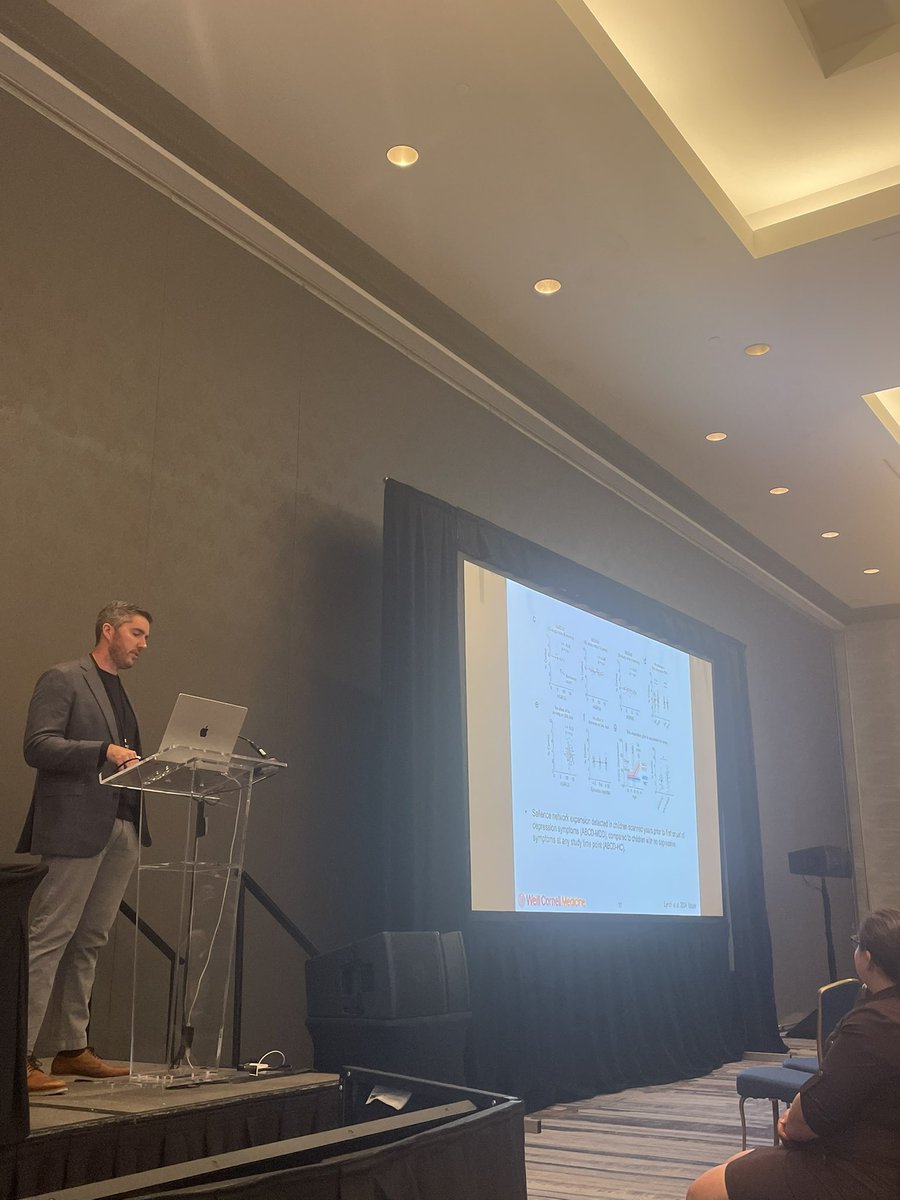
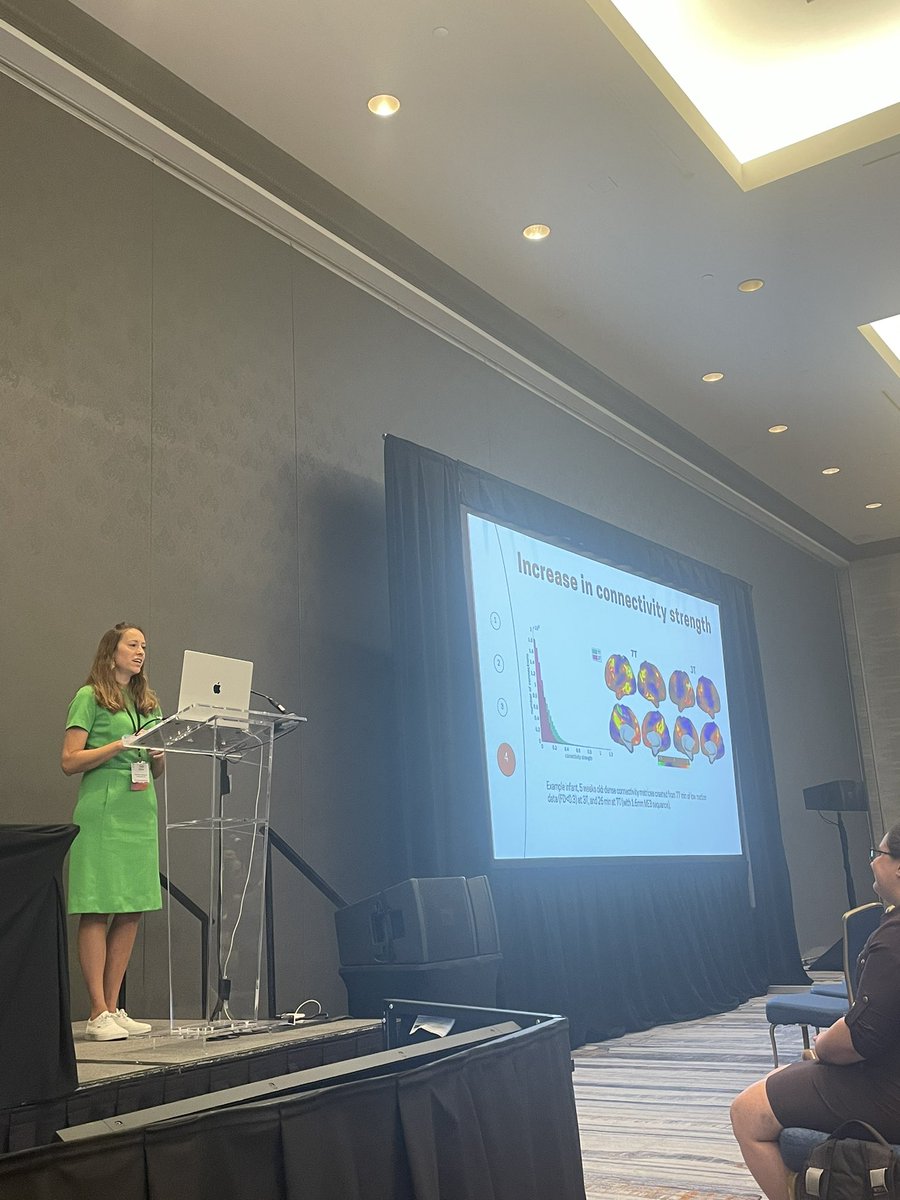
thank you #flux2024 for a wonderful meeting!!! the precision functional mapping session led by @ArielleKeller was an 11/10!! ✨✨✨ such exciting data and work across the lifespan and in clinical populations @DeannaJGreene@cl9681@_JuliaMoser
What happens when you go beyond tract averages to study white matter development along tracts? *hint* Some wildly stark patterns appear. Come chat with me at poster 37 on Monday's session!! #Flux2024
5 years ago, on the heels of 28andMe, our team designed a new precision imaging experiment: scanning an individual’s brain throughout her entire pregnancy. We are excited to share that these findings are out today in @NatureNeuro! https://t.co/NfbCsSigXn
👏👏Finally out!! Our new study called copy number variants in ABCD study, identified genetic associations with dimensions of psychopathology and cognitive development in ~10,000 children. Please check it out. Thanks @Aaron_A_B, Joe and other coauthors.👍
https://t.co/Sz9kZcmSgD
Thrilled to share our preprint introducing ComBatLS, a new data harmonization method that preserves covariates’ (e.g. age and sex) effects on variance! (1/2)
https://t.co/74rJQZ5C2Z
First up in our incredible Flux 2024 symposium line-up, organized by @ArielleKeller & led by @DrDamienFair, researchers will present on precision brain mapping for developmental cognitive neuroscience. Read more about Symposium VII here: https://t.co/L5AcF139kL
We hope our findings provide insight into the biological mechanisms underlying the emergence of mental illness and can provide new research directions in our goal of precision psychiatry! (15/17)
By integrating genetics, precision functional brain mapping, and dimensional psychopathology, we show that genetic risk for transdiagnostic adulthood psychopathology is associated with both p-factor and heritable person-specific network topography during adolescence. (14/17)
The association of PFN topography with PRS-F2 implies that genetic risk for psychotic disorders (bipolar I, schizoaffective, schizophrenia) is reflected in the developing brain before manifesting clinically! (13/17)
To our knowledge, this is the first study to demonstrate associations between psychiatric polygenic risk and PFN topography. We found convergent patterns of PFN topography in p-factor and PRS-F1 models, and divergent patterns in PRS-F2. (12/17)
But wait, there’s more! It isn’t just the same cortical regions at play for p-factor and PRS-F1—it’s the same networks! In the PFC, there is remarkable overlap in the topography of higher-order, association networks between p-factor and PRS-F1 models. (10/17)
We next tested the correlation between these 3 brian maps, and found that the p-factor and PRS-F1 maps were significantly correlated beyond chance (p=0.003): the association we showed between PRS-F1 and p-factor is reflected in convergent functional brain network organization!