Ecstatic to see the RBC paper out!! MAJOR congrats to all-star first-author @goliashf. RBC has been an amazing collab between #pennlinc & @childmindinst, led with the inimitable @MilhamMichael. So many thx to the many many many collabs that made RBC happen.
(1/17) Now out on bioRxiv‼️Reproducible Brain Charts: An open data resource for mapping brain development and its associations with mental health | https://t.co/ZSymcPIJ7c
Funded by @NIMHgov
Postdoc opening w/ a great team inc close collab Dan Wolf! fMRI + computational modeling in NIH-funded clinical high risk for psychosis study. U. Maryland in collaboration with UPenn + Mt. Sinai. Full posting here: https://t.co/pF5T9E25Ni
So excited to see this fabulous work by stellar MD-PhD student @briana__macedo out as a preprint. Briana reports some of the strongest results I've ever seen -- very strong (25% variance, out-of-sample) associations between the childhood environment and white matter. 🧵
How much does the childhood environment shape the brain?
In our new preprint, we study the exposome (300+ environmental exposures) and link it to white matter structure in 8,000+ kids. 🧠✨
Read here: https://t.co/OfIYsOuQdQ
🧵Thread below
Huzzah for @stevenmeisler.com, whose preprint on our new fully-processed ABCD dMRI data resource is now out. The super-clear results from this monumental effort will undoubtably change the way we approach studies of white matter development going forward.
Diffusion MRI (dMRI) is a powerful tool to study white matter maturation. In our new preprint, we process and distribute a new resource of >24,000 ABCD dMRI scans using open source tools! We then evaluate how methods shape inferences about development.
🔗 https://t.co/XzEFQQj6i9
Incredible work by the absolutely stellar Brooke Sevchick and @singletonion — the second installment of our open-science living meta-analysis of psychedelics for mental health; check out https://t.co/Fui5SuqW4y.
🍄 Our second installment of https://t.co/ICdlySqJJl, a living systematic review and meta-analysis on MDMA for PTSD is now live on medRxiv. Here's what we found and how we built upon our open science infrastructure to support it 🧵
https://t.co/KSUPAKJdjW
Beyond delighted to see this paper -- our first from the SYPRES initiative -- now out at Nature Mental Health. Check out Parker's awesome explainer below, w/ links to dashboard + all code + data.
🍄 Our first https://t.co/ICdlySqJJl living systematic review and meta-analysis on psilocybin for depression is out now in @NatMentHealth. Here's what we found and the open science infrastructure we built to support it: 🧵
Open-Access Link: https://t.co/PhU4tad8Q8
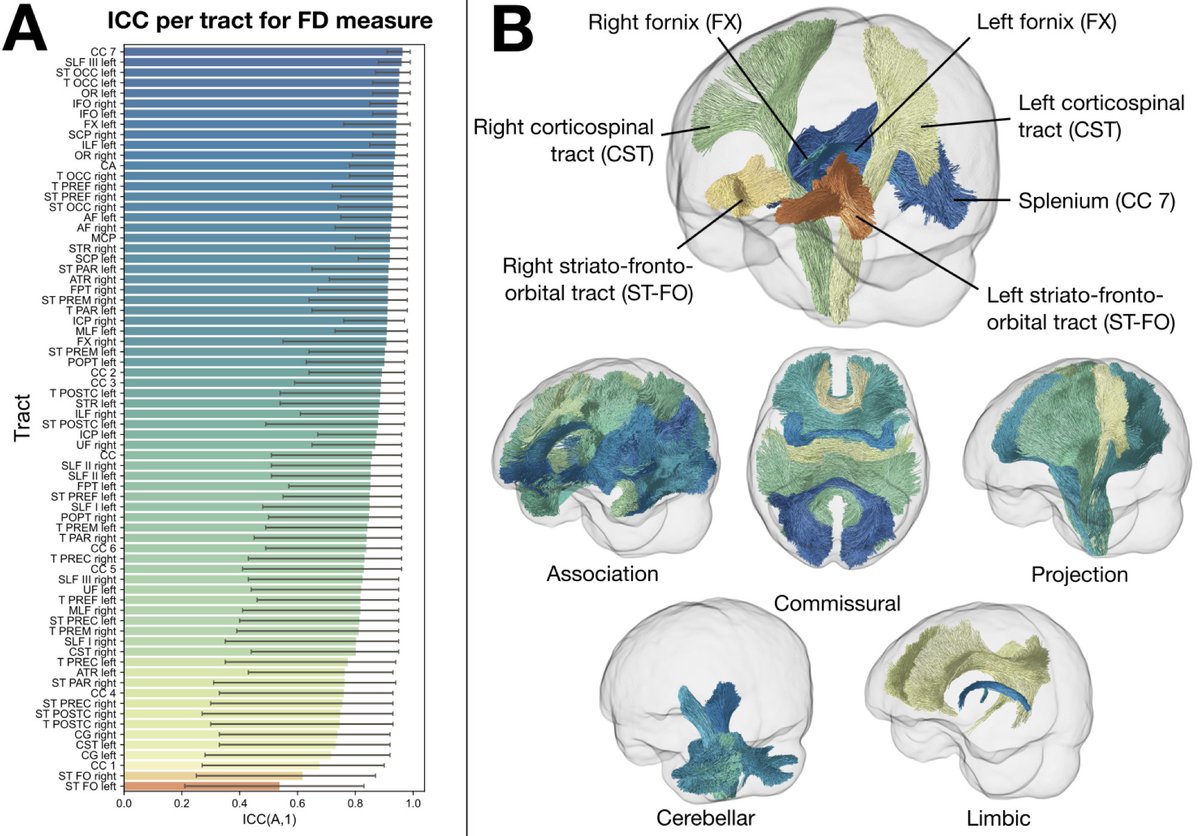
New paper in Imaging Neuroscience by Remika Mito, Andrew Zalesky, et al:
TRAMFIX: TRavelling Across Melbourne for FIXel-based analysis (a reproducibility and reliability study)
https://t.co/pRJgXi6kAV
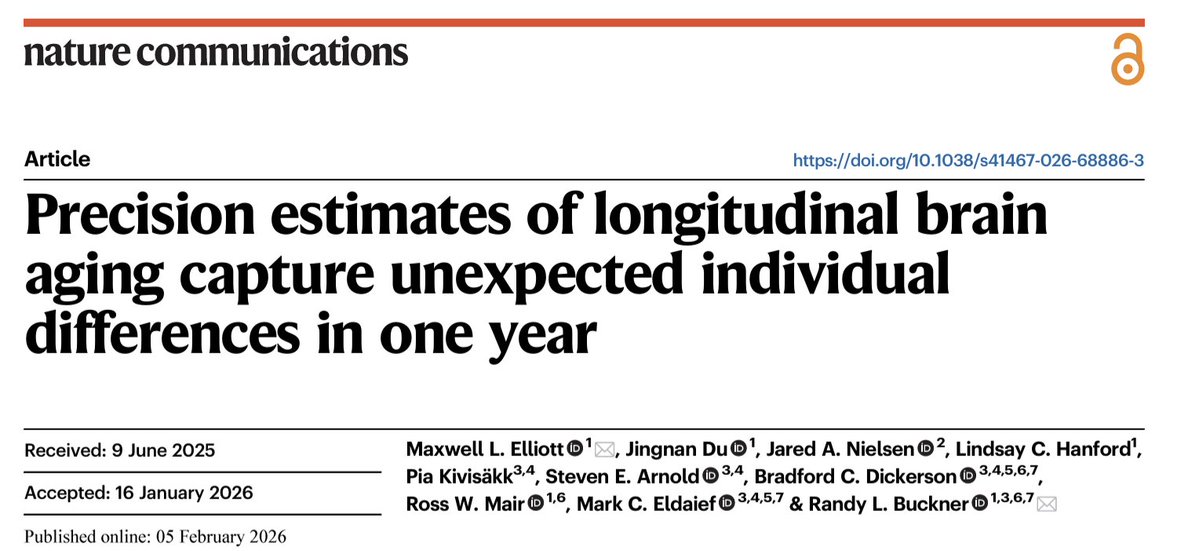
Are you interested in detecting brain changes in individuals with higher precision over shorter intervals?
Check out our new paper in @NatureComms. With @RandyLBuckner, @jingnandu049 and others
Link - https://t.co/o5NPDoHspY
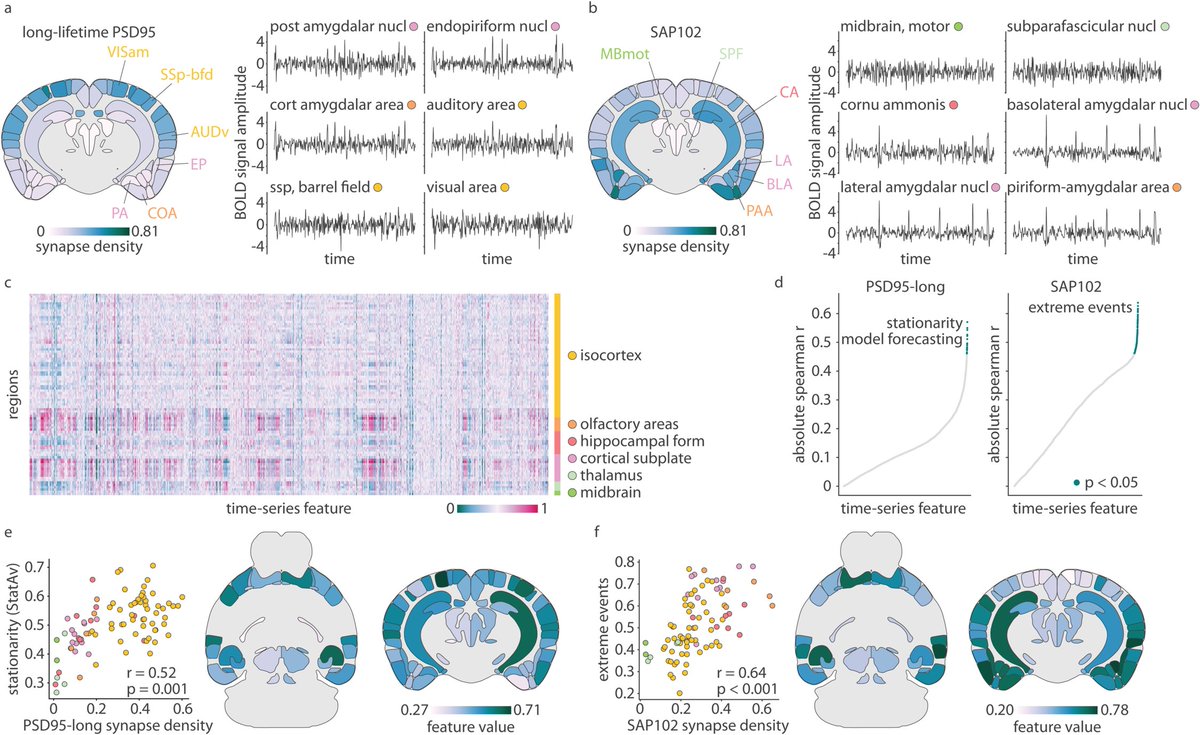
Synaptome architecture shapes regional dynamics in the mouse brain | https://t.co/YKH3euIQpP
How do diverse synapses relate to the spatial patterning of whole-brain dynamics? @JustineYHansen explores @PLOSBiology ⤵️
Beyond delighted to see this awesome paper from superstar Audrey Luo now out. See her wonderful thread below re: two highly-replicable axes of white matter development in youth.
We think of white matter as highways of the brain. But when we followed development along those highways, we were surprised. The journey is more complex than we thought. My PhD paper, “Two Axes of White Matter Development”, is now out in @NatureComms!🧠
🔗https://t.co/qR3tyH0y90
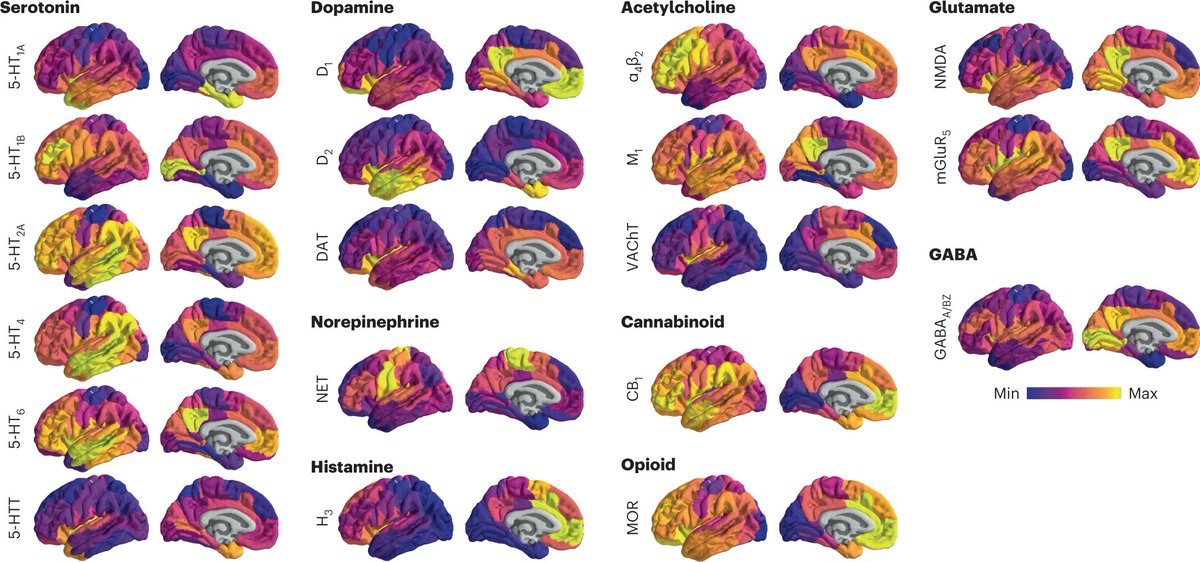
1️⃣ A few years ago we released an in vivo chemoarchitectural atlas of group-average receptor maps (https://t.co/zpjnCsVayw).
What is the inter-individual variability in receptor density, and how does it vary of brain regions?
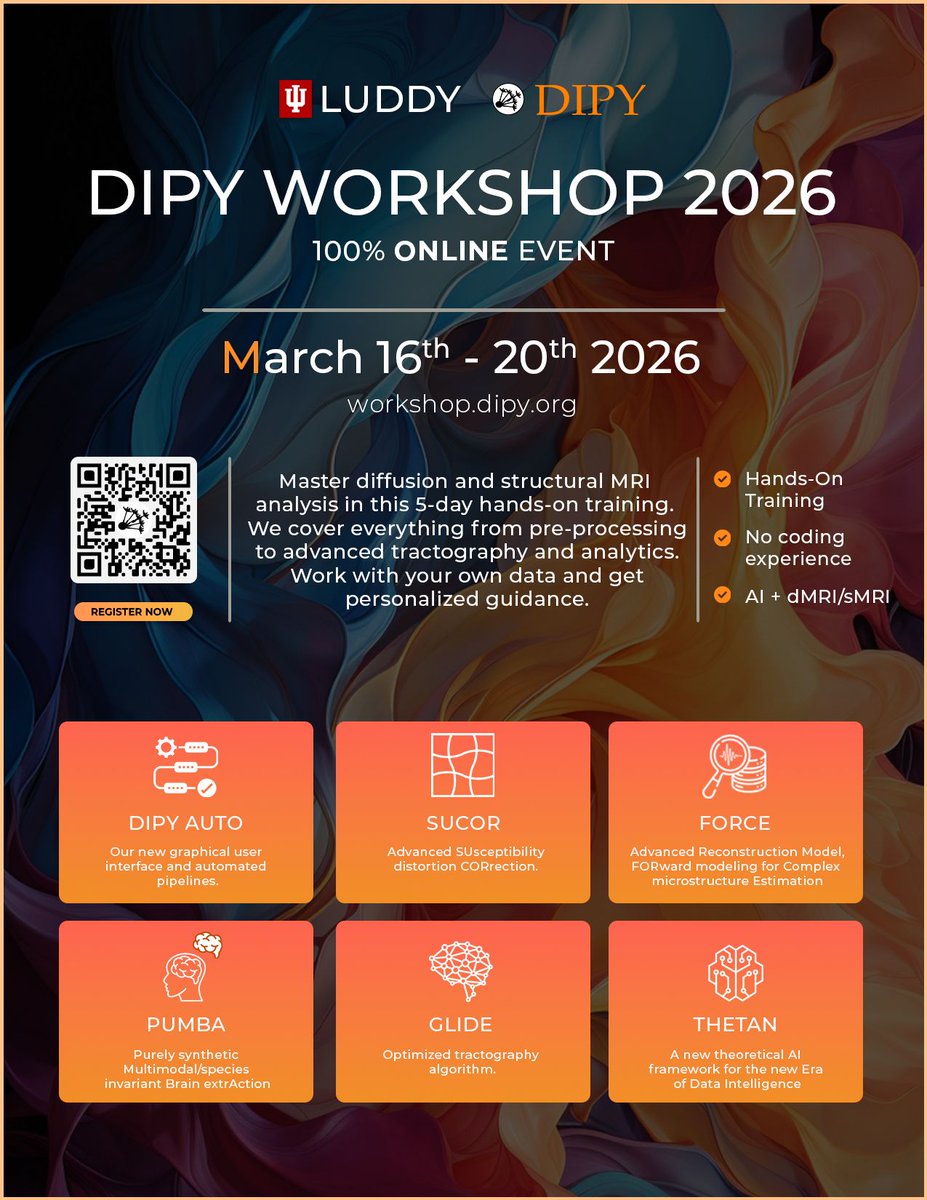
Beyond excited seeing so many of you registered already. Help us spread the word wherever you are!
March 16-20 | Hands-on medical imaging training All levels welcome
Bring your questions, your data, and your curiosity! 💙
Join us: https://t.co/WDDBrAgH0m
It’s time to rethink Parkinson’s disease. Our work reframes PD as a disorder of the somato-cognitive action network (SCAN), and shows that normalization of SCAN connectivity represents a shared mechanism across diverse effective therapies.
https://t.co/OuqOQcOcYq
@ndosenbach@DavidRen555@iamzhangvv@bttyeo@foxmdphd
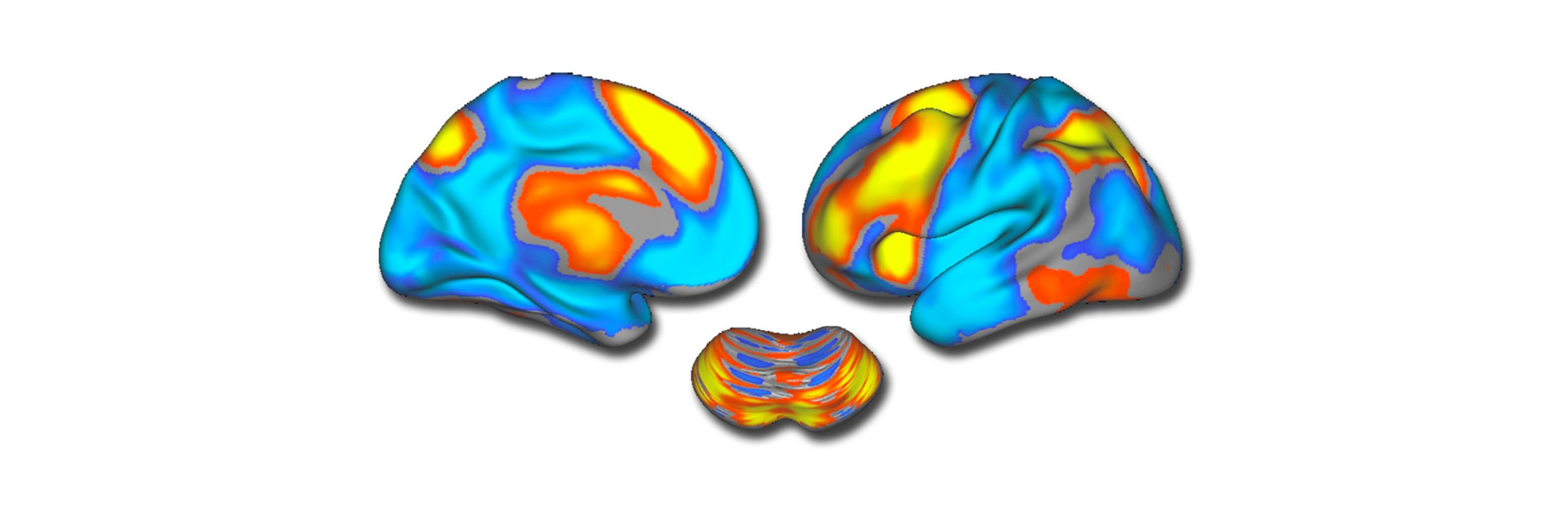
🚨 New science alert! Our cross-species study, now in Nature Neuroscience, demonstrates psychedelics distort how we should interpret functional brain imaging.
👇🧵
https://t.co/x3KbEcEawP
#Neuroscience#Psychedelics#BrainImaging
(1/10) How do brain networks and cognition co-evolve as children enter adolescence?
While valuable, cross-sectional studies offer only a single snapshot of brain–cognition relationships, missing the dynamic changes that longitudinal designs can reveal.
We hypothesize that cross-sectional and longitudinal estimates may diverge, echoing classical Simpson’s paradox.
As illustrated below:
To test this, we analyzed longitudinal fMRI and cognitive data at baseline and Year 2 in ~3,000 individuals (ages 8.9–13.5) from the ABCD Study, spanning the transition from childhood to adolescence.
[Read the full paper here: https://t.co/0NShR7O6l8]









![XieYapei's tweet photo. (1/10) How do brain networks and cognition co-evolve as children enter adolescence?
While valuable, cross-sectional studies offer only a single snapshot of brain–cognition relationships, missing the dynamic changes that longitudinal designs can reveal.
We hypothesize that cross-sectional and longitudinal estimates may diverge, echoing classical Simpson’s paradox.
As illustrated below:
To test this, we analyzed longitudinal fMRI and cognitive data at baseline and Year 2 in ~3,000 individuals (ages 8.9–13.5) from the ABCD Study, spanning the transition from childhood to adolescence.
[Read the full paper here: https://t.co/0NShR7O6l8]](https://pbs.twimg.com/media/Gs7Aqlla4AAUdup.jpg)


