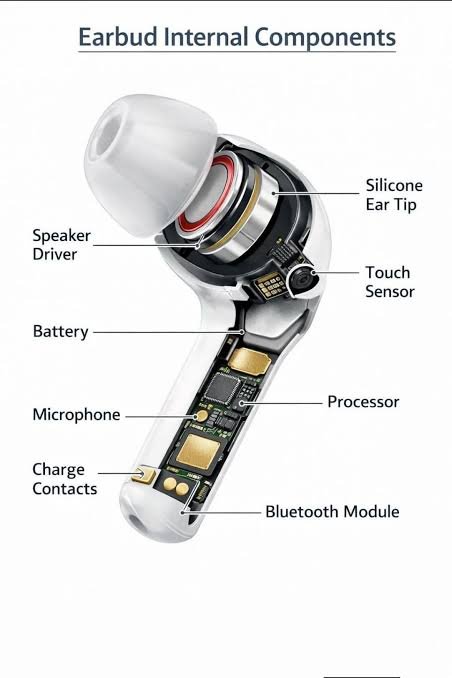
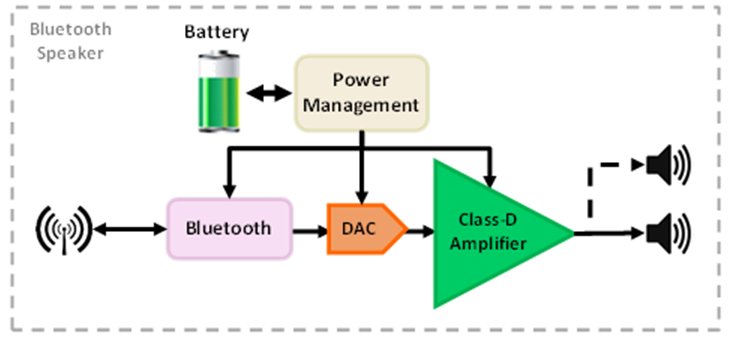
Ever wondered what actually happens inside a chip when your headphones connect via Bluetooth?
Here is a breakdown of the hardware components making it work:
1. RF Transceiver (Physical Layer)
Operates in the 2.4 GHz ISM band. Uses Adaptive Frequency Hopping to hop across 79 channels up to 1,600 times per sec to avoid Wi-Fi noise.
2. Baseband Processor & Link Controller
The digital core. Handles hardware-level timing, packet framing, AES-128 encryption & error correction before data hits the airwaves.
3. Crystal Oscillator (XTAL)
Precision timing is everything. A high-accuracy crystal oscillator keeps slave devices synchronized with the master device's clock down to microseconds.
4. Matching Network & Antenna
Converts RF signals into electromagnetic waves. PCB trace antennas or chip antennas tuned precisely to 2.4 GHz.
5. Host Controller Interface (HCI)
The bridge between the silicon controller and the high-level OS stack.
Tiny silicon doing massive math at 1,600 hops per second.
Este chad entró al minuto 89, anotó el gol de la victoria al 90, en la entrevista primero le dice “hola buenas tardes” a la reportera y después confiesa que le pidió a papá Dios meter gol.
Nunca había visto un jugador así de humilde.
🇩🇪 Cero pulgas tuvo Klopp en su presentación como DT de Alemania!
“No acepté este trabajo por mí. Lo hago por ustedes. Acepto este puesto a pesar de haber visto cómo han tratado a Julian Nagelsmann y a Thomas Tuchel.
Si atacan a mi familia, me voy. Si creen que soy un inútil, díganmelo a la cara y me iré inmediatamente, sin pedir ninguna compensación.”
Arduino support for @Nordic_Tweets nRF54L wireless SoCs
https://t.co/c3FFlEqgWp
Lolren's nRF54L Arduino Core adds Bluetooth LE and experimental Zigbee and Thread support to boards such as @seeedstudio XIAO nRF54L15 (Sense), XIAO nRFL54M20A (Sense), HolyIoT modules, the official nRF54L15 DK, and more.
The code is open-source, released under the MIT license.
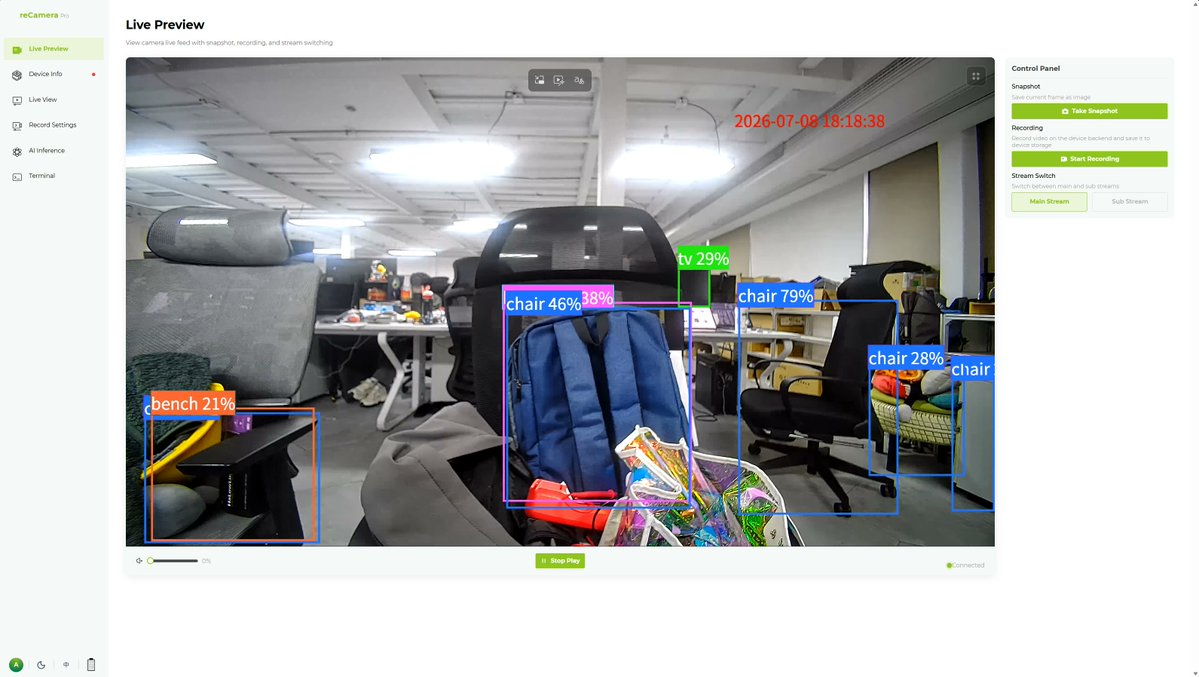
Compact Rockchip RV1126B AI camera with support for AI vision, generative AI, and smart audio workloads.
https://t.co/IUslbdHJV5
@SeeedStudio reCamera Pro ships with 2GB or 4GB RAM, 16GB eMMC flash, and features an 8MP camera sensor supporting up to 4K @ 30 FPS, an M12 lens mount, a built-in 1W speaker, two microphones, Gigabit Ethernet with PoE, dual-band WiFi 5 connectivity, a USB-C port for power and data, and offers expansion capabilities through GPIO and MIPI DSI connectors.
It leverages the processor's 3 TOPS NPU for on-device computer vision, large language models (LLMs), vision-language models (VLMs), speech-to-text (STT), and text-to-speech (TTS). The company provides a web UI and an HTTP API for control.
The world's smallest Arduino-compatible USB-C board.
https://t.co/I7CAAERRur
The moddo Pinch measures just 10.9 x 10.5 mm, and features a Microchip Technology Inc. SAMD11 Cortex-M0+ microcontroller with 4 KB SRAM and 16KB flash, an RGB LED, reset/bootloader button, 3.3 V LDO, and a total of 12 GPIOs via a 16-pin header.
The company provides a kit with a breakout board and a board URL to easily get started in the Arduino IDE.
ESP32-C5 dual-band WiFi 6 and BLE 5.0 board with a 1.47-inch color LCD.
https://t.co/WFRXF1qzOU
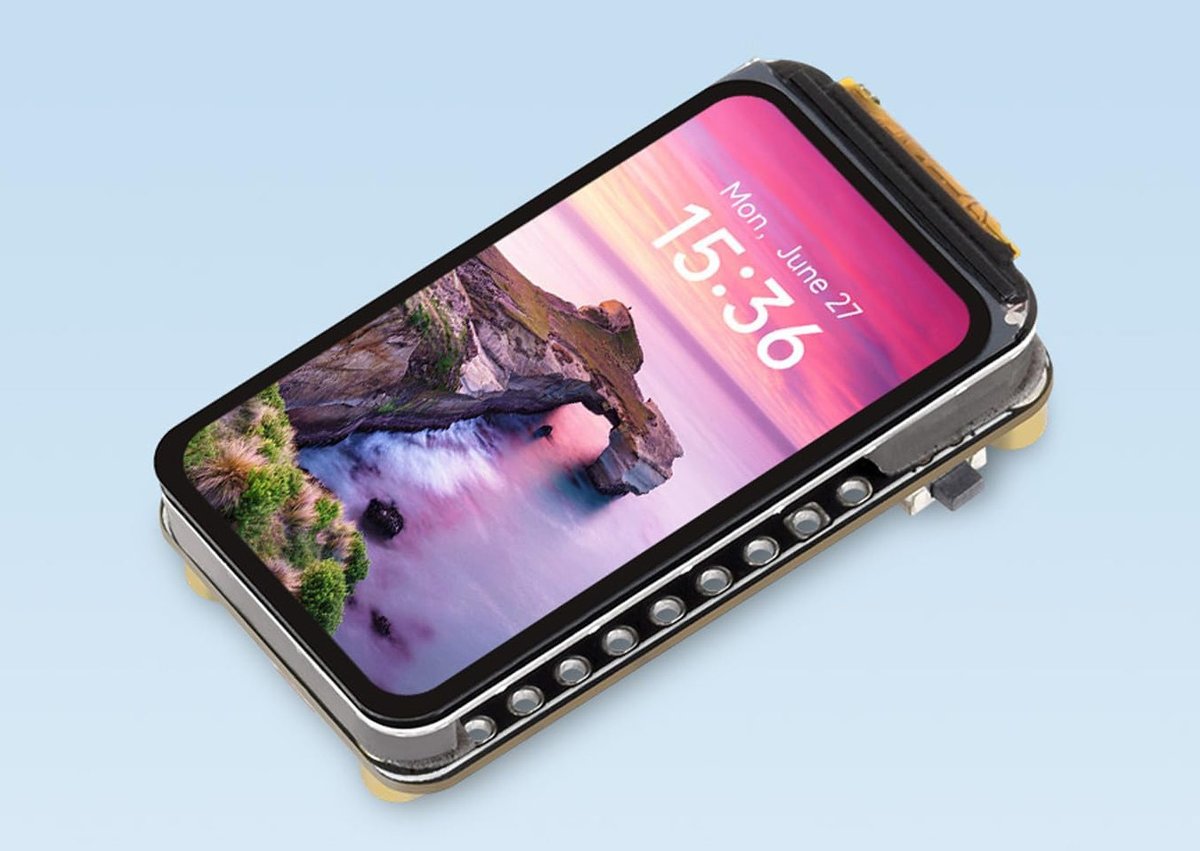
@Waveshare00 ESP32-C5-LCD-1.47 is the first LCD board we've seen based on the new ESP32-C5 SoC. It features a 1.47-inch 262K-color display with 320 x 172 resolution, 4MB of flash, an RGB LED, a microSD card slot, and two 9-pin headers for GPIO expansion.
The company provides instructions to get started with the ESP-IDF framework and the Arduino IDE. Older projects for the previous-generation ESP32-C6-LCD-1.47 board might also work with some modifications for 5 GHz WiFi.
Compact CIX P1 12-core Cortex-A720/A520 SBC launched for $239 and up.
https://t.co/jcnpbDLVEG
The new @orangepixunlong Orange Pi 6 SBC shares many of the features of the Orange Pi 6 Plus board introduced last October, but comes in a smaller and lighter form factor (90 x 90mm vs 115 x 100mm), features two 2.5GbE ports instead of two 5GbE jacks, drops support for LiPo batteries, and is offered with lower RAM capacity options (8GB-32GB vs 16GB-64GB).
The company mentions support for Debian, Ubuntu, Android, Windows, OpenHarmony, and ROS2. That's possible because of UEFI, but don't expect 100% drivers support, especially for Windows.
Hoy nos despedimos oficialmente del torneo con la frente en alto 🇮🇷... ¡pero la pasión ahora late por México! 🇲🇽🔥 No se desesperen, campeones, el futuro es suyo.
¡Adelante, campeones, y que su camino hacia el trofeo esté lleno de bendiciones! 🏆
BIOS-like firmware for the ESP32-C6 wireless SoC
https://t.co/Sp1lRGy4vf
OpenC6 BIOS open-source firmware runs as the base system on the ESP32-C6 and handles hardware initialization and system functions. Instead of flashing a full application each time, it can load small payload programs over USB or WiFi (PXE-like network boot) to RAM or flash (XIP) and use system functions through a simple Application Binary Interface (ABI).
It works on ESP32-C6 boards with at least 8MB SPI flash.
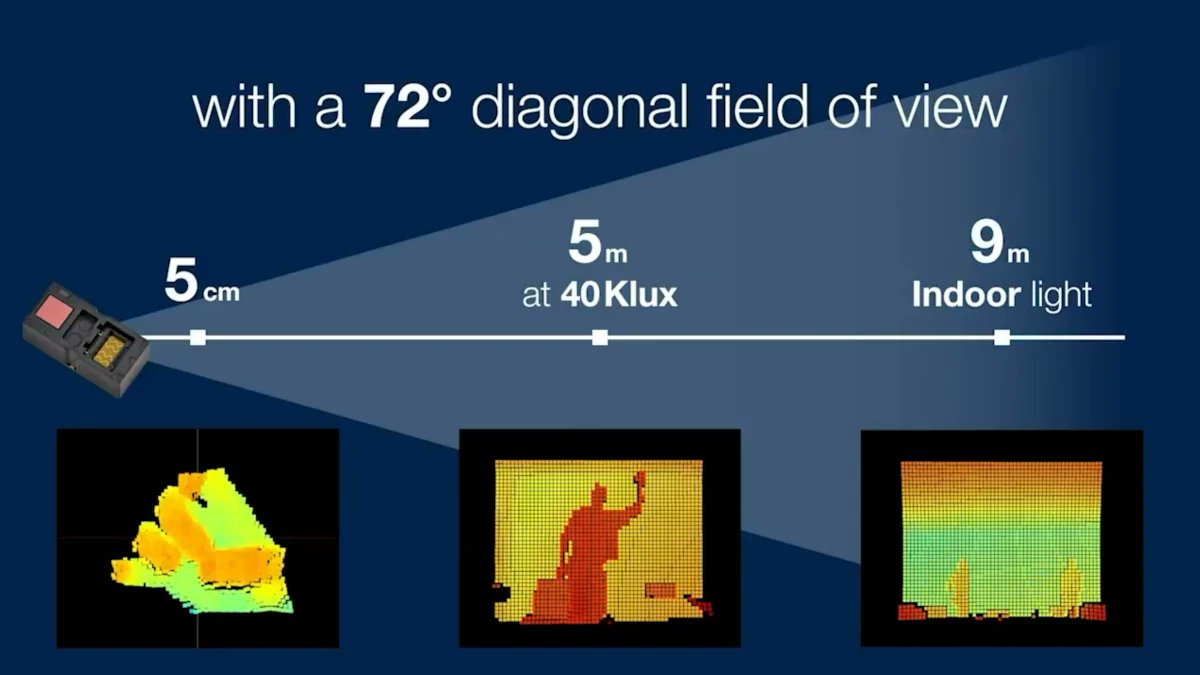
New 3D ToF LiDAR sensor with 5cm to 9m range, 2.3K zones resolution, 100 HZ frame rate.
https://t.co/I1MOdTs7FJ
@ST_World VL53L9CX is a tiny (12.8 x 6.1 x 4.6 mm) ToF module acting like a mini 3D scanner with 2268 zones. It targets a range of applications in robotics, industrial automation, smart buildings, AR/VR, and healthcare.
The module interfaces to the host over MIPI I3C or CSI to transfer 2D and 3D maps, and the company provides two evaluation boards.