What is the role of people amid hyper-rational AI on one side and the simplistic answers of populism on the other?
To frame issue better or reframe them altogether. And to do that well, we need openness and pluralism.
We also need pre-orders.
#framers
https://t.co/KOrwzp37gi
Hear from @kncukier , Deputy Executive Editor of the @TheEconomist at the #AIforGood Global Summit, 7–10 July in Geneva.
At last year's AI for Good Global Summit, Kenneth explored the intersection of #AI, religion, and humanism, examining how emerging #technologies are reshaping our understanding of #ethics, purpose, and what it means to be human. This year, he's returning to continue the conversation and share new insights on our AI future
🎟️ Register now: https://t.co/jjecfjkywq
Encode the Geneva Conventions into AI weapons.
Join my talk at the UN's AI for Good Summit in Geneva on Thur. As AI makes weapons more lethal, there is an opportunity to make them more humane as well. The same technology can adhere to the laws of war
https://t.co/sA1LsQrEre
What happens when a new era in human existence (AI) juts up against the oldest traditions of human experience (religion). Join my online course on AI and faith this June with Woodbrooke Institute. A few places left.
https://t.co/YYZC5tCE8v
Sick of AI? Curious about spirituality? If only there were a four-week course in June from the Woodbrooke Institute...
Join me and explore what happens when a new era in human existence smashes against the oldest traditions of human experience. OMG!
https://t.co/x62eBHjChd
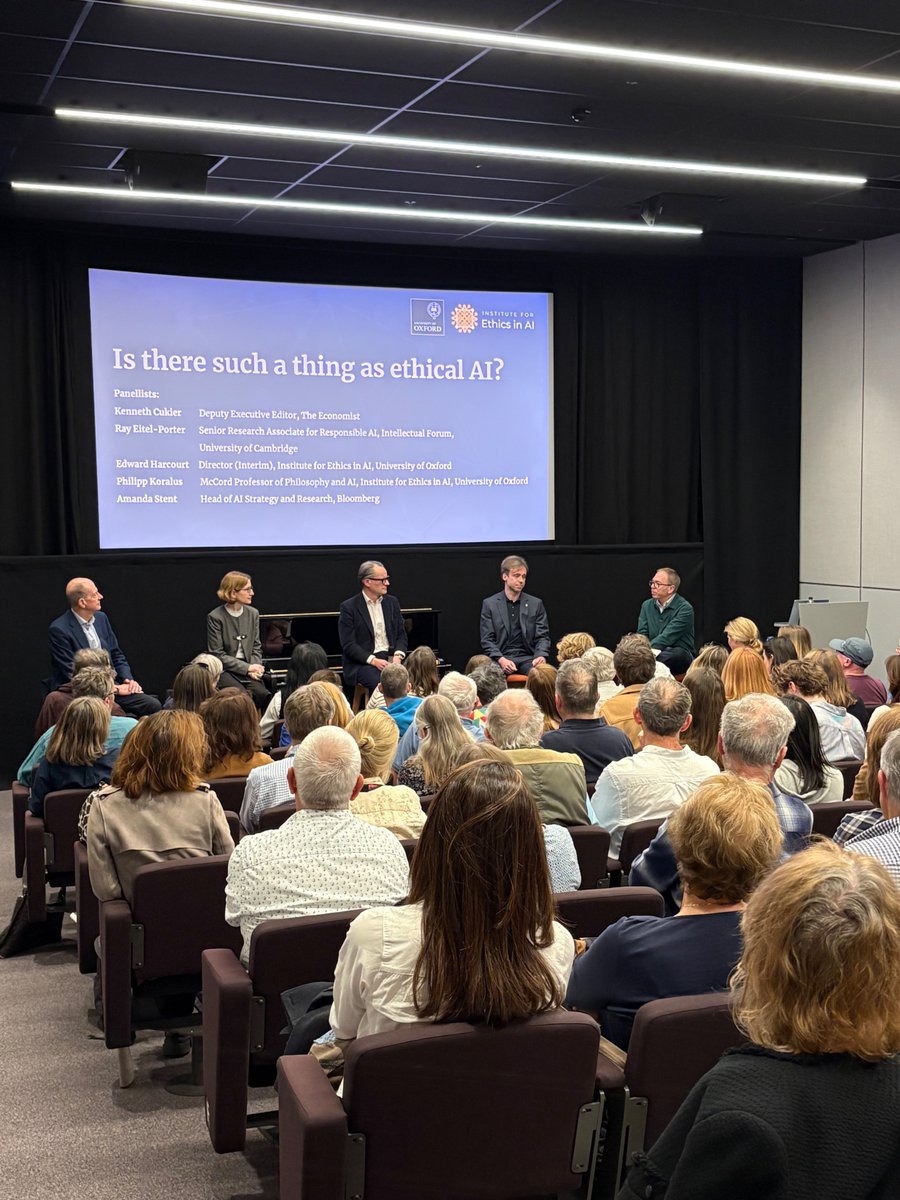
🤖 Is there such a thing as ethical AI?
On 25 April, the Institute for Ethics in AI invites you to a public panel exploring one of the most important questions of our time: Can AI be ethical - or is it an ideal we are still far from realising?
Hosted at the Schwarzman Centre for the Humanities, this discussion brings together leading voices from journalism, academia, philosophy and industry to examine what 'Ethical AI' means in practice - and whether it can guide how AI is developed and used.
Panellists:
Kenneth Cukier (@kncukier), Deputy Executive Editor, The Economist
Ray Eitel-Porter (@RayEitelPorter), Senior Research Associate for Responsible AI, Intellectual Forum, University of Cambridge; former Global Lead for Responsible AI, Accenture
Edward Harcourt, Director (Interim), Institute for Ethics in AI, University of Oxford
Philipp Koralus (@PhilippKoralus), McCord Professor of Philosophy and AI, Institute for Ethics in AI, University of Oxford
Amanda Stent (@astent), Head of AI Strategy and Research, Bloomberg
Open to all, this event is part of the Schwarzman Centre Open House - a free day of performances, discussions and activities for everyone.
📍 Schwarzman Centre, Oxford, Cinema
🗓 25 April 2026
🕓 16:00
🔗 Find out more about the event: https://t.co/EmOwM8R71S
🗣️ We were delighted to host a full house for our panel discussion, 'Is there such a thing as ethical AI?', which brought together Kenneth Cukier (@kncukier), Deputy Executive Editor @TheEconomist; Amanda Stent (@astent), Head of AI Strategy and Research at @Bloomberg; Ray Eitel-Porter (@RayEitelPorter), Senior Research Associate for Responsible AI at the Intellectual Forum, University of Cambridge (@Cambridge_Uni); Edward Harcourt, Director of the Institute for Ethics in AI, University of Oxford (@UniofOxford) and Philipp Koralus (@PhilippKoralus), McCord Professor of Philosophy and AI at the Institute for Ethics in AI, University of Oxford (@UniofOxford). The discussion prompted a wide-ranging exchange with the audience. If you were unable to join us on the day, please keep an eye on our channels in the coming weeks; we will be sharing the recording soon.
We were also pleased to be part of Es Devlin’s 360 Vessels workshop series, developed as part of her Bloomberg–Oxford Fellowship in collaboration with the Institute for Ethics in AI. The installation, combining choral performance, light and 360 clay vessels representing different perspectives on AI, provided a memorable close to the day.
Thank you again to all who attended, and to everyone who made the event possible. We look forward to welcoming you again soon to the Institute and the Schwarzman Centre for the Humanities.
🔗 Discover our upcoming events this Trinity term on our website: https://t.co/3tkz1V4ERl
Three Minutes to Midnight: How Europe is Running out of Time, by @ajkeen https://t.co/XhrRMDRJFt
@kncukier
Few speakers at DLD this year were more sombre than The Economist's deputy executive editor Kenneth Cukier. “Civilizations aren’t killed,” Cukier says, “they commit suicide.” It's now "three minutes to midnight" in Europe, he warns, and what he called the priceless "vase" of the liberal order is about to shatter. Borrowing from Hemingway's description of personal bankruptcy, Cukier argues that civilizational suicide comes "slowly, then suddenly". So can anything avert this collapse? Cukier isn't particularly optimistic, but nor is he hopeless. The vase hasn't shattered yet. The hope, he suggests, is with new peaceful technologies that can help reinvent democracy. But if the European clock really is teetering at three minutes to midnight, it's hard to be persuaded by Kenneth Cukier’s abstract promises of ethical technology.
At IASEAI'26, @kncukier polled the audience on AI: about 2/3 felt optimistic. 1/3 had a "sinking feeling in the stomach." After reading the International AI Safety Report, panelists were more concerned. @ghadfield was "very nervous", @susanleavy was "petrified," while @Yoshua_Bengio said "we need a global discussion." Read more: https://t.co/uLdQTdMXz6 @IASEAIorg
Three Minutes to Midnight: How Europe is Running out of Time, by @ajkeen https://t.co/XhrRMDRJFt
@kncukier
Few speakers at DLD this year were more sombre than The Economist's deputy executive editor Kenneth Cukier. “Civilizations aren’t killed,” Cukier says, “they commit suicide.” It's now "three minutes to midnight" in Europe, he warns, and what he called the priceless "vase" of the liberal order is about to shatter. Borrowing from Hemingway's description of personal bankruptcy, Cukier argues that civilizational suicide comes "slowly, then suddenly". So can anything avert this collapse? Cukier isn't particularly optimistic, but nor is he hopeless. The vase hasn't shattered yet. The hope, he suggests, is with new peaceful technologies that can help reinvent democracy. But if the European clock really is teetering at three minutes to midnight, it's hard to be persuaded by Kenneth Cukier’s abstract promises of ethical technology.
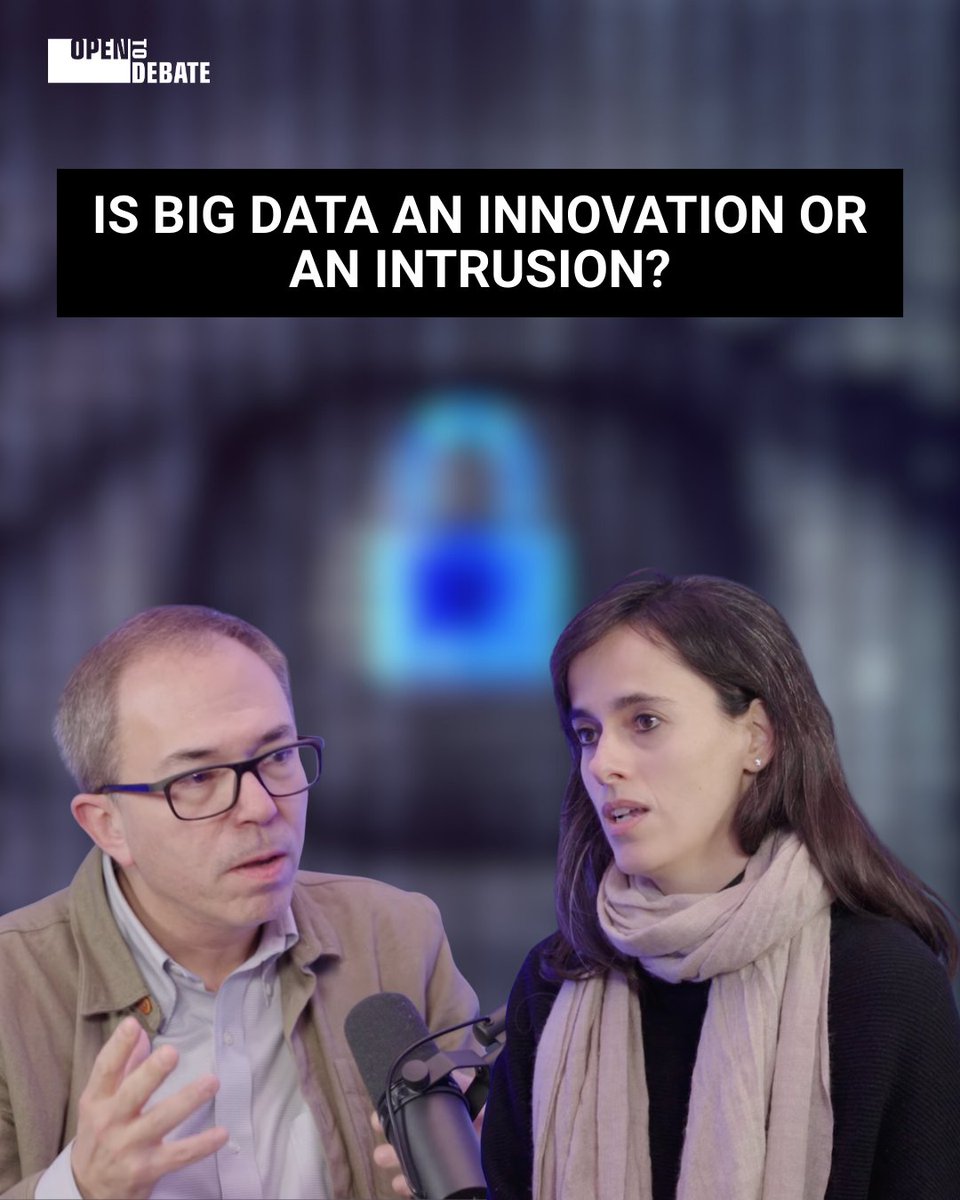
Every click you make is shaping the world around you. Big Data powers AI, elections, and trillion-dollar tech giants—but at what cost to privacy, power, and democracy?
Listen now and decide: Is Big Data an innovation or intrusion?
Featured Debaters:
@kncukier, Deputy Executive Editor @TheEconomist@CarissaVeliz, Associate Professor at the Faculty of Philosophy and the Institute for Ethics in AI at the @UniofOxford
Moderated by @xeniawickett.
Had a lovely time being beaten to a pulp by the amazing @CarissaVeliz in the debate - but it's because I'm a terrible debater: the value of data (with ethical practices) is still the right one, even if I'm inept at making the case!
Can Democracy Survive Algorithms?
From Minority Report to real-world elections, @kncukier and @CarissaVeliz tackle the dangers of assuming data can always predict the future, and explore why respecting human unpredictability—and the “minority view”—is so essential.
Should companies be allowed to buy and sell your personal data?
@CarissaVeliz argues it’s time to ban the data trade. @kncukier counters that, when used responsibly, it’s fair game and can enhance user experience.
Where do you stand?