One of the biggest realizations from traveling long-term as a biohacker is that “health optimization” often collapses the moment people leave their controlled environment.
And that’s why I wrote this book. For now, it’s just a test version in PDF format so I can see how things are going, but aside from the format, it’s fully complete. You’ll also find a few practical illustrations in there—it’s not just boring scientific text.
I truly hope you enjoy it :)
https://t.co/heTFZPfpz2
How to Treat Food Poisoning as a Modern Medicine Man in 2026:
I had a mild case of food poisoning today. Instead of taking an antispasmodic, I made a tea with vilcacora (AKA cat’s claw AKA Uncaria tomentosa), Greek mountain tea (AKA Sideritis scardica AKA Malotira AKA ironwort AKA tsai tou vonou), and added 5 g of glycine. The cramping ceased within 15 minutes. I can’t say whether that was the combination of ingredients, the known effects of glycine on the gut (or placebo, or the illness resolving on its own :)), but I was surprised by how quickly it worked, so I summarized some pharmacology.
Vilcacora (cat’s claw) is rich in pentacyclic oxindole alkaloids (e.g., isopteropodine, mitraphylline). In vitro and animal studies show these attenuate NF‑κB signaling and reduce pro‑inflammatory cytokines (TNF‑α, IL‑1β, IL‑6), and some extracts show antioxidant/cytoprotective effects that could help epithelial integrity during inflammation. Human clinical evidence for acute gastroenteritis is, however, very limited...
Greek mountain tea (Sideritis scardica), one of my favorite herbs in general, is, among other things, rich in flavonoids such as hypolaetin and isoscutellarein, along with several phenolic compounds. These compounds show antioxidant and anti-inflammatory activity in experimental models, and some also inhibit COX enzymes in vitro. While it’s very difficult to know how much of that translates from a cup of tea, this plant has an amazing history of traditional use for digestive complaints (just like vilcacora).
Then there’s glycine, which I suspect may have contributed most to the relatively quick reduction in cramping. I take approx. 3 grams daily, but at 5 g, it’s above normal dietary intake.
Beyond being an amino acid, glycine is also a signaling molecule with real pharmacology. Glycine receptors are best known in the CNS, but they are also present in the enteric nervous system, where glycine has been shown to activate myenteric neurons and alter colonic motility in experimental models. When glycine binds these receptors, they open chloride channels, changing membrane potential and neuronal excitability; in the gut, that gives a plausible mechanism for dampening spasms, even though the direction of the effect can depend on cell type and context. On immune cells, glycine has anti-inflammatory effects in experimental systems, including reduced cytokine signaling, but this is still mainly preclinical rather than definitive human evidence.
Glycine is also the primary structural amino acid in collagen, making up roughly a third of the molecule. The intestinal epithelium renews itself every 3-5 days under normal conditions - and even faster after injury - so the demand for glycine increases when the gut is repairing itself. Endogenous glycine synthesis may not fully meet demand during inflammation, making dietary glycine more relevant than it’s often given credit for.
On top of that, experimental studies suggest glycine can help preserve epithelial barrier function by supporting tight-junction proteins such as claudin-7 and ZO proteins and by reducing oxidative and ER-stress-related injury. It certainly isn't proof that glycine can cure food poisoning, but I'm definitely willing to give it some credit for that.
And that's it.
I'm going to venture a BIG CLAIM here: that this combination is literally a “miracle cure” for digestive problems, but I'd be happy if you tested it out for yourselves. What works today may not work tomorrow. What works for me may not work for you. But it's definitely worth a try.
Resources:
Cat’s claw (Uncaria tomentosa) — NF‑κB, anti‑inflammatory, cytoprotection: Keplinger K et al., Phytomedicine 1999. https://t.co/l0tpyUHcMA
Sideritis (Greek mountain tea) — flavonoids, antioxidant/anti‑inflammatory: Soković M et al., Food Chem Toxicol 2009. https://t.co/8QYfw2Icbl
Glycine — GlyR neuromodulation, anti‑inflammatory, barrier effects: Singer P et al., Am J Physiol Gastrointest Liver Physiol 2004; Wang et al., Br J Pharmacol 2000 (example review). https://t.co/zKOCt4RZRT
Life in civilization has robbed me of many things, and I’m not alone in this. And the older I get, the more I realize just how serious this is. Wealth, a career, things we can buy, friendships, children, pets, relationships, nice food, nice house and all sorts of other things—they’re all fine, but personally, one of my top priorities is to minimize the destructive impact of civilization on my body and mind and to “get as close to nature as possible,” no matter how cliché that may sound.
The destruction is irreversible, and I doubt that I—or anyone else—can do anything about it. However, if you feel the same way I do, you should definitely read my three-part series of articles, in which I describe my “impression” of all the trappings of civilization. Enjoy. I hope we’ll meet in the future at some pleasant spot against the current.
1.) Encrypted messengers, educational systems and social media (https://t.co/d8dp6EOxIW)
2.) The inability to find happiness and satisfaction within the urban environment (https://t.co/ahafss0fJh)
3.) GenZ, AI and disappointment from the present and future (https://t.co/oGZH2MIJX2)
@jurbed Interesting - to me personally, dog shit is just a speck of dust in the pile of manure that is civilization as a whole. People, buildings, technology, and everything in between. Prague is a reinforced concrete desert, which I write about here :)
https://t.co/phjcwL1IXK
I recently started experimenting with Uncaria tomentosa (AKA Cat’s Claw, AKA Vilcacora).
It’s a plant closely associated with traditional Amazonian medicine and is typically used for things related to immunity, inflammation, infections, and joint pain. Interestingly, for me it produces surprisingly pronounced nootropic effects — comparable to high doses of Lion’s Mane.
My assumption is that the primary drivers are its oxindole alkaloids (mitraphylline, isomitraphylline, pteropodine, isopteropodine, etc.), which are thought to influence neuroimmune signalling among other things, but honestly I’m not sure whether that’s the whole story.
Purely subjectively, I would also speculate that Vilcacora may produce "vinpocetine or Greek mountain tea-like" effect of cerebral blood flow. That’s just my conspirative hypothesis though.
In any case, if anyone has experienced something similar, I’d be very interested to hear about it. I think this plant deserves further experimentation. I haven’t found much particularly interesting data on its cognitive effects, although I do know that Powerlogy used it as one of the ingredients in their Brain Focus formula, which honestly doesn’t surprise me at all :)
Unpopular opinion:
A surprising amount of biohacking is just socially acceptable narcissistic perfectionism.
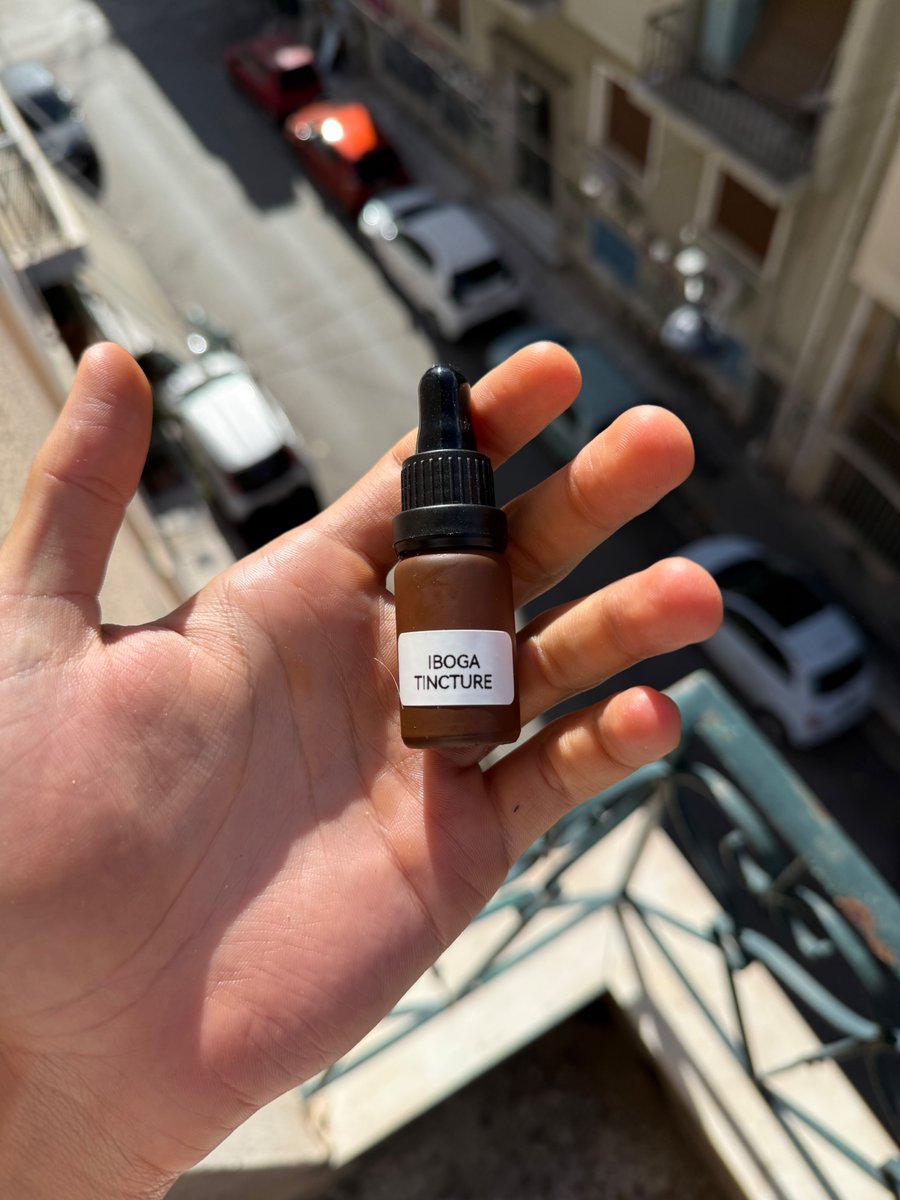
One of the biggest lessons I took from recent iboga therapies was realizing that my obsession with self-optimization wasn’t making me healthier—it was often doing the opposite.
Sometimes less is more. Being okay with being imperfect might be the ultimate biohack.
This talk with Teemu really hit home for me:
https://t.co/UarEI5dd5f
It looks like 40 Hz frequency stimulation could be extremely interesting for Alzheimer’s patients. This is essentially a gamma frequency — the same frequency range involved when an opera singer can shatter a glass with resonance.
In this case, researchers are investigating whether 40 Hz stimulation may help influence amyloid plaque and brain function. One near-infrared device using this approach is currently awaiting FDA approval and may potentially be approved next year.
If you want to learn more, I recommend this video from this guy (if you’re not already following him). It’s not just another product review — he explains some of the fundamentals behind these “healing frequencies.”
https://t.co/O40OMLYhFI
Dave, this is exactly the kind of stuff I use while traveling. I'm not a longevity leader like you, though :)
But I’ve been into biohacking for years, and since I travel a lot, I decided to write an entire book on the intersection of biohacking and travel, in which I explain some of the insights, protocols, and supplements—and you and your podcasts were a major inspiration for it. If you’re interested, you can check it out — for now it’s only available as a PDF.
https://t.co/heTFZPfpz2
@bryan_johnson@justalexoki@_katetolo Did you happen to forget to tell Claude how much money you have? I think that would dramatically improve your chances
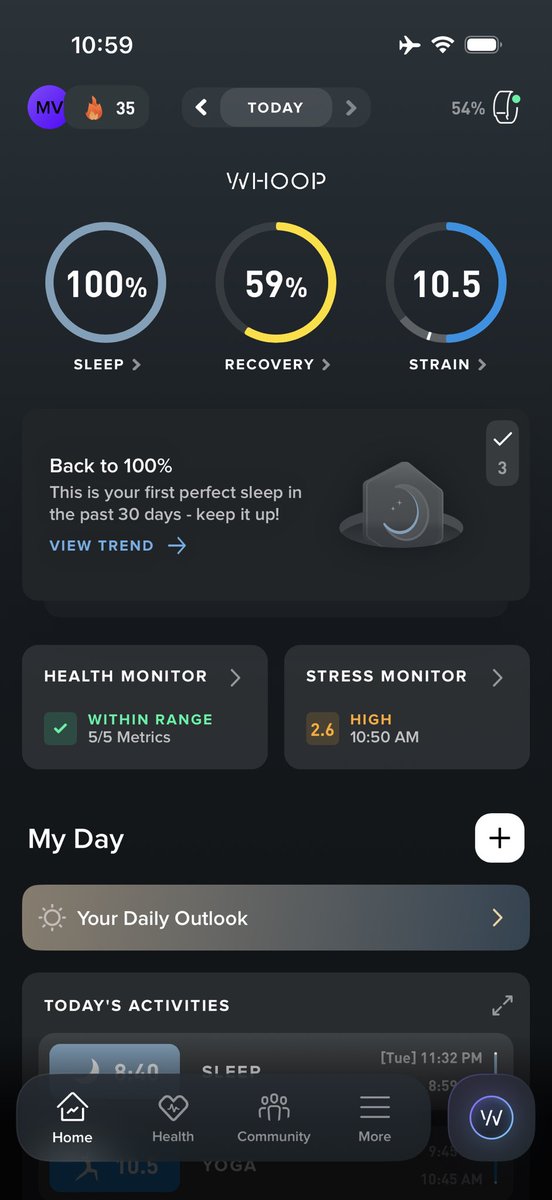
The last few days, I’ve genuinely had the best sleep of my life. Yin yoga before sleep is, so far, the most consistent sleep biohack I’ve ever tried.
I experimented with this before (and I’ve practiced fairly regularly for years), but I realized the real trick is doing a long session (around 45 minutes or more) and doing it as the very last thing before sleep, ideally directly before meditation.
Personally, it works unbelievably well for me. My sleep scores now look like those of people who spend millions of dollars a year optimizing their health, and outside of time, it costs me absolutely nothing. I honestly don’t remember the last time I slept this well.
What’s interesting is that this does not feel comparable to normal exercise or even most forms of yoga. Yin yoga practice is based around long passive holds, minimal muscular activity, slower breathing and prolonged exposure to mild discomfort without reactive tension. It feels less like “training” and more like doing nothing :)
Most people spend the entire day in a stimulated, attention-fragmented state and then expect sleep to happen immediately.
After ~30–40 minutes of yin yoga, there is often a noticeable shift: breathing slows, muscular guarding decreases and the body stops behaving as if it needs to prepare for action. The long passive holds also seem to alter how sensory signals are processed - tension stops feeling like something the system needs to react to, and the entire body gradually shifts from vigilance into inhibition.
I’m not going into pharmacology here — I’ve already covered the mechanisms in detail elsewhere, and there’s no point repeating them. This is just a subjective report from the first days of microdosing iboga.
The first two to three doses were anything but subtle. The closest description I have is a kind of failure of filtering in the system. Normally, thoughts and sensory inputs have different weights — some are background noise, some are relevant. Here, it felt like everything was assigned the same high importance, without any hierarchy or gating — just a flat field of signals all competing for attention.
That created a very specific kind of overload. Too many signals, all amplified, without a mechanism to suppress or prioritize them. At the peak of that state, there were thoughts that could be described as suicidal, but they didn’t come from despair or low mood. I still had a certain degree of metacognition and was simply observing a system that was saturated and unable to organize itself properly. This phase was short-lived and only present during the first exposures, but it’s not something I would ignore or downplay.
After that, things shifted into a completely different configuration.
The baseline mood stabilized and was actually quite good. At the same time, the relationship between behavior and reward changed in a way that’s difficult to map onto anything familiar. Activities I used to find rewarding still function on a mechanical level — I can do them, I understand them — but the reinforcing component is weakened. It doesn’t feel like anhedonia, because the baseline isn’t negative. It’s more like the “pull” behind certain behaviors is missing.
What made this even clearer was how stimulation was processed. Before this, I had a fairly reactive system — certain inputs, like even small doses of cacao, would easily push me into overstimulation. There was a kind of low tolerance to dopaminergic drive. After iboga, I tried cacao again, expecting the same result, but it didn’t happen. There was no spike, no overload, no “too much” feeling. It was smooth, almost neutral, just integrated into the background. That was the moment it became obvious that something about how my system handles dopamine had changed. It felt less like increasing or decreasing dopamine and more like changing the way the system responds to it.
At the same time, I can still feel patterns firing that previously led to action, including what I would normally interpret as dopamine-driven craving. The difference is that they don’t translate into compulsion. There’s a kind of separation between the signal and the response. In some cases, it goes even further — instead of having to cognitively resist something, there’s a very clear somatic pushback, almost as if the body refuses to engage before the mind even gets involved. I didn’t decide to change anything, but some behaviors simply don’t pass through anymore.
I also want to be clear about uncertainty. I don’t have proof that the initial extreme states, including the overload and the darker thought patterns, are directly caused by iboga. The timing aligns, and I don’t have a better explanation, but this is still just an observation.
What makes iboga particularly difficult to place is that it sits in a strange gap between what we know and what people report. There is solid evidence for certain effects — especially around addiction and long-term behavioral change — but at the same time, there are repeated anecdotal reports of things that go far beyond standard neuropharmacology. People talk about shifts in metabolism, changes in how they respond to food, even the resolution of gut-related issues like SIBO. It sounds excessive, but the consistency of these reports is hard to ignore, even if we don’t yet have a framework to explain them.
The best way I can summarize the core shift is this: the system still generates reward-related signals, but their ability to drive behavior is reduced. That creates a state where patterns can be observed without automatically acting on them. It feels less like suppression and more like a loss of coupling between signal and action.
I don’t know how stable this is over time or how it reorganizes in the longer term. For now, it looks like a transitional phase where old patterns are still active but no longer dominant, and I need to integrate it.
This can be dangerous. I wouldn’t recommend experimenting with this lightly.
A lot of “natural” allergy approaches generally function as a form of long-term immune modulation.
Things like reishi, etc. — they can work (and often work well), but it’s slow and indirect.
On the other side you have antihistamines, which just blunt the reaction.
Black seed oil feels like something in between — still natural, but much more targeted.
↓