Scientists May Have Discovered Why We Gained Consciousness.
Two new papers from Ruhr University Bochum that shift the classic “how” question of consciousness to a more evolutionary “why.”
The first paper, by philosophers Albert Newen and Carlos Montemayor, proposes the ALARM theory, which frames consciousness as three graded levels rather than an all-or-nothing trait: basic arousal, general alertness, and reflexive (self-)consciousness.
Basic arousal is described as an evolutionarily ancient “alarm system” that sensitizes organisms to life-threatening dangers. General alertness builds on that by enabling organisms to detect and learn correlations—from simple cues like smoke indicating fire to more abstract, scientific relationships. At the highest level, reflexive consciousness introduces a sense of self extended across past and future, allowing individuals not just to perceive their environment, but also to register and evaluate aspects of themselves in relation to it.
The second paper, led by neuroscientists Onur Güntürkün and Gianmarco Maldarelli, applies this graded framework to birds, challenging the stereotype of the “bird brain.” Despite very different brain architecture from mammals—birds lack a prefrontal cortex but possess a highly interconnected nidopallium caudolaterale (NCL)—the researchers argue that many bird species reach surprisingly high levels on the ALARM scale. Experiments such as the “mirror-audience test” with roosters show that these animals can distinguish themselves from conspecifics and adjust their alarm calls accordingly, suggesting sophisticated information processing and self–other differentiation.
References:
Newen, A., & Montemayor, C. (2025). The ALARM theory of consciousness: A multi-level account of arousal, alertness, and reflexive self-consciousness. *Philosophical Transactions of the Royal Society B: Biological Sciences*.
Güntürkün, O., & Maldarelli, G. (2025). Levels of consciousness in birds: Evidence from behavior and avian brain architecture. *Philosophical Transactions of the Royal Society B: Biological Sciences*.
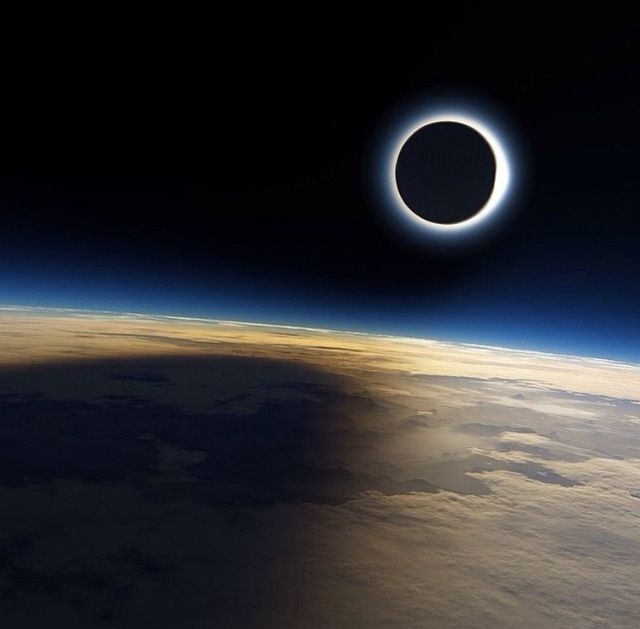
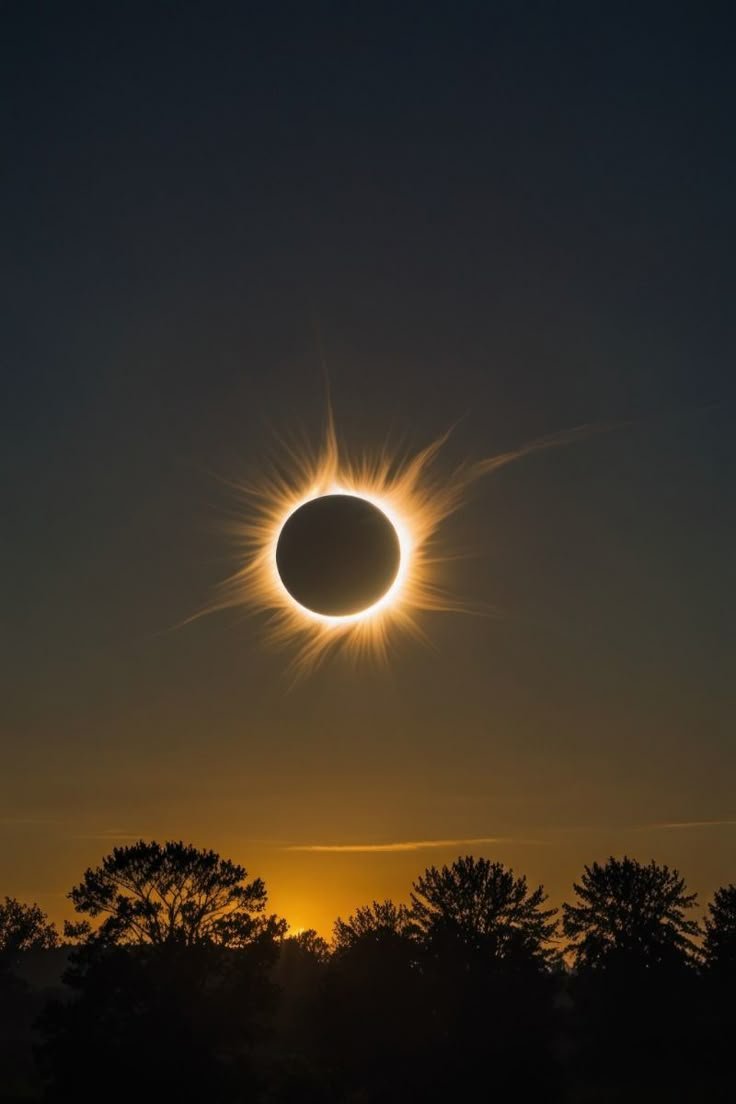
BREAKING🚨: Starting February 17, 2026, Earth enters what astronomers are calling a "golden age" of solar eclipses.
Over the next three years, six solar eclipses will sweep across the planet: three "ring of fire" annular eclipses and three total solar eclipses, all between 2026 and 2028.
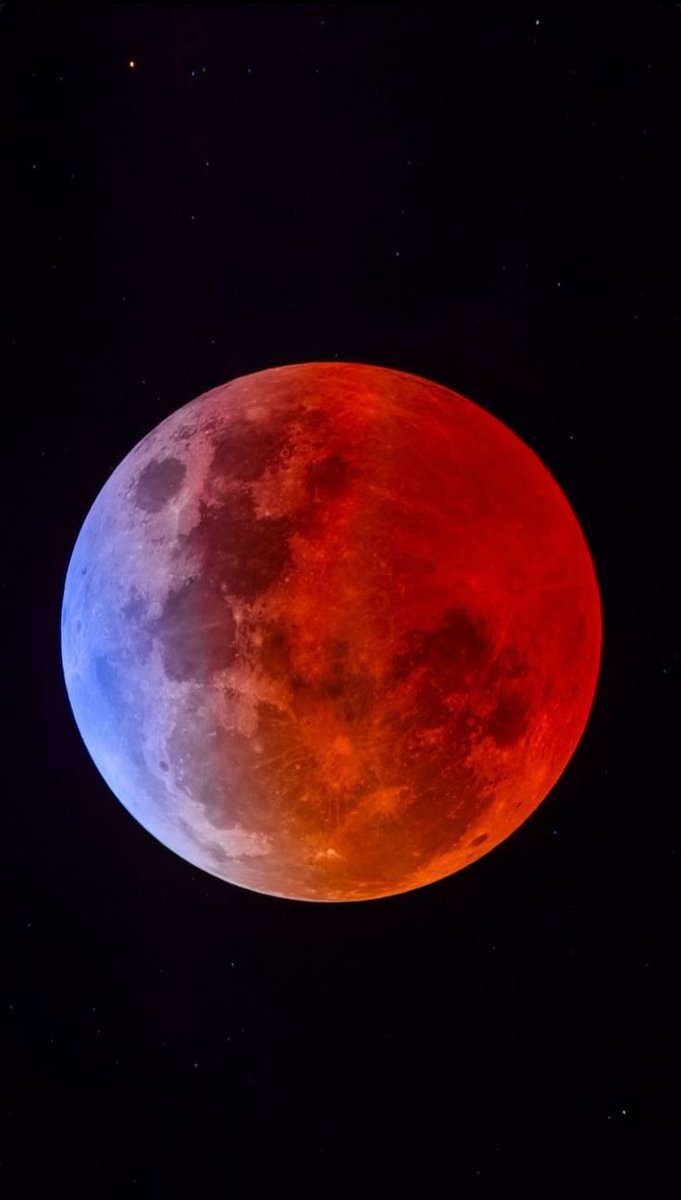
BREAKING🚨: On March 3, 2026, a total lunar eclipse will turn the Moon blood red for ~58 minutes — visible across the night side of Earth.
Countdown: 14 days left!
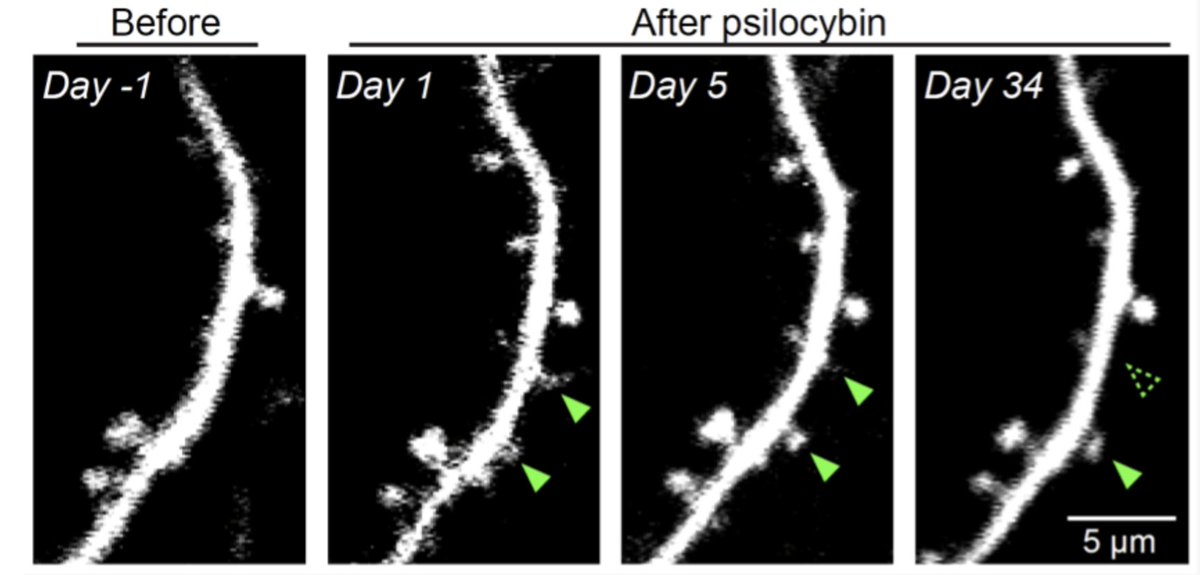
We can now watch psilocybin grow new brain connections in real time.
Not metaphorically. Not "neuroplasticity" as a vague buzzword. Actual, physical structures — dendritic spines — sprouting from cortical neurons within 24 hours of a single dose.
A team at Yale used chronic two-photon microscopy to image individual dendritic spines on layer 5 pyramidal neurons in the medial frontal cortex of living mice.
Before psilocybin. After psilocybin. Same neurons. Same spines. Day after day.
And here's what they found:
A single dose of psilocybin produced a ~10% increase in spine density and spine size. New spines began forming within 24 hours. Most of these new connections were still there a month later.
That last part matters most.
Psilocybin has a half-life of about 3 hours. The molecule is gone by dinner. But the structural changes it triggers persist for at least 34 days (and likely far longer).
This is the biological explanation for something clinicians have observed for years: a single psilocybin session producing therapeutic benefits that last months. The drug disappears, but the architecture it built does not.
There's a critical mechanistic detail. When researchers pre-treated with ketanserin — a 5-HT2A receptor antagonist — the spine growth was completely blocked. This confirms that structural remodeling depends on activation of the serotonin 2A receptor. The same receptor responsible for the psychedelic experience itself.
A 2025 follow-up from the same lab went further. Using rabies tracing to map brain-wide inputs to these new spines, they discovered psilocybin's rewiring is network-specific. It selectively strengthens inputs from perceptual and default mode network regions, the same networks implicated in self-referential processing, rumination, and depression.
It doesn't just grow connections randomly. It grows the RIGHT ones.
Here's what this means for practitioners:
The window after a psychedelic experience isn't just psychological. It's structural. New dendritic spines form and stabilize in the days and weeks following a session.
Integration practices — therapy, journaling, somatic work, meditation, breathwork — aren't just processing insights. They may be reinforcing which of these new physical connections survive.
You're not just supporting someone's mental model. You're supporting their neural architecture.
Think about what that reframes. The integration period isn't a nice-to-have. It's a biological imperative. Those new spines either stabilize into lasting connections or get pruned. The environment, practices, and support during that window may determine which.
We're not just learning that psilocybin works. We're watching exactly how it works, at the level of individual synapses.
The implications for how we design protocols, structure integration, and time follow-up sessions are enormous.
What do you make of this research? Is psilocybin the miracle drug that science makes it out to be?
The moment you wake up
the dating pool shrinks by 98 percent.
Because you’re no longer looking for
Chemistry
Validation
Sex
A cute moment
A warm body
A holiday to perform for
You’re looking for consciousness.
And most people outsourced theirs.
Once you see the simulation
most people stop looking like potential partners
and start looking like background processes.
Not because they’re inferior
but because they are running a different script entirely
different aims
different bandwidth
different reality model.
Your loneliness isn’t loneliness.
It’s incompatibility with the default firmware.
You can’t “put yourself out there” you’re already in a different realm.