Uneven gully covers on the roads in Colombo are putting motorists, motorcyclists and pedestrians at risk of road accidents. This risk further rises on flooded roads.
The Colombo Municipal Council (CMC) maintains about 12,000 gully and manhole covers; however, this figure rises to roughly 20,000 across the city when covers owned by other bodies are counted, including Telecom, the Water Board, the Electricity Board and cable companies such as Dialog. By Minaza Hassan. @TimesOnlineLK #SriLanka
https://t.co/p5IikMOXl4
The National Building Research Institute (NBRI) has warned that there is a continued risk of rockfalls from the slopes above the Colombo–Kandy main road in the Kadugannawa area.
Recent observations by the Landslide Research and Risk Management Division of the institute have found two previously identified slope instabilities to the east and west of the affected area. They are likely to become active again.
https://t.co/wC1CeycG34
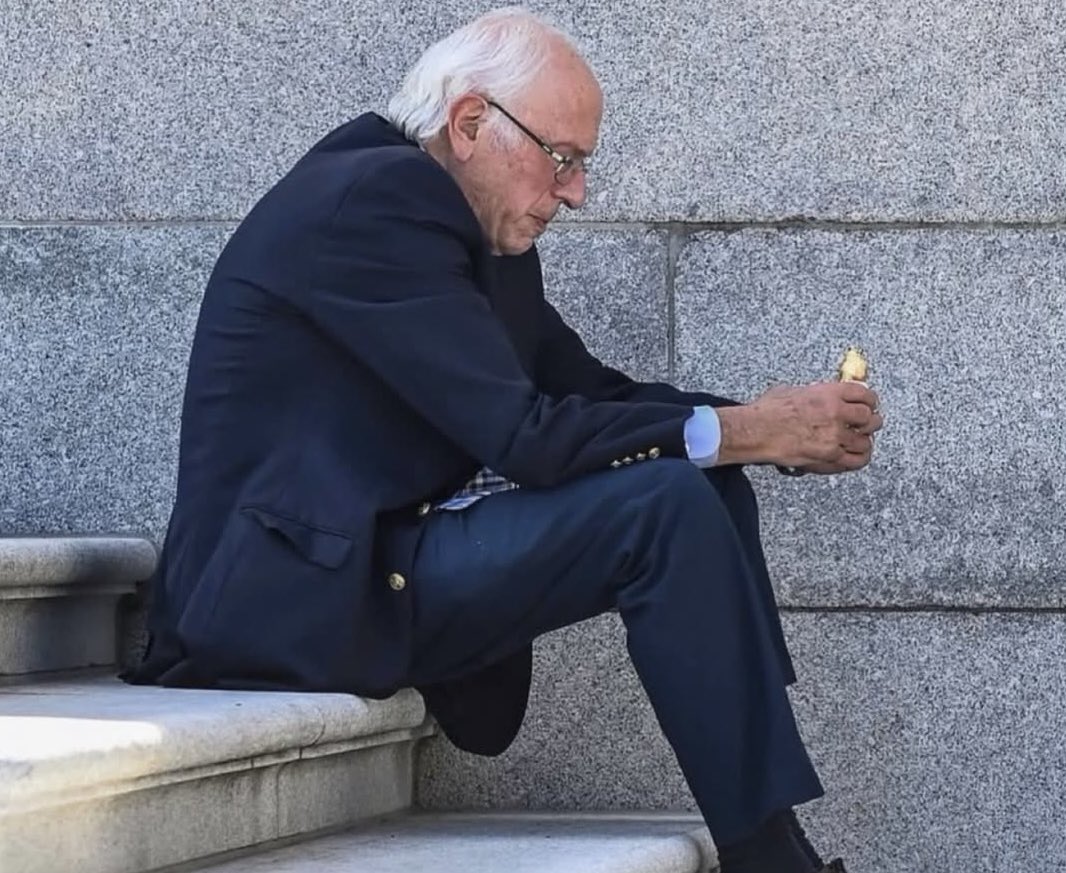
Senator Bernie Sanders sitting alone on the steps of the U.S. Capitol in Washington, D.C. after his amendment to cut Medicare drug prices by 50% was defeated 99-1, 2022.
Bernie Sanders, just 49 years old and newly elected to Congress, stood before a nearly empty chamber, warning against the Gulf War. He spoke about the innocent lives that would be lost, the billions spent on destruction while Americans struggled with poverty, homelessness and inadequate healthcare.
This image is almost a perfect metaphor for his entire political life.
A man speaking to empty chairs because his conscience mattered more than applause. A man willing to stand alone when the political establishment chose the easier path.
For decades, Bernie has challenged wars, corporate greed, billionaires and a political system that puts money before human beings.
Then, in 2015, this seemingly solitary figure inspired an entire generation of young Americans to believe that politics could actually be about justice, dignity and humanity.
He never needed to reinvent himself to remain relevant. The world kept changing. Bernie remained Bernie.
One of the rarest things in politics: a man who never forgot why he entered it in the first place.
He’s been on the right side of history so many times, often long before others found the courage to join him.
I absolutely love this man. 💔
Catch Yolani Fernando and Umesh Moramudali speaking this Sunday, November 15, from 5:00 PM to 7:00 PM, alongside Dr. Anuruddha Ekanayake for a discussion on the 2026 budget (2026 අයවැය කොහොමද?) organized by Kathikawa. Tune in live via the Sadharana Samajayak Facebook page!
Disappointment for those who thought the govt would actually get rid of para tariffs. Expected revenue from SCL goes up; PAL and import cess decline but not to zero by 2029 as promised elsewhere. No help with housing costs and none with imported food.
We’re seeing positive results with our efforts to restart affected infrastructure and recover server availability in an isolated manner. We’re actively monitoring the performance of these portions of infrastructure to verify stability, which we suspect will support improved availability as these actions are subsequently expanded more broadly. More info under EX1550543 and MO1550821 in the Microsoft 365 admin center, as well as https://t.co/mVBrjda5eD if the admin center is not available to you.
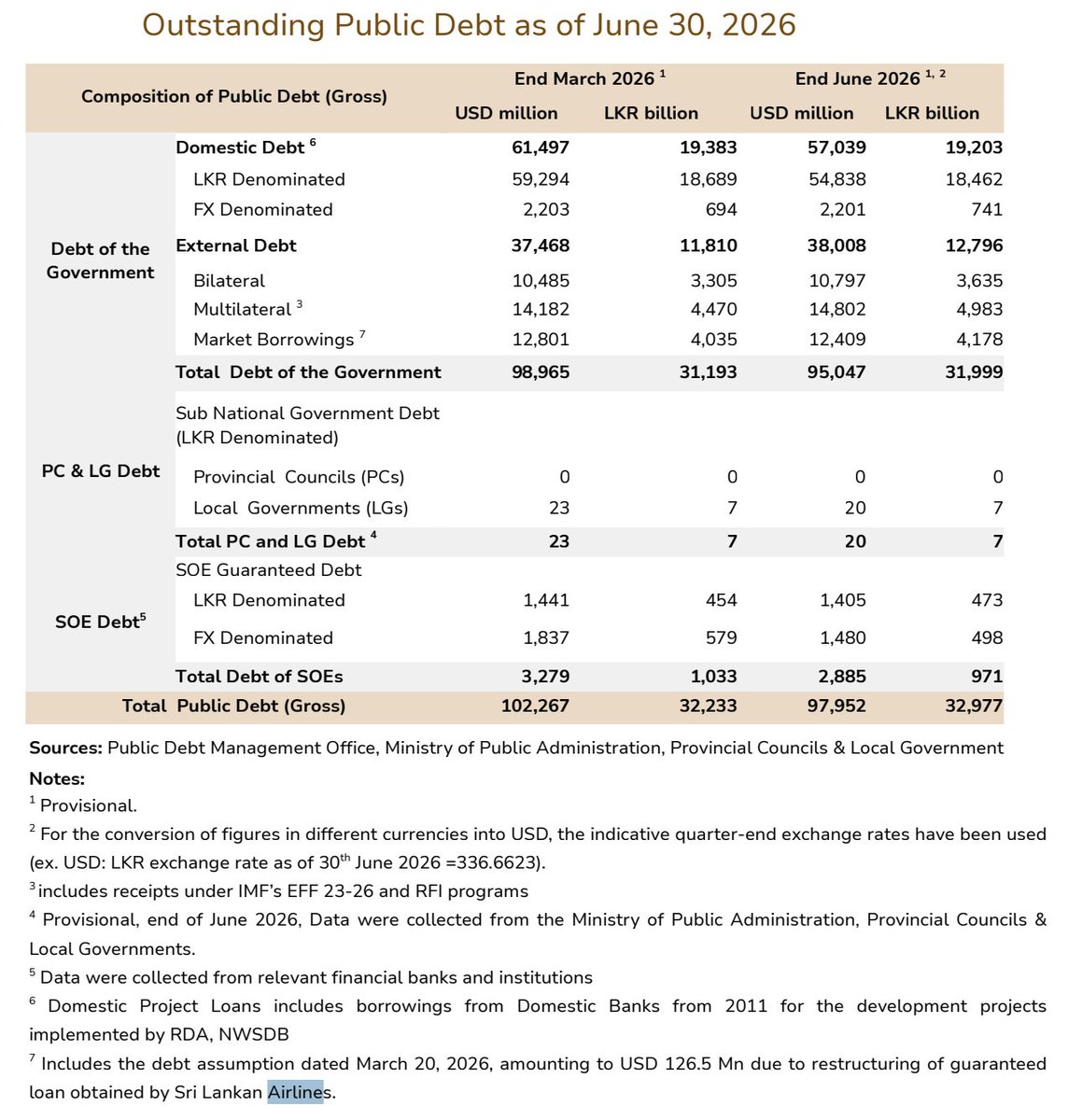
#lka state broadcasters lost LKR 271 million in just 6 months of 2026. Management changes with govts, but
@rupavahinitv, @ITNSriLanka & @slbccolombo keep draining taxpayer funds with no proportionate benefits to public. Ratings down, audiences lost. WHY do we need to sustain such white elephants?
https://t.co/yNO7Fq4GEt
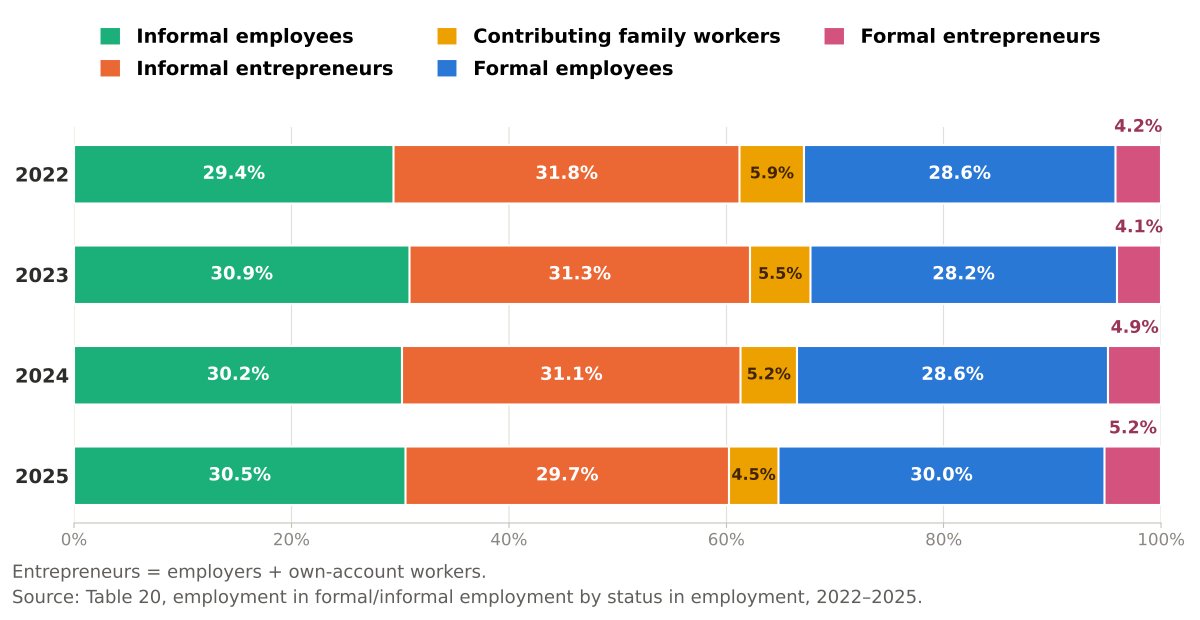
To implement successful policies in Sri Lanka, one has to understand the nature of the economy. Almost 30% of the employed population are small-scale informal entrepreneurs, on top of another 30% informal employees.
Taxation has to capture the high earners among informal entrepreneurs. But this requires a significant increase in IRD capacity.
I used AI to summarise what I pointed out in the article.
Here is why you should worry. Professional journalists in #SriLanka have always done their job. If you kill investigative journalism, prepare to stay in the dark. Be ready to rely on rumour, gossip, hearsay and politicians; and to not have strong, verifiable information on which to base your electoral decisions.
Five ways the Prevention of Organised Crimes Bill could affect journalists:
1. Court reporting will require prior judicial approval: Section 14(3) makes publishing any matter about court proceedings involving a serious crime under the Act an offence without the court’s prior permission. Journalists could face up to two years’ imprisonment, a fine, or both. There is no prescribed application procedure, deadline or appeal mechanism.
2. Journalists’ sources could be exposed: Sections 28, 44 and 45 give police powers to obtain communications data, intercept communications and extract information from phones and computers. There are no specific safeguards for journalist-source communications or confidential sources. Senior police officers can also obtain subscriber identities, call records and phone-location data without prior judicial approval.
3. Journalists could come under surveillance: Reporters communicating with people under investigation could have their conversations intercepted, even if they are not suspects. Encrypted communications may also be accessed. There are no clear limits on how long surveillance can continue, how long intercepted material can be retained or when affected persons must be notified.
4. Investigative reporting and contact with criminal networks could become legally risky: Meeting gang members, visiting their premises or associating with them could be among the factors considered when determining membership of an organised criminal group. While these activities alone do not constitute the offence, reporters could also face exposure under provisions requiring disclosure of information about crimes or prohibiting disclosures that could prejudice investigations.
5. Police powers could threaten journalistic material and independence: Police can, on reasonable suspicion, enter and search premises without a warrant, seize documents and electronic devices, and arrest people. There are no additional protections for journalists or their material. Section 65 could also compel reporters to disclose what they know about a crime, potentially undermining promises of confidentiality to whistleblowers and other sources.
Underlying concern: The Bill contains no specific exemption for journalism undertaken in the public interest. Its broad definitions and extensive investigative powers could bring ordinary reporting, particularly investigative and court reporting, within its reach.
It is the duty of professional journalists to report and hold power to account. @anuradisanayake and his current administration have benefited from reporters in #SriLanka doing just that. To now propose a law that could impede their work is beyond inadvisable.
I say this because select clauses of the Prevention of Organised Crimes (POC) Bill will cripple professional journalism and stifle investigative reporting. The bill does not specifically refer to journalists or media. But vaguely worded offences and sweeping police powers have implications for routine journalistic work.
Significantly, the bill includes no exemption for public-interest reporting. If passed into law, court reporting—a basic and universal component of journalism—would need explicit approval.
Under Section 14(3), anyone who prints or publishes any matter about any court proceeding concerning a “serious crime under this Act” without the court’s prior permission faces up to two years’ imprisonment, a fine, or both.
This is such a big shift for crime and court reporters that it is near impossible to fathom. It is the journalist that requires permission prior to printing or publishing. The bill lays out no procedure for the judiciary.
https://t.co/3gaO4yFNsX