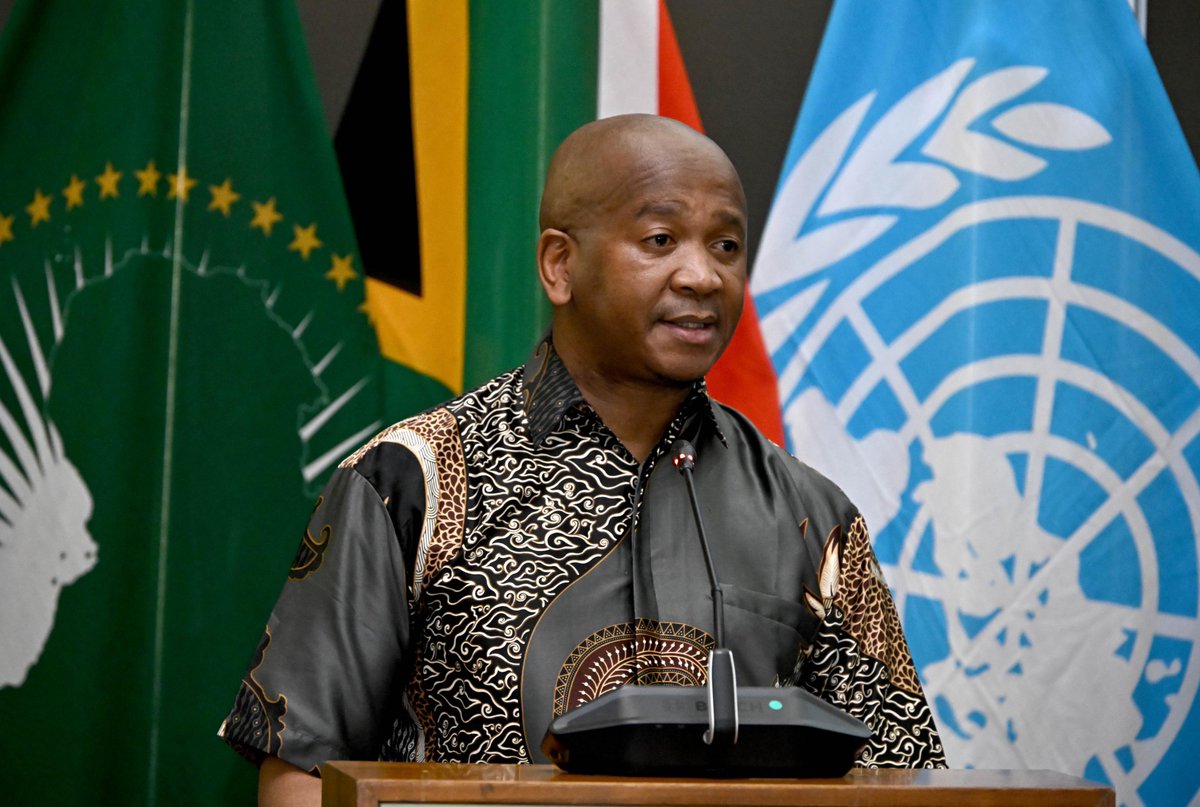
It was a pleasure to meet and briefly discuss with the President of Iceland 🇮🇸 marking the final phase of my ACONA Fellowship. I emphasized reinforcing the NWFZ that have been holding a steadfast threshold against the regression of fundamental norms.
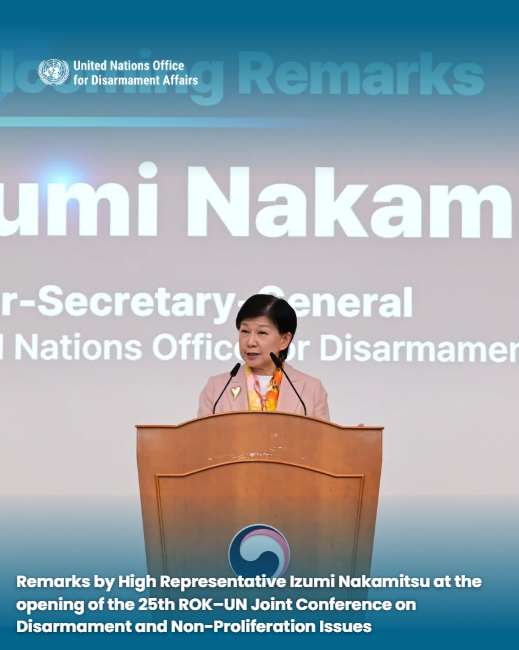
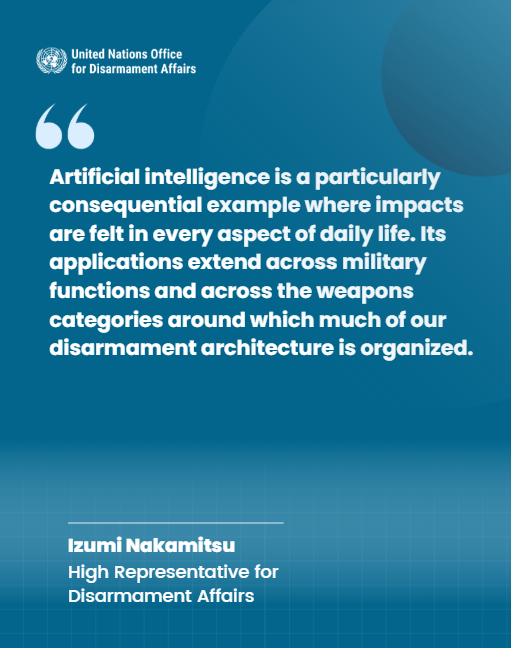
On 12 November, High Representative for Disarmament Affairs @INakamitsu delivered remarks at the opening of the 25th ROK-UN Joint Conference on Disarmament and Non Proliferation Issues.
Read the full statement here: https://t.co/ZyjCcrd7T5
#ScienceDiplomacy#NGOs
At the forefront of science diplomacy: The role of non-governmental scientific organizations
https://t.co/tr3AOpOnVv
[Report - PDF available]
Across borders and political divides, science has a long record of finding common ground. Shared research, shared data and a shared commitment to evidence have helped countries tackle problems no nation can solve alone, from protecting Antarctica to understanding climate change. That cooperation now faces growing strain, as geopolitical tensions rise, conflicts spread and science becomes an arena of competition between states.
This report looks at what independent scientific organizations, such as academies, research councils and international scientific unions, can do in this changing landscape. Drawing on a survey of more than 100 scientific organizations across all regions, as well as interviews with experts in science, policy and diplomacy, it shows how these organizations have helped build global institutions, informed international negotiations and kept dialogue open across political divides. It also shows that many of them want to do more, but are held back by limited funding and capacity.
The report sets out practical ways for the scientific community to protect international cooperation and strengthen its contribution to global governance.
What does the future of arms control look like?
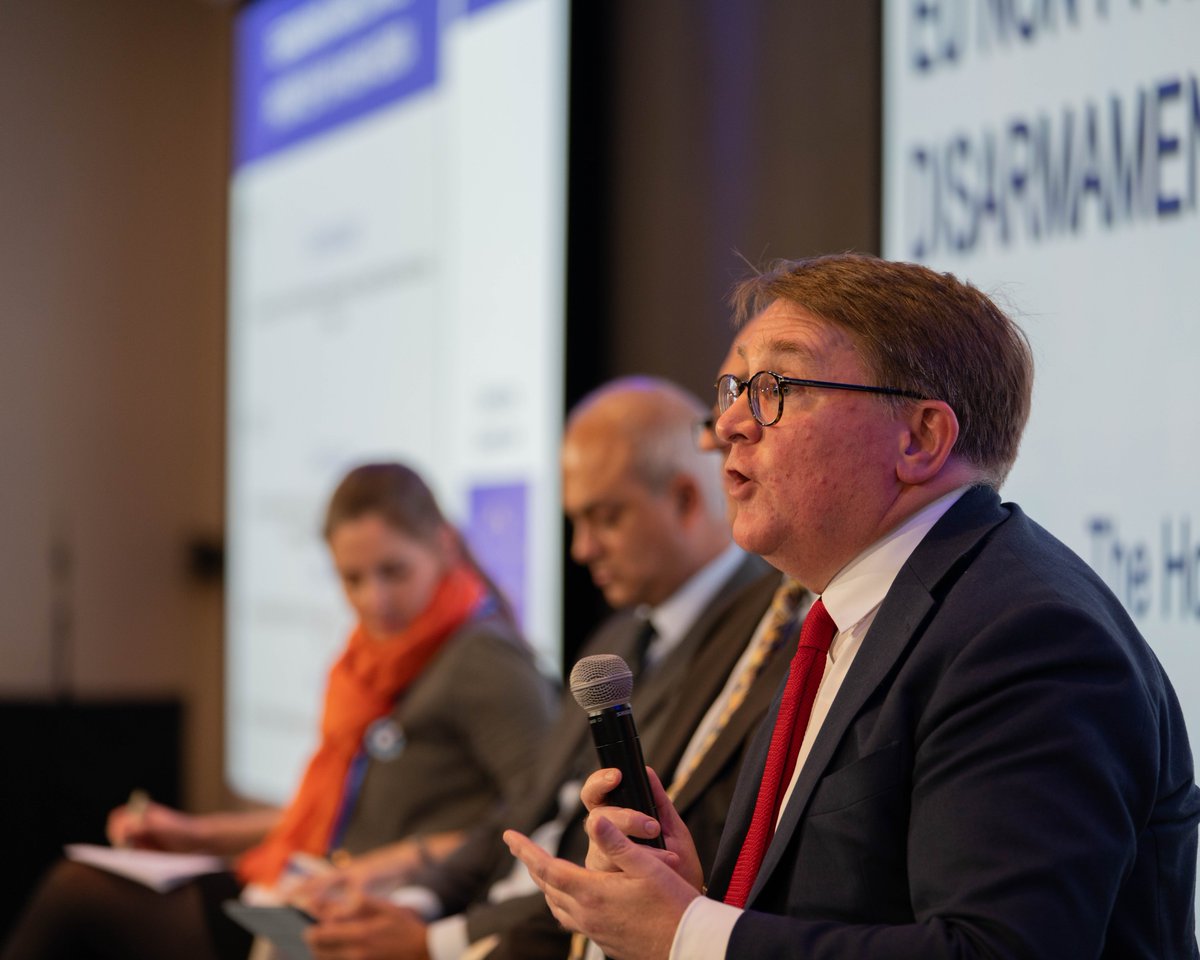
Claire Raulin (@francediplo), Ben Fender (@FCDOGovUK) and Zaheer Laher (@RSA_UNOG) address this question in the first panel "Reimagining Arms Control: Priorities for a New Agenda", chaired by @Amb_Klement_EU (@eu_eeas)
Raulin stressed the need to preserve and adapt existing arms control frameworks, while ensuring the involvement of nuclear-weapon states in shaping a new architecture.
Fender highlighted the challenges posed by emerging technologies, pointing to practical steps, including stronger export controls, that can already be taken to advance arms control.
Laher called for more inclusive and credible multilateralism, emphasising the need to rebuild trust in international institutions and ensure that all states have a voice in shaping the future of arms control.
#EUNPDC2026
Gratified by the overwhelming support in the UN General Assembly’s First Committee for three Pakistan-led resolutions on:
-> Confidence-Building Measures (CBMs) at Regional and Sub-regional Levels
-> Negative Security Assurances to Non-Nuclear-Weapon States
-> Conventional Arms Control at Regional and Sub-regional Levels
As President of the Conference on Disarmament, Pakistan also led the drafting and negotiations on the resolution on the Report of the Conference on Disarmament, which was adopted by 135 affirmative votes.
This is a strong reaffirmation of multilateralism and Pakistan’s constructive leadership in advancing international peace, security and disarmament.
@MIshaqDar50@ForeignOfficePk@PakUN_Geneva@PakistanUN_NY@UN_Disarmament
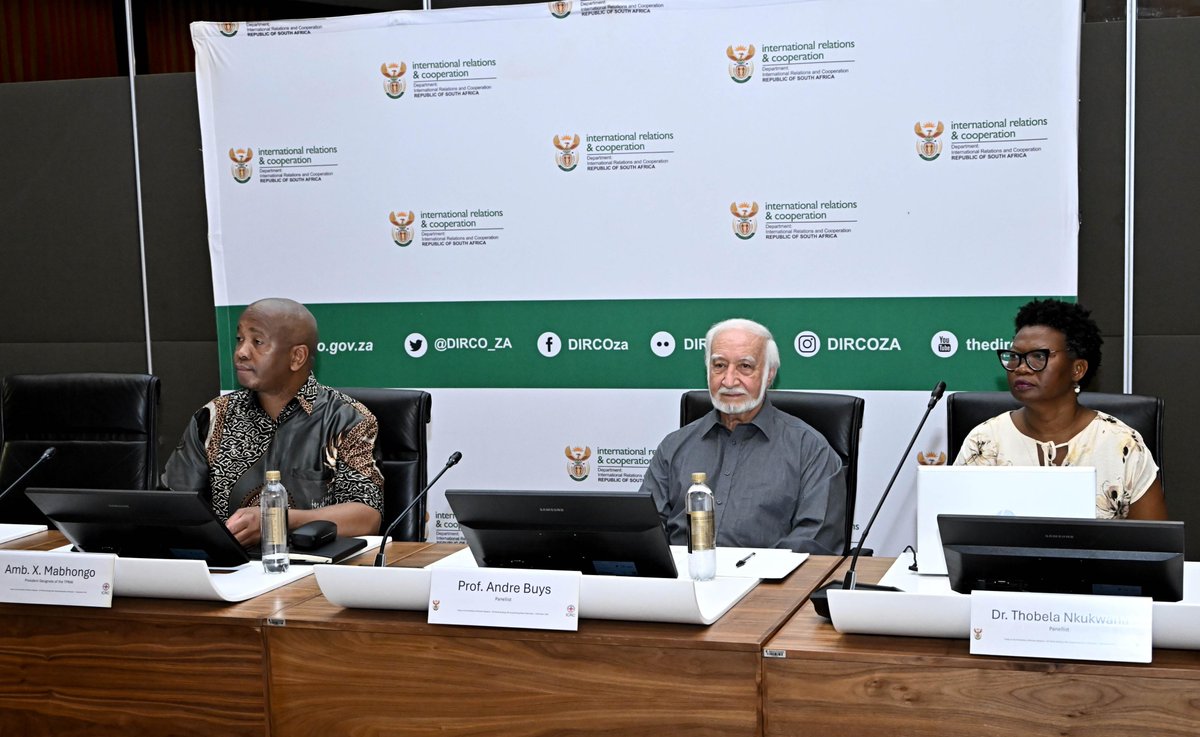
In his capacity as the President of the First Review Conference of the Treaty on the Prohibition of #NuclearWeapons (TPNW), Ambassador @XolisaMabhongo convened a Stakeholders Engagement under the theme “Advancing the Imperative of Nuclear Disarmament: Broadening International Understanding of the Humanitarian Consequences of Nuclear Explosive Testing and Nuclear War.”
The #TPNW Stakeholders’ Engagement provided a platform for dialogue among government, regional and continental institutions, international organisations, scientific and academic experts and civil society to deepen understanding of the devastating humanitarian, health, environmental and socioeconomic consequences of nuclear explosive testing and nuclear war, while highlighting the enduring and intergenerational impact on affected communities.
Discussions also focused on the relationship between the TPNW, international humanitarian law and the broader international legal framework governing nuclear weapons.
Our appreciation to the International Committee of the Red Cross #ICRC for their support in hosting this important engagement. @ICRC_SAfrica@ICRC_Africa@SarahMabeza
📘 The 2026 Nuclear Technology Review is available online!
The latest edition of the NTR highlights advances shaping the future of #NuclearEnergy, from #SMRs and new nuclear programmes to the fuel cycle, fusion energy and #AI ⚛️
Read it here: https://t.co/UK9HAEI4TY
The nine nuclear weapons states vote No (US, UK, DPRK, France, Russia) or abstain (China, India, Pakistan, Israel) on the United Nations General Assembly resolution on assistance to survivors of nuclear testing and nuclear weapons use. 172 nations vote Yes.
A pleasure to meet Minister Selma Ashipala-Musavyi, @MIRT_NAMIBIA, and Minister Modestus Amutse, @MIMEnamibia. Thank you for an engaging exchange and for Namibia’s generous support in hosting #IFE26, our largest-ever on-site inspection exercise and the first in Africa. Together, we’re working towards a world without nuclear tests and advancing peace and security for all.
@ZBCNewsonline Expression of interest from Zimbabwe to add nuclear tech in their energy mix. Interesting times for developing countries seeking to alleviate their development deficit using nuclear tech vis-a-vis the development of SMRs with promising potential in these environments
🔎 A new resource for those following nuclear disarmament verification.
Hugh Chalmers (@vertic_org) presents a new web-based compendium bringing together information related to the proposed establishment of a Group of Scientific and Technical Experts on Nuclear Disarmament Verification (GSTE-NDV) within the United Nations disarmament machinery.
The resource provides a dedicated reference point for information on the proposed group and the broader discussion surrounding scientific and technical expertise in nuclear disarmament verification.
🔗 https://t.co/ae8Y385D7z
#NuclearDisarmament #Verification #NuclearWeapons #UnitedNations #Disarmament #EUNPDC
At First Committee, Director Adedeji Ebo highlighted the importance of transparency and confidence-building measures in reducing risks and building trust. From tackling nuclear risk to addressing AI, TCBMs can make a contribution to international security.
https://t.co/OvsAlREC1H
Minilateralism is a deliberate institutional choice whereby states select the size of the table, the composition of participants, the agenda and who is excluded.
@ash_sujata on why small clubs proliferate as multilateralism falters: https://t.co/Q7U7IVsxrb
In his Arms Control Today article, "Out of the Ashes: How to Re-energize the NPT," @meier_oliver argues that the Nonproliferation Treaty review process is "in crisis mode" and writes about what can be done to reverse its slow slide into irrelevance. See: https://t.co/xLbZznVxk1
OTD 40 years ago ... "LOOKING BACK: The 1986 Reykjavik Summit, " from Arms Control Today in 2006 by Ambassador James E. Goodby: https://t.co/EUABXHrZeX