The complete deep origins of 328 Kurdish patrilineal lineages that have been sponsored or purchased through Whole Genome Sequencing (30x or higher), or through Y-700 and equivalent STR-based testing. The following also includes Kurdish samples sequenced through scientific studies to the level of 30x WGS or higher. It does not include haplogroups sequenced to anything below this high level of sequencing, therefore excluding the majority of scientific studies conducted only at Y-17 level, since we require Y-700 level testing.
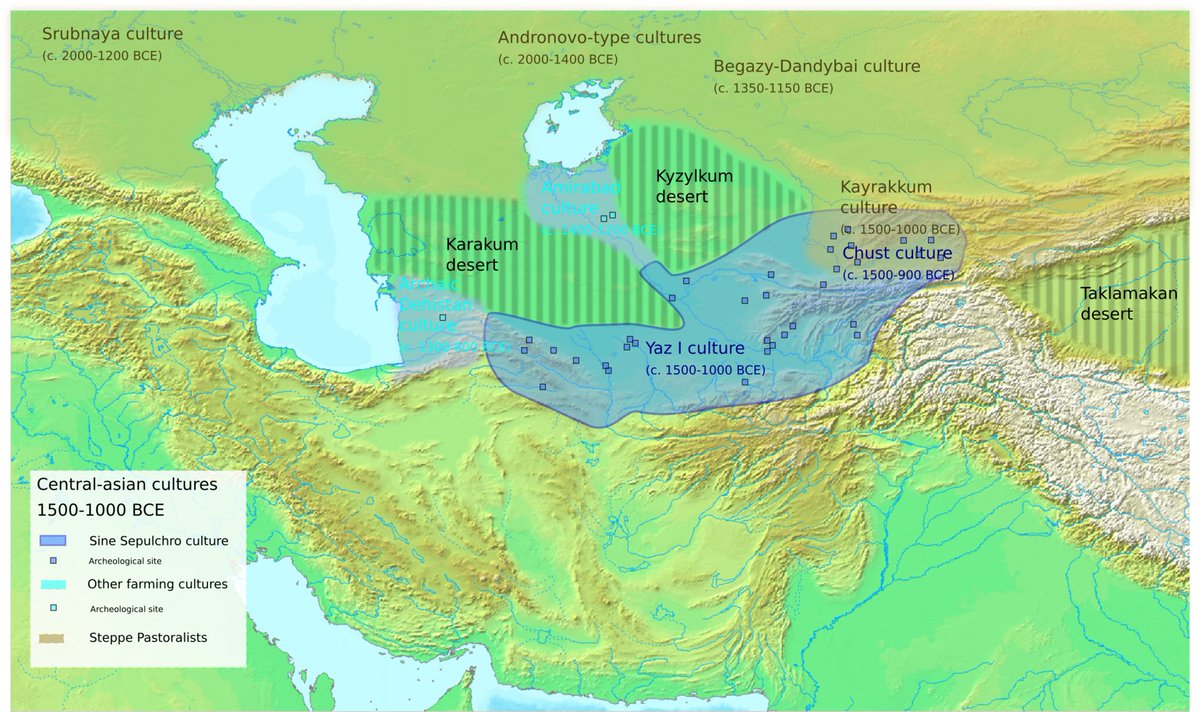
Based on the current data it can be ascertained that the clear plurality of the founding father population among the Kurds belong to Iron Age Iranians (circa 1500–1000 BCE), who were a hybridised population between Andronovans and local South Central Asian cultures like the BMAC. Most notably the Yaz culture, which scholarship and academics attribute to the rise of the Zoroastrian religion and the rapid militarisation of Iranian society, experienced a massive expansion phase. The so-called "West Iranian peoples" are a syncretised population from these early Iron Age Iranians from Central Asia who moved into the Zagros and plateau and encountered a myriad of different cultures, most notably the Elamites, including populations that were also quite freshly integrating into the Zagros, like the Semitic peoples who were already penetrating deep into the Zagros since the Middle Bronze Age (attested as far as Anshan, the Elamite capital). It is from this milieu that the first attestation of Kurds can reliably be found, dating back to Eratosthenes of Cyrene, who was born in the Ptolemaic Kingdom and was likely relying on an Achaemenid source. Kurds are first attested in the province of Persis in south-west Iran. Indeed, this is what we expect via comparative linguistic studies at the dialectal level. A North-West Iranian language living in a core Persian hub, prior to expansion out of south-west Iran into what is now Kurdistan sometime around the Sassanian era.
Based on the modern haplogroup distribution of Kurds it is quite apparent that the strongest and oldest layers of non-Iron Age Iranian paternal ancestry is in fact attributable to Semites, and not what most people expect, which is various indigenous Zagrosian populations. Typically the Semitic lineages among Kurds date back to around the Achaemenid era. In general there seems to be an influx of Semitic speakers into the Iranian plateau during the Achaemenid period. Based on haplogroup data there is not a single clear case of an indigenous remnant Zagrosian lineage among the Kurds that precedes the Bronze Age. Despite this, 9% is plausibly attributed to some type of local LC Meso and/or Zagrosian populations. The first Kurdish tribes would be comprised of a Semitic, an Iron Age SCA Iranian, and a localised plateau population. Interestingly there is a probable Seleucid Greek founder-effect lineage among modern Kurds that dates a few hundred years after the attestation of the first Kurdish tribes. The overwhelming majority of the remaining lineages I have not mentioned here have mutations attributable to post-Islamic assimilations, which includes the vast majority of the Armenian highland haplogroups, all Oghuz Turkic lines, among many others. Comparing Kurdish autosomal data against haplogroups, it is exceedingly clear that the Iron Age Iranian haplogroups among Kurds have huge male-biased selection. This means the Iranian lineages were the most socially dominant group among the Kurds, who reproduced more than other segments of the population. This makes sense since Kurds are an Iranian ethnic derived population, in a patrilineal based society.
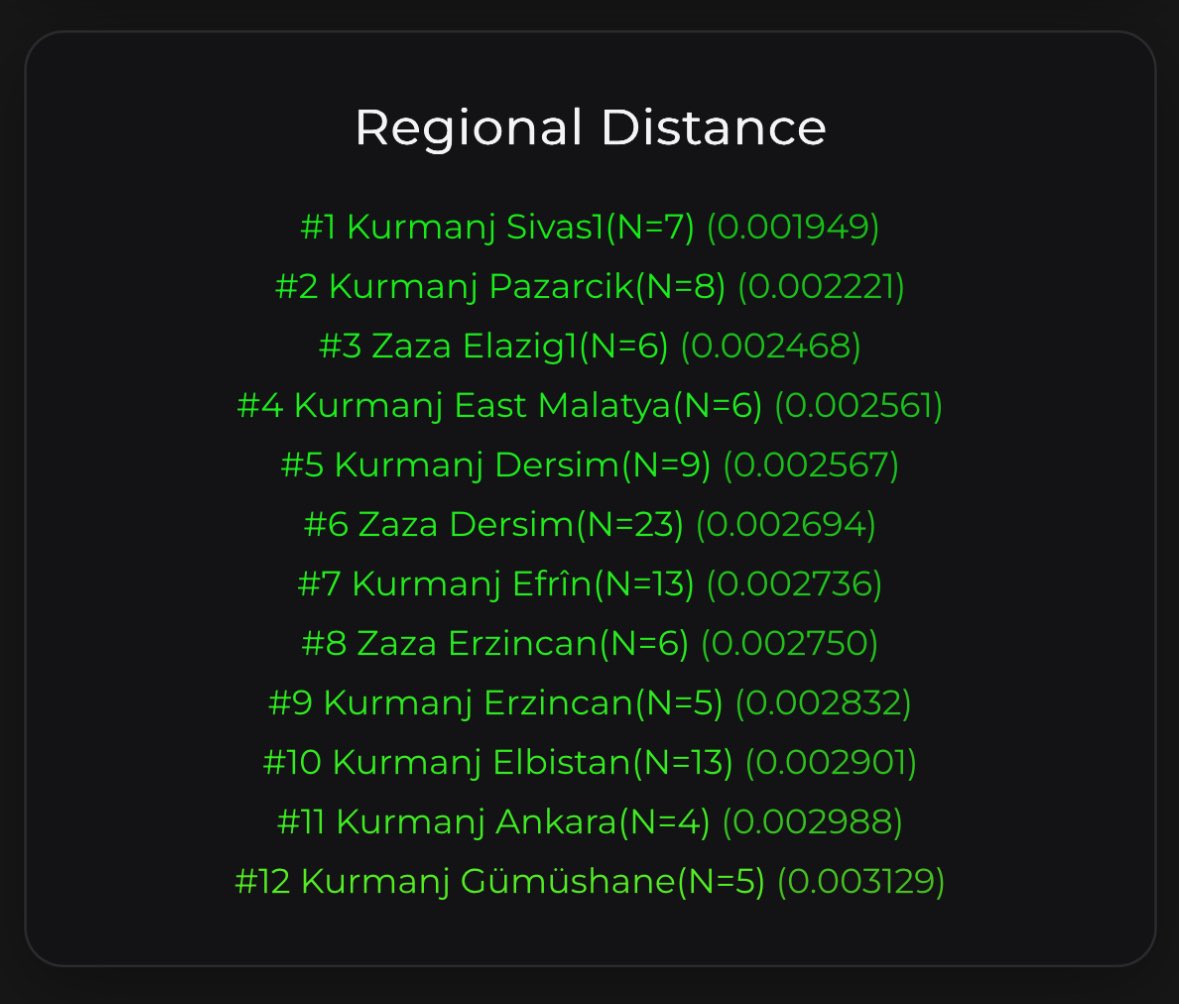
Unfortunately the data disproportionately includes Zaza and Kurmanji speakers who come from Berferati (the most western parts of Kurdistan) speaking regions, since these are the regions that generate the most diaspora. Sponsoring Kurdish clades all across the Kurdistan region is of heavy priority right now. A major issue right now is that the vast majority of DNA kits that are being sponsored are not being used and are being sent back to the labs, despite the fact that these kits cost $449 for a single test. Please DO NOT ask for sponsorship if you are going to waste hard-earned money. This is just shameless and disrespectful of the highest order. If you have gotten your DNA sequenced, you must join a relevant DNA project to secure traceability of where we are sourcing this information from. We encourage you to include all relevant details like tribe, place of birth of paternal ancestors, etc.
An Ottoman document from 1806 talk about a person of the Atmî tribe that could be his ancestor:
"Arabgir sancağına tabi Abad nahiyesinde Atma karyesi ve gayrıdan timara mutasarrıf olan Süleyman veled-i Ömer'in Mısr-ı Kahire tarafında vefat etmesi üzerine timarının oğlu İsmail'e tevcihi."
All the individuals under the G-Y164809 subclade are of the Atmî subclade which supports this.
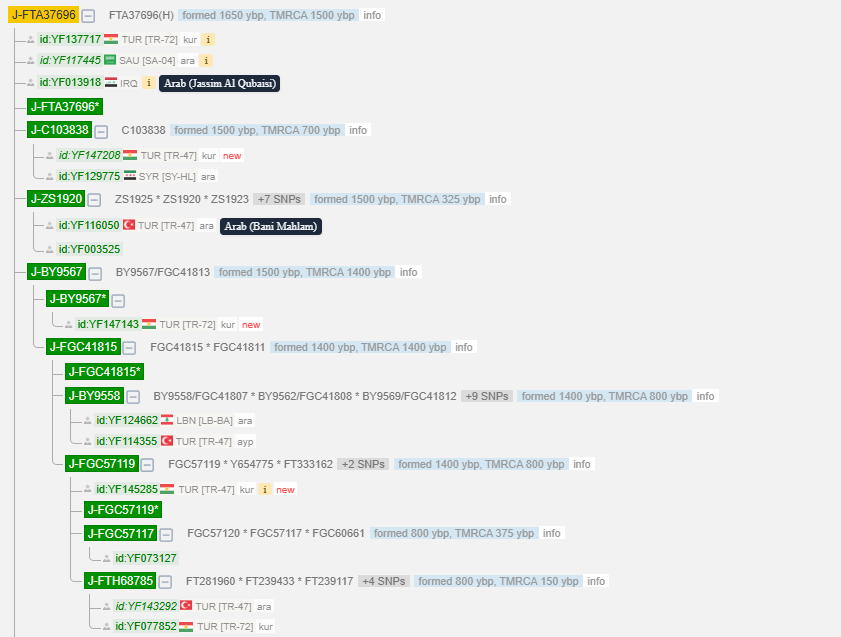
🇪🇬 Egypt Y-DNA: G-Y164809 (Egyptian sample within a Kurdish-majority cluster | TMRCA ~750 years)
A very interesting new finding: an Egyptian Y-DNA sample from Al Minya has appeared inside a branch that is currently dominated by testers from Turkey/Anatolia, many of whom are associated with Kurdish backgrounds in project notes and regional clustering.
This Egyptian result sits under haplogroup G at G-Y164809, and on the Discover time-tree it falls in the G-FTA62389 neighborhood, with an estimated TMRCA of ~750 years for the relevant split. Seeing an Egyptian placement “in the middle” of this cluster is exactly the kind of result that highlights how paternal lines can connect populations across regions through shared ancestry, historical mobility, and long-term demographic exchange.
In terms of historical framing, a ~750-year TMRCA in an Anatolia–Egypt context points broadly to late medieval Islamic-era mobility. Plausible frameworks can include the Ayyubid / Mamluk period (given the strong Egypt–Bilad al-Sham connection and the well-known Kurdish presence in regional military and administrative networks), and also later Ottoman-era dynamics—without implying a single identifiable migration event.
Reference trees:
• YFull: https://t.co/33RH4lrjEU
• FTDNA Discover: https://t.co/gvjJ2VYP4V
(The migration routes shown on the map are inferred from modern testers only and represent a simplified reconstruction. They do not necessarily reflect the exact paths of ancient movements, which may have been different or more complex. The visualization is provided for contextual and illustrative purposes.)
#YDNA #GeneticGenealogy #FamilyTreeDNA #FTDNA #YFull #HaplogroupG #G #Y164809 #FTA62389 #Egypt #EgyptianDNA #Kurds #Kurdish #Turkey #Anatolia #MiddleEastGenetics #NorthAfrica #TMRCA #BigY #YTree
19% of the paternal lineages among Kurds are traceable to Proto-Semitic/early Semitic speakers, who originated in the Levant around 3500 BCE. The greatest bulk of the Semitic lineages among Kurds diverge from other Semites sometime just before and during the Achaemenid era. Semitic presence in the Iranian plateau dates back to the Bronze and Iron Ages, during their great expansion phase. Their presence is attested all across the Zagros during the pre-Iranian periods, as far as Anshan in Elam, among many others. Mesopotamian Semitic presence in Iran continued well into the Iranian periods, where they were known for being merchants and traders.
Out of these 61 Semitic haplogroups, 6 are of Bedouin Arab origin, and 1 is of Sabaean Yemenite origin. Therefore, 11% of the total Semitic haplogroups among Kurds are of Bedouin Arab and Sabaean origin. This roughly translates to 2% of the current total Kurdish Y-DNA. A low number of these clades can be attributed to post Islamic assimilations.
14% of the currently sequenced Y-700 Kurdish male lineages are traceable to the Chalcolithic-era Armenian highlands, encompassing cultures like the Kura-Araxes, and onwards into the Bronze Age with the Lchashen-Metsamor and Hayasa-Azzi, all the way to the Iron Age with the Urartian empire, and later in Antiquity with the rise of the Armenian kingdoms.
At a minimum, 20/45 (44%) of the post-Chalcolithic Armenian highland lineages among Kurds derive from the assimilation of Armenians within the last few hundred years, as the mutational DNA markers between individuals are shared within the Islamic age. Kurds expanded into the Armenian highlands during the tail end of the Sassanid empire, and more specifically during the Islamic age.
Given the overrepresentation of Kurds DNA-tested in regions where Armenian autosomal ancestry spikes (typically in the 40–60% range), it can be stated with certainty that there was a strong bias against non-Kurdish males who were previously native to the Armenian highland regions throughout history. Given that a great portion of Kurdish males, especially central-southern Sorani speakers and southern Kurdish/Xwarini males, do not have such high levels of Armenian ancestry, the proportion of Armenian highland lineages is realistically much lower than what is shown here for the Kurdish average.
Indeed, associated haplogroups with the Armenian highland regions are far lower among groups like Xwarin speakers or Sorans, but they lack high depth genetic sequencing.
6.5% of Kurdish men belong to paternal Y-700 lineages traceable to the Greco-Anatolian world of antiquity. All the following clades have no post-Islamic matches, which strongly implies roots deep within history. Most notably, the massive Reshwan tribe have a major founder effect under R-FT186298 dating back to 87 CE (Parthian era). Most likely this individual was a descendant of a Seleucid Greeks settlers further back, carrying a Mycenaean lineage in Iran. The following historical frameworks are the most likely explanations for the origin of the various clades among the Kurds:
The first notable point of contact between the Anatolian and Greek world and the Iranian world came during the Achaemenid era, rather than the so-called Median Empire, which serious academic scholarship now largely deems to be an invention of Herodotus and not something that actually existed. Despite what is commonly believed, the Achaemenids brought in massive quantities of indentured servants and slaves from across the empire to serve the Iranian tribes. These house and palace workers were called kurtash (not to be confused with Kurd, which is separately attested as an Iranian tribe) and were often sourced from the Greco-Anatolian world. Iranian interaction with that world continued with Alexander's conquest and the succeeding Seleucid empire, which held dominion over Iran. Although not Greek, Thracian subjects were attested by Strabo as having migrated into the Zagros (possibly the root of those E-V13 Kurds). A great friction spanning 700 years between the Roman and Iranian world ignited with the collapse of the Seleucids and the rise of the Parthian empire, beginning with the delegations they sent to the great Roman dictator Sulla, whereby great disrespect was taken by the Parthian king of kings. The succeeding wars ultimately resulted in large quantities of slaves being transported to the winning side. Most famously, the Iranian annihilation of Roman armies at Edessa and Carrhae resulted in large numbers of slaves being imported into Iran, including the enslavement of the Roman emperor Valerian.
Almost half of Kurdish Y-DNA paternal lineages are traceable to Iron Age Iranians of south-central Asia, inferred through a combination of Late Neolithic–Iron Age ancient samples from central Asia and Y-haplogroup diversity data from modern populations sharing the same root lineages as Kurds that link back to an Iron age SCA root. Source: yfull/FTDNA/theytree
This should not be confused with the proportion of "proto-Kurdish" lineages among Kurds, as Kurds are first attested as a tribal organisation sometime between the Achaemenid and early Seleucid periods, and did not fully emerge as a distinct ethnicity from other Iranians until the Islamic era.
The largest genetically confirmed Bedouin Arab paternal Y-DNA lineage that exists among Kurds traces back to the Adnanite patriarch Rabi'a ibn Nizar J1-P58>Z2331>Z1884>FGC11>Y10887>FGC4453. More specifically, it is likely linked to the Banu Shayban tribal, itself a branch of Banu Bakr bin Wa'il (Banu Bakr), whose original heartland was centred in what is now Najd, Saudi Arabia.
The first Rabi'ah groups to enter Northern Mesopotamia were the Taghlibi Arabs, who arrived following the Basus War in the 500s AD, making them roughly contemporary with the earliest Kurdish settlements in Mesopotamia. The legacy of Banu Bakr's descendants is still visible today: the modern Kurdish city of Diyarbakır takes its name from Diyar Bakr, meaning "The Abode of Bakr."
Banu Shayban arrived later than their historic rivals and close cousins, the Taghlibis. They are perhaps best known for their role in the Islamic conquest of Sassanid Iran, most notably at the Battle of Dhi Qar, a conflict whom Kurds fought in the defence of Iran.
Given their newly shared geography, tribal structures, and common faith, Kurds and Bedouin Arabs had historically alternated between shared confederation and rivalry. Periods of cooperation naturally created opportunities for assimilation in both directions. However, as Kurds rapidly consolidated their hold over Upper Mesopotamia in the post-Islamic era, the dominant vector of assimilation was into Kurdish society, though recorded accounts of the reverse also exist.
No ancient genetic samples from Banu Shayban have yet been recovered, but we have samples from their close kin, the Taghlibis during their rule under the Hamdanid dynasty (890–1004 AD) in northern Mesopotamia and Syria. Despite their Bedouin paternal roots, the Hamdanids' autosomal DNA was heavily shaped by extensive intermarriage with Armenians, Kurds, and Syriacs, with Iranian/Kurdish ancestry accounting for approximately 30–50% of their genetic profile. This legacy persists today among the Baggara Arabs of Syria, who have retained a substantial proportion of Hamdanid lineage from their forebears.
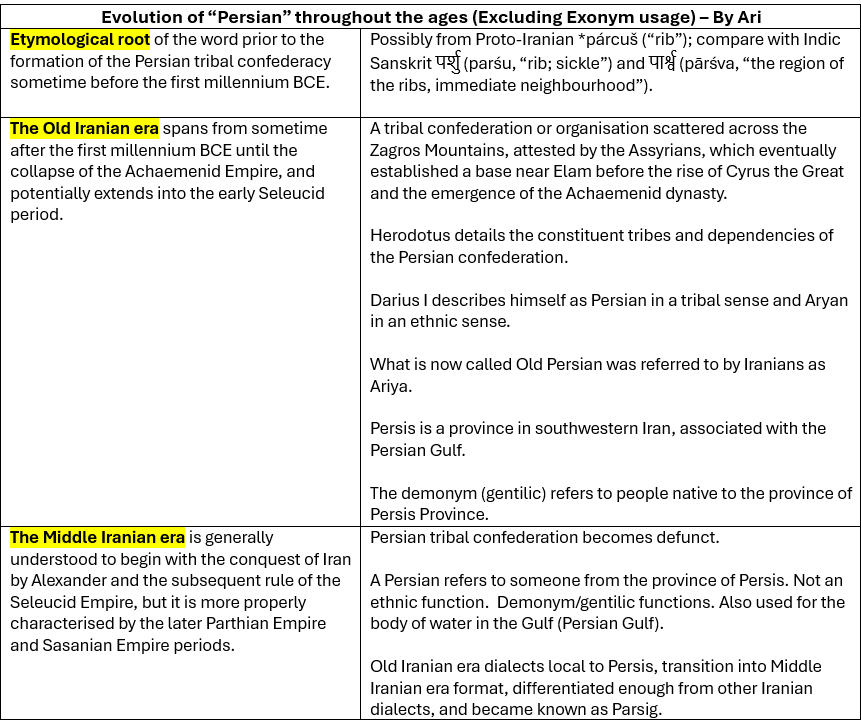
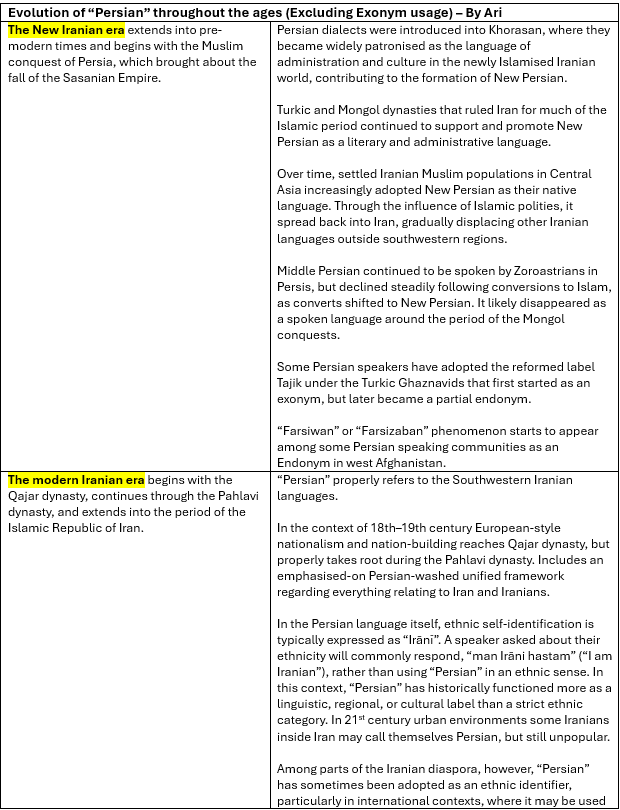
In light of the repeated misuse of the word Persian by non Iranians and even members of the Iranian diaspora, I have decided to explain how the word Persian has been historically used by Iranians themselves. The persistent use of the word Persian, as it is known as an exonym, is harmful to discourse and to a proper understanding of how the past should be authentically investigated. The Greek and Arabic renditions of the term, through which most of the world has come to know it, do not accurately reflect what the term has meant within the context of Iranian society.
It may come as a surprise to many, but the term Persian does not denote any sort of ethnic meaning, and it has never done so at any point in history among Iranians. This is contrary to the new major push in Iranian diaspora to reinvent their identity due to reasons relating to perception and Pahlavi era related revisionism centred around "Persianness". Often times these Iranians in diaspora don't even come from Persian speaking backgrounds, but rather from Azeri, Gilaki, etc backgrounds. Ultimately this still doesn't affect how Persian speakers within Iran itself choose to project their identity. Its neither here or there if people want to choose a new identity. It is however a major problem when people want to back project their new identity onto the entirety of history.
It is therefore incorrect to call figures such as Ibn Sina, Al Razi, Al Khwarizmi, Omar Khayyam, Ferdowsi, and Rumi ethnic Persians. These were ethnic Iranians who wrote in Arabic or Persian, as those languages were the lingua franca in which science, poetry, and other forms of knowledge were expressed. Within the context of Iranian society, language has not been a major factor in how society has defined itself ethnically compared to other cultures around the world.
In the ancient Iranian era, the Persians were mostly a specific tribal organization within Iranian society. Iranian confederations such as the Mards and the Medes should not be understood as ethnic units but as political ones, in which Iranians joined and left. These tribal confederations sometimes left a legacy that can be seen in the geographic names of Iran. In the case of the Persian tribes, their legacy is preserved in names such as Persis and the Persian Gulf, even though their political confederations became defunct after the ancient Iranian era.
From the Middle Iranian era onward, which can be defined as beginning with the Seleucid period, the term Persian mostly referred to a language. Old Persian is a modern term for what Iranians called Ariya. Parsig, as known to Iranians, is what we now call Middle Persian.
Demonyms were an important way in which Iranians distinguished themselves during the Middle Iranian era. Much like how an Iranian from Parthia could call himself Parthian, or an Iranian from Kerman could call himself Kermani, an Iranian from Persis could call himself Parsig or Persian. This is not an ethnic definition, but rather the word Persian carried gentilic meaning.
In this sense, it would be correct to call the Sasanian regime Persian, but not in the way most people assume. The Sasanian regime was ethnically Iranian but gentilically from the province of Persis. This does not contradict the idea that the Sasanians may have had tribal Kurdish origins, as noted by several early Islamic era historians. However, this does not mean they were ethnically Kurdish, as Kurds did not exist as a defined ethnic unit during that period, though that is a separate issue.
The main point is to understand how the meanings of words change over time, and how different societies can understand the same word differently. While foreigners have often used the words Persian and Iranian interchangeably, this is not reflected in Iranian history. These definitional assumptions become problematic when attempting to study these topics beyond a surface level. In Arabic historiography, the word Persian was sometimes used to refer to settled Iranians, and at other times to Iranians as a whole. This definition even partially influenced the Iranian world for a long time. For example even up to the early 20th century Kurds did not have a problem saying their language was Persian (as per Arabic historiographical understanding). Of course much has changed in light of nationalism.
Without understanding nuance, it is not possible to properly investigate the truth. All of this is ignoring another layer of problems regarding sensitivities in how different communities feel about completely revising history and reality due to a fundamental misunderstanding.
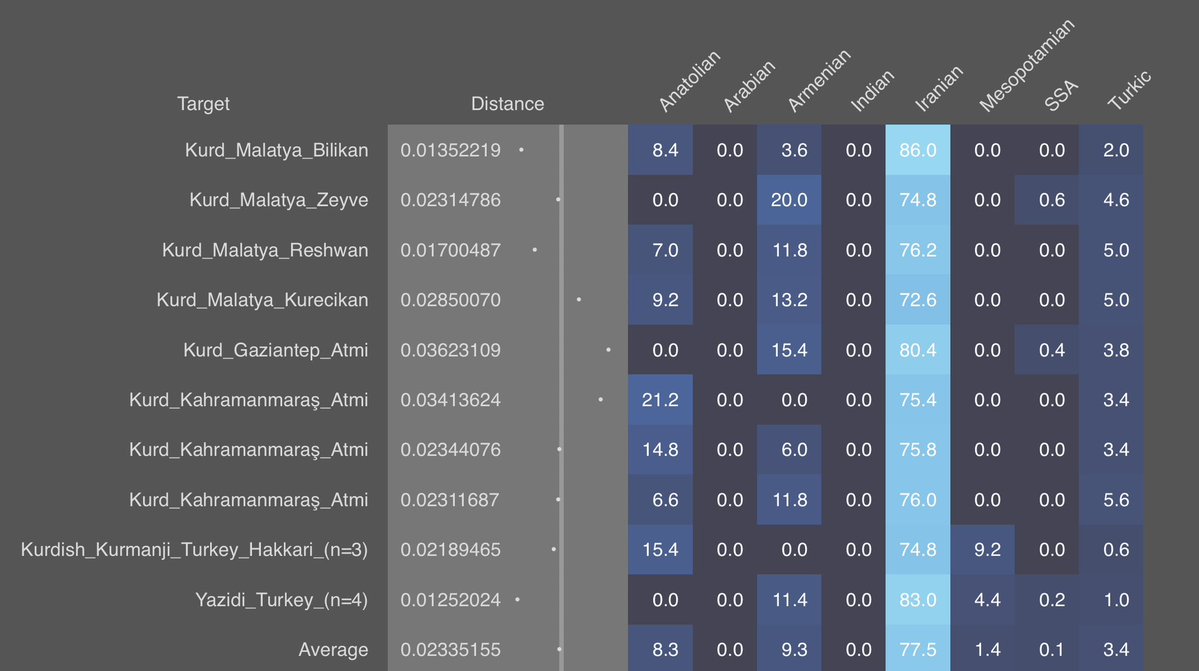
Interesting how @QizilbashDNA hyper-focuses on trace Turkic signals in Kurds while ignoring the rest.
Sinemillî are overwhelmingly J-Z7706>SK1381, a clearly Iranian subclade. https://t.co/WDdokUD1ZB
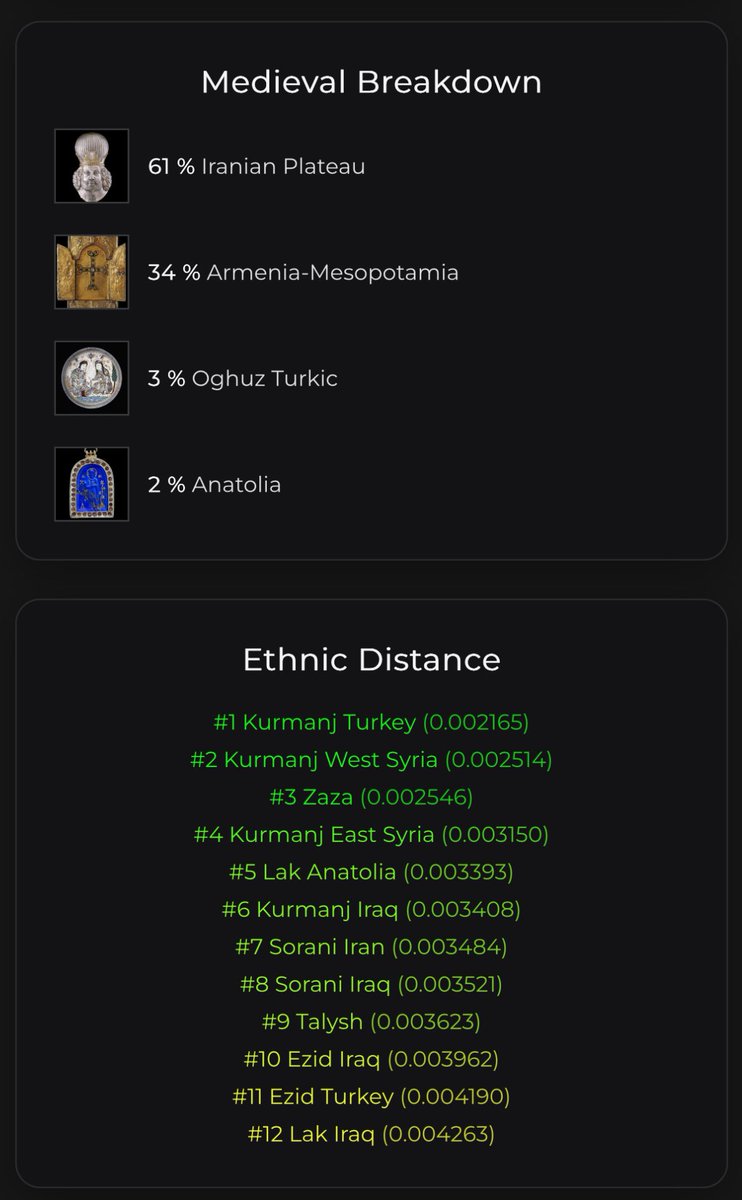
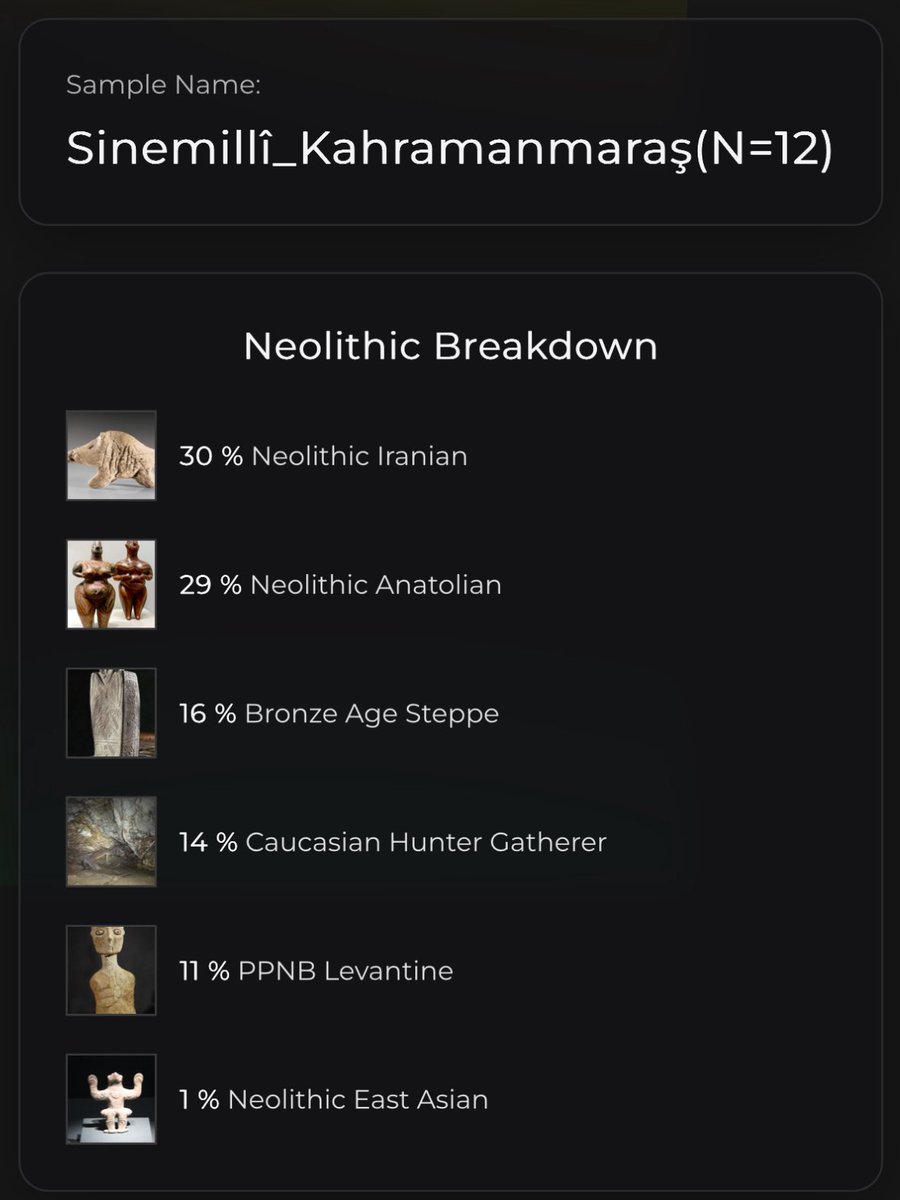
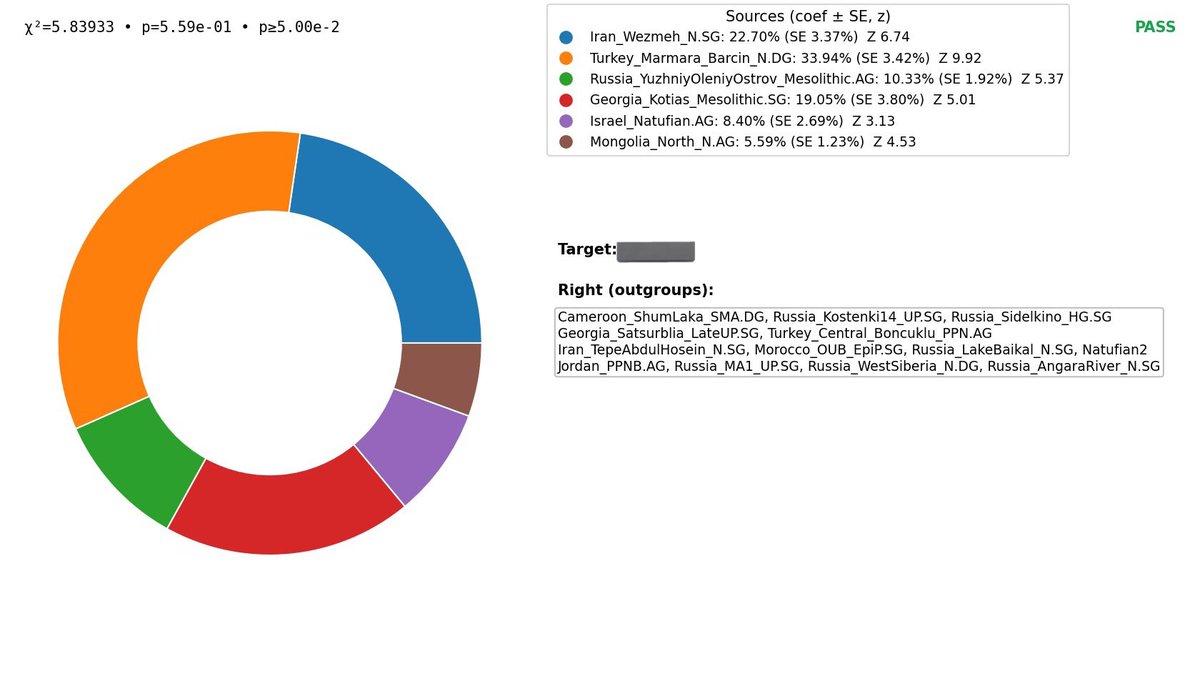
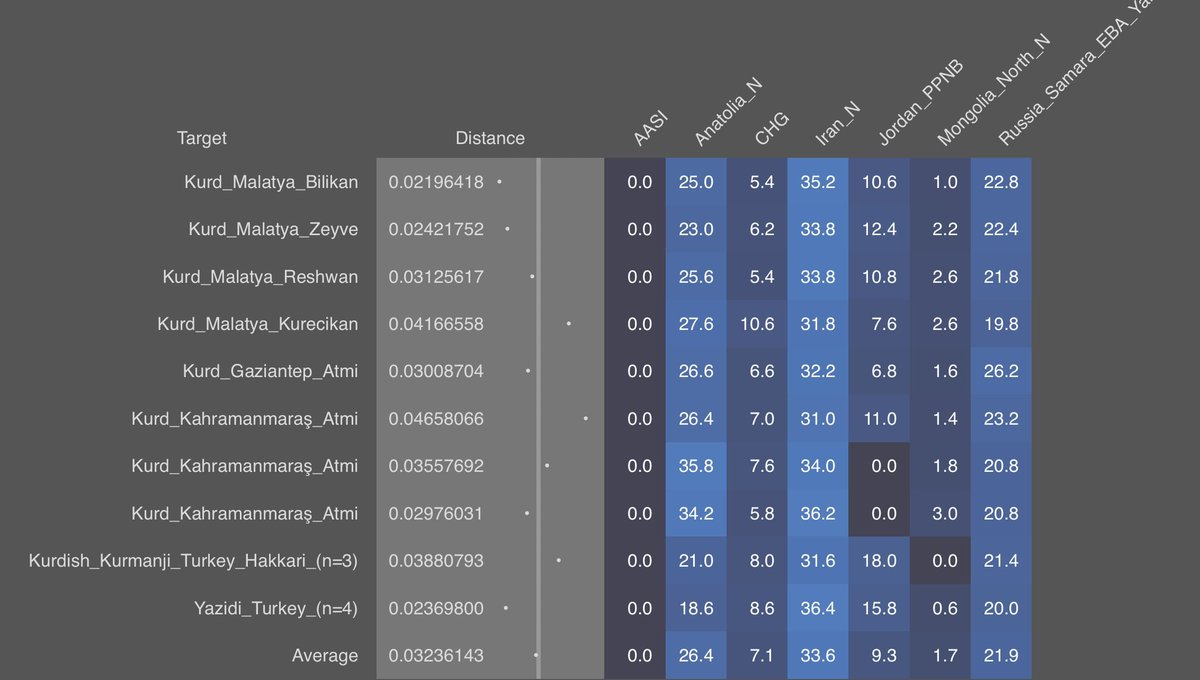
Their autosomal makeup shows high Medieval Iranian affinity. Very low Turkic input for a group neighboring Turkmens for centuries.
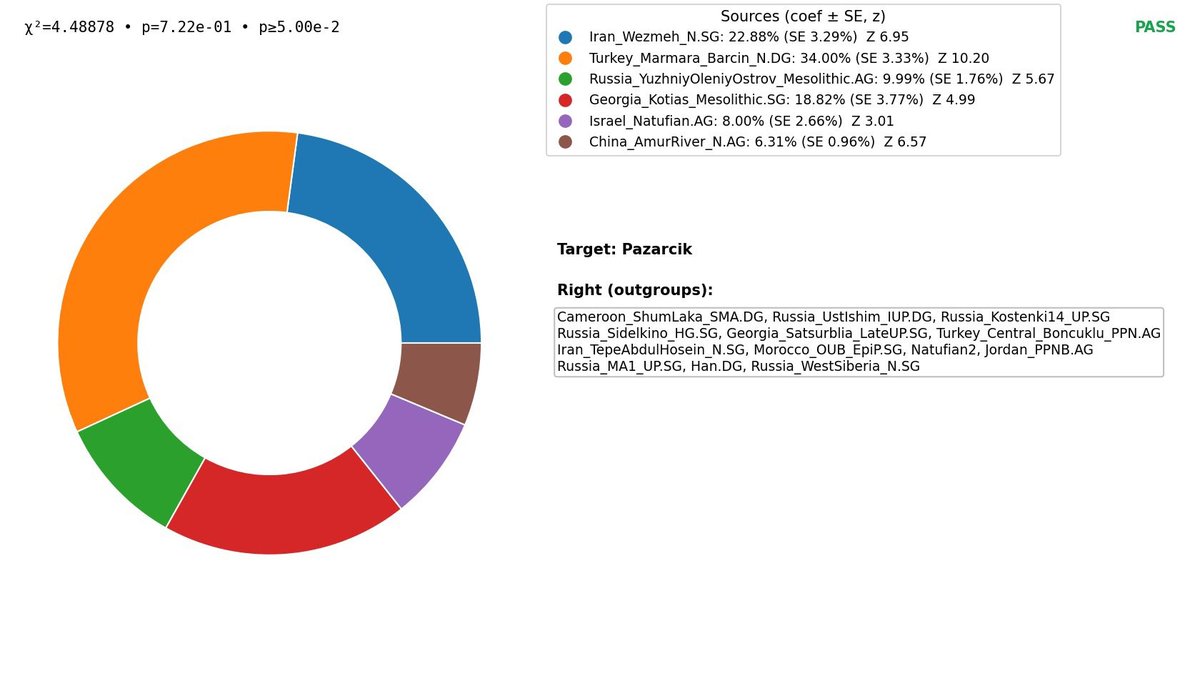
They're indistinguishable from the broader Kurdish/Northwest Iranian cluster. (See pictures attached, average of 12 Sinemillî from Kahramanmaraş, Kayseri and Erzincan provinces)
@thekhaganate Evet Sinemilliler için Türkmen iddiaları mevcut (ki bende böyle olduğunu düşünüyorum) ama kimsenin etnik aidiyetine karışamayız bu etik değil🙌🏻
@mikehawk773@QizilbashDNA We never said that there was no influence but we see that it is very low for people who lived together for the last 500 years..
Alevi Kurds of Kahramanmaraş have in average typical Kurdish results.
@QizilbashDNA We never claimed 95% Iranian heritage.
What you're doing isn't science; it's Identity Projection masked by pseudoscientific jargon. You are hyper-fixating on 3% to satisfy an ideological narrative.
You just admitted the bias. Science doesn't "take into account" a specific heritage before the data is analyzed, that’s confirmation bias.
You cannot project "ancestral wolf symbols" onto Kurdish tribes like Sinemilli. There is enough historical sources, tribal lores and genetic evidences showing their Kurdish origins.
And again, if you were truly "ideology-free," you would admit these results cluster firmly with Kurds, not Oghuz Turks.
Scientific projects use neutral charts, not nationalist political symbols like the Grey Wolf.
Claiming neutrality while ignoring the 95% of their ancestry and the Y-DNA of the Sinemilli is pure cherry-picking.
That east asian admixture that you show is trace admixture, not an ethnic overhaul. If you were truly "ideology-free," you would admit these results cluster firmly with Kurds, not how much ancestry they got from Oghuz Turks.
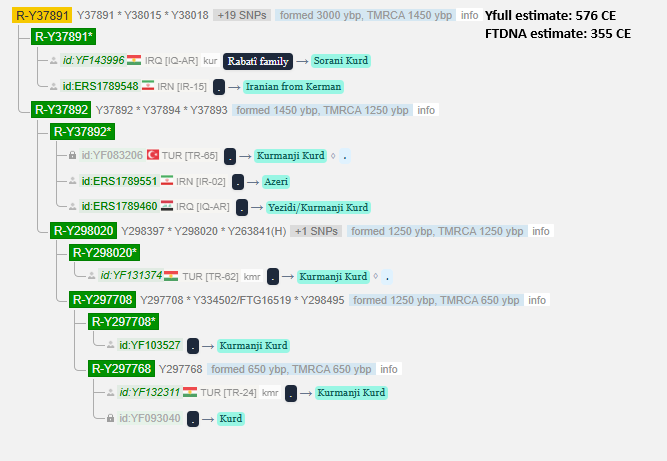
Patrilineal lineage R1a-Z93 > CTS6 > Y37891 is shaping up to be one of the original Kurdish genetic markers. It is currently shared between three lines: the Rabatî family, as tested by Hawpa leader Sarhoz Rabaty; secondly various Kurmanjis, particularly from the Shadiyan and Shikak tribes; and lastly an Iranian from Kerman. This haplogroup is of Indo-Iranian > Iranian > CIr > Kurd origins.
What is interesting here is that, unlike the Azeri who descends recently from a Kurd, the Iranian from Kerman carries a divergent mutational marker from the two Kurdish lines, suggesting this is not the result of a recent backflow population as far as we can tell. Moreover, the TMRCA split between the Kurdish lines and the Kermani individual occurs around the time when, according to linguistic evidence, the last major batch of Kurds left the region of southern Iran. It is therefore very reasonable to think that this Iranian from Kerman is descended from a Kurd who never left southern Iran. It should be noted that the Shadi tribe is one of the oldest continuously existing Kurdish tribes that survives into the modern period, so the fact that it's men overwhelmingly carry this genetic lineage as their main line is of great significance.
For all of the aforementioned reasons, it is extremely unlikely that this Y haplogroup could be an Iranian lineage assimilated via later Adharic speaking Iranian populations whom we know Kurds encountered/assimilated while migrating from southwestern Iran. Rather, this Iranian lineage would be carried from the original wave of Kurds who expanded into what is now the region of Kurdistan.
@Rozekurdno We also would like to sponsor 5 more so please reach out to us if interested.
Also @Rozekurdno let's chat about which provinces/tribes are priority.
There are provinces that don't need testing anymore. (Ex: Dersim, Maraş, Konya. Ankara etc...)
Okay, I’m donating around 30 Family Finder tests at $29 each.
Send me a DM with your tribe and region, and I’ll select 30 people for the first batch.
I chose to switch to part-time work to write my book. If I’m going to invest in Y-700 tests at 500 euros each, I’ll need to return to full-time work.
If there are resourceful Kurdish businessmen who want to donate to the Kurdish DNA project to uncover our great history, please contact me. I’m especially looking at the Talabanis and Barzanis.
The Kurdish Genetic Project is a group of high-IQ, autistic, non-corrupted young men, all with higher education and an enormous drive to pursue Kurdish history to its core.
Everything we do is for Kurd û Kurdistan.
I trust this young clique of smart Kurds.