The pro-inflammatory role of microglia is considered a key driver of Alzheimer's disease. Today @NeuroCellPress discovery of an epigenetic regulator of microglial mitochondria in the experimental model that may be amenable as a target for therapy or prevention
https://t.co/NXkEi59H8N
AI of radiologist read as normal mammograms shown to detect high-risk of breast cancer out several years
"Artificial intelligence scores from sequential
mammograms in individuals diagnosed with breast cancer showed elevated scores up to 10 years before diagnosis"
a retrospective study, but supported by prospective study in 3-5 year time horizon
https://t.co/NafnAkpEfo
https://t.co/ead144H2XW
David Sinclair says he’s been reversing plaque in his arteries with nattokinase.
On Peter Diamandis’ podcast, Sinclair shared that he’s been taking it for years and mentioned a Chinese study with 1,086 people that showed up to 95% plaque reduction in one year at sufficient doses (at least 12 fibrinolytic units daily). He also checks his own carotid arteries with ultrasound and says there’s no buildup.
Nattokinase is an enzyme from fermented soybeans that breaks down fibrin. Some human studies show it can help reduce arterial plaque and improve blood flow, but results vary. Larger, high-quality trials are still limited, so it’s considered promising but not definitive.
Cardiovascular disease is still the #1 killer. If there are accessible tools that support artery health beyond statins and lifestyle, it’s worth paying attention.
Have you heard about nattokinase or tried anything similar for heart health?
reminder
One of the most advanced spinal cord regeneration breakthroughs yet 👀
"Researchers just created microscopic living robots called NPCbots that combine human neural stem-cell progenitors with magnetoelectric nanoparticles."
"The tiny biohybrid robots can be guided to spinal cord injuries using external magnetic fields and stimulated wirelessly without implanted electrodes."
"When exposed to magnetic stimulation, the nanoparticles generate electrical signals that encourage stem cells to mature into neurons and supportive nerve tissue."
"In zebrafish with spinal cord injuries, the treatment produced near-complete recovery of swimming and exploratory behavior within just 3 days."
"The team then tested the technology in mice with complete spinal cord transection, one of the most severe forms of spinal cord injury."
"Researchers implanted approximately 500,000 NPCbots and applied magnetic stimulation for 30 minutes per day over two weeks."
"Within 28 days, treated mice showed significant improvements in nerve regeneration, neural signaling, gait, coordination, and mobility."
"The therapy combines stem cells, microrobotics, magnetic navigation, and wireless bioelectronic stimulation into a single regenerative platform."
"Unlike conventional neurostimulation approaches, the system does not require electrodes implanted into the spinal cord."
"The results suggest a future where precisely controlled living microrobots could help repair damaged nervous tissue and restore lost function after spinal cord injury."
Charlie Munger, the Stoic: "Life will have terrible blows in it. Horrible blows. Unfair blows. It doesn't matter. And some people recover and others don't."
"There, I think the attitude of Epictetus is the best. He thought that every mischance in life was an opportunity to behave well. Every mischance in life was an opportunity to learn something. Your duty was not to be submerged in self-pity, but to utilize the terrible blow in a constructive fashion."
Mutations in B cells can drive autoimmune disease…this could support the argument that “B cell refresh” therapies like 2 or 3 day fasts can counter over-active immune systems…
https://t.co/gg0G2yKSXG
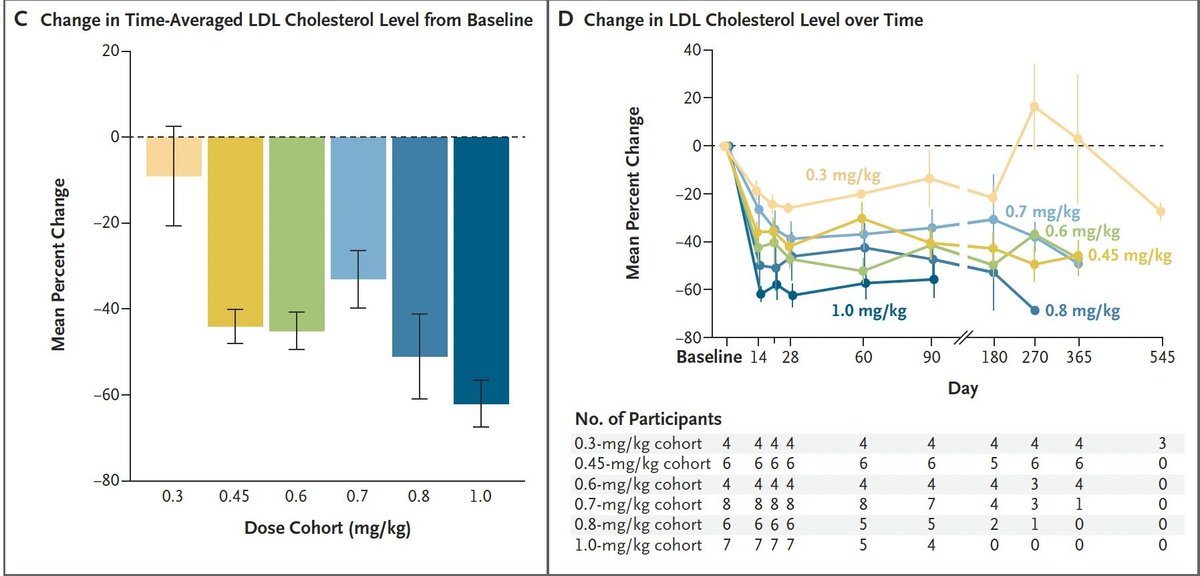
Eli Lilly has done it.
They've gone and made what seems to be a powerful, permanent gene therapy for LDL cholesterol.
That means they'll be able to effectively prevent most heart disease with a single infusion!
Since telomeres act as epigenetic regulators, telomere shortening accelerates epigenetic aging. Meanwhile, the clearance of senescent cells triggers compensatory cell proliferation, which further expedites telomere shortening and leads to replicative senescence. This accounts for why senescent cell clearance accelerates epigenetic aging.
Step by step, AI and robots will revolutionize many/most aspects of medical care …
But will it revolutionize all medical care? What aspects won’t be affected?
amazing
An AI model developed by the Mayo Clinic can now help doctors detect pancreatic cancer on routine abdominal CT scans up to 3 YEARS before a clinical diagnosis.
It works by identifying subtle early signs of disease, even before tumors become visible.
Your brain has a circuit that doesn't know you live in a city. Its only job is to monitor whether birds are still singing. Right now, in this room, it is on.
The circuit predates primates. Mammals have been using ambient soundscape continuity as a predator-detection system for roughly 200 million years. Birds stop singing when something larger moves through their territory. For most of mammalian history, a forest full of song meant no large predator was nearby, and the cessation of sound was the warning. Your nervous system never updated this software.
The Max Planck Institute tested the inverse in 2022 with 295 participants. Six minutes of birdsong dropped anxiety with a medium effect size. Six minutes of traffic noise raised depression with the same. The effect worked on subjects who lived in dense urban environments and had no regular contact with nature. The brain still ran the check.
Birdsong sits in the 1,000 to 8,000 Hz range. Your brainstem reads continuous patterns in that band as a signal that nothing dangerous is currently moving through the environment. EEG data shows birdsong at 45 to 50 decibels boosts alpha wave activity by 14.1% relative to silence. Alpha is the brainwave signature of relaxed alertness. Push the same birdsong above 60 decibels and the response flips. Stress markers rise 29%. The circuit only trusts the signal at the volume of quiet conversation, which is exactly the volume birds sing at from a typical distance.
Three things happen simultaneously when the brain registers ambient safety. The amygdala downregulates. The parasympathetic nervous system takes over from the sympathetic. Heart rate variability rises, cortisol drops. The posterior cingulate cortex, which sits at the center of the rumination circuit, quiets down. King's College London tracked this through a smartphone study with over 1,200 participants and found the mood lift lasted hours after the sound stopped. People diagnosed with depression got the same response as healthy controls.
Most of what gets labeled mental fatigue is hypervigilance running in the background. Birdsong tells the circuit it can stand down, and the brain reallocates the freed compute everywhere else.
A quiet park feels different from a quiet office because the parks have sentinels.
Scientists have created one of the most detailed 3D reconstructions of a human cell (eukaryotic cell) ever produced.
This groundbreaking model, often termed a "Cellular Landscape Cross-Section Through a Eukaryotic Cell," combines data from X-ray tomography, nuclear magnetic resonance (NMR), and cryo-electron microscopy to map molecular structures in extreme detail.